If you asked most children who go to school in Cambridge to draw a crown, it wouldn’t look like what this part of the construction industry is proposing for 4000 Discovery Drive
The design is ***so awful*** that even the BBC refrained from including the CGI visualisations – presumably because it might give people nightmares.
You can view the meeting at Cambridge City Council here, with the developers starting their presentations from around 16mins.

Above – “4000 Discovery Drive on the Cambridge Biomedical Campus. I loath it already and it hasn’t even been built yet“
“Step away from your work and reconnect with the present moment. Through gentle movement and sensory awareness, mindful walking helps you see challenges from new perspectives, easing stress and lifting your mood. Each step and breath becomes a moving meditation, refreshing your energy and grounding you for the rest of the day.”
Above – Cambridge Biomedical Campus mindfulness walk. Do the designs below make you feel relaxed?
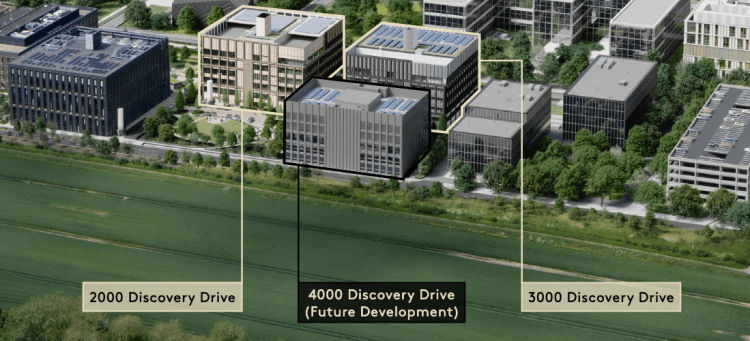
Above – the proposals in a Cambridge Biomedical Campus brochure from April 2025
Since then I’ve introduced & Humanise to the research of Dr Cleo Valentine to senior figures within the Cambridge Biomedical Campus and invited them to reappraise their entire approach to building facades.
The building designs remind me of the menacing flak towers of WWII in Vienna
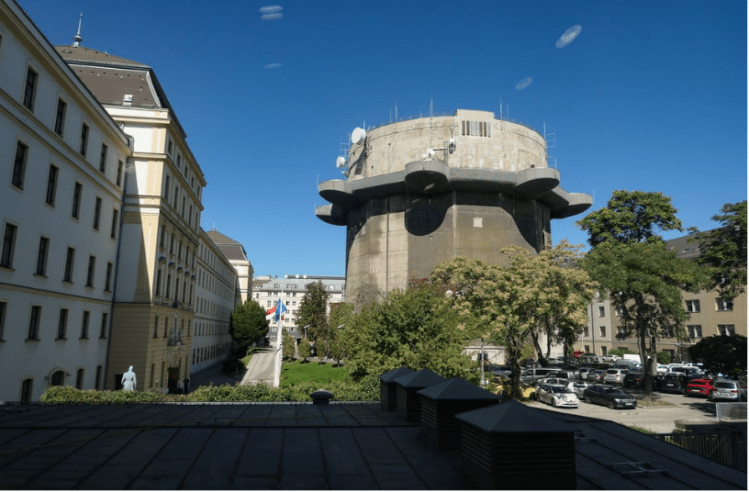
Above – Photo by Maxim Chornyi (2017) of one of the WWII-era anti-aircraft towers built in response to allied air raids on Vienna.
Such was the nature and materials used in the construction of these architectural monsters (other examples can be found in Hamburg and Berlin) that it proved too expensive to demolish them – hence they remain.
Inclusive design this is not
There’s a strange irony of Cambridge hosting events like the inclusive design festival that I went to last Friday, and one of the most prominent developments coming up with monstrosities that the latest research in the field of neuroarchitecture showing how too many contemporary building designs increase the levels of mental stress in the human brain – especially those of us with neurodiverse dispositions and neurotypes.
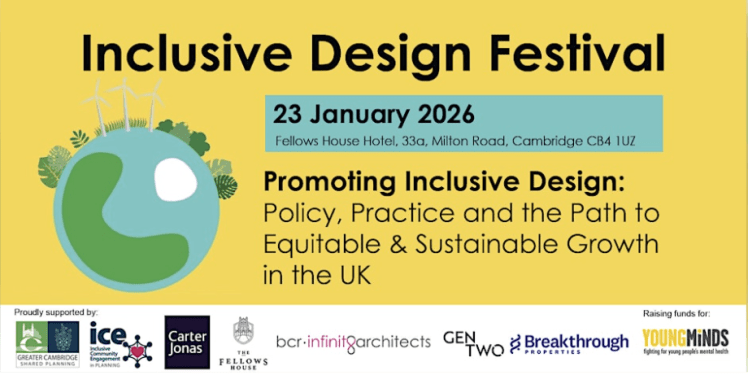
Above – the Inclusive Design Festival back on 23 Jan 2026
“What is the point of engaging in consultations and citing elements of the existing local plan if all that happens is we get ignored?”
This was the question I put to one of the panels at Friday’s event. While the responses I got from the panel were broadly in agreement with what I had said on my experiences of responding to planning applications and going to planning committee meetings, no one had an explanation of *how* to get to a place where developers are engaging with communities *at design stage* and are demonstrably including the major parts of what the public is suggesting. What was just as comical on my part was that buildings I had written critically about were included as examples of inclusive design in the brochure.
Although the developers are still in negotiations with the Greater Cambridge Shared Planning Service, if you’ve got views on the design of the building you can contact the Cambridge Biomedical Campus directly (See https://cambridge-biomedical.com/contact/)
Alternatively, you can let the CBC managers know what you think at their next Open Forum on 18 March 2026
If you are interested in the longer term future of Cambridge, and on what happens at the local democracy meetings where decisions are made, feel free to:
- Consider a small donation to help fund my continued research and reporting on local democracy in and around Cambridge
- Follow me on BSky
- Spot me on LinkedIn
- Like my Facebook page

 The Cambridge Town Owl