
The Housing and Communities Secretary published his policy paper here
You can:
- watch his statement on Social Cohesion to Parliament (and the Qs from MPs) here
- browse through the transcript in Hansard (the parliamentary official record) here
Why the omission of adult education and lifelong learning institutions?
Maybe it reflects the long-term enfeebling of what was once a prominent feature in many towns and cities, many of which crumbled in the face of long term austerity that began under Margaret Thatcher’s Government. The former Advisory Council for Adult and Continuing Education (Abolished in 1983) published a number of interesting policy documents in the last few years of its existence.
- Protecting The Future For Adult Education 1981
- Basic Science Education for Adults 1981
- Political Education for Adults 1983
- Continuing Education – Local Learning Centres 1983
Other publications from the distant past
I’ve collected a number of old policy documents and related publications from a range of institutions which I’ve digitised and uploaded to the internet archive here.

Above – An Ideal Adult Education Centre (1968) WEA
I explored what one of these might look like for Cambridge in this blogpost – something I regularly raise with any locally-elected politician who’s around to listen!
“To support community cohesion, we must first build community itself and the kind of community that comes from access to shared spaces—youth clubs, green spaces and the everyday places where, regardless of background, we come to recognise how much we have in common with each other.”
Above – Marie Goldman MP (LibDems – Chelsmford) Hansard 09 March 2026
For large towns and cities, wouldn’t large lifelong learning institutions make for ideal shared spaces that can bring adults from diverse backgrounds together simply from the range of courses, workshops, and programmes they offer?
This isn’t about putting on ‘social cohesion’ courses or workshops. It is adding an additional shared third space that isn’t ‘home’ or ‘the workplace’ for adults. Furthermore, such institutions have to be something more than a generic ‘community centre’ – such places inevitably being vulnerable to local government austerity. (i.e. such institutions need to have multiple income streams including from local employers paying for training for their staff).
The emphasis on faith institutions overlooks the census data on people with no religion
““No religion” was the second most common response with 37.2% (22.2 million)”
Above – Religion, England and Wales: Census 2021
Which means that many of the policies targeting communities defined by religion, and delivering through religious institutions risk overlooking those who identify as having no religion. One of the issues I’ve pointed out locally on a number of occasions is the lack of secular community spaces in my bit of Cambridge, and the reliance on church-owned buildings for a range of council-supported activities. There was meant to be a council-owned community centre built on Wulfstan Way with an attached community centre in the original plan for Queen Edith’s Ward in the Holford-Wright Report of 1950, but there was never the funding for it to be built so the land was sold off to a non-conformist group.
The opposition spokesman said the policy paper was light on content.
“[The Government’s] strategy lacks ambition and action to deliver tangible change….there is absolutely nothing new in the measures that the Government are announcing this evening.”
Above – Paul Holmes MP (Cons – Hamble Valley) Hansard 09 March 2026
Do you agree? You can have a look at it at Annex A here
There are 16 different policy sections in that annex. Under each of these headings are a series of separate policies with each one having a departmental lead. Which is why policy-making is inherently complex – the policy objectives involve a number of different government departments.
“Shouldn’t local councils be left to get on with much of this through stronger devolution structures?”
A reasonable request? That said, what do you do when local council elections deliver results that put in power political parties that contest the policies of central government on social cohesion? Or Combined Authority Mayors for that matter – such as happened north of CPCA.
Which reminds me – some of the issues raised in the policy paper were also covered in the Resolution Foundation’s paper Unsung Britain
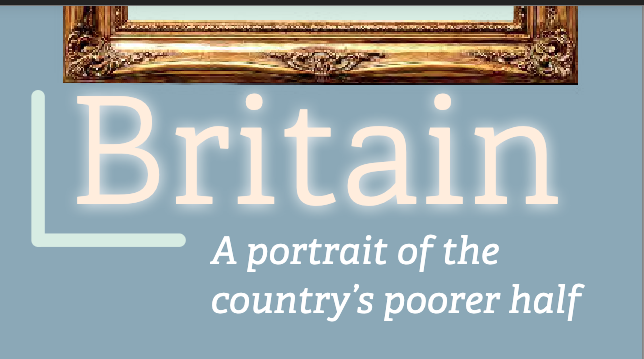
Above – Unsung Britain – a portrait of the country’s poorer half (2026) Resolution Foundation
Scroll further down via the link above to see the top ten *and* the policy recommendations, including:
“Reform property taxation to support efficient allocation of the existing housing stock, including reform to Council Tax charges and rebates to lessen the burden on lower-income households.”
“Give English local areas greater control over their finances, including devolution of taxes linked to local economic performance.”
Above – Policy recommendations from Resolution Foundation’s executive summary
The devolution of taxes can either be in the form of giving councils the tax raising powers, or simply devolving a certain percentage of revenues of income tax receipts to councils by a formula as part of a longer term settlement. (The problem with a Sovereign Parliament controlled by party whips (which is an oxymoron because a Sovereign Parliament should not be controlled by anyone!) is that any legislation passed by one government can easily be repealed by the next one!)
There’s also the party political challenge of the party in government inevitably losing council seats in local elections. Does poor election performances at a local level make ministers even more reluctant to devolve funding and powers?
No – let’s not go down that pothole! It’s half past one in the morning!
If you are interested in the longer term future of Cambridge, and on what happens at the local democracy meetings where decisions are made, feel free to:
- Follow me on BSky
- Spot me on LinkedIn
- Like my Facebook page
- Consider a small donation to help fund my continued research and reporting on local democracy in and around Cambridge

 The Cambridge Town Owl