
Cambridge City Council publishes its statement of nominations for the 14 wards being contested.
Image: Debate not hate by the LGA
You can:
- read the press release and the single list of all nominated here
- read the extended version with other election documents here
- find out who is standing where you live via https://whocanivotefor.co.uk/ and email your questions to the candidates! Even if it’s: “I see you’re standing for election in my part of town. I haven’t decided who to vote for. Please inspire me and convince me you are the best candidate for our area.”
“Anything new to report?”
Dominic McGrath’s report for Labour List covers the battle that Cambridge Labour faces to hold onto party political control in this article. With a very small majority following the Liberal Democrats recovering ground and The Greens gaining over the past couple of years, commentators like Phil Rodgers see it as increasingly difficult for Labour to maintain their majority control on the city council.
“And with Labour defending a one-seat overall majority – and with 15 seats up for election overall – it would not take much for the council to fall out of the party’s control for the first time since 2014.”
Above – Dominic McGrath for Labour List, 10 April 2026
Out of the ten seats Labour are defending, Mr Rodgers predicts Labour will only hold onto four of them:
- Arbury,
- Cherry Hinton,
- King’s Hedges, and
- Peterfield.
Of the six, he predicts an equal split between The Greens and LibDems
For the Greens, as well as holding onto Abbey ward he predicts the following will go Green
- Coleridge
- Newnham
- Romsey
For the Liberal Democrats, as well as defending and likely to hold onto Market, Queen Edith’s and Trumpington, he predicts the following will switch (back?) to the Liberal Democrats:
- Castle
- East Chesterton
- West Chesterton
It’s worth remembering that in 2027 the Government has planned for the local elections to include elections for shadow unitary councils before they get going the following year. We don’t know what the ward boundaries will be for the shadow councils, or whether this will mean there won’t be any city council elections in 2027. They might run both at the same time, or not bother with the ones for the institution about to be abolished/merged.
“Does this mean another early-2000s style decline for Cambridge Labour?”
On one sense Cambridge is the classic stereotype of its electors punishing whoever is in national government at the local ballot box.
The 1980s and 1990s? The once mighty Cambridge Conservatives got an annual kicking from the electorate in the city – reducing them from majority control and the MP seat in the late 1970s through to one single councillor in 1997. There’s a local history / political Ph.D waiting for someone to work out why this happened.
The 2000s? Tuition fees and the Iraq war crushed Labour at the local ballot box to the extent that all of Labour’s old strongholds of Romsey, Arbury, and King’s Hedges were at various points in that decade dominated by the Liberal Democrats. In the late 2000s the party only held onto two county council seats in the miserable elections of 2009 that also saw them lose the Abbey Division to their former group leader the late Simon Sedgwick-Jell, who was also the city council leader who brought in the much-maligned ‘Green Bike’ scheme. He quit Labour over Tony Blair becoming leader, returning to contest the Abbey county seat for The Greens – and winning.
In the 2010s the people of Cambridge punished the Liberal Democrats at the ballot box for Nick Clegg’s decision (approved by the party’s hierarchy) to go into coalition with the Conservatives. Arbury, King’s Hedges, and Romsey promptly returned to the fold, with the once huge party being reduced to a third of their 2000s size in the council chamber, only just staying in double figures in 2024.
In the 2020s, following the postponed elections of 2020 due to lockdown, The Greens emerged in both Abbey and Newnham wards – one of the most and one of the least economically-deprived wards in the whole of Cambridgeshire. Which reflects the challenge the established parties face when opposing them. How do you deal with a party that seems to appeal to people from both ends of the wealth spectrum?
Should the Greens be as successful as Mr Rodgers predicts, the Greens will have nine seats on the city council. Labour would end up with 15, and the Liberal Democrats would have 14 seats, resulting in a council with no overall control. Although Labour would nominally still be the largest on the city council, what the governance model would be like for the final year or two of the council’s existence remains to be seen.
They could opt for an arrangement similar to the joint administrations that worked well in Huntingdonshire and Cambridgeshire in the early 2020s – although both of those were primarily ‘anti-Conservative’ alliances that kept out what were then the largest party on the councils historically – and a very visible presence of what they would face if the alliances fell. That’s not the case with Cambridge. Without a critical mass of Conservative councillors, inevitably the councillors of the other three parties end up arguing with each other even when there were Conservative governments.
From a Labour and Liberal Democrats perspective, they will want to make the final years of the Greater Cambridge Partnership a successful one, so there’s an incentive for the two of them to work together on that – as there will be for the future local development plan that they work with the Liberal-Democrat majority South Cambridgeshire District Council. If the Liberal Democrats hold onto the substantial majority that they currently have, then that may focus some minds in the other parties for future elections as more houses are built across Cambridge and South Cambridgeshire. By that I mean working out where to spread limited campaigning resources.
In the case of Cambridge Labour, inevitably they have been affected by the loss of activists and supporters to both The Greens and to the Corbyn/Sultana Your Party – although surprisingly only one independent candidate is standing with that party’s backing. (Zarina Anwar in King’s Hedges). There are at least two councillors in The Guildhall who have previously served as Labour Councillors before switching to The Greens and YP respectively. Additionally, Cambridge Communists are standing two candidates as well – in Abbey and in West Chesterton.
“You mean that TeamBoris screwed up the country so badly that communism’s back?!?!”
Yep. Also Cambridge has got form – not just in the spies. Pearl Lilley stood for them back in 1945 with an in-depth manifesto. I blogged about it in LostCambridge here.
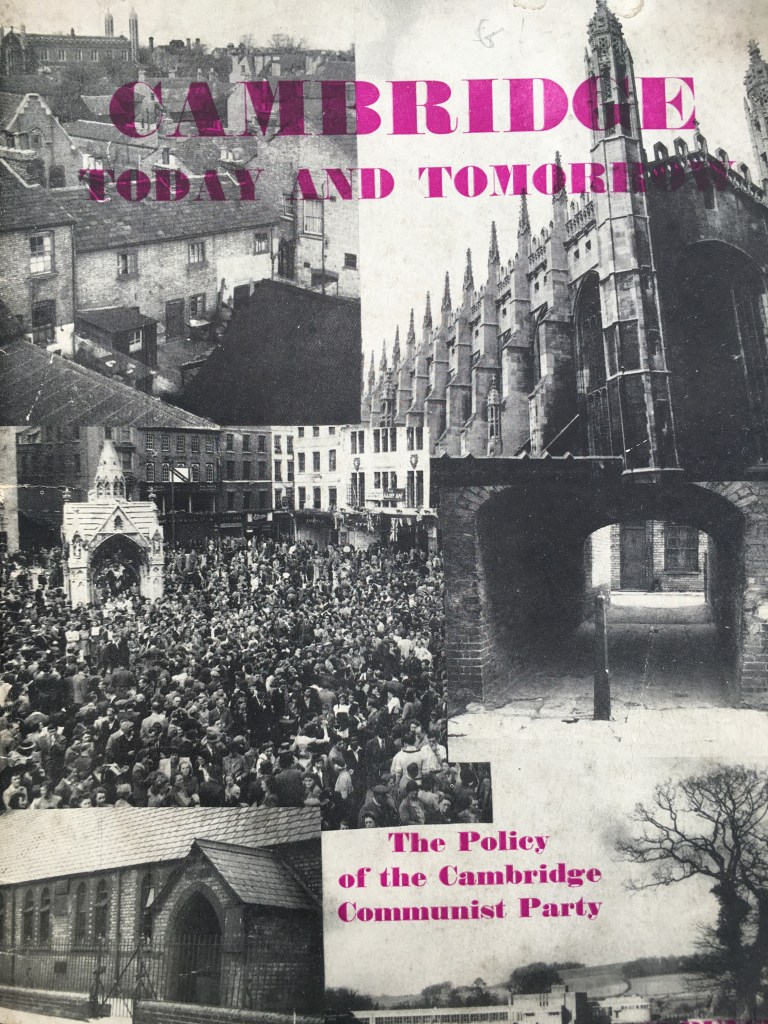
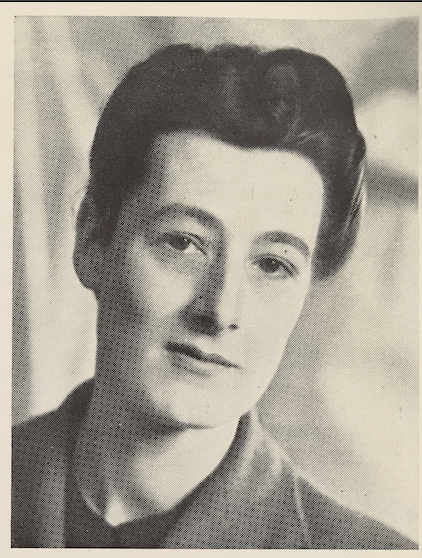
Above – the Cambridge Communist Party’s manifesto for the borough, 1945 – have a browse, and also Mrs Pearl Lilley who was their only candidate – polling over 500 votes in solid Conservative Trumpington of that era.
As for the Conservatives vs TeamNigel front line, it remains to be seen what impact the fragmentation of the vote has in that part of politics. At the same time there are now multiple places for the protest vote to go to – as the Kent by-election in Thanet showed when a former Labour district councillor who defected to the Greens last December won the county divisional seat from TeamNigel with a last minute surge campaign supported by party leader Zack Polanski. If you thought our politics in Cambridgeshire were messy, go and have a look at Kent’s!
Meanwhile over the county border
Suffolk County Council have full elections – their statements have been broken down by district council area, so West Suffolk being closest to Cambridge is one to watch. The construction of rail-based transport between Addenbrooke’s / Biomedical Campus and the West Suffolk towns and villages could have the sort of demographic and and party political impact that the rapid growth had on the once safe-as-military-fortresses blue South Cambridgeshire.
Meanwhile in Hertfordshire there’s a proper contest for Royston Town Council as The Greens and Lib-Dems go head-to-head in one part of town, and where it’s all-against-all everywhere else!
For the county elections in Norfolk and Suffolk, the normally safe-as-blue-military fortress counties, it remains to be seen what the fragmentation of that vote into pro/anti TeamNigel has – and whether any of the other parties can sneak in to snatch a seat or three.
Also, see the LGA’s Debate not Hate campaign

 The Cambridge Town Owl