
A takeaway from Cambridge student activists at Cambridge Land Justice earlier this evening.
You can find Cambridge Land Justice on FB here, and on Twitter at https://twitter.com/camlandjustice. Some of you may have spotted their stall at the Strawberry Fair on Midsummer Common.
I was reminded of how aged I felt when several of the undergraduates said they were off to the pub while [CFS/ME] fatigued-up-to-my-eyeballs me was heading back home to sleep having had an afternoon nap to recharge more after a day of cycling more than usual.
There were a couple of us older town people there – and it was interesting to hear the students and recent graduates saying how useful they found it to have people who knew the local historical background to call on. At the same time they reminded this ageing warhorse that I am the power of the optimism that younger generations have – and how that optimism has been conspicuous by its absence in too many public debates about the future of our city.
Cambridge City Council and local public sector organisations must put pressure on Cambridge University and its member colleges to demonstrate they have consulted meaningfully with their students and members when the latter put forward the corporate positions of their institutions.
Looking at the Greater Cambridge Partnership Board in particular.
For those of you who live in/around Cambridge and are members of the University of Cambridge, were you asked to submit your views towards a corporate response from you University?
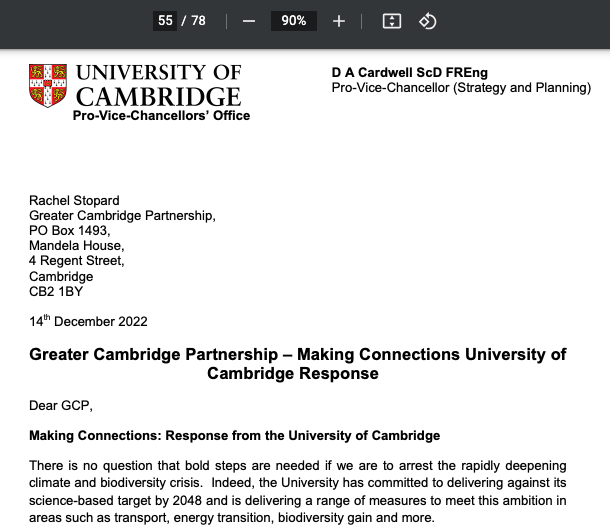
…you can read the response from the Pro-VC for Strategy and Planning from p55 here
Feel free to browse through the written responses from other institutions and individuals here
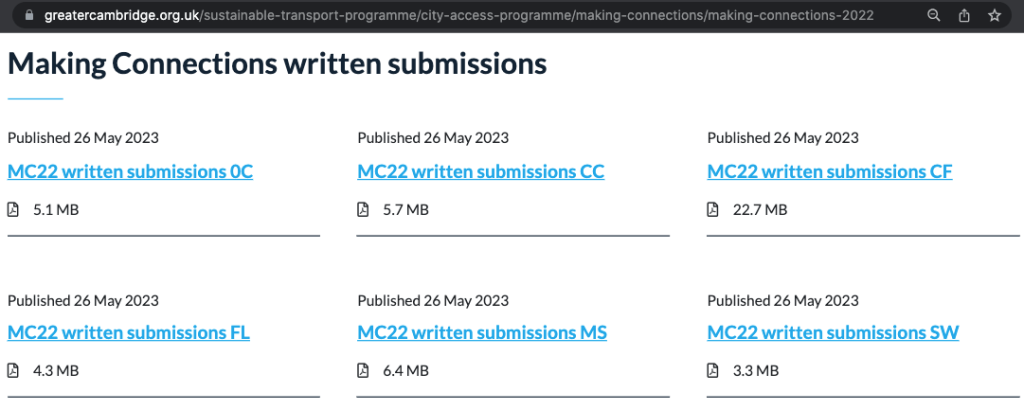
Above – screengrabbed above – written responses divided up into six and in alphabetical order. (MC22… SW are individuals/institutions beginning with S to W).
“How does anyone hold the University of Cambridge to account?”
This was one of the things I said would make for a very interesting student union project: a short guide on how to hold colleges and university institutions to account for the corporate decisions they take that have an impact on the wider city.
The Office for Intercollegiate Services – co-ordinating the interests of the colleges
I think I was today years old when I discovered that such an office existed – you can browse through their web pages here. Furthermore, you can view the lists of committees and any meeting papers here.
A historical example of college landowners not taking into account the needs of one of our most economically deprived neighbourhoods.
Some of you may have seen the headline in this week’s Cambridge Independent.
Above – Castle Ward councillor and MP-candidate for Cambridge Liberal Democrats, Cllr Cheney Payne furious over the catastrophic failures at Darwin Green.
The development has been a very long time coming – the planning dating back almost a generation. The document screengrabbed below (Ref S/0001/07/F via the Greater Cambridge Planning Portal at https://applications.greatercambridgeplanning.org/online-applications/ ) dates from December 2008. And that’s just for the pedestrian, cycle, and vehicles access!
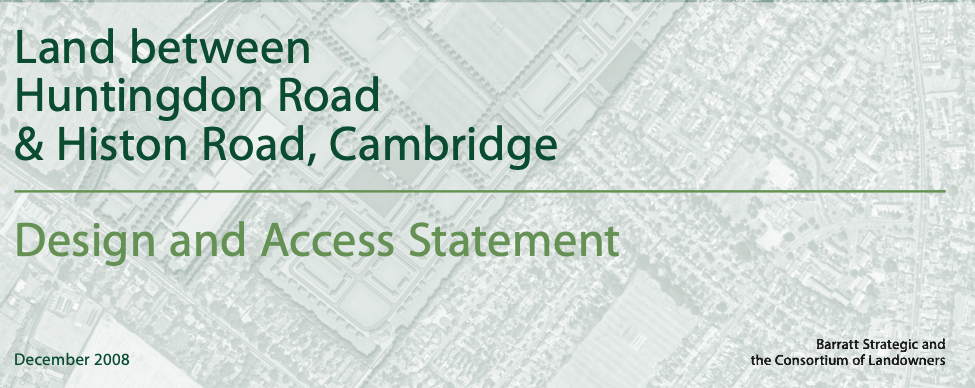
It was enough to tell me who the landowners promoting the site were.
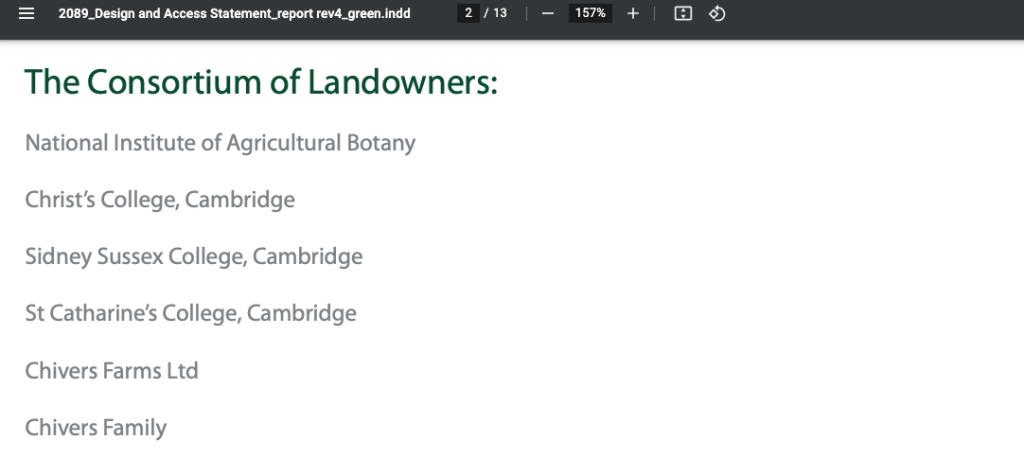
Above – the NIAB was privatised in the 1990s but alongside the Chivers Family are Christ’s, Sidney Sussex, and St Catharine’s Colleges of the University of Cambridge.
Recently I was given a copy of the old 1992 Green Belt Plan originally published by Cambridgeshire County Council. This shines a light on what our city used to be like around the time I started secondary school.

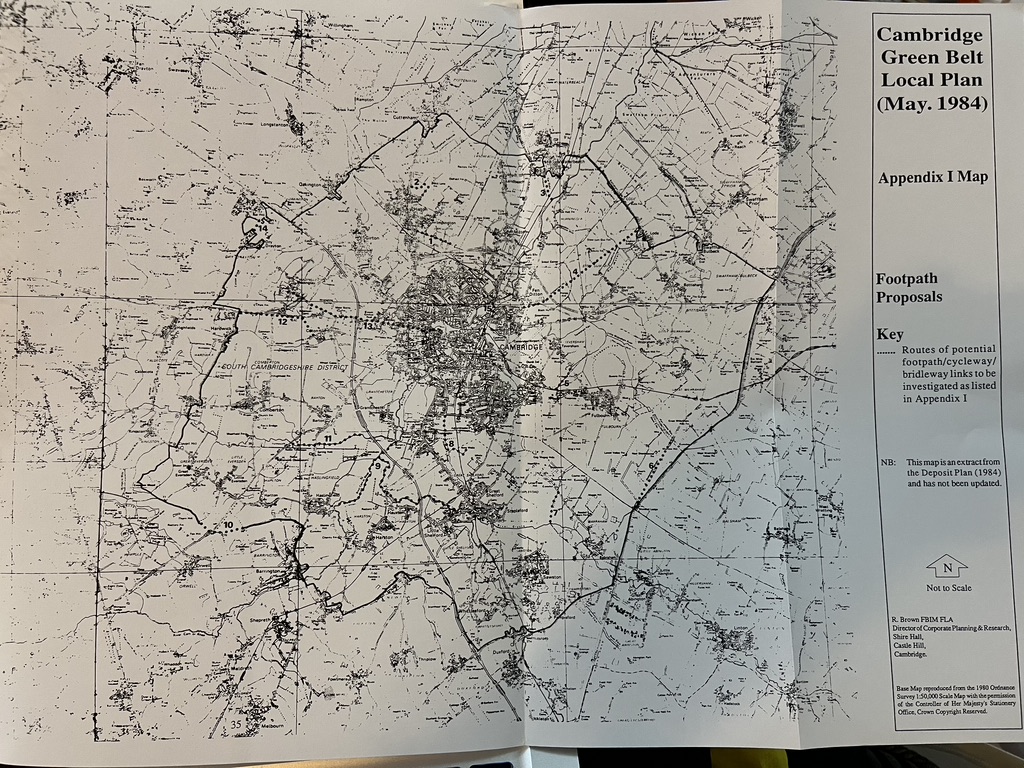
What’s particularly interesting is what the current Darwin Green site looked like in the late 1980s/early 1990s.
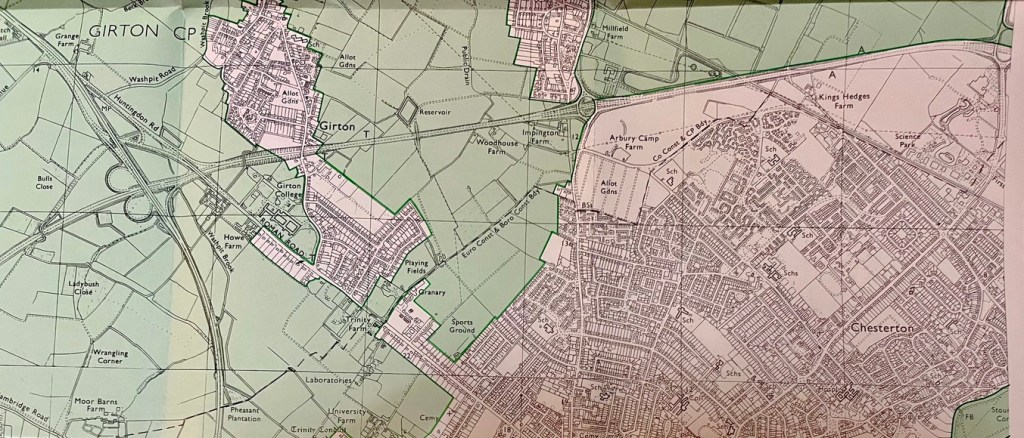
Now compare it with G-Maps more recently
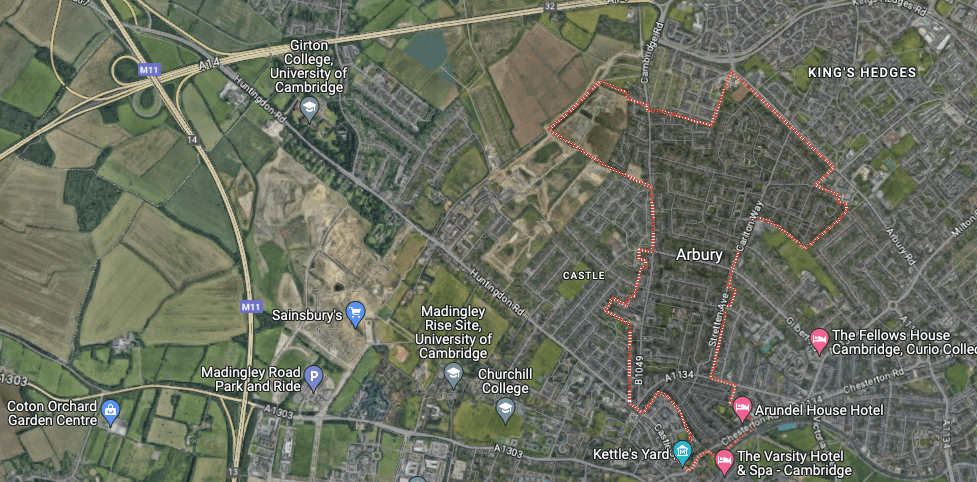
Cambridge missed the opportunity to create a much-needed large park for the people of Arbury. This is despite the fact locals have been calling for one for decades.

Actually, for over half a century. Above – from the Cambridge Evening News December 1975 in the Cambridgeshire Collection which I wrote about in October 2021 here.
A reminder of what the former Vice Chancellor Sir Ivor Jennings QC stated in the Cambridge Evening News on 01 June 1962 at an exhibition the previous day:
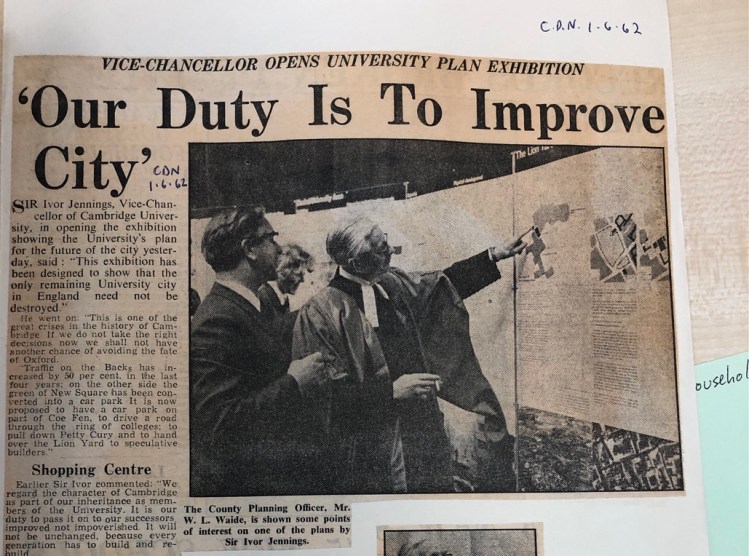
Above: “Our duty is to improve the city”. Sir Ivor Jennings QC quoted in the Cambridge Evening News 01 June 1962 in the Cambridgeshire Collection – which I wrote about here
It’s soul-destroying to see both the unkept civic ambition of Sir Ivor and the missed opportunity to meet a huge social, environmental and civic need. One of the many problems I have with the present planning system is there’s nothing to require developers and land owners to set aside land for anything beyond the neighbourhood that people will live in. i.e. no measures to help make good some of the wider urban and strategic planning errors of the past.
“Why didn’t any of those colleges look out for the need of the residents of Arbury in terms of a large park and open green space?”
It’s not in their constitutions or Royal Charters for a start.
Furthermore, when you’ve got systems hot-wired to put financial returns over and above everything else, those with the least lose the most as far as their interests go. And with Arbury historically being a predominantly residential area with a large proportion of council housing…you can fill in the rest.
I’d like to think that as a city we can do better.
What raised my mood earlier this evening was listening to the students debating practical actions and responses to a host of long term issues in Cambridge – ones that previous generations of politicians and activists have struggled with and been worn down in the fight over. Which is one of the reasons why getting new people with fresh ideas and perspectives – whether from within or outside of our city, is ever so important.
What barriers are decision-makers routinely putting up – often without realising it, that prevents younger generations from influencing decisions about our collective futures?
I’ve just called out the first one earlier: academic institutions not demonstrating how they are engaging with their student members in forming corporate positions vis-a-vis local government.
Where are the guides aimed at students and young adults generally on how to engage with local democracy and the future decisions affecting our city?
Because later today (at the time of writing – it’s gone midnight) there is a meeting of the Greater Cambridge Partnership Assembly at The Guildhall and there are over 300 pages of meeting papers. (The headline-grabbing bit on congestion-charging won’t start until 1.30pm – and that paperwork starts on p80).
Cambridge City Council will be developing a youth strategy later this year (I covered it here) so something councillors could consider is challenging educational institutions to demonstrate how they are listening to their students when lobbying the city council. If that led to institutional and structural change within a sector that forms a large part our city’s economy, think of the wider impact young people could have.
Food for thought?
If you are interested in the longer term future of Cambridge, and on what happens at the local democracy meetings where decisions are made, feel free to:
- Follow me on Twitter
- Like my Facebook page
- Consider a small donation to help fund my continued research and reporting on local democracy in and around Cambridge.

 The Cambridge Town Owl