TL/DR: The shortcomings of basing citizenship workshops around existing academic-based syllabuses – something that some vocational courses have overcome.
Remember how I said things were getting more complex? That.
I’m still of the view that local/combined authorities responsible for lifelong learning policy should be providing citizenship courses – including but not limited to the accredited courses such as the GCSE in Citizenship Studies. Not least because it provides a structure to work within, provides a qualification at the end for those who want/need it, and provides a setting and safe space for people to ask questions that they might not be willing to ask in a public forum.
Citizen-centric workshops and courses.
It’s not easy to find, but my pen-covered cheapo copy of the long defunct AS Citizenship Studies from 2009 by Mitchell & co arrived this morning, and it had a diagram that mirrored the format of the first exercise I designed for a workshop back in 2015 on Mill Road. It puts the citizen at the centre of everything, and builds outwards from there.

Above – from AS Citizenship Studies (2009) Mitchell et al, Hodder Education, p231
Town planning is not even mentioned in the otherwise excellent GCSE in Citizenship Studies by Jenny Wales (2023 – Collins). Neither is the NHS. Not her fault as she didn’t set the curriculum. Furthermore, there’s only so much you can cover with one lesson a week over two years with a group of teenagers where the system emphasises the greater importance of the core subjects (Maths, English, and Science). [If you were, let’s say… a pro-private healthcare minister whose political party had received lots of money from developers, would you want teenagers to be learning about the NHS or how to scrutinise town planning applications?!?] Not casting blame or anything, just looking at how Politicised the curriculums of any education system are – such as when Gove allegedly mandated the learning of lists of kings and queens but not the power structures that put them there or kept them there. And don’t get me started on Imperialism.
Public health – covered by healthcare-related vocational courses
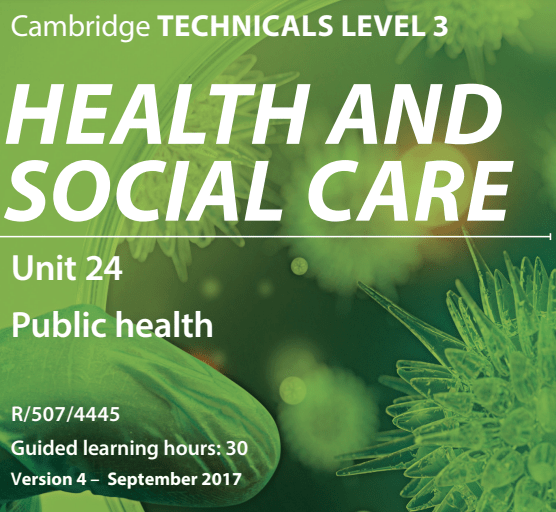
In the Health and Social Care T-level – the suite of new vocational alternatives to the academically-based A-levels, public health is covered.

Above – from Unit 24 Public Health (2017), OCR, p3
It’s worth browsing through the above document. Note the Sanitary Act 1866. One of the things that Parliament legislated on was requiring local councils to present annual sanitation / public health reports to their full councils. (I’ve published links to the ones for the old Cambridge Borough Council, digitised by the Wellcome Library here).
I also noted the very early lesson about social and personal values in the 2017 version of the BTEC Health and Social Care book
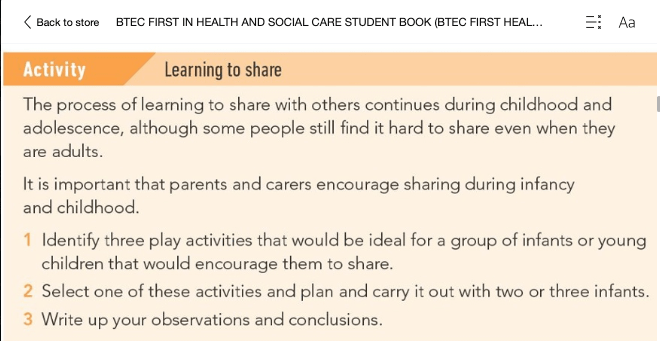
Above – BTec Health & Social Care (2017) Pearson. What does this say about the teaching of economics and politics? Or the politicians and economists that have promoted neoliberal / ‘greed is good’ economics over the past few decades?
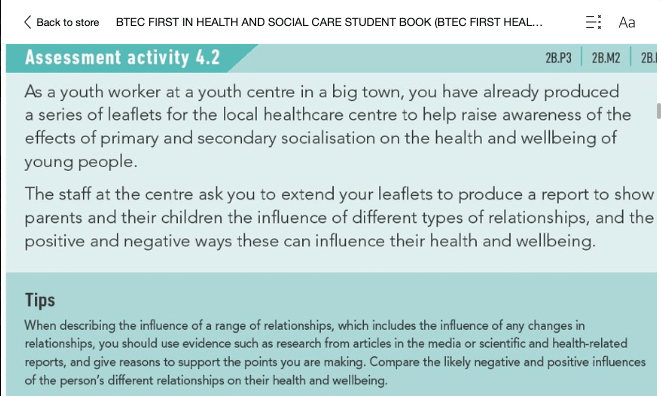
Note also that some of the activities cover things that certainly my generation (1990s teens) never got taught.
My point about all of these is on the importance of lifelong learning – and finding a way to bridge the gap between what my generation was not taught (esp those of us who went down the academic route and/or find themselves in positions of power and influence, vs what the children and teenagers today are covering.)
Town planning – conspicuous by its absence although it should not be. And the town planning institutions such as the RTPI ***really need to step up their efforts here***
I should be a little careful as two of my three siblings are qualified town planners.
Let’s not ignore the class barriers here. The fact that the traditional route to becoming a qualified town planner involves post-graduate studies is a huge barrier in the training and recruitment of such qualified persons. Furthermore, ministers have refused to put the necessary policies in to increase the supply of qualified town planners – in particular their refusal to fund substantial numbers of bursaries that cover fees and living costs that might encourage existing professionals in related fields to switch careers.
Town Planning Technical Support – A-level equivalent.
Again, have a look at the specification document. Below you’ll see some of the essential concepts that students learn about the town planning system in England. (It’s a devolved matter for the rest of the UK).

Above – from p37 of the spec. how much more familiar would our city be if workshops and short courses covering the above were made available in lifelong learning programmes?
There are a host of RTPI books out there that make for interesting reading, but so little of it breaks out beyond town planning circles. Why?
Let’s take two that are particularly relevant to Cambridgeshire.
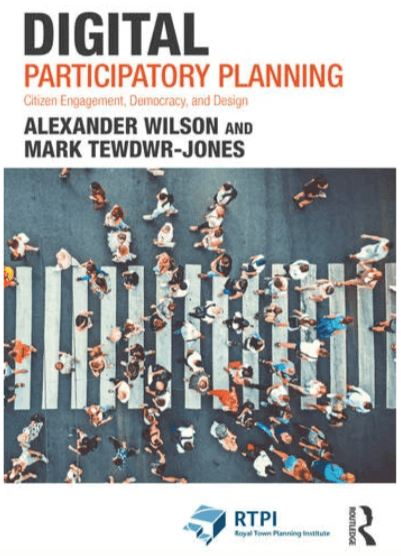
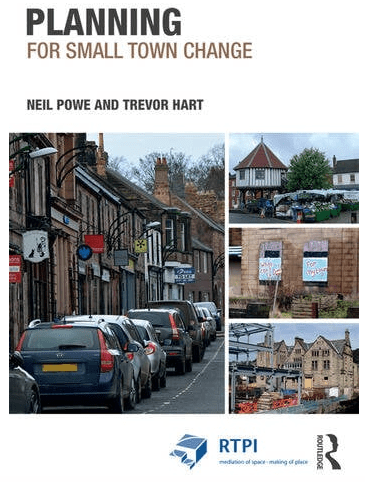
Above – from the back catalogue of RTPI / Routledge.
The product pages for each book list the contents in the previews.
Now, I’m in no position to afford these books, let alone read through them with my easily-distracted mind that has the attention span of a goldfish. But this is the sort of thing where there are enough activists and/or qualified people in Cambridge who have the collective interest of our city in their hearts who could lead a workshop in one of these fields.
When it comes to scrutinising proposals for cycleways and active travel, how many of us know the first thing about the urban design of highways?
It’s all very well pointing to the Government’s guidance on cycle infrastructure, but how do we embed improved infrastructure into our education and culture if finding out about where to learn it from is easier said than done? Again, let’s have a look at the course specification of BTEC in Construction. Which is a significant undertaking for anyone looking at doing this course. It’s not for the faint-hearted!

Above – BTEC Level 3 Construction by Pearson, p15 – scroll down to the table and you’ll see all of the units available. Note:
- Public health engineering – applicable to the North East Cambridge site and the moving of the sewage works. (Unit 30).
- Highway construction and maintenance – applicable to all of the cycleways as well as the roads projects. (Unit 32)
- Planning the built environment – think of the newtowns recent (Bar Hill, Cambourne, Northstowe) and proposed. (Unit 34)
How many people get to study Unit 34 I don’t know, but it matters.
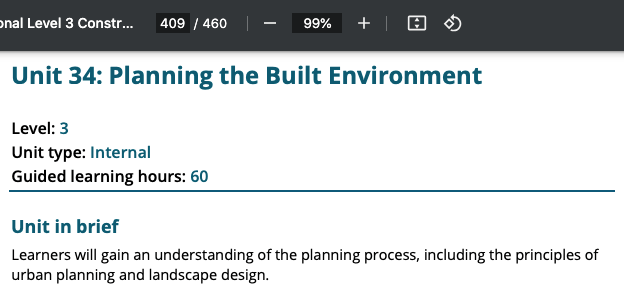

Above – from p409, BTEC Construction.
If we are to break the stereotype of academia being for the affluent and the vocational being for working classes, we risk what happened in the 1980s with the destruction of the UK’s manufacturing capacity. And we found out the hard way in the first lockdown how much of a national security risk this was, relying on imported manufactured goods and components this was. Furthermore, extended supply chains are also a vulnerability in an era where transport emissions have to come down.
University-era regrets – and why lifelong learning matters
I sometimes say to myself that I conformed to authority so much during my childhood and teens that I broke myself as a human being in the process. It was only when I got to university and figured out that 1) I no longer had to conform to what figures and institutions of authority said – because there weren’t any for me in Brighton, and 2) so much of what the institutions in particular were being challenged repeatedly and comprehensively in my new city & cultural environment that the hollow intellectual content of what was by then ‘the previous millennium’ had been exposed as hollow.
As a humanities student on a course that turned out to be one that went over old ground (i.e. my A-levels in geography, economics, and maths) it was too late to switch – and even then I had no confidence to actually do so, nor the support needed from those around me to make it happen. There were no workshops like Cambridge Makespace, nor was the place I studied at known for having an inclusive and vibrant arts & music scene – you had to go into town for that. (This was a quarter of a century ago – so chances are things may well have changed. But it doesn’t take the pain of missed opportunities away).
I’ve read a number of accounts over the years of people from working class backgrounds both regretting the chance that they never got to go to university, or that they were ‘written off’ by the system only to beat it in later years. (See Clare Holtham’s example here, and also Jack Overhill here.) As a city we really need to get our act together on lifelong learning beyond what the the mainstream media is covering with all things Sci-Tech-Uni expansion, and break the internal barriers that are currently blocking us from learning collectively about how to improve our city.
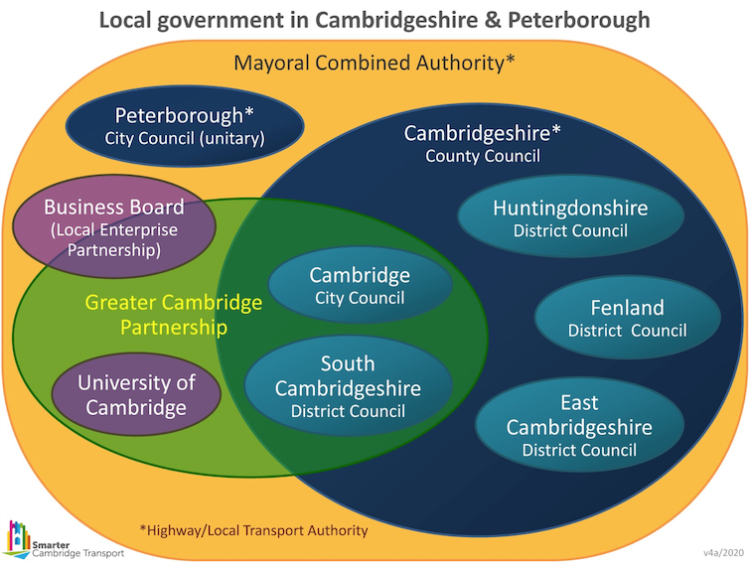
Because we need to make it far more resilient in the face of the climate emergency. That means not only providing the spaces and opportunities for those that have never got to learn about politics and government, but also the spaces for those of us who never got the chance to learn about the practical vocations and professions that are essential to the sound functioning of our towns and cities. Question for the Combined Authority: How can we do better than what you’ve set out for this autumn? If anyone wants to follow this up with the CPCA’s Skills Committee that meets on 04 Sept 2023, you can table a public question via this link. (I can’t as I’ve already got one tabled and it’s one Q per person per meeting). If this blogpost has made you think, feel free to put your Qs to those elected to represent us.
Food for thought?
If you are interested in the longer term future of Cambridge, and on what happens at the local democracy meetings where decisions are made, feel free to:
- Follow me on Twitter
- Like my Facebook page
- Consider a small donation to help fund my continued research and reporting on local democracy in and around Cambridge.
 The Cambridge Town Owl