
Cambridge City Council submits plans for 120 new homes at the junction of Newmarket Road and Barnwell Road – but there are concerns about over-development
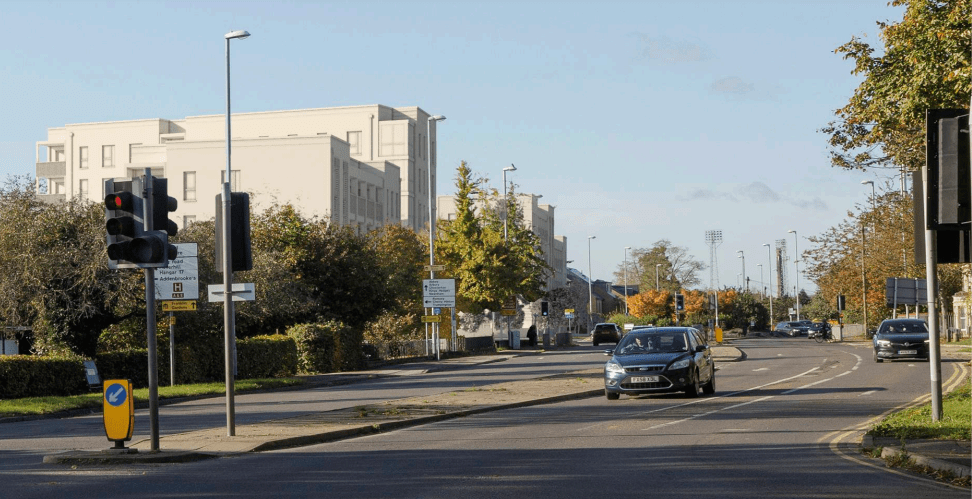
Above – a CGI from the planning documents at the foot of the list (See below)
From the above-image you can see why there is concern from residents – the new buildings are significantly taller than the two-up-two-down low density council housing in the surrounding area. But, as I explain in this blogpost, Cambridge City Council is caught between a rock and a hard place in the face of a housing waiting list of over 5,000 people.
Want the details to browse through? See the GCSP Portal here and then type in the reference number: 23/04687/FUL in the simple search drop down box. You’ll then be presented with a list of over 100 documents to look at.
You can comment on the application by following the Council’s guidance notes here. Note particularly the issues that councils and planning committees made up of elected councillors can consider under planning laws – and which ones they cannot.
Want to see the arguments in favour of the scheme?
You’ll need to look for the Planning Statement in the list of documents.
Above – the Planning Statement looks like this. Scroll down the list and click on the right hand side of the row that says ‘Planning Statement’ and this will come up.
Want some of the background? See my blogpost from Sept 2020 here (going into the second lockdown)
You can see what the area looks like presently on GMaps here, and compare that to the illustration below.
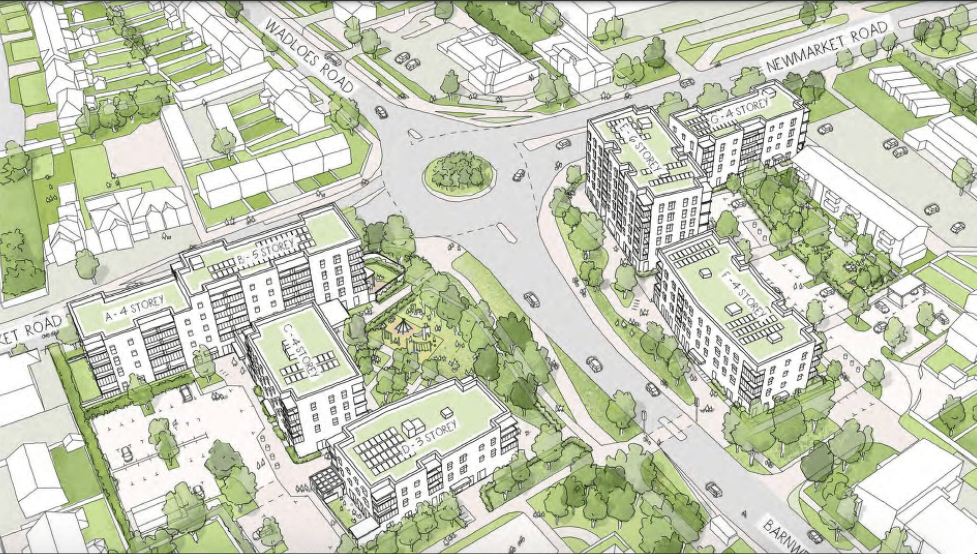
Above – from the design and access statement
Under the documents tab, you should see a table that looks like the image below:
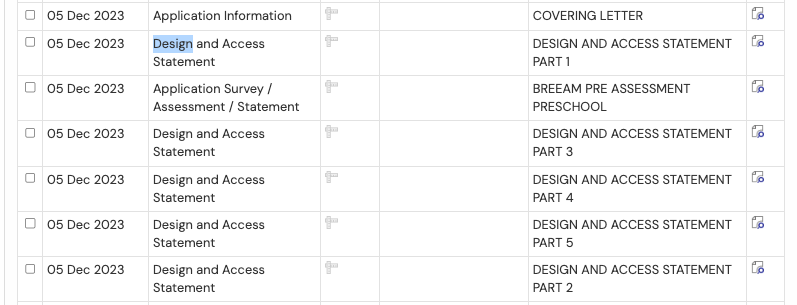
Above – in the right hand column, click on any of the page-and-blue-dot icons to open the documents
“The proposals are for 18 existing flats to be replaced with 48 social rented and 72 intermediate rent homes, including four homes designed for disabled people. The properties will include a mix of one, two, and three-bedroom flats and three-bedroom maisonettes.”
Cait Findlay, Cambridge News 06 Jan 2023
Above – journalist Cait Findlay summarising the proposals – note the massive increase in the number of flats for a city – which has a huge waiting list for socially-rented properties.
…”the total number of people on the waiting list as 5,347 from the number of active people in household from the application as of 31 March 2023.”
1 bedroom 1,328
Response to Freedom of Information Request 12904, 18 May 2023
2 bedroom 581
3 bedroom 405
4 bedrooms + plus 115
Total 2,429“
I’m not interested in arguments about the ‘deserving vs undeserving poor’ anymore than the ‘deserving vs undeserving rich’ because both categories are the result of economic systems far beyond the control of one person. And I’m not going to solve it any more than securing peace in the decades-long wars that you’ll find still going in various parts of the world.
Some of you may be interested in the older publications I’ve stumbled across and digitised such as:
- Social aspects of a town plan (at a time of new council estate building) 1951
- The Great Sales Robbery – The Case Against Council House Sales – 1976 (the national context being the UK had to go to the IMF to get a bail out because of a financial crisis – one that came with terms and conditions involving spending cuts and asset sales)
- St Matthew’s District Plan (next to Abbey Ward, now part of Petersfield) 1977
- In and out of the workhouse – Huntingdonshire & Cambridgeshire 1978
- Ethical tensions in the Welfare State – 1987
- Local Authority Housing – Origins And Development – 1996
- Abbey People (community newsletter) Autumn 2002
“Looks like identikit spreadsheet architecture to me”
In the midst of a chronic housing shortage – and especially ones on social housing in the existing Political climate, what other alternatives are there other than to get more people into better quality homes so they can live better quality lives?
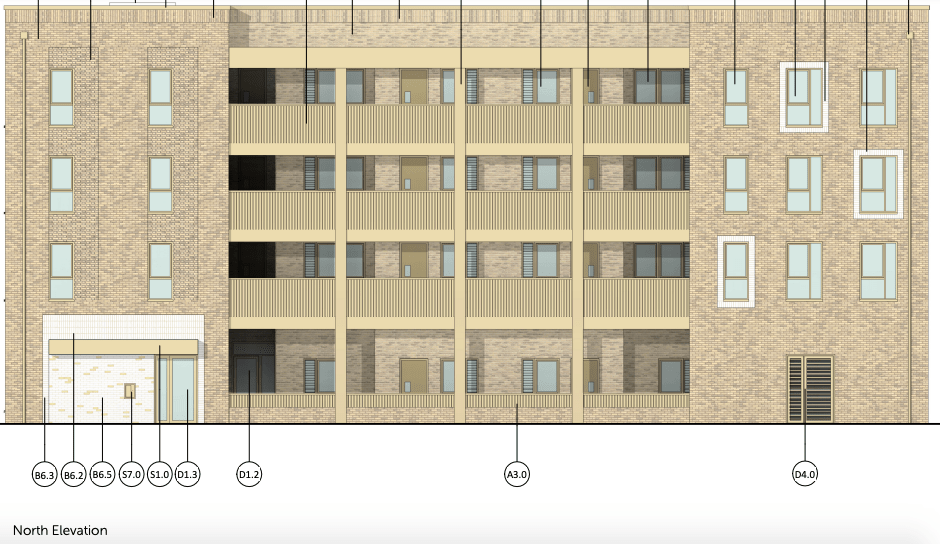
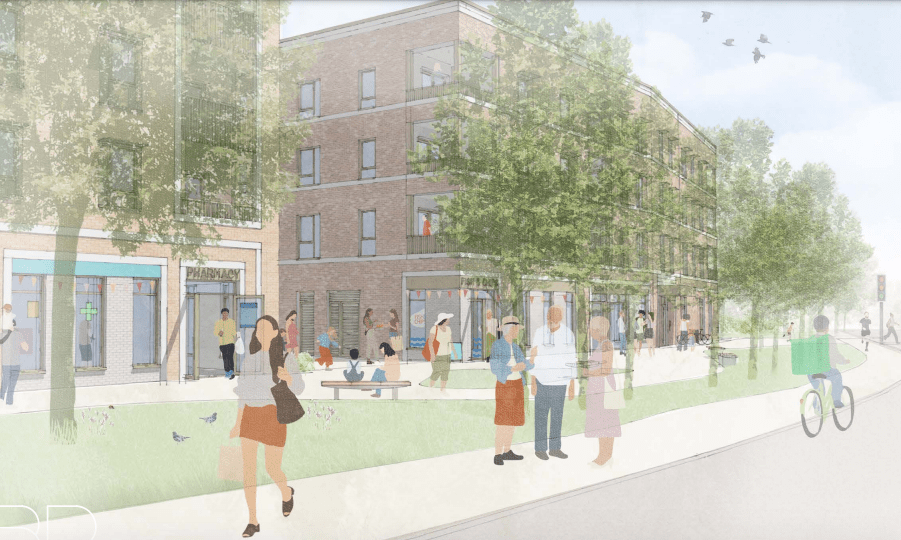
Above – Design and Access Statement 1, p24
They’ve got some standard playground equipment too – and some unfamiliar ones, such as the cat-shaped ‘stroking stone.

Above – Play equipment detail
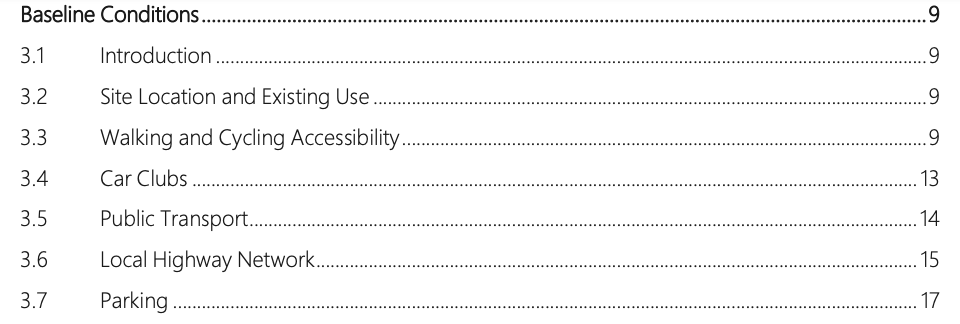
Travel plans
“Discussions will be held with bus operators servicing the local area to explore discounts or free travel for a period of time following resident’s occupation of their new home. This will encourage the use of bus services during and after the initial trial period.”
Framework Travel Plan Document, p29
Above – the joys of a fragmented system of local government where city council, county council, combined authority, and private bus company have to figure out what to do about bus services because of decisions made by ministers past and present who insist on this crazy system of privatised and deregulated bus services, plus a convoluted system of ‘bus franchising. Just renationalise them and be done with it!
Public Art – the details inevitably come later
There is a summary document with lists and criteria, ending with:
“The East Barnwell Public Art Strategy envisions a community-driven and artistically enriched environment that catalyses positive social change, fosters community pride, and transforms East Barnwell into a vibrant and culturally rich neighbourhood.”
Public Art Strategy
Sport England’s objection
The loss of the bowling green is something that goes against national planning policy which means that unless the City Council bring forward their plans for the replacement facility, Sport England has said that it will object to the application as it stands – though it is willing to review its position should those additional proposals come forward. So this is an issue of synchronising applications.
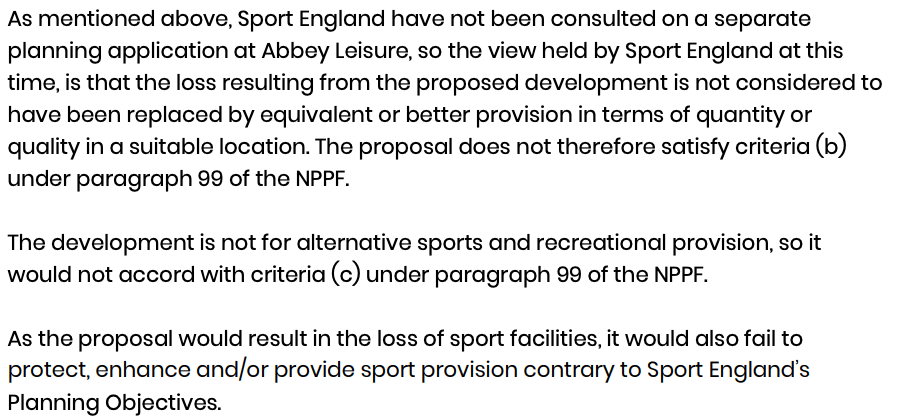
Above – Sport England’s objection
Much of the opposition so far seems to be on the grounds of over-development / trying to put too many homes onto too small a site. People are understandably raising concerns about already over-burdened public services such as doctors and dentists – both of which like buses are completely outside of local government control.
Which brings us back to the challenge of how the UK runs its cities. Both of these are symptoms of an over-centralised state with local institutions stuck in silos created by central government and having reporting mechanisms hotwired to Whitehall rather than to their local communities.
For those of you who want a crash course in local government finances before, during, and after the Poll Tax, this came through recently, (digitised here) published 30 years ago, and is about as readable a document as you will find on where councils get their funds from.


Above – The LGIU Guide to Local Government Finance (1993)
Happy reading!
If you are interested in the longer term future of Cambridge, and on what happens at the local democracy meetings where decisions are made, feel free to:
- Follow me on Twitter
- Like my Facebook page
- Consider a small donation to help fund my continued research and reporting on local democracy in and around Cambridge.

 The Cambridge Town Owl