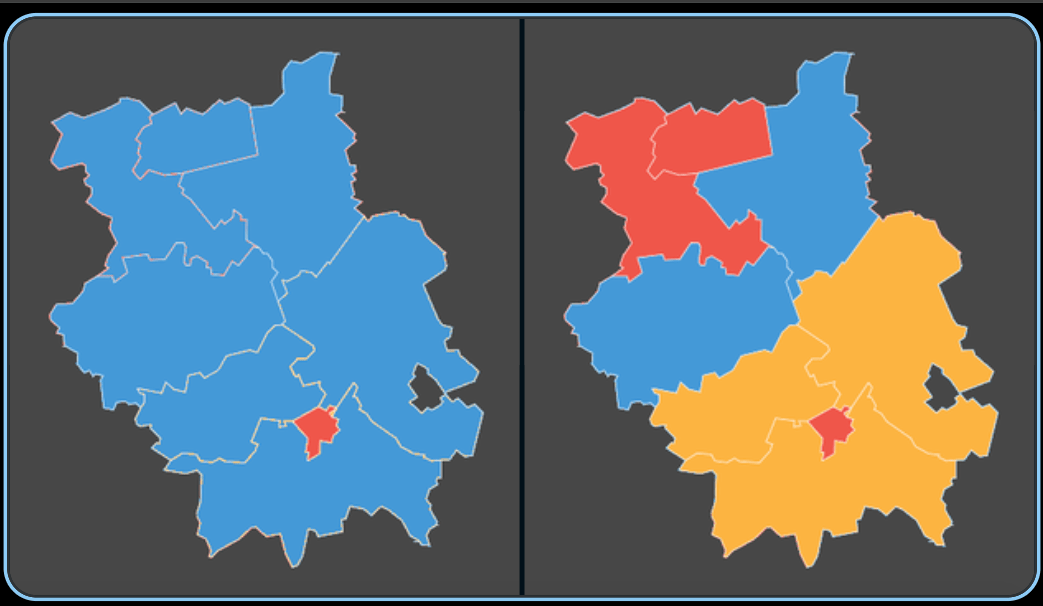
Only the local government calendar of meetings starts up again as the new MPs head down to Westminster
The first set of senior ministerial appointments have been made – see the announcement here. Further ministerial appointments are due in the next 48 hours, one of which is likely to see Cambridge MP Daniel Zeichner step into the ministerial role at DeFRA that he spent the past few year shadowing, as Minister for Food, Fisheries, and Farming. One theme of Sir Keir Starmer’s appointments is to have his new ministers stepping into the roles that they have shadowed in recent years. And if you’ve not browsed it yet, Labour’s 2024 Manifesto is here. Any legislation tabled in Parliament that delivers on a manifesto commitment cannot be blocked by the House of Lords.
The ones to look out for as far as the future of Cambridgeshire is concerned are:
- Jim McMahon OBE MP as a Minister of State in the Department for Levelling Up, Housing and Communities
- Matthew Pennycook MP as a Minister of State in the Department for Levelling Up, Housing and Communities
We will find out this week what policy responsibilities each minister has, but the early announcement of the new Ministers of State (the mid-ranking level of ministers who have a stronger policy focus vs Cabinet Ministers that focus on big picture strategy) sends a signal that these are important policy areas for the new government.
A look at the councils’ calendars – important given the full council meetings coming up
Mayor Nik Johnson will be meeting with the Prime Minister Sir Keir Starmer on Tuesday, so one of the most important tasks for him is to schedule a follow-up meeting with local council leaders and chief executives to give them a sense of what the new government will expect from them, and also what they can expect in return from ministers. The calendars are as follows:
- Cambridge City Council
- South Cambridgeshire District Council
- East Cambridgeshire District Council
- Huntingdonshire District Council
- Fenland District Council
- Peterborough City Council (with the PCC)
- Cambridgeshire County Council (with the GCP)
- Cambridgeshire & Peterborough Combined Authority
In Cambridge there are the proposals to overhaul the model of area committees which I wrote about here that are coming up for debate this week. Both Cambridge City Council and South Cambridgeshire District Council have their full council meetings on 18th July 2024.
Cambridgeshire County Council’s full council is on 16 July 2024 – we await to hear when the postponed GCP meetings will take place. Not least given that the GCP was a huge issue in the elections for the St Neots & Mid-Cambs seat, and the revamped South Cambs seat. It will be interesting to see what both Dr Ian Sollom (Lib Dems – SNMC) and Pippa Heylings (LibDems – South Cambs) have to say now that the pressure of elections is now off – replaced by the even greater pressure and scrutiny of being holders of elected national public office.
Note that neither MP will have any decision-making role. As opposition MPs their role is in the legislature, not the executive. Don’t write to them demanding that they ‘stop the busway personally’ because they do not have the legal powers to actually do that. Their roles will be about influencing and not instructing. (Constituents can however ask the new MPs to write to the ministers responsible and ask what their new policies are – for example on the existence of the Greater Cambridge Partnership). At the same time, they will also have an important role scrutinising ministers – including the ability to request meetings with ministers on local issues (requests which for non-party-political issues are often granted in normal times) on the issues around development that will inevitably arise.
The future of local government.
Phil Rodgers posted this thread earlier. It follows from the motion passed by Cambridge City Council on creating a unitary council which I wrote about here. It will be interesting to see how this progresses – and what the new MPs surrounding Cambridge make of any proposals that come forward.
Note that Cambridgeshire County Council has its own full council elections in 10 months time alongside that of the Mayoralty of the Combined Authority. I hope the main political parties will have firm policies on the future of local government in Cambridge (irrespective of what they are) so that the public has a clear choice to make. Part of that process in my view has to involve public outreach activities that help inform the public about the essentials of local government in Cambridgeshire so that they can make an informed decision based on their understanding of the top-line evidence. i.e. so they can articulate what they are in favour of and why. With that in mind, there is some background reading on the challenges North Yorkshire faced here before they became a unitary council.
That all said, one of the things (which I’ll save for a new post) that the Government might want to prioritise for local government in England is simply getting the basics right. The most visible way they can do this in the short-medium term is to focus on enforcement and maintenance. Enforcement where it seems like existing laws don’t exist that cause irritation in residential areas, along with things like repairing bus stops, pot holes, and street lamps. It won’t grab the headlines, but people are more likely to notice the change given the state of our built environment today. The question is whether minister can and will provide the extra funding needed for councils given the grim state of local government finances.
If you are interested in the longer term future of Cambridge, and on what happens at the local democracy meetings where decisions are made, feel free to:
- Follow me on Twitter
- Like my Facebook page
- Consider a small donation to help fund my continued research and reporting on local democracy in and around Cambridge.
Below – The Case for Cambridge. What’s going to happen to this? Something the new MPs will have to ask ministers about.


