
The October issue of BBC Science Focus Magazine (which I got from the shop formerly known as WH Smith) leads with an item on ADHD
This follows on from my earlier blogpost here and is sort of for anyone who I have infodumped on. I.e. where someone has had a conversation with me and they have come away with their brain ***completely frazzled*** by the experience.
Before I start, have a look through your choice of music player/streamer and see how many hits you get after typing in the song title ‘ADHD’ Only I got ***all of these*** below on iTunes. (I don’t like streaming in principle because the artist doesn’t get anything meaningful in return).

Compare this trio
- ADHD by Jonas Game from 2007 – one of the first with that title (28,000 plays on YT)
- ADHD by Mae Stephens from 2024 – which has had over 175,000 plays on YT.
- This AI-generated number – which sounds like a primary school number.
The number of songs along indicates something is changing in social culture on all things neurodiversity
In a blogpost, infodumping looks a bit like the second half of this post. But when your ‘brain radio’ won’t switch off it’s impossible to fall asleep. Which also explains why I never really took to things like Yoga – I simply could not switch off.
“That’s a lot of ideas – at 3am!”
I’m not the only one.
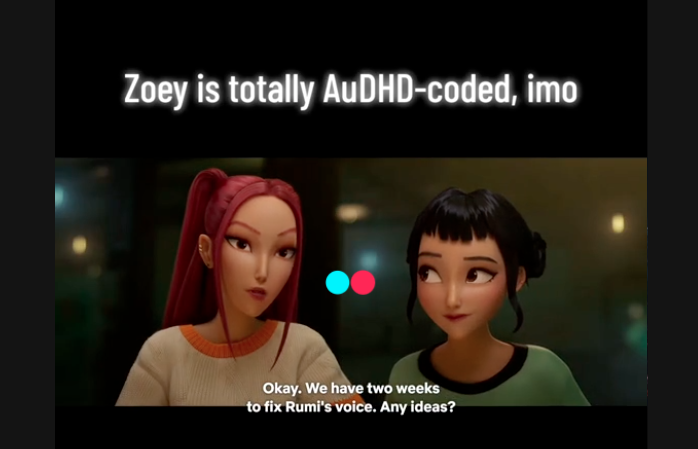
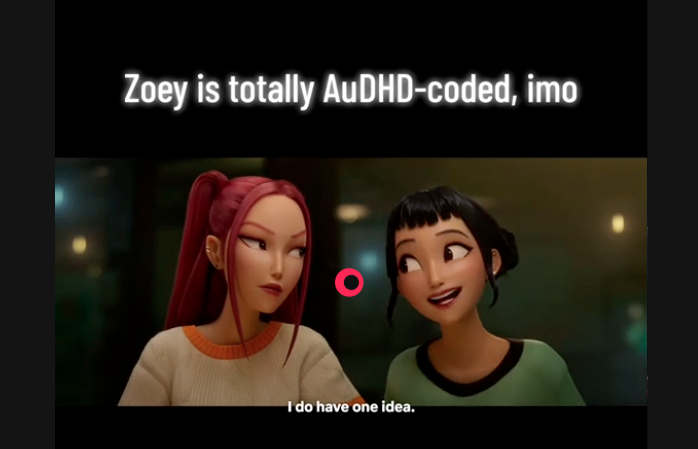

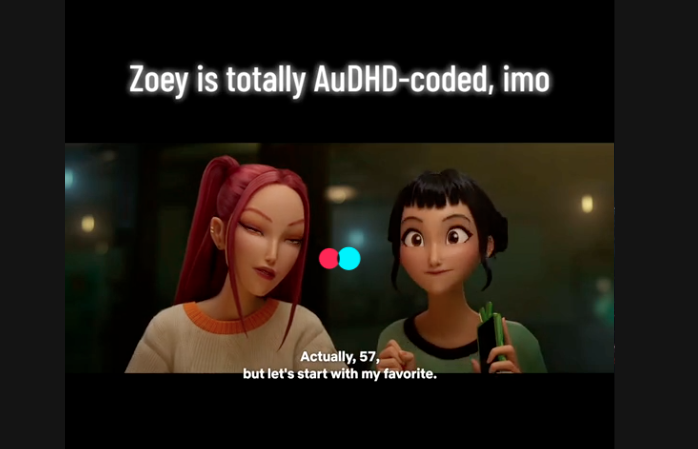
“It’s not a disorder combo — it’s a unique neurotype. Recognizing AuDHD helps tailor support and celebrate how complex and capable neurodivergent brains really are”
Above – On Zoey being an example of neurodiverse representation in popular culture
“That video about 700 turtles video line? It’s not random. That’s info-dumping! Where neurodiverse people share *everything* about their special interest because they assume everyone finds it as fascinating as they do!”
Above – Kpop Demon Hunters: Zoey’s ‘Quirks’ are Actually Autism and ADHD!
And picking out those three videos one after another is in itself a form of info-dumping. (Especially after having posted a blogpost all about Cambridge’s local plan – the I think my fifth blogpost on the same subject! Which is an example of hyperfocusing).
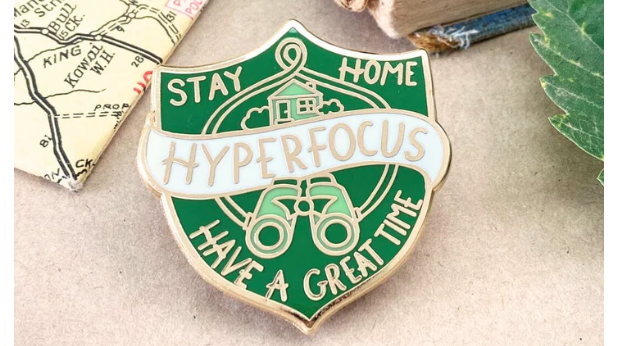
Above – Tasha from Jubly-Umph in Australia has even made some badges for us. (Look further and you’ll see many creatives have done similar
“So…why the massive spike in referrals and diagnoses?”
We still don’t have the right language to describe what it is and what is happening on all things neurodiversity. For example.
- A – Attention
- D – Deficit
- H – Hyperactivity
- D – Disorder
A phrase coined in the 1980s evolving from ADD – Attention Deficit Disorder, the latest research shows us that it is neither a deficit (turns out it’s an over-abundance of sensory inputs that our brains cannot cope with – eg the ‘radio that is always on’) and it’s not a disorder to be cured, but rather a ‘disposition’ because it just happens to be the way we are. You might say someone is of a nervous or anxious disposition. Others might be of a fearless disposition.
One recent feature on BBC’s This Morning involved author Leanne Maskell who wrote:
*How the evidence shows ADHD is real – and why it’s not a ‘Deficit’*
You can watch the clip on BBCiPlayer from 14m20s here
The most striking part was where the journalist Zara McDermott and Ms Maskell took part in an experiment measuring their brains’ activity. The differences between the two when their eyes were closed, as measured by an Electroencephalogram (EEG)
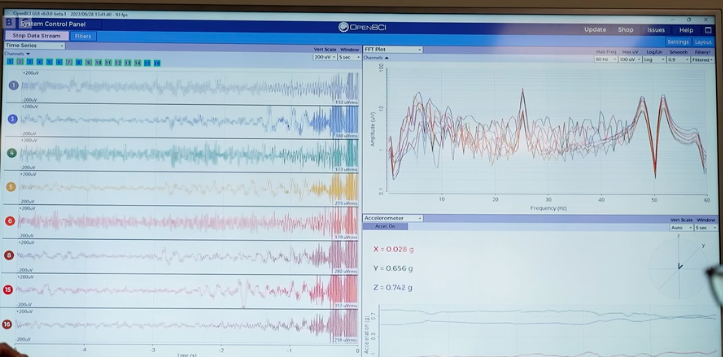
Above – Zara McDermott’s baseline scan results with eyes closed

Above – Leanne Maskell’s baseline scan results with eyes closed
Both are screengrabs of the BBC Good Morning feature
Dr Benjamin T. Sharpe, PhD, Director of the Human Attention Laboratory interpreted the results and said that Ms Maskell’s results could well reflect why her and other neurodiverse people struggle to get to sleep at night.
When it came to eye-movement while scrolling on a mobile phone, Ms Maskell’s eye movement did not stay on the screen unlike Ms McDermotts, which did.
“With ADHD Leanne’s brain can it can take longer to focus on one task, and with so much high stimulation on screen she is constantly searching for the next thing to engage with, which means it can become addictive”
Above – Zara McDermott for BBC This Morning, 28 Oct 2025
Think of it like this: How in the world are you meant to concentrate on ***anything*** when your brain’s activity pattern looks something like this?!?

Above – Leanne Maskell’s EEG scan during the mobile phone scrolling test – which looks similar to when at rest with her eyes closed.
“If you have ADHD, your brain is chasing dopamine already, so it’s not surprising that this type of short video content is the most engaging and addictive content format, especially for a brain that is already seeking stimulation.”
Above – Leanne Maskell to the University of Chichester, 28 Oct 2025
“The Human Attention Laboratory at the University of Chichester explores the fascinating world of human cognition, particularly how we maintain focus in an increasingly distracted world. Dr Sharpe’s research has a particular focus on sustained attention, but topics include stress and coping and cognitive impairment.”
“Just even looking at those EEG scan charts is visually exhausting”
That’s quite literally AuDHD – Autism + ADHD on the brain – something neuroscientists are still discovering more things about. Furthermore, as Ms Maskell states:
“Essentially, ADHD is not a deficit of attention – but a challenge with regulating it.”
And if my own EEG scan looks anything like that, I would not know where to start.
Living through a discovery process that changes and even overturns the way we think about something that affects so many
I was diagnosed with General Anxiety Disorder in…the year 2001 – when I started having panic attack symptoms at University. In hindsight, so many of the issues that I have today could have been avoided by a more competent institution that ensured there was enough suitable housing and accommodation to go around for everyone. Different people deal with housing crises in different ways. The mindset at the time was that this was simply a part of ‘adulting’ at a time when post-Thatcher individualism was very much the culture of the era.
What we now appreciate with the chronic housing crisis of the 2020s is that so many health and social problems have their root causes in poor housing. In the case of students in higher education, my experience was that the instability caused by poorly-located, poorly designed, and insufficient housing meant that I was not able to take advantage of opportunities that being at university should have provided.
That then makes me wonder what the longer term impact the self-created student housing crises has both on students when they grow older, and on the institutions themselves. Why would a former student want to ‘give something back’ to their ‘alma mater’ especially in an era of high tuition fees given such distressing experiences that could have been avoided?
From General Anxiety to Neurodiversity
Not surprisingly, my IG page is bombarded by all things neurodiversity, and anecdotally it seems to be women who create a lot more content than men (though in recent months I’ve noticed a few more of the latter appearing).

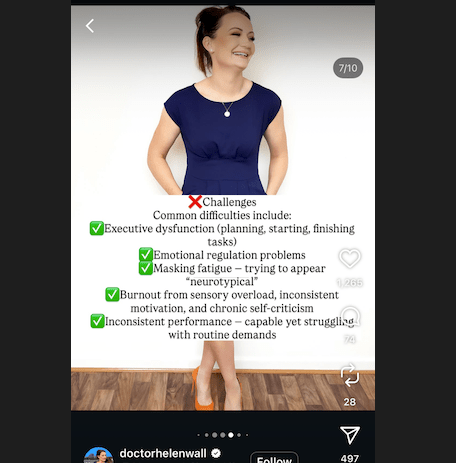
Above-Left – Dr Alison Lennox on the Hidden 20% Podcast. Above-Right – NHS GP Dr Helen Wall on the challenges of AuDHD (Autism with ADHD) on IG.
One of the things I often do when doom-scrolling is screen-grabbing anything that I think might be useful to refer back to or write about in a future blogpost. This was one case by TheUrbanPonyTail who as a late-diagnosed AuDHDer posts a lot of content on this and who popped up in my IGfeed recently. It was her words about Grief – grieving for the life I could have had but never had because had I known, I would have taken some very different life decisions to the ones I ended up taking.

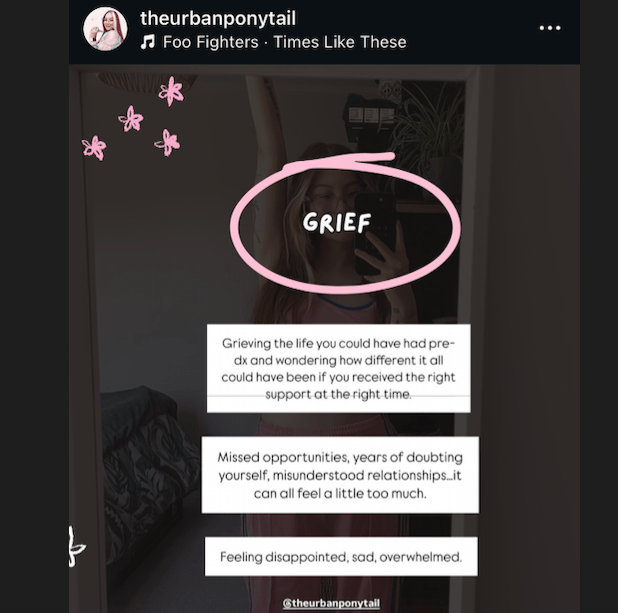
Above – Theurbanponytail on grief and AuDHD

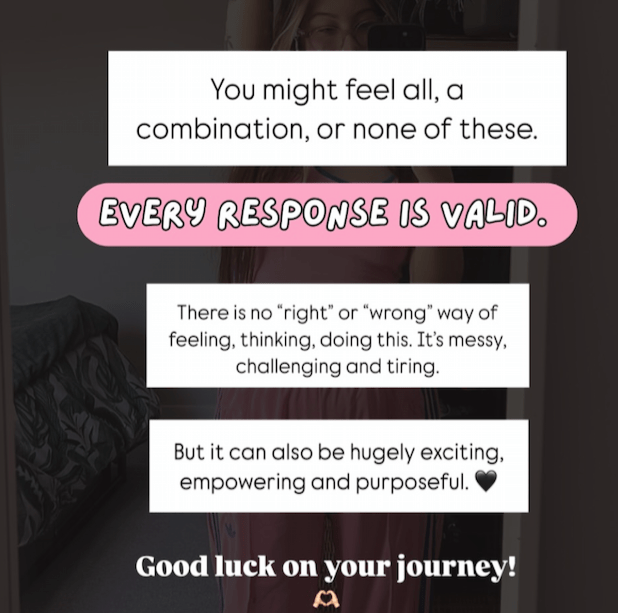
Above – “Why didn’t anyone catch this sooner?” And the importance of third parties saying that every emotional response to the pain is valid
I remember my former, now retired GP telling me following a depression diagnosis a quarter of a century ago that there had been a generational shift socially in recent decades – from where a doctor would prescribe a course of medication for a couple of weeks and you would get better. And that would be that. And that was pretty much childhood for me give or take a broken arm from playing football on concrete as a 12 year old.
Which is one of the reasons why another IG post – from Neurotribe below, resonated with me
“If you were born in the 80s or 90s, you probably spent half your life feeling like something was different – you just didn’t have the words for it. You grew up before the language of ADHD and autism reached the mainstream, when “too sensitive,” “lazy,” or “distracted” were labels given instead of understanding. You learned to mask before anyone called it that, to push through noise, confusion, and burnout because that’s what everyone else seemed to do.
“You were the generation that built its own bridges – between a quiet, slower childhood and an overstimulating, always-on world. Between hiding your differences and finally learning to name them. You watched the internet arrive, bringing connection and chaos in equal measure. You went from fidgeting under classroom lights to scrolling endlessly under blue ones, always trying to find calm in a world that keeps speeding up.
“Now, the younger ones are getting words, support, and community you never had – and you’re both proud and grieving. Proud that things are changing. Grieving for the version of you who needed it, too.“
Above – Neurotribe 14 Oct 2025
If you are interested in the longer term future of Cambridge, and on what happens at the local democracy meetings where decisions are made, feel free to:
- Consider a small donation to help fund my continued research and reporting on local democracy in and around Cambridge
- Follow me on BSky
- Spot me on LinkedIn
- Like my Facebook page

 The Cambridge Town Owl