The emerging Local Plan that goes out to consultation in December has a number of sections on things that our city and county lack – things that should have been provided for in previous rounds of expansion but were not.
A quick reminder for the two free public workshops in Cambridge that I’m running which are coming up soon
- Sat 15 Nov 2025, 11am-1pm. Rock Road Library, Cambridge
- Sat 22 Nov 2025, 11am-1pm, Cherry Hinton Library and Hub, Cambridge
Click on the links above to sign up. (It helps with working out things like chairs and materials needed)
The huge pack of documents is at https://consultations.greatercambridgeplanning.org/draft-greater-cambridge-local-plan-scrutiny-committee-pack/greater-cambridge-local-plan-scrutiny and in this blogpost the issues being highlighted are on what our growing city and surrounding villages need.
One of the monster documents from earlier rounds is the 849-page development strategy of 2021
You can read it here and see what the proposed settlement hierarchy is (i.e. the ranking of settlements by population size, followed by their categorisation which should indicate what sort of facilities they should have).

Above – GCSP Development Strategy (2021) p276
This settlement hierarchy was considered recently in this 2025 paper
One of the interesting maps to consider – one that has a significant impact on the day-to-day lives of a significant number of residents, are the locations of our state secondary schools.
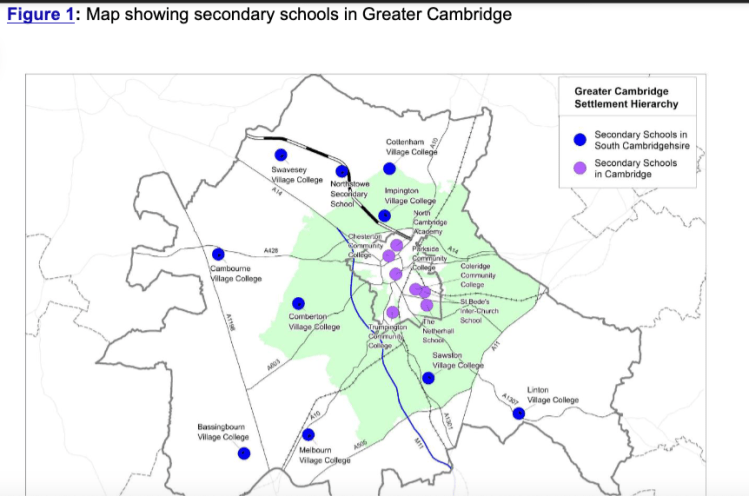
The locations and accessibility of our secondary schools – especially on foot and by active travel indirectly impact on things like school run motor traffic to the physical health of children and teenagers.
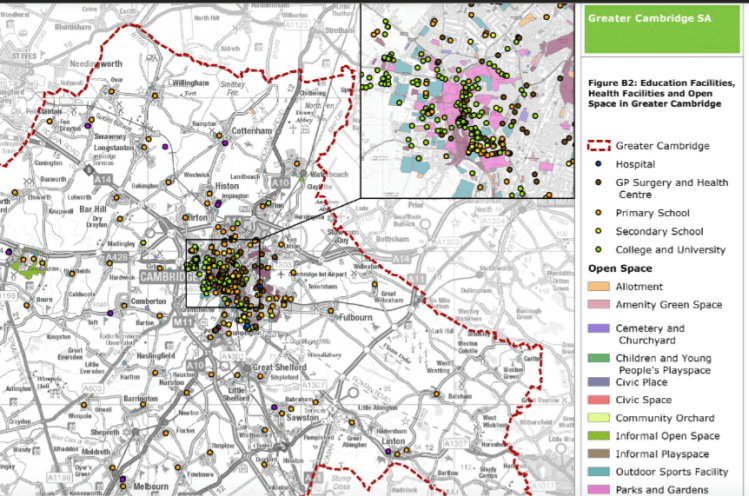
Above – from one of the early 2021 papers on schools, hospitals, and GP surgeries.
Wellbeing and social inclusion
I’m particularly interested in this paper – and the section from p32 below
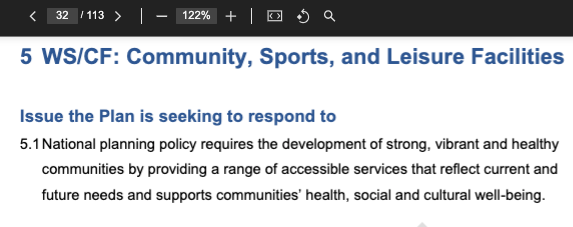
Above: “Policy WS/CF: Community Sports and Leisure Facilities”
That paper really needs scrutinising by more people. It says that the issue the plan is seeking to respond to is…a national planning policy requirement. Understandable but depressing as it doesn’t include evidence bases demonstrating *local need AND local demand*.
“National planning policy requires the development of strong, vibrant and healthy communities by providing a range of accessible services that reflect current and future needs and supports communities’ health, social, and cultural wellbeing”
So by the end of this local planning period (2045) there should be enough evidence showing an achievement of the above? (How does this work with evaluating previous local plans?)
The problem I have with the Wellbeing and Social Inclusion Paper is it shows the huge failure of the GCSP Service and consultant firms to get meaningful input from the general public
Only one person is recorded as commenting on the need for a new swimming pool
This indicates (to me at least) that the planners, council officers, and councillors really need to make an effort to highlight the things that will attract the attention of, and inspire the participation of the general public – perhaps producing different briefing documents for different interest groups. For example:
- Participate in indoor sports? Want more indoor sporting facilities? Read this briefing on what parts to read, and on how to respond.
- Participate in outdoor sports?
- Do you visit museums/art galleries/heritage sites?
- Do you visit the theatre, musical performances, and performing arts venues?
One of my (many) concerns is that if I can’t find the information on things that are likely to interest other people and groups – eg community facilities, what hope does everyone else have? (i.e. people with better things to do in their lives than scrutinise local planning documents like they own the place!)
For those of you coming to the workshops, feel free to bring along print outs of things that you’ve spotted that you think will be of interest in discussing.
If you are interested in the longer term future of Cambridge, and on what happens at the local democracy meetings where decisions are made, feel free to:
- Follow me on BSky
- Spot me on LinkedIn
- Like my Facebook page
- Consider a small donation to help fund my continued research and reporting on local democracy in and around Cambridge

 The Cambridge Town Owl