Bringing in such processes would probably require a change in the law – and a huge culture change in the architecture profession and the construction industry more generally. But they could result in a significant improvement in our built environment so far as human and environmental health are concerned
This post by Dr Amalia Verzola appeared in my stream – coinciding with similar posts from various people on IG from architectural backgrounds exploring new concepts. One of the things I’m struggling to connect are the interesting ideas coming from individuals doing pioneering work in their fields vs what’s actually happening on the ground in the places where we live and work.
This post also covers comments by Dr Holly Smith of the University of Cambridge who I met at the CRASSH Urban Histories evening where she told the audience about how she incorporated Kenneth Robinson’s highly-opinionated take on the architecture of Cambridge in 1964 – which I wrote about in Lost Cambridge back in 2019. If I tried similar for today, It’d probably be more like one of the appearances of David Baddiel in Spitting Image in the early 1990s where he went around various places and declaring them to be “Crap.”
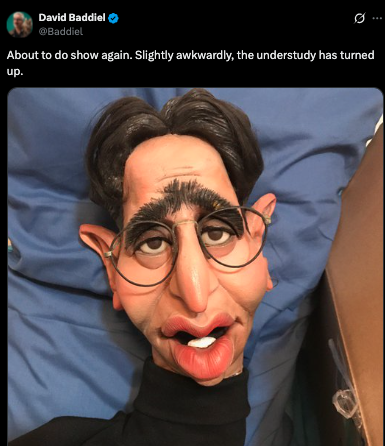
Above – David Baddiel’s old spitting image puppet from the man himself.
“So this is what they call ‘Cambridge Vernacular’ is it? ***It’s Crap!***”
Or what his puppet might have said if presented with the CGI below.

Above – the Kett House Karbuncle monstrosity proposed by Bennett Associates.
“There are serious problems with this application. Despite all the discussions andconsultations the applicant is clearly seeking to sweep aside as irrelevant, Policies 55,56, 57, 59, 60 and 61. They being, all the those relating to Protecting and Enhancing theCharacter of Cambridge”
Above – Cllr Richard Robertson (Lab – Petersfield) responding to the application
(Whatever your views of this application are (See the GCSP Portal here and search Ref: 25/04039/FUL. It’s for “Demolition of the existing building and structures, erection of an office building” on the corner of Station Road and Hills Road”), submit your comments via the portal following the guidance here, )
Emotional mapping and higher-density housing
Dr Smith has written a book on the history of high-rise housing in Britain, which you can buy from the publishers Verso Books. What’s interesting about her research is she’s not afraid to go after the politics. One of the things I’ve often found in some fields of academia is a reluctance to address Politics (big P) – perhaps in the same way that the academic communities *within* the city of Cambridge outside of the big institutional decision makers in executive positions tend not to get involved in the debates on the future of our city. It has only been in recent years that I’ve seen students – in particular the undergraduates – willing to hold their colleges and universities (we have Anglia Ruskin University whose roots go back to 1859 in our city) to account for the decisions their institutions take. (See Cambridge Defend Education calling for housing justice in the city back in 2018)
Dr Smith’s current research that she also mentioned in her comments is on The Community Architecture Movement which I had not heard of until she had mentioned it. It’s a movement that dates back to the 1970s in response to the first generation of post-war housing estates and the problems residents had with them – the movement demanding involvement in the designs. And as the Architects’ Journal’s Sustainability Editor asks, can the current revival be made into something more permanent?
“It’s not yet a groundswell. But in these uncertain times, it is heartening to see so many practitioners promoting a just transition. What was branded ‘Community Architecture’ in the 1990s has come full-circle. Hand-made slide shows may have been replaced by apps and Tiktok videos, but the thrust is similar. This time, I hope it is here to stay.”
Above – Hattie Hartman in “Community architecture is back. Is this part of the ‘90s revival or something more permanent?” AJ 25 Feb 2025
The reason why this matters for Cambridge should be obvious: with the Minister for Housing stating that the Government’s policy is for the turbo-charged growth of the city, there is a massive risk that the new housing estates and new towns will be imposed with only token consultation with residents.
It comes as no surprise that a number of developers have already got their speculative housing designs lined up in expensive corporate brochures
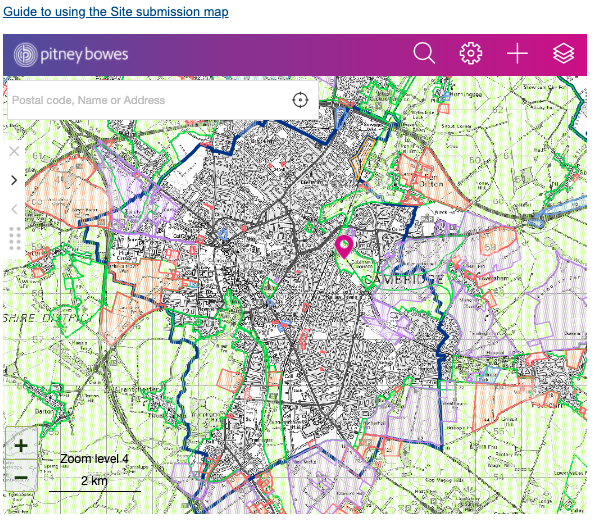
Above – Submissions from developers to the Greater Cambridge Planning Service, 2021
The brochures are all buried in the GCSP database and they keep on changing the URL which is annoying. (Hence why I saved lots of local copies so as not to rely on them!)
One of the grim examples is from Commercial Estates with proposals on the edge of my childhood neighbourhood. You can browse through their ‘supporting evidence’ here
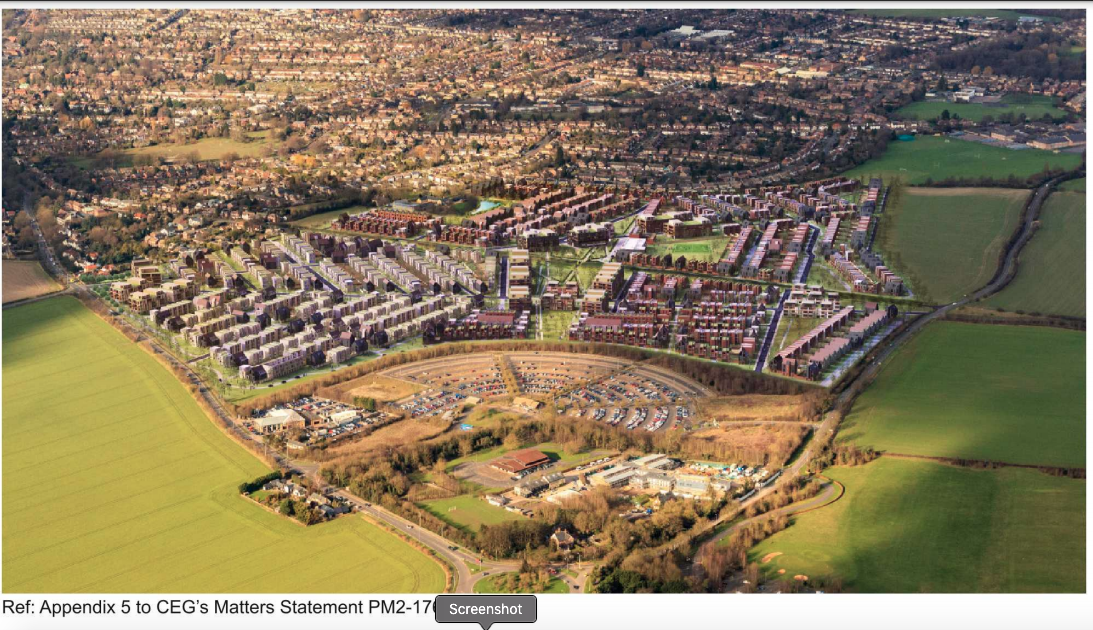
Above – bland boxy identikit homes west of the Babraham Road Park & Ride, CEG (2020) to the GCSP Response to call for sites.
They made a similar bid in the previous local planning around and I dare say that should this one be refused and not included in the Cambridge Growth Company’s plans, they will be back again – because that’s the timeframe institutions work at.
Emotional Mapping – and how the results could and should influence future plans (and protect us from repeating past mistakes
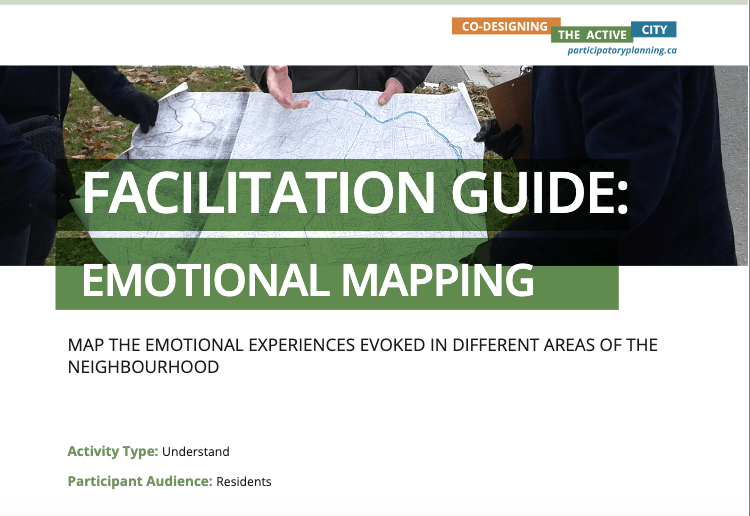
The emotional mapping guide mentioned by Dr Verzola was this one. It’s something that teachers, youth group leaders and adults more generally can take groups of people (including and especially children & young people) to carry out this exercise where they live.
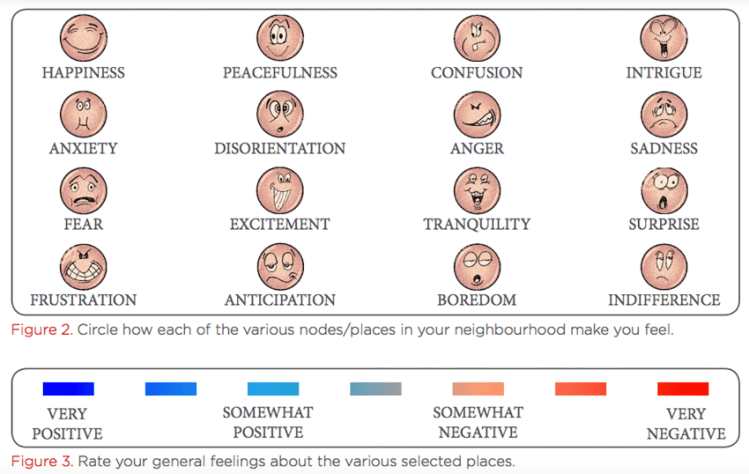
Above – what would a map of your neighbourhood look like through an emotional mapping lens?
This is from Canada’s Participatory Planning toolkit here – there are ***lots*** of other useful things in it.
Emotional Mapping Cambridge – 1996
My teenage memories of 1990s Cambridge are not great. I’ve only really started to process some of the really big things due to the more recent discoveries in neuroscience and neurodiversity. I wrote more about it in response to a piece by Grace Blakeley about ‘the deal’ politicians and institutions sold my generation that they never delivered on – and its impact.
What I now know is that I hyperfocussed like an expert on what were my cohort’s first public exams – the GCSEs. My mindset was that my and my friends at a very large secondary school in the city were being schooled in crumbling buildings, forced to be in classes with people who didn’t want to be there and just making things miserable for everyone. And that the GCSEs would separate ‘the good from the bad’, and the latter would go off to one part of town while we would head towards the town centre and everything would be great.
The emotional mapping? This excerpt from my manuscript diary from nearly 30 years ago

Above – 29-and-a-half years ago. Crikey!
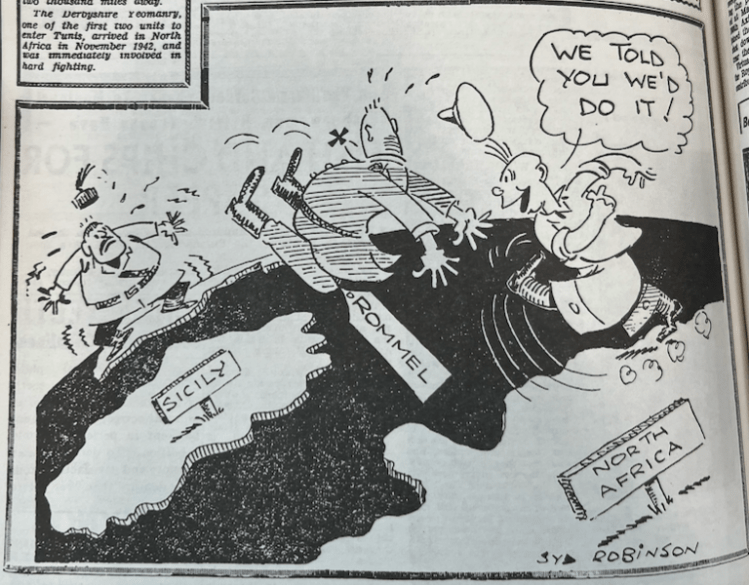
Above – what my sketch from 1996 was based on – The War Illustrated. Axis powers kicked out of North Africa
In a nutshell it’s basically a sketch of me kicking a racist school bully ‘back’ into the neighbourhood of Cherry Hinton – one which as a child my late grandfather used to take me on cyclerides through before I started secondary school. It was after I started secondary school that I stopped going through that part of town – hence the fence and barbed wire depicting it as a ‘no go zone’ – and the quaking figure at the back being an unknown gang leader mirroring the the Italian Dictator overthrown in 1943.
Which reveals its origins – it’s actually based on a wartime cartoon from when General Montgomery ejected General Rommel from North Africa after three years of brutal desert warfare – I sketched it at a time when I stayed at my grandparents during the exams to get some peace and quiet. My late grandfather was a WWII veteran.
*We don’t really go into town anymore. Bad vibes, bad people*
What would a large scale emotionally-mapping exercise of Cambridge undertaken by teenagers and young adults reveal about our city today?
Because compared to what things were like in the late 1990s, the city centre is dead. And that’s worrying. (I wrote more about it in June 2025 here)
When speaking to one of the college leavers recently at my local, she told me some hard truths about the town centre. Furthermore, she told me it was ever so difficult for teenagers to find jobs because everyone asks for experience. The appearance of self-checkouts has taken away so many entry-level jobs that are essential for easing school leavers into the adult world. Furthermore there are a critical mass of customers who *prefer* using a staffed checkout – something that one chain in The Netherlands picked up on a few years ago. No part-time jobs for teenagers in further education, no disposable income to spend in the local economy. Instead the money goes on the electricity bill and to the company and extracted from local economies and communities.
What really saddened me was her comments about the risk of being a victim of crime. Again this resonates because going into my late-teens one of the things I was very risk-averse to was violence. And in the one of the few talks from public service figures we had at school in Year 11 was from a police officer who told us that the cohort of people most likely to be victims of crime was the age group 17-25. The problem was he didn’t really say much about how to reduce the risks or how to respond when faced with an incident. Hence many moons later I asked Cambridge City Council about them funding Active Bystander Training at their Environment and Community Scrutiny Committee meeting in March 2023. (You can see the council’s response in the public questions item in the minutes here). That sparked off a pilot funded by the council and ultimately led to things like the Active Bystander Training workshop on 24 Jan 2026 at Cambridge Central Library which you can sign up for here.
A city viewed through the eyes of its children and young people
There is more research coming out in this field – and perhaps more importantly, more activity templates for children to use themselves whether at school, in youth groups and beyond.
“Working with artists Andy Field and Beckie Darlington the Book of Cambridge project has empowered local children to describe Cambridge in their own words, exploring both real and imagined versions of the city.”
Above – The Book of Cambridge at The Junction – 2025
It’s not as if the children and young people are not telling us that some things in our city have gone badly wrong. One group of youth panellists in October 2024 told one conference I was at some sobering home truths about the lack of democracy education. If they’re not even taught the basics of our democracy, what hope do they have in participating in town planning and community architecture? This is something I picked up in an earlier blogpost that is also a huge gap in adult education and lifelong learning.
As things stand, the institutional structures on lifelong learning remains tightly controlled by HM Treasury to the extent that the only things being prioritised are vocational and basic skills courses. The Cambridgeshire & Peterborough Combined Authority has stated repeatedly (despite my pestering) that they have such little discretionary funding and no real independent revenue-raising powers that their adult education and skills offer is whatever ministers tell them it is. Which makes the CPCA little more than a delivery instrument of Whitehall (where the real policy decisions are made) and meaning that CPCA Committee meetings are little more than rubber-stamping commissioning and procurement exercises.
Hence participatory architecture needs real devolution to local government, and things like emotional mapping also need better resourced school co-ordinating with local government along with residents being able to spend more time doing things in their communities rather than being burdened with long hours on low pay, or stuck in long commutes.
If you are interested in the longer term future of Cambridge, and on what happens at the local democracy meetings where decisions are made, feel free to:
- Follow me on BSky
- Spot me on LinkedIn
- Like my Facebook page
- Consider a small donation to help fund my continued research and reporting on local democracy in and around Cambridge

 The Cambridge Town Owl