And none of them account for the the needs of the wider city and economic sub-region as a whole – which is why ministers need to strengthen local councils and combined authorities to push back against the financiers most likely to profit handsomely from a new generation of housebuilding
I’m posting this to coincide with the oral statement to Parliament by the Minister for Housing and Planning here on the Government’s responses to the consultation on changing the planning system. The changes were summarised in this press release from the Prime Minister and Deputy Prime Minister – the most significant thing for Cambridge being the confirmation that planning services will become cost-recovering via increased planning fees.
On this screengrab below, again from a 2021 blogpost which shows thr refreshed submissions from developers, you can picture how much greater the urban area of Cambridge would be if all of the areas submitted were approved for inclusion in an expanded Cambridge.
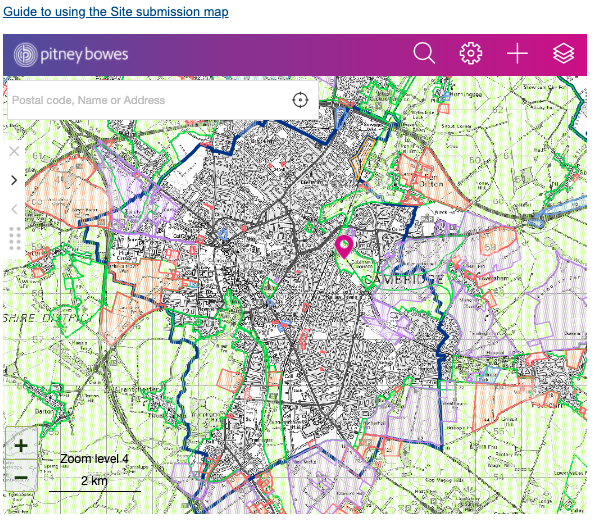
Above – Submissions from developers to the Greater Cambridge Planning Service, 2021
At the time, I went through a number of professionally-produced brochures that were embedded in the submissions to see who was proposing what, and screengrabbed a number of the front pages, which I’ve re-uploaded to give you all an idea of what developers are pushing for.
In this earlier blogpost I created a mini-guide on how to explore the maps showing the bids from developers for inclusion in the next local plan – and most probably bids to any development corporation established by the Secretary of State.
Below: Scroll down
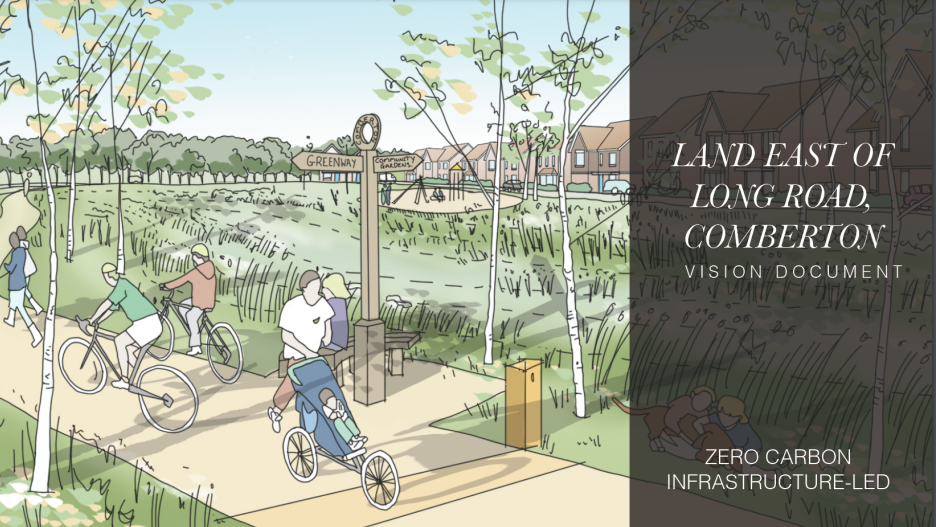
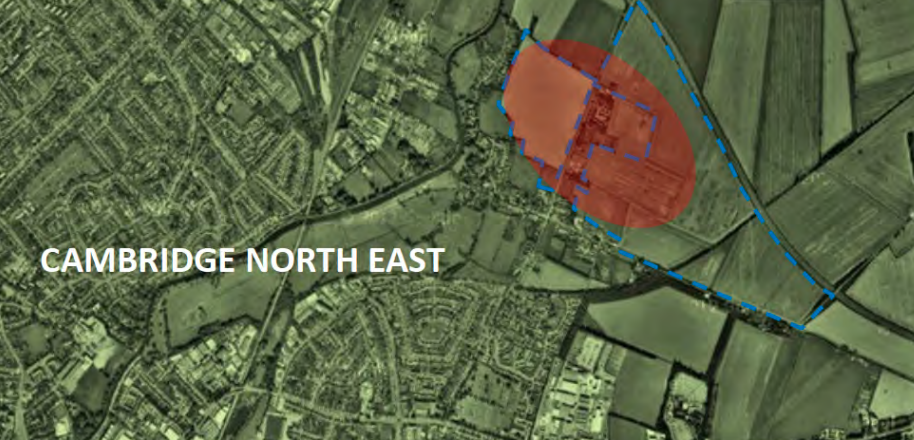
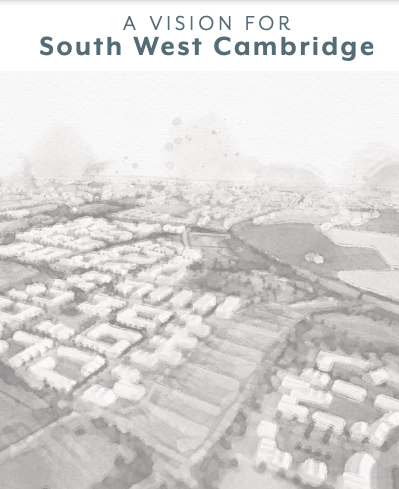
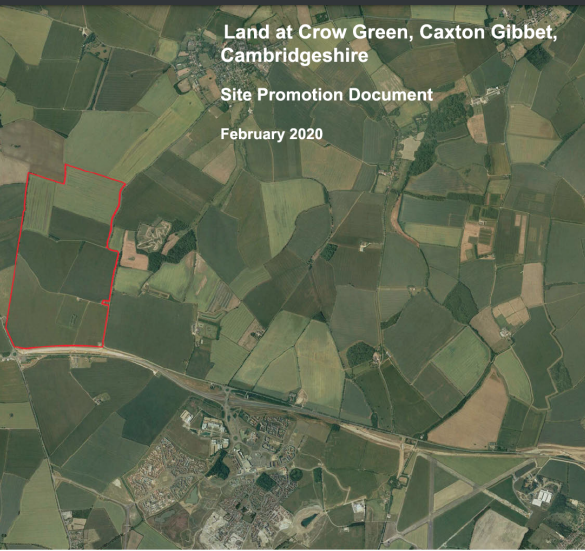
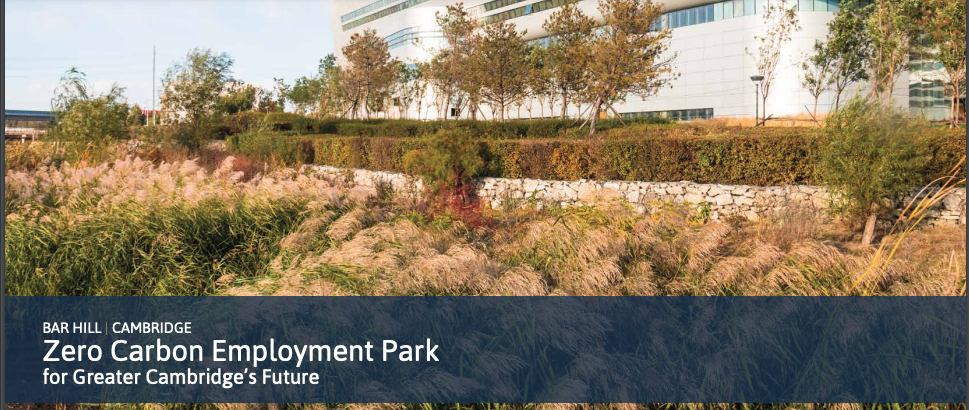
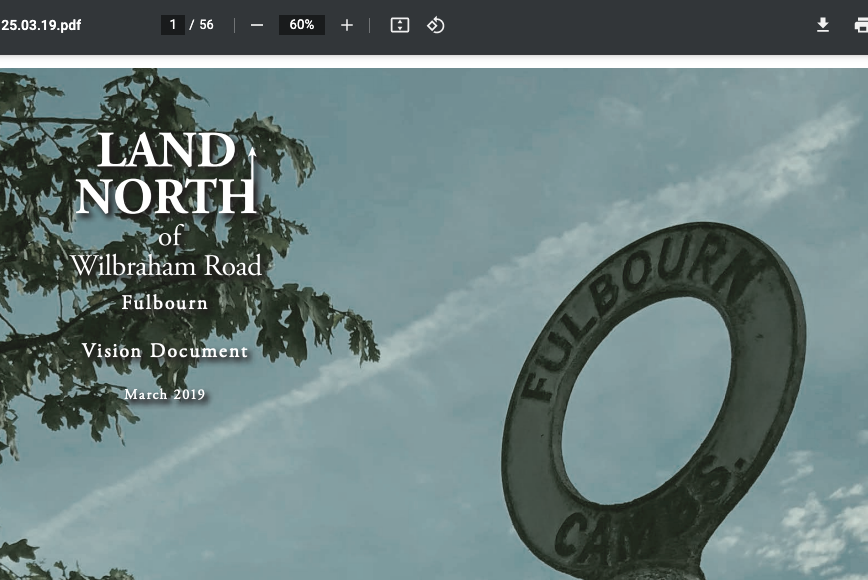
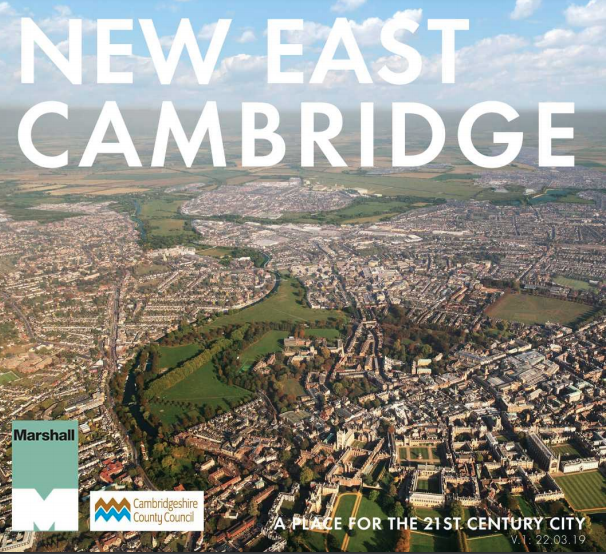
Note that many of these either have been (such as New East Cambridge), or will need refreshing because of changes to the building regulations and also from the fallout of the Grenfell Tower inquiry
Since I wrote the 2021 blogpost, a number of developments have come forward and have been progressed, including:
- The Beehive Centre Redevelopment
- Land South of Coldham’s Lane / Cherry Hinton Innovation / Project Newton
- Cambridge Biomedical Campus 2050
- Cambridge Science Park North
- Cambridge North
- Hartree / Anglian Water Works
- Eddington Future Phases
- North Cambourne
- Cowley Road Crown Estates
- Cambridge East – Airport Redevelopment
Simply summing up the bare minimum of social and community infrastructure that profit-making firms have incorporated in their plans won’t provide Cambridge with nearly enough of what it needs to function as a growing city
Cambridge City Council councillors have said in response to my public questions that they do not envisage a second urban centre for Cambridge, rather instead they see a much more dispersed model of local centres.
Obviously I disagree strongly – not least because by having a second urban centre you can provide the regional level services and benefit from economies of scale that a large transport hub serving such a centre would provide – as I described in this blogpost on the anchor institutions that would secure the longterm sustainability of such a place.
The mistakes Cambridge made with the Grafton Centre were all outside of the direct control of Cambridge City Council, but they were mistakes that need learning from:
- Having a car-fed retail-focused site as the anchor theme with only a couple of prime retailers
- Having a limited cinema offering adjoined to the retail side
- Having no control over the bus services serving the site
Exciting though the expansion of 1995 was at the time (I lived through it as a teenager and The Grafton was the place to go when the cinema section opened), the fruits of Thatcher’s economic and privatisation policies meant that local government ceased to be in control. This made the site vulnerable to decisions made far away from Cambridge including:
- Ownership changes of the Grafton Centre
- Ownership changes of high street brands
- Dependence on the fortunes of Hollywood studios on new releases
- Ruthless cost-cutting by Stagecoach executives
The result as we saw was the buyout of the site by a sci-tech financier taking advantage of the property bubble in the sector – itself an inherent weakness should that bubble burst.
The reduction in direct bus services to the purpose-built bus station off East Road by Stagecoach some 20 years ago completely cut off the critical audience of teenagers and young people from southern Cambridge – in particular the more affluent parts where families had more disposable incomes. The asset stripping of high street brands resulted in tenants such as Mothercare, BHS, and finally Debenhams all shutting up shop.
Hence my call that a second urban centre should have a new municipal council civic hall at its heart, with a new concert hall, a new lifelong learning centre, and a new transport interchange/hub encompassing a new civic square – a new Parker’s Piece if you like.

Above – we’ll need an even bigger civic hall than what Peck and Stephens proposed for Cambridge back in the late 1850s!
Given the boxes currently going up, I’ve said that as an architectural/style theme Cambridge should re-asset the theme of ‘ornate twin towers – whether in the above design, from King’s College Chapel, or in other buildings such as the old Christ Church on Newmarket Road (fortunately still there!) through to the ‘twin sets of chimney pots’ at Addenbrooke’s.
Note also near the end of my recent blogpost here I picked up on the massive cost reductions of stone and stone carving – along with the additional savings on carbon emissions that can be gained from powering robotics using renewables. Compared with brick, iron, and glass, no intense furnaces are needed – nature has already done the hard work. (The challenge as always is finding the raw materials – it goes without saying that quarrying is an incredibly destructive activity irrespective of what you do with the materiel excavated).
Next week we expect the long-delayed Devolution White Paper. Keep an eye out on what the Cambs Unitaries Campaign has to say about this as they are organising a few events for early 2025.
If you are interested in the longer term future of Cambridge, and on what happens at the local democracy meetings where decisions are made, feel free to:
- Follow me on BSky <- A critical mass of public policy people seem to have moved here (and we could do with more local Cambridge/Cambs people on there!)
- Like my Facebook page
- Consider a small donation to help fund my continued research and reporting on local democracy in and around Cambridge.
Below – talking of community conversations about the future of our city, a new cafe has opened within walking distance from where I live, and it’s open on Sundays. I’m pondering setting up an informal fortnightly or monthly afternoon discussions – see my blogpost here