…or the old Cattle Market site for those of you who have been around for longer
Also, it looks like LandSec are going to be selling on their long term lease.
“Whilst we can’t comment on sales processes, we don’t have plans to redevelop Cambridge Leisure Park and the centre will remain open as usual for the foreseeable future.””
LandSec to BBC Cambridgeshire, 30 April 2026
This all follows the proposals in the emerging local plan for the comprehensive redevelopment of the site, which I wrote about back in October 2025 here.
A very colourful mock-up has been put up by the property company instructed to market the site to potential investors – you can browse through the brochure here which I found in the Cambridge Reddit Group here.
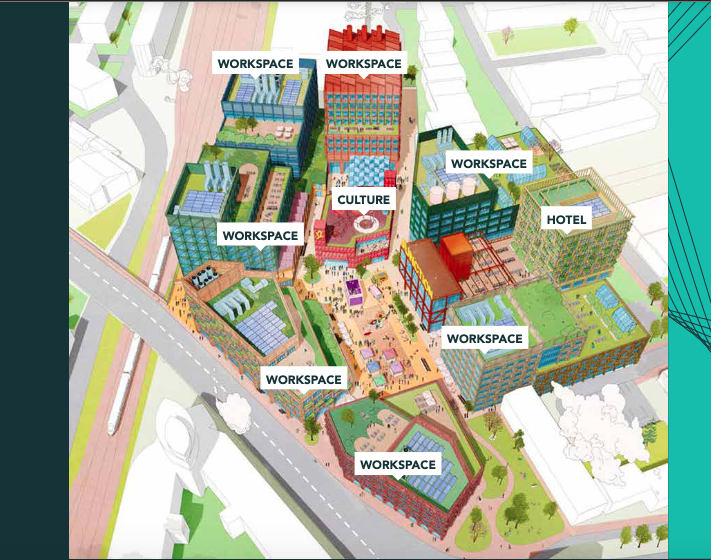
Above – from the brochure. It’s unlikely the final site will look like this
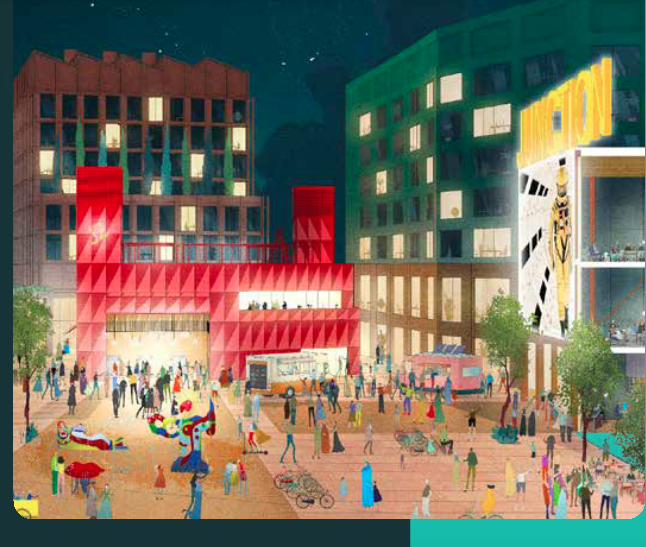
Above – don’t expect to see the pink and red building anytime soon. As for the brown spreadsheet behind it, there are already too many of them!
“Who are they marketing the site to?”
Other than a wider international institutional market only interested in the returns – only that was what LandSec went for when deciding on a strategy that targeted branded national franchises that resulted in a facility that in my view did not meet its potential despite having so many positive things going for it.
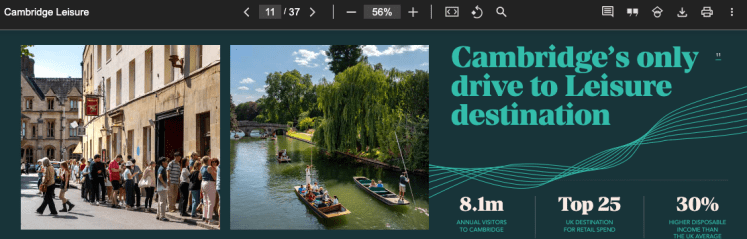
Above – the chronic traffic problems in the area makes the above-statement combined with pictures that are ***ages away*** from the site somewhat puzzling
And if you can’t make a decent financial return from a site that we’re told has a ‘monopolistic position’ in Cambridge…exactly. There’s a research project for someone to work out why LandSec’s tenure as longterm leaseholder has resulted in it marketing the site for sale.
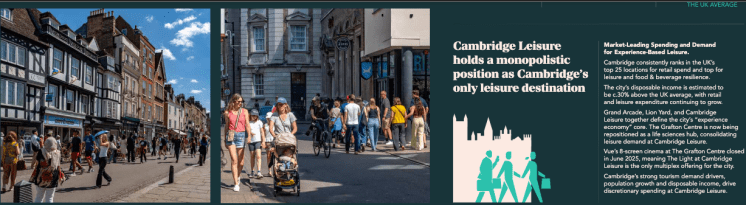
Above – the brochure highlights a higher than average disposable income, but does this hide chronic inequalities within the city?
Not that the narrative is targeting low income families. Which is inconsistent with some of the objectives with The Junction which has a number of projects bringing opportunities to families on low incomes who might otherwise miss out.
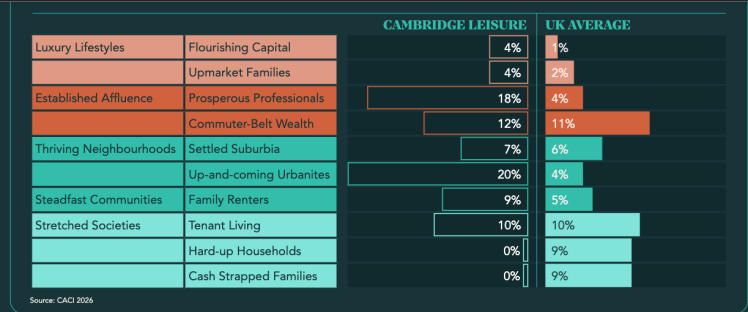
Above – Hard-up Households and Cash Strapped Families are not the target audience
It also sits awkwardly with the aims of the Cambridge Playlaws project that had one of its events outside The Junction back in 2023.
Above – Cambridge Playlaws, where in summer 2023 I heard from one of the teenage volunteers why the Cambridge Leisure Park was not working for local teenagers at Hills Road Sixth Form College
It will be interesting to see if Cambridge City Council as the freeholder can persuade whoever purchases the leasehold to be more community-minded in its investment strategy. Additionally, with the city continuing to grow and a possible light rail network looming, it’s possible that in 10-20 years time a new leisure site could get built and provide a much better offering than what is currently on the Cambridge Leisure Park.
Regional Competitors
With my long term view that not everything needs to be in Cambridge, a sub-regional metro / light rail /not-more-buses system could make places like Huntingdon and Haverhill better alternative locations – especially if regional planning authorities can ensure that new leisure attractions are within walking distance of new rail-based transport systems and new medium-to-high density housing developments.
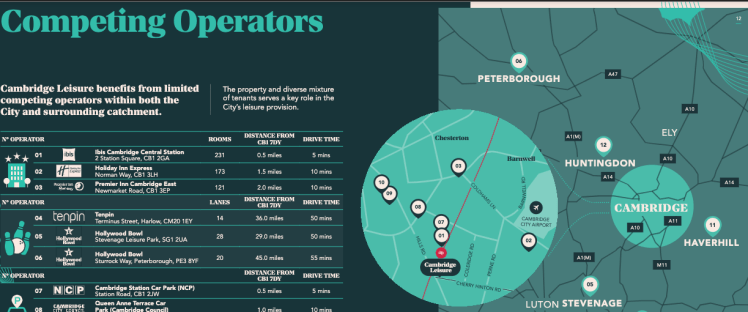
Above – the brochure identifies competing settlements, but does this reflect an obsolete car-based mindset?
Mindful of social and cultural changes towards active travel and a desire for more closely-located facilities. Which is the opposite of what I experienced in my childhood when staying with my late aunt and uncle in rural Hertfordshire during school holidays. With no public transport, everyone was dependent on the motorcar to get anywhere. In hindsight it’s hard to forget how we were driven by car *everywhere* with family friends to the various offerings in Stevenage (which in 1990 was the coolest place on the planet as far as I was concerned!) and the nearby post-war newtowns had. In those days Stevenage had a bowling alley, an ice rink, and a McDonalds. Cambridge was one of the last cities in the UK to resist the establishment of that particular brand of fast food chain, before it finally relented in 1993/94.
On Cambridge’s economic sub-region
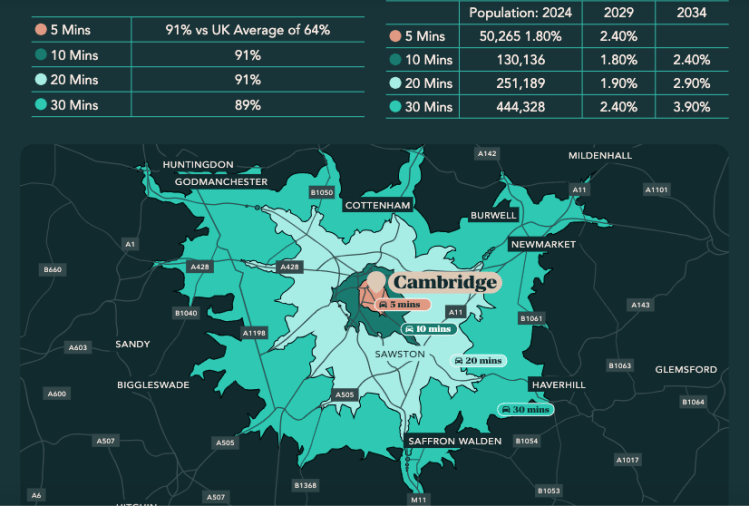
I found this map to make for interesting browsing. Not least because of the car-dependency in the modelling. What would the same diagram look like under different transport infrastructure scenarios?
What do the election candidates think?
I’ve not asked them – but South Cambridgeshire and Cambridge City voters may want to ask those campaigning for their votes, via https://whocanivotefor.co.uk/
Only we’ll find out what the party-political balance of the councils are in a week’s time.
If you are interested in the longer term future of Cambridge, and on what happens at the local democracy meetings where decisions are made, feel free to:
- Consider a small donation to help fund my continued research and reporting on local democracy in and around Cambridge
- Follow me on BSky
- Spot me on LinkedIn
- Like my Facebook page


