I haven’t been keeping up as much as I normally would because of this persistent cold bug that has also meant missing music rehearsals. So chances are I missed someone who said something about the PM’s relaunch speech which I’ve not had the headspace to watch/listen to.
You can watch it in full via ITV here
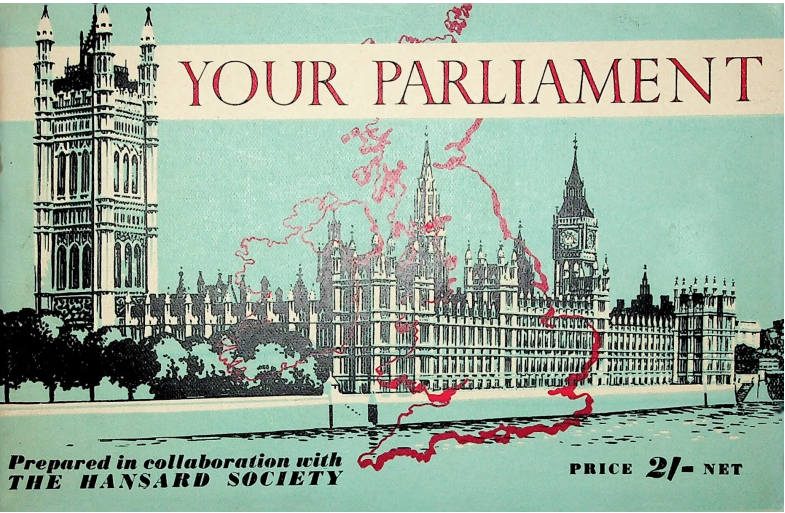
Image – Whitehall and Westminster still confusing? Here’s a guide from the olden days: Because it’s Your Parliament too.
Yet the BBC Politics page is still showing the scale of the local elections results.
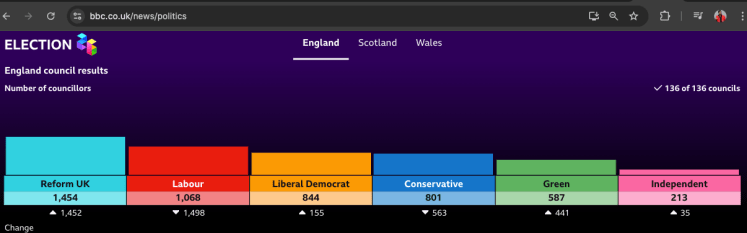
Above – an almost seat-by-seat replacement numbers-wise of councillors from Labour to TeamNigel, although the reality is likely to be far more complex when accounting for things like regular supporters who stayed at home vs past non-voters turning out.
And yet the geographical coverage of the local elections in England was relatively limited
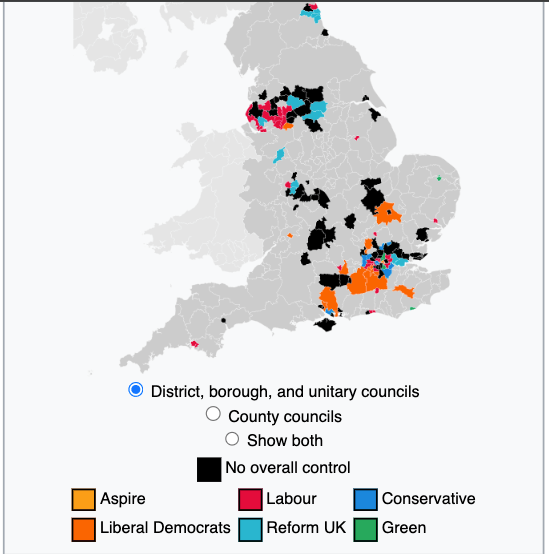
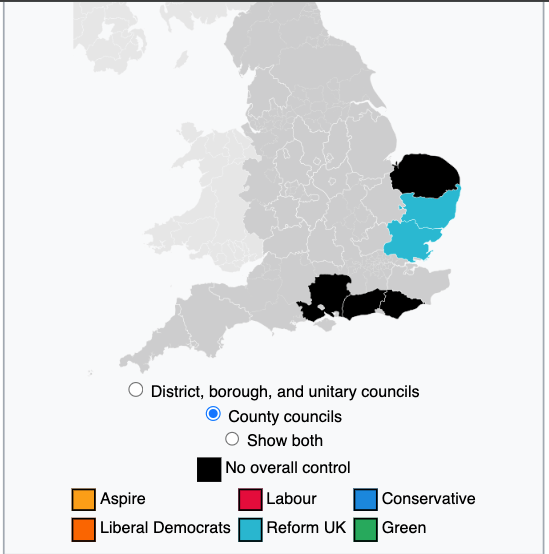
Above – maps from the UK Local Elections Wikip
There were huge swathes of England that were not covered. Furthermore, the focus on the troubles of Labour by the broadcast media meant that the Conservatives got away lightly with the media scrutiny of its huge losses in East Anglia and on the south/south-eastern coasts.
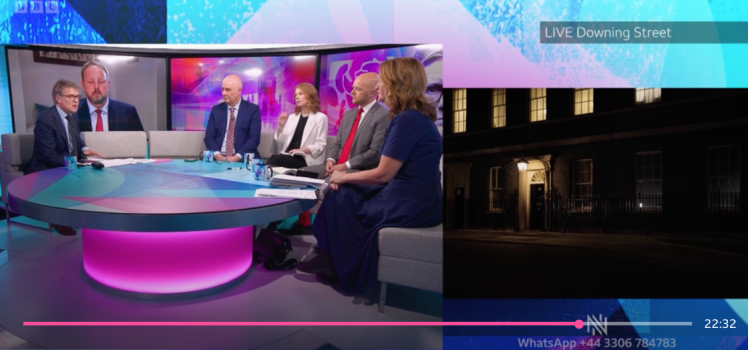
Above – the doom-and-gloom staging on BBC Newsnight earlier is almost comical
It’s also a political correspondent’s dream come true – zero complex policy content, maximum politics and gossip and who has said what.
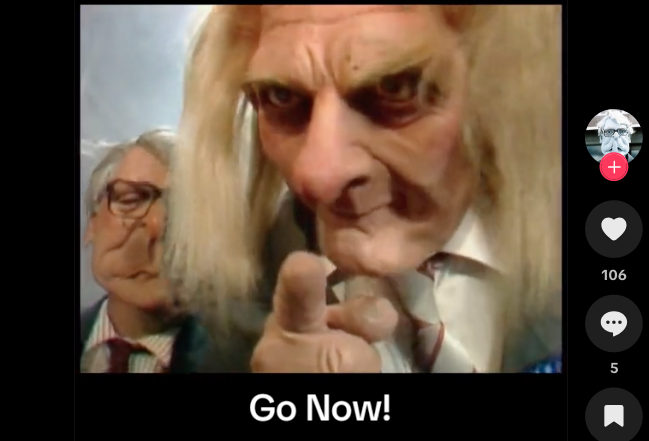
Interestingly, despite Labour being favourites to win the general election that was only 18 months away from the time John Major became Prime Minister, Major went and won in 1992. Only for the £ to crash out of the exchange rate mechanism and…the rest is history.
A few short things to consider irrespective of what happens in the near future
- Which of the MPs that are calling for him to go were the ones who were out and about campaigning for the local elections? (i.e. beyond the pre-arranged photoshoots?) Anecdotally some of the ones featured in the media said that the message coming from the doorstep was that the PM was the issue that was influencing their vote.
- The Government’s failure to deal with disinformation both online and also from the ‘comment TV’ channels via OfCom has helped create rods for their own backs. It’s not just about individual pieces, it’s also about the much wider picture and the themes that such outlets choose to cover. The New World – formerly the New European, covered this here. And it’s not new. The Guardian picked this up back in December 2024. What has happened since?
“Are the 1920s repeating again?”
It felt like it in 2022 – when I wrote this piece
There is a much bigger structural picture which is one where the over-centralised and paradoxically fragmented state means that it’s impossible for ministers to get what they want by pulling levers in Whitehall and hope that magic happens. Has the over-centralisation made being Prime Minister an impossible job?
Without going into detail (because brainfog) local government simply does not have the powers or resources to do the sort of work needed to make things better in the short-medium term. (Not independently of Whitehall anyway.) Things that people would really notice at a street level. And not just potholes.
Cambridge MP Daniel Zeichner backs the Prime Minister
Above – confirmation by Phil Rodgers
His Parliamentary colleague in North West Cambridgeshire, Sam Carling MP (formerly a councillor on Cambridge City Council) on the other hand has called for the Prime Minister to go.
Here’s a reminder of the 2024 General Election result in Cambridge. What are the prospects for Labour following the recent city council elections? Furthermore, will there be even more boundary changes with future population increases factored in?
Time will tell.
If you are interested in the longer term future of Cambridge, and on what happens at the local democracy meetings where decisions are made, feel free to:
- Consider a small donation to help fund my continued research and reporting on local democracy in and around Cambridge
- Follow me on BSky
- Spot me on LinkedIn
- Like my Facebook page


