Some of you may have seen the news regarding former Green Party leader and current Green Party Bristol Central MP Carla Denyer who is taking time off due to burnout.
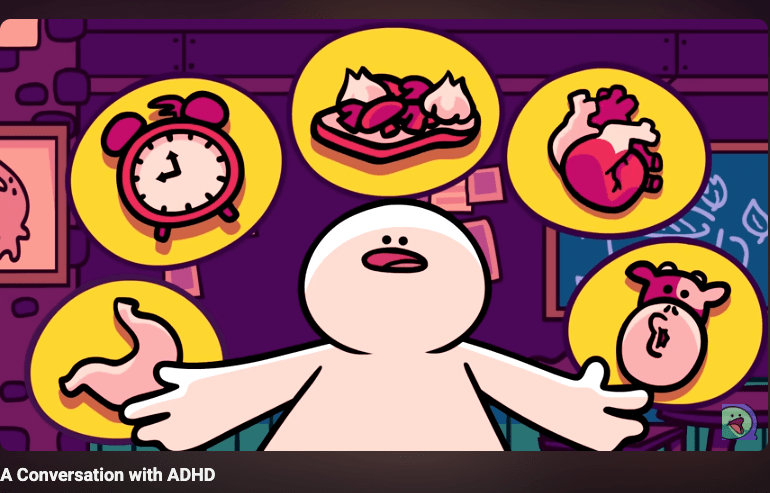
Image: ***And this was just my morning!*** In A Conversation with ADHD By GingerPale which is superbly done.
“I hope that by sharing my own struggles, I can help in some small way to combat the stigma around it and contribute to a more open conversation.”
Above – Carla Denyer MP (Greens – Bristol West), 22 May 2026
I hope she recovers and also I hope this becomes the spark that gets politicians looking once again at the toxic working environment that is Westminster. Because it makes no sense for anyone coping with burnout to return to the same conditions that led to burnout in the first place.
One way that MPs and ministers could reduce their workloads is by devolving and delegating more functions to regional and local tiers of the state
Or separating the legislature from executive so that all MPs are effectively backbenchers, and all ministers have to be nominated by the Prime Minister (Party leader that gets the most MPs/support of the most MPs in the House of Commons) and subject to confirmation hearings similar to other countries. Note this is now routine for some senior non-party-political offices of state, such as regulators.
Easier said than done – especially in an environment where political journalists habitually ask ministers and senior politicians to comment on things that are local issues and that are best resolved locally. All too often the opportunity for a party-political ‘hit’ on a council led by an opposing party is too good to miss – even though hardly anyone within Westminster let alone outside it actually notices.
Any solution that involved elected politicians in devolved parliaments and local councils would have to involve increasing their resources because councillors officially don’t get paid – they only get ‘expenses’ or allowances depending on the roles they officially take on. (Such as committee chairs or executive council posts in charge of a service area or function). In the case of Ms Denyer there are 34 Green Party Councillors on Bristol City Council who in principle could be called upon to support – but this (in my view anyway) could only be justified if they were remunerated for the additional burdens and working hours such roles would take on.
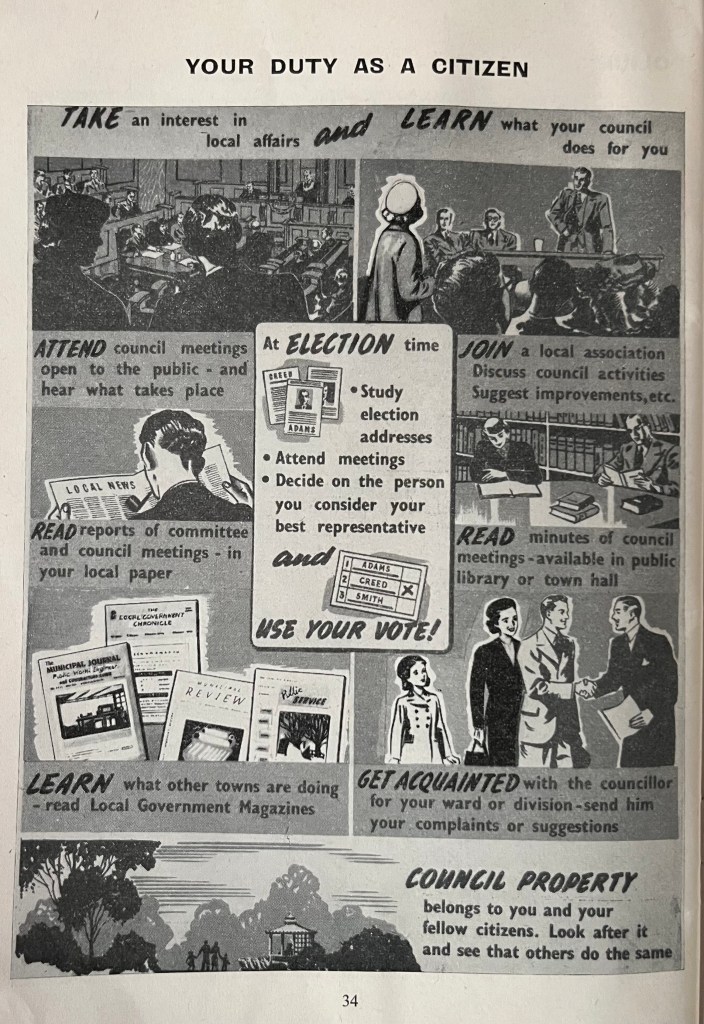
For those of you unfamiliar with the work of local councillors, have a look at the anonymised diaries/blog from East Anglia Bylines here. While it is possible to get away with minimal effort in safe seats, councillors that go out of their way to make themselves known to local people and get active in their constituencies can make a huge difference. Which is one of the reasons why I think councillors should get paid – and paid more given their responsibilities.
Burnout in my case put my life’s progress into a sort of ‘suspended animation’ back in 2012
It would be over a decade later before I learnt the vocabulary of neurodiversity to describe what I had been going through. ‘Name it to tame it’ so to speak. The problem in my case is that Cambridge has moved on from what it was in the early 2010s and as my health has deteriorated and as I’ve gotten older I’m no longer able to keep up.
A classic example was last Thursday where I normally like to make the effort to turn up and take photos/post social media updates on the new Mayor of Cambridge and new councillors. It should have been followed by the East West Rail public event at the Abbey Stadium in Cambridge, followed by the post-city council AGM drinks at the Cambridge Beer Festival – which in a good year will be cross-party. But after Thursday’s unprecedented events (in recent town history anyway) I have no idea if this took place. Because I don’t think I managed to get out of the house that day so fatigued I was.

Above – my heavy eyes at Balzano’s in Cambridge – which I try to go to every day if only because it gets me out of the house and ensures I have to speak to someone face-to-face in this era of self-checkout tills.
This was just as I was getting over a persistent bug that left me with both a persistent rash on my limbs and also a heavy chesty cough that I’ve not had at this time of year before. And being stuck indoors made it impossible to avoid facing the reality of my long term situation, and the impact that it has had on my mental wellbeing.
Burnout breaking our social bonds
Basically my IG feed gets AuDHD-bombed although it sort of functions as a feed for new music in the absence of Top of the Pops. (The return of which I think would do wonders for our collective conversations across the country, and single points of conversation accessible to the many).
In my case I struggled to settle into the ‘work hard play hard’ lifestyle and, having moved out of London found the prospect of spending the next 25 years commuting to London and back something that did not appeal. Even more so when I found myself living a life where I spent much of the weekend sleeping (and not exercising – thus putting on weight) before Monday morning came around again. Losing over 3 hours a day to commuting really made me appreciate the impact that the Cambridge-London commute had on my social life – it all but destroyed it.
Changing housing markets breaking our social bonds
This is something journalist Donna Ferguson (of this parish too) picked up on with this petition calling for a restriction on the percentage of Houses of Multiple Occupation in Cambridge. Back in 2021 former councillor Sam Davies wrote about the impact of the rising number of short term lets on South Cambridge. Ultimately it’s up to the Minister for Housing to table the legislation (having wrestled the necessary approval from The Treasury) . This is not a new problem – here’s the BBC from 2008 (18 years ago!!!) highlighting the problem of large areas of previously residential neighbourhoods handed over to the student market.
“Brighton University will see 21,000 students arrive for the start of term – that number has grown by 7,000 in just over a decade.”
Above – BBC South Today 02 October 2008
Interestingly, the limits to growth were clearly met in Brighton University’s case going by their branch of the University and College Union highlighted a fall in recruitment of 15% in 2024.
In the case of Cambridge where growth continues, I’m reminded of the piece by Prof J Sanders on his vision of Cambridge in 2065:
Service workers will mainly live further out, commuting into Cambridge via fast mass transit from hubs such as Wisbech, Alconbury or Haverhill, although many of the University’s lowest-paid staff will be living nearby in affordable housing that it owns. They will be providing service to the intellectuals and leaders in business and the University, and also servicing the world-wide tourist trade who come to look at the traditional colleges as living history.”
“Cambridge will be one of the key venues to come and be seen, and to rub shoulders with the global intellectual elite. If it sounds like an exclusive conference venue, then that may be about right.”
Sanders, J (2014) in Cambridge 2065, p40-41
This was followed up several years later by Cllr Sam Davies MBE – see the video: Cllr Sam Davies MBE to Cambridge City Council’s Full Council, 03 March 2022, in her comments on the city council’s corporate strategy 2022-27. (How does it sound now?)
In her last-but-one blogpost before resigning from Cambridge City Council, Sam Davies posted a blogpost titled ‘Relentless’ which you can read here. The title alone says it all – and reinforces my point about the under-resourcing of councillors who – especially in the case of Cambridge, have had to take on extra duties due to the creation of things like the Greater Cambridge City Deal and the Combined Authority.
Going into the city centre and recognising no one
Which was a huge change from 30 years ago in my mid-late teens. But then Cambridge’s resident population was about 40,000 fewer than it is today, and the annual tourist visitor count even more so. Strange to think that in those days hardly anyone had a mobile phone or the internet. A very different world. But one I recall that was full of people. How have we ended up in a world with fewer, more empty ‘third spaces’? It reminds me of what Sam Davies said in one of the videos above about Cambridge becoming ‘an extractive economy’ where people creating the wealth don’t have the disposable income to spend because the rents and costs of living are so high in comparison to wages, salaries, and funding grants.
Going to Coleridge Rec and recognising no one
One of the challenges the new Coleridge councillor Sarah Nicmanis of Cambridge Green Party has is trying to build up active local community institutions. That’s not to say her predecessors did not try – part of our problem was that at least two of them at any one time were allocated executive council portfolios by their party (Labour) which is a huge commitment on top of being a ward councillor, having a full time job, and in the case of at least two of the councillors at the time, caring responsibilities for younger/older generations. Which is why I also hope that the new Unitary Council can provide for much stronger and properly resourced funding for all of our neighbourhoods, not just being compelled to focus artificially limited funding (by HMT) on the most economically-deprived parts of our city – council funding for which can only be a sticking plaster on the issues they face.
There was one nice scene I spotted which brought a smile to my face
There were two teenage girls with skateboards sat on top of the dragon slide at the Rec. For those of you not familiar, the dragon slide looks like this:
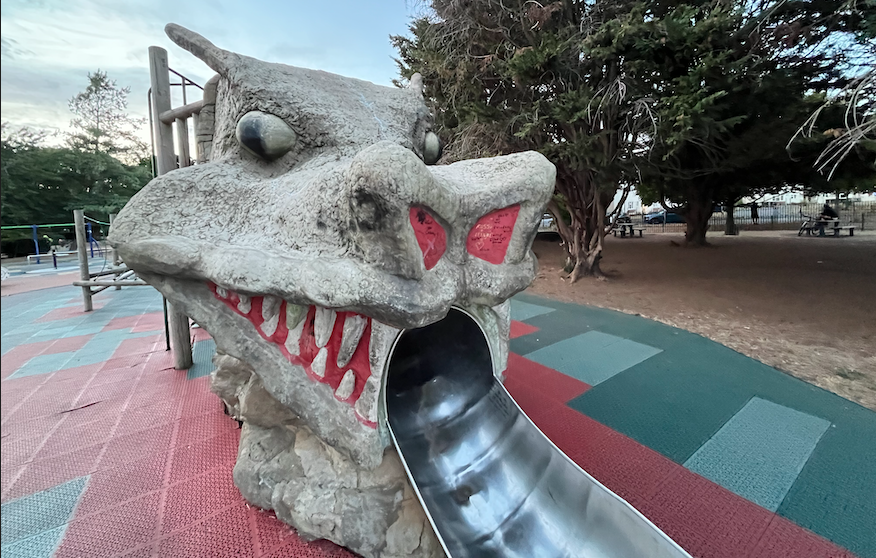
Above – Dragon slide at Coleridge Rec
The slide was installed by Cambridge City Council over a decade ago to celebrate the 89 votes that Coleridge residents cast in favour of my old dragon-themed Twitter account from an era that no longer exists. Which is such a shame because social media in the late 2000s/early 2010s had so much potential to achieve so much social good. Not least enabling people to find out in good time what was happening in their local areas, and to keep in touch with what was happening at meetings and events through live reporting/blogging. And I recall a number of those events, meetings and protests of the early-mid 2010s (and even the late 2010s) were absolutely buzzing.
Which also makes me wonder about the state of the city, its fragmented state, and its ability to bring people together to influence the future shape of it.
If you are interested in the longer term future of Cambridge, and on what happens at the local democracy meetings where decisions are made, feel free to:
- Consider a small donation to help fund my continued research and reporting on local democracy in and around Cambridge
- Follow me on BSky
- Spot me on LinkedIn
- Like my Facebook page


