Applicants for large planning applications spend fortunes on consultants to provide transport assessments. Has anyone done an in-depth assessment on what the cumulative impact of these corporate reports is? And has anyone done an assessment of the private commuter bus services?
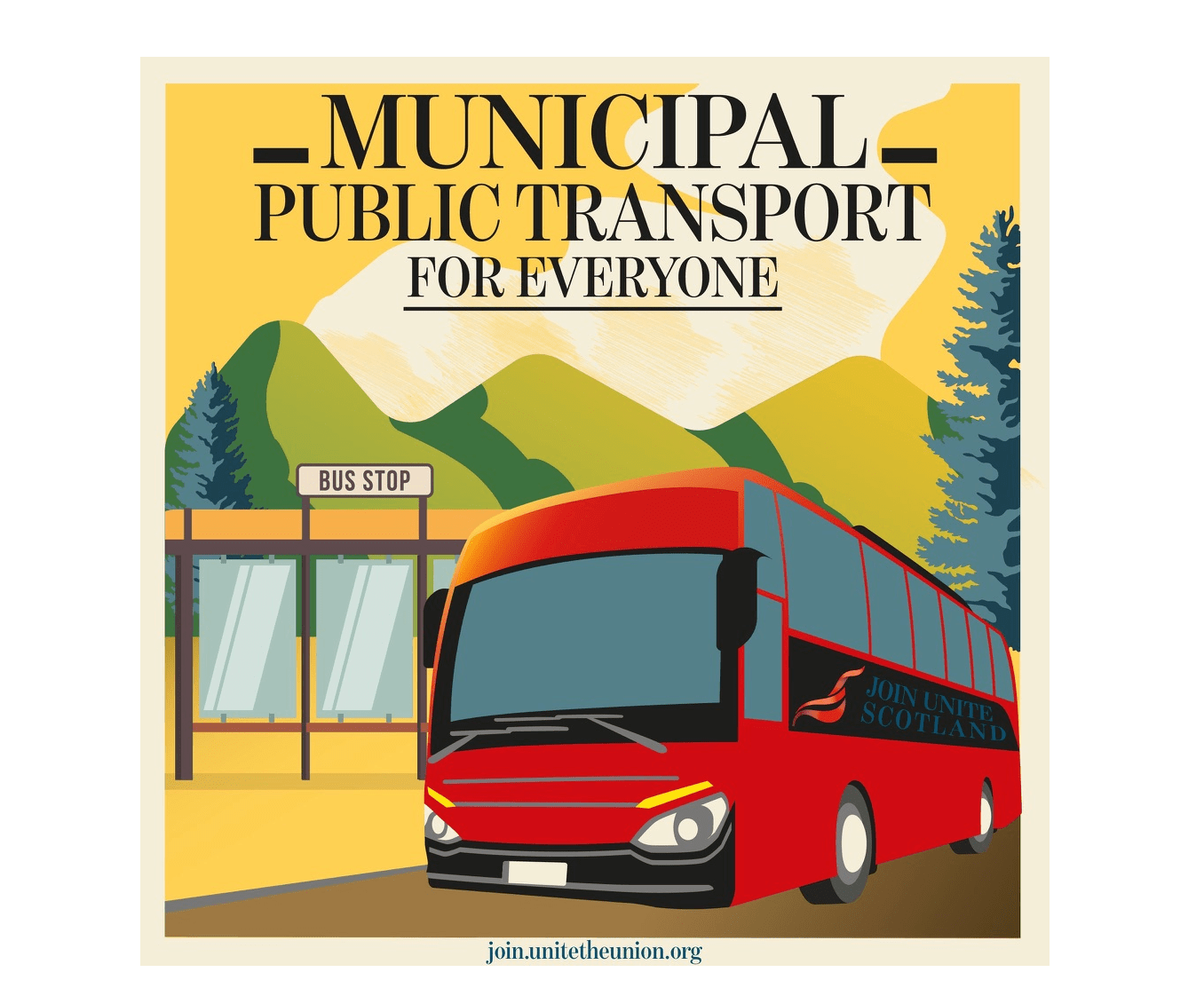
[Image – from Unite Glasgow – can’t we all have this?]
Two years ago I tabled a public question to the Combined Authority asking what assessment it had made of private commuter buses in Cambridge.
You can watch the video here – what did you think of the response?
I then wrote a blogpost on the issue of private commuter buses in July 2024 which raised the issue of regional transport. Because it turned out that we had a regional bus strategy.
Above – the Sub-National transport organisation’s bus strategy from 2022
The ‘England’s Economic Heartland’ sub-national transport organisation was also at UKREiiF 2026.
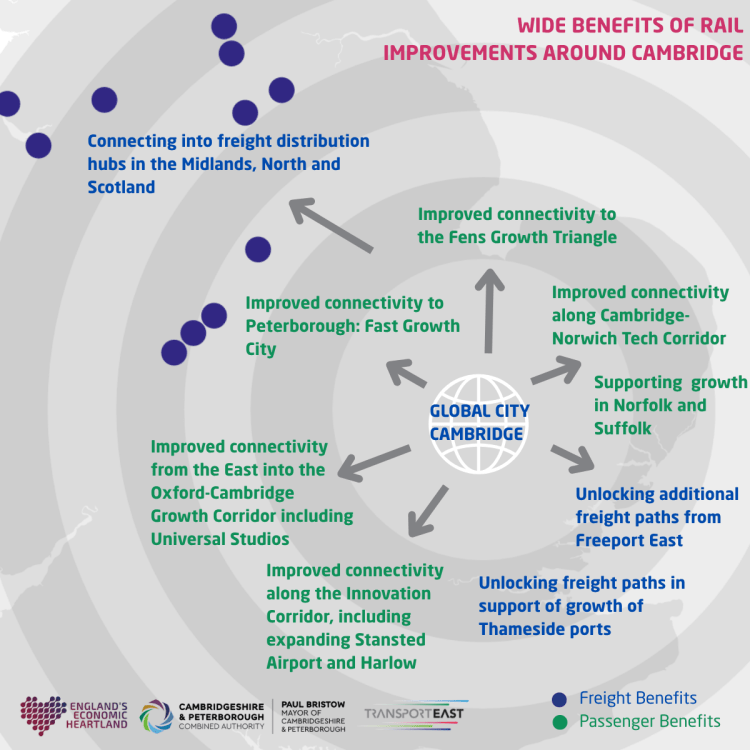
Above – ‘Global City Cambridge’ where you have to phone up an office in Alconbury to close a side road for a community street party, and where you have to catch a train to Ely to access the city’s local government archives
We are yet to see a vision document from any institution about what Cambridge might look like and be like in the next 25 years – something that covers the essentials including:
- What buildings, facilities and services will be there and where geographically
- Where the current major gaps are and how they will be filled – eg the shortages of doctors, dentists, town planners, and also of people working in the trades
- Where any new major transport infrastructure routes will be and what method of transport is being proposed
- Whether we will continue with fragmented local public service structures or whether we might look at local government having at least the basic oversight function of local public services irrespective of which sector provides them (something that should involve powers of summons to the executives responsible for providing them – even private sector ones).
There are *lots* of transport assessments that need looking at – one for any interested early career researchers?
Let’s take a few case studies:
- Cambridge Science Park densification (2026)
- Kett House Station Road Monster (2026)
- Babraham Research Campus (resubmitted 2026 – have a look!)
- North East Cambridge Area Action Plan (incl Cambridge Sewage Works)
- Crown Estates (2025)
- Beehive Redevelopment – RailPen (2025)
- Astra Zeneca (Cambridge Biomedical Campus (2025)
- Eddington’s expansion (2025)
- Bar Hill speculative business park (2025)
- Cambridge North by the railway station (2024)
- Cambridge East / Marshall’s Airport (2024)
- Abbey Ward – redevelopment of council houses (2023)
- Cherry Hinton Innovation / Land South of Coldham’s Lane (2023) (see also https://cherryhintoninnovation.co.uk/ )
- Land at 104-112 Hills Road, Cambridge (Flying Pig Pub and surrounds) (2020) Click on link and type in 20/03429/FUL into the reference box in simple search.
And that’s just the few off of the top of my head, not including the other very large and ongoing ones including:
- Cambridge Southern Fringe
- Marleigh (East Cambridge)
- Springstead Village (Land North of Cherry Hinton)
- Darwin Green (NW Cambridge)
“Well someone’s been busy!”
Note South Cambridgeshire District Council also has:
- Cambourne
- Northstowe
- Bourn
- Waterbeach New Town
- Grange Farm / East of Granta Park near the Abingtons
“That’s a huge amount of information to process!”
Which indicates a new approach might be needed – one that doesn’t involve:
- Trying to get existing staff to do it without the additional resources
- Outsourcing it to consultants who may not live/work in Cambridge (And thus any knowledge that might be gained ends up being lost to the consultancy world)
Could a very large community research project/programme making use of the combined wealth of knowledge of city and county work?
It could – not least because the amount of information involved is:
- Too much for one person to process and analyse alone
- So great that it needs to be broken up into bitesize bits, including:
- Working out the additional bus routes proposed by different applicants for large planning applications – and putting them on a map for residents and the general public (and students) to scrutinise
- Working out what the likely minimum growth in active travel traffic is likely to be given the step-changes created by major routes such as the busway cycleway
- Working out what the capacity of Cambridge’s city centre is for buses and identifying at what point that passenger traffic needs to be transferred to a light rail (that goes underground in the city centre) – mindful that Cambridge Science Park alone is bringing *an additional 20,000 jobs* to its site – which is the size of a small town (as Cambridge’s existing labour market cannot meet that demand).
“When will the next set of Combined Authority meetings take place?”
See the meetings calendar here Note the following:
- Skills Committee – Mon 15 June 2026
- Transport Committee – Wed 17 June 2026
- Growth Committee – Tues 23 June 2026
- Overview and Scrutiny Committee – Tues 30 June 2026
Feel free to email over public questions which the CPCA Officers can table on your behalf
If you are interested in the longer term future of Cambridge, and on what happens at the local democracy meetings where decisions are made, feel free to:
- Follow me on BSky <- A critical mass of public policy people seem to have moved here (and we could do with more local Cambridge/Cambs people on there!)
- Like my Facebook page
- Consider a small donation to help fund my continued research and reporting on local democracy in and around Cambridge.

 The Cambridge Town Owl