So, who owns what then?
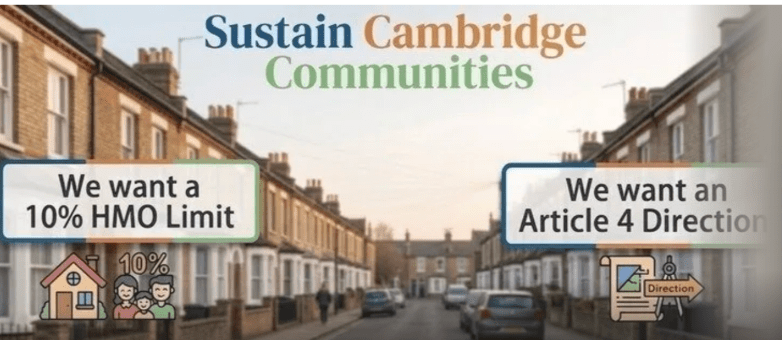
You can see the map at https://cambridgehmos.netlify.app/, and the original petition here – with the image screengrabbed for this post. The linked petition on Cambridge City Council’s website was debated on 16 July 2026 – see item 6 of the meeting papers here.
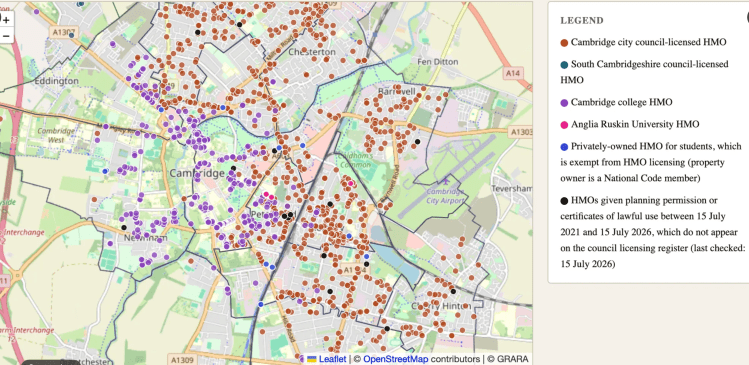
Above – a screengrab of the map by Phil Rodgers here
“This sounds familiar”
It should do – there’s an earlier blogpost on the issue here. It features a recently-published report commissioned by the city council.
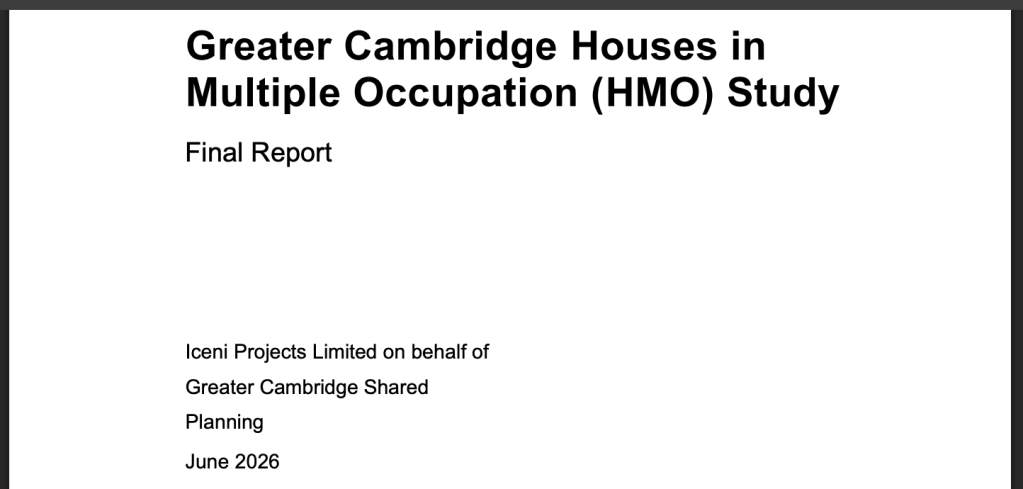
Above – Greater Cambridge Houses in Multiple Occupation, ICENI for GCSPS.
So if anyone wants to compare the above-paper with what Donna Ferguson and campaigners have published in their campaign, feel free to do so. See also the latest BBC Cambridgeshire update here.
Both miss out Air BnB
Collecting data on which is a mind-numbing task in itself. But the Cambridge Draft Local Plan picks up on the problems of excessive numbers of short-term lets concentrated in specific areas, including:
- Loss of residential housing supply, reducing the supply of homes available to meet
residential accommodation needs. - Loss of amenity space, privacy and enjoyment of their home resulting from patterns
of behaviour of short-term tenants. - Continual disruption caused by visitors moving in and out of the premises, disruptive
occupants and associated servicing of the unit(s). - Frequent rotation of unknown, neighbouring occupiers undermines residents’ sense
of security of living in their own homes.
Above – negative impacts of Air BnB accommodation – see Appendix A in the Committee Pack at the top of the big list. In the document, head to p647.
Hence the statement:
‘Within Cambridge, and also settlements and countryside that fall within the Greater Cambridge Green Belt outer boundary, where planning permission is needed, in order to maintain housing supply, support residents’ amenity and wellbeing and maintain local character, the conversion of residential properties to visitor accommodation use will be allowed only in exceptional circumstances…”
The number of people walking down main roads in my neighbourhood pulling weekend wheelie bags behind them or carrying backpacks has increased substantially in recent years. At the same time there has not been an increase in the number of guest houses or hotels at the end of these roads that head outwards from Cambridge Station. There is still one derelict former guesthouse – and a fairly large one in the grand scheme of things, that has not been brought back into use.
My take is that the use of Air BnB or similar for properties designed, located, and built as residential accommodation is a net negative for a town/city when there is already a chronic shortage of housing. People who might otherwise want to settle down and put down roots are prevented from doing so, while the property is ‘sweated’ for as much money as the property owner can make. And the property owner does not have to even live locally. There’s nothing to stop buyers resident abroad buying up properties and commissioning a property management company to do the hard work for them. (For a fee!)
Which means that as far as residents are concerned, there is no ‘return address’ because the time and resources it takes to get a local authority to take substantive action on the negative externalities caused by the excessive concentration of such uses of properties is so great that in this era of low public trust in politics, few bother.
Not everyone supports a clamp-down.\
Housing policy expert Dr Anna Clark who is based in Cambridge told me:
“I do hope someone points out the dire shortage of affordable places to live for single people on low-middle incomes in Cambridge (including students). HMOs are all they can afford, so we should not be clamping down on them IMO.”
Hence my point about bringing in more not-for-profit landlords in absence of an overhaul of council housing policy and provision, that could provide that single person accommodation for young adults entering the workplace for the first time. I put it in the context of keyworker housing in my previous blogpost.
What I didn’t add but is something that the state could help housing associations experiment with is rents based on a percentage of people’s rent. What would it be like if people working in specific sectors where there are chronic shortages of public workers / people in occupations without whom the city would grind to a halt say under the age of 35 were able to live in developments that had been designed to be within easy access of work via public transport and/or active travel? What are the policies that could ease the pressure on housing caused by the demand for HMO accommodation?
There’s a debate on at the Cambridge Room in the Grafton Centre next week.
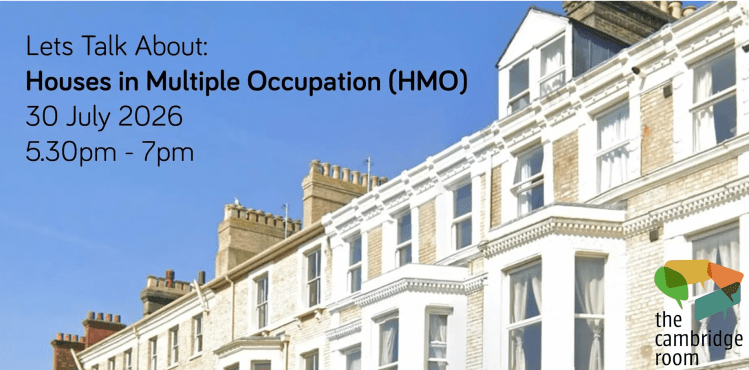
See also The Cambridge Room which will be hosting more events on the future of the city this autumn
If you are interested in the longer term future of Cambridge, and on what happens at the local democracy meetings where decisions are made, feel free to:
- Follow me on BSky
- Spot me on LinkedIn
- Like my Facebook page
- Consider a small donation to help fund my continued research and reporting on local democracy in and around Cambridge


