
The development is for 240 co-living residential units as part of the Darwin Green development in North West Cambridge. Could these developments help reduce the frequency of family homes being converted into awkwardly-converted Houses of Multiple Occupation that they were never designed for?
…Having lived in such a property in my university days in Brighton and Hove – one that was eventually shut down by the council!
You can read the planning application documents at https://applications.greatercambridgeplanning.org/online-applications/ typing in the reference 26/02607/FUL into the simple search box.

Above – the cover of the design and access statement for Howes Green
“Do they have a consultation website?”
Their old website is at https://howesgreenconsultation.co.uk/ – the process is now at the statutory consultation phase so you will need to respond via the Greater Cambridge Shared Planning Service here.
“Given the debate on HMOs of late, I imagine this will be quite popular given it’s a new development on the edge of the city”
It should be – especially for those wanting alternatives to the Article 4 Direction being called for by campaigners living off Mill Road.
The figures on HMOs don’t add up
The Cambridge HMOs campaign found:
- At least 1,493 HMOs in Cambridge
- 944 – Council-licensed HMOs
- 532 – HMOs managed by Anglia Ruskin University or Cambridge Colleges.
The Cambridge City Council commissioned report for the draft local plan found:
- 840 licensed HMOs in Cambridge (Feb 2026) which it also stated accommodates 5,319 people
- 100 in South Cambridgeshire (Feb 2026)
- “Cambridge City Council data compiled by the Environmental Health team estimates there to be a further 887 HMOs which are not licensed in Cambridge”
Above – ICENI for Greater Cambridge Shared Planning (2026)
The applicant for Darwin Green used March 2025 figures and found 822 licensed HMOs
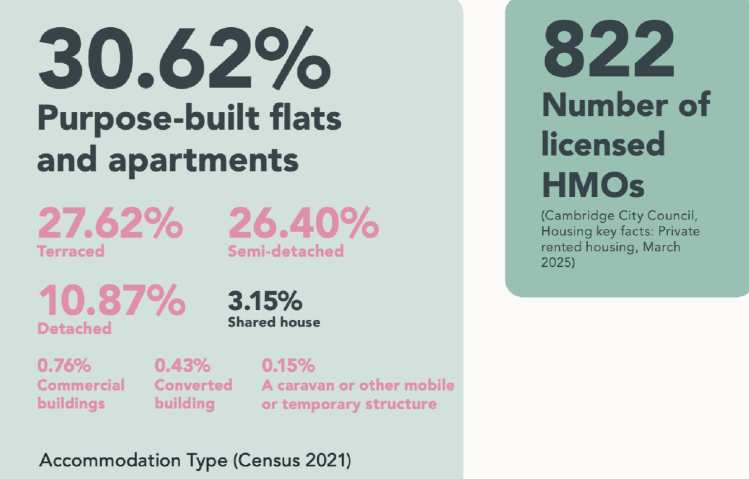
Above – Howes Green D&A Statement, p10
There are also some interesting findings on Cambridge’s growing regional economy which reflects the large number of graduates leaving ‘regional cities’ and heading to London or elsewhere.
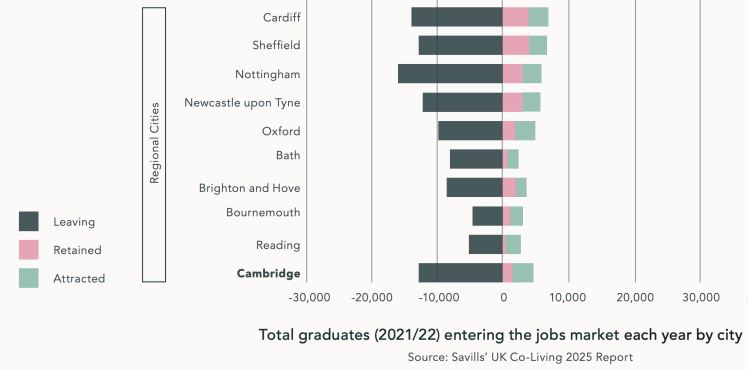
Above – Howes Green D&A Statement, p11
Benefits of co-living
This is something I would have loved to have had when I was in London. The stress and expense inevitably took its toll on my health.
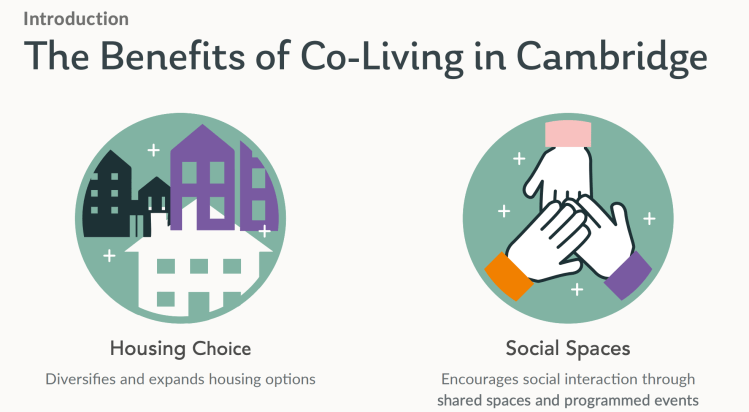
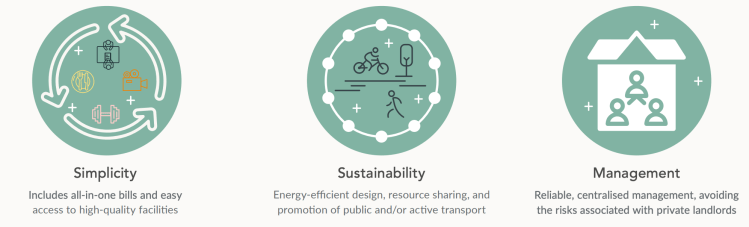
Above – Howes Green D&A Statement, p12
From the perspective of a new arrival – and for anyone who is neurodiverse and/or does not like unnecessary complicated arrangements, having an all-in-one bill rather than having to manage multiple different bills and firms makes a huge difference.
Co-living building managers and the new unitary council
I don’t know what the relationships are like with existing private sector co-living set ups for non-students. I don’t even know what they are for existing students. Given that housing is the root cause for so many social ills (as I found out the hard way during my student days), there is a huge role for a much more active local council function in this area.
Could any housing associations pilot a scheme where co-living tenants paid a percentage of their wage/salary as rent rather than a set £number?
The reason being that it might help stabilise turnover and make accommodation more affordable for those graduates who are on lower incomes – thus reducing the risk of segregation by income and wealth. One of the things I noticed with Cambridge’s colleges is that accommodation is generally equal for all, irrespective of background. In more recent years – especially since the bringing in of fees and the targeting of international students with affluent parents, the growth of ‘luxury student accommodation’ (especially in the larger cities) has become a phenomenon, further segregating socially student populations. It has become a growing issue in the USA. How does the state create models where property owners are constituted not to extract every last penny possible from their tenants? (Hence the appeal to housing associations).
Transport and Travel – who monitors the monitors?
I had a look at the Travel Plan document which said that it would be monitored post-construction.
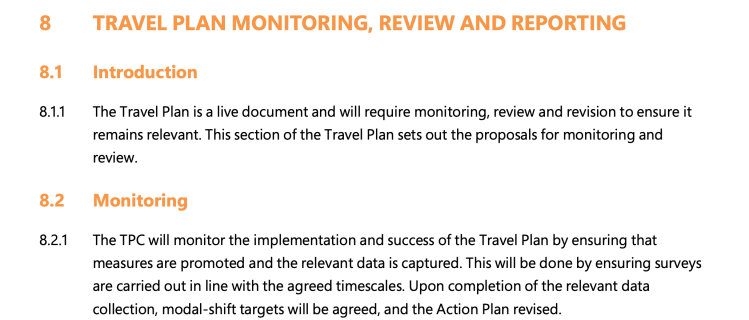
Above – Travel Plan, section 8, p32
Does anyone in local government keep track of all of the travel plans submitted by developers for larger planning applications and review/feedback what comes up? For example how many are meeting the requirements of public transport? (Where is public transport provision failing?) How many people are using private motor cars versus the numbers predicted and modeled for?
There’s a research project for some students and researchers to get stuck into!
Anyway, have a look at the application and see if you think it’s a model that could work in Cambridge, and if other sites could build similar
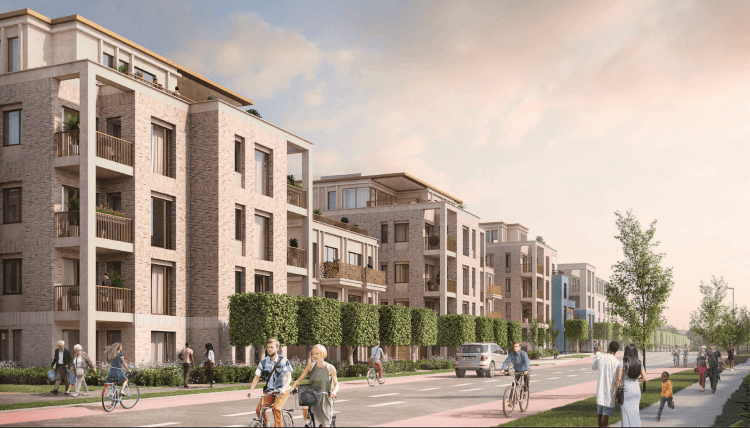
Above – From D&A 2 (second document) p6
Personally I would have gone for a more aesthetically-pleasing vernacular but hey, can’t have everything.
If you are interested in the longer term future of Cambridge, and on what happens at the local democracy meetings where decisions are made, feel free to:
- Follow me on BSky
- Spot me on LinkedIn
- Like my Facebook page
- Consider a small donation to help fund my continued research and reporting on local democracy in and around Cambridge

 The Cambridge Town Owl