The think tank / public policy institute had a look at the impact of the implosion of genuinely local and regional media, and the scaling back of social media profiles by some councils – and has some hard-hitting recommendations (that will probably be put in the ‘too difficult’ box’
“Information voids created by a lack of institutional information provision and cut through were filled with speculation and rumour, misinformation and hate speech, the rise of the local influencer as a modern community spokesperson, and the emergent power of Facebook group admins as gatekeepers of local information.”
Above – Demos (2026) intro page
One of the authors wrote an interesting piece on his Li Page
“Where do communities go to learn about issues impacting them? It’s not to the institutions many would have traditionally turned to, but online spaces, other locals, and well known influencers.”
Above – Flynn Devine of Demos, 02 November 2026
The other authors are Hannah Perry and Azzurra Moores.
TL/DR? Their recommendations start from p74 of their report:
- “Local and regional government officials should experiment with new ways to engage local residents with public interest information“
- “[Government] should expand resourcing to local councils through a new national fund supporting comms experimentation and expansion”
- “Councils should roll out mandatory communications training for councillors emphasising their role as local information actors and informing how to effectively communicate public interest information as needed to support their community and nature of their relationships with constituents. (Hashtag #IAgreeWithPuffles from 2014)
- “Local and regional authorities should embed local information mapping as core practice in their crisis management planning to account for unique and shifting local information environments”
- “Philanthropy and civil society should support healthier online spaces through support for community social media group admins to ensure they are fully equipped for their role.”
- “Number 10 North’s forthcoming [?] Devolution White Paper should address the urgent need for information infrastructure to support the new democratic structures. The paper should include proposals for how strategic authorities build information channels, alongside mechanisms for ensuring accountability.” [Was this covered in the Select Committee Report?]
- [Ministers] should recognise the assets and infrastructure they’re supporting and creating via the Pride in Place strategy as key scaffolding for better community engagement and communication, including physical spaces as well as Neighbourhood Boards and other governance infrastructure that could be a platform for new ways of meaningful community engagement. [Why didn’t this work with the Greater Cambridge Partnership?]
- The DCMS [Department for Digital, Culture, Media & Sport] should expand the size and ambition of the Local News Fund [Currently just £12million, max £125,000 per grant] to maximise support for local news media sustainability and innovation – not just increasing the scale and duration of resourcing, but the independence of funding. [See also the Cairncross review 2019 on the future of local journalism]
- DCMS should allocate ambitious funding to an arms length vehicle(s) to support experiments in, and scaling of, new digital public spaces – with ranging possibilities in scale and form that could be launched in combination, from a £5-10m challenge fund to a SovAI style £300-500m equity fund.
- [Ministers should] develop better epistemic health metrics [New Concept!] to understand where local information supply chain vulnerabilities are and how bad the situation is.
- The Chancellor should increase the Digital Services Tax from 2% to 4% and expand its scope to include not just search engines, social media platforms, and digital marketplaces but AI services too. [I don’t think the Budget included this]
Above – summarised headline recommendations from Demos (2026) pp74-84
Media literacy and citizenship education
Two other reports picked up by the Demos paper were:
- A Safe, Informed Digital Nation (2026) – the Government’s media literacy strategy published last March. I didn’t cover it as I was too snowed under dealing with controversial local planning applications.
- Amplify: The Local Media Action Plan (2026) which lists the policies and commitments made towards the end of Sir Keir Starmer’s administration.
What the authors of the Demos might have included was something about adult citizenship education, as Qasir Shah of UCL stated in his research paper of 2020
But that’s just a minor criticism in a report that amongst other things shows how huge the gap is between where we are and where we need to get to on dealing with disinformation, irrespective of its origin.
Interestingly the report picks up on the NATO commitment to spend 1.5% of GDP on ‘defence-related spending’.
“And Allies will account for up to 1.5% of GDP annually to inter alia protect our critical infrastructure, defend our networks, ensure our civil preparedness and resilience, unleash innovation, and strengthen our defence industrial base.”
Above – NATO Hague Summit 25 June 2025.
Such is the urgency that the Demos report recommends spending significant sums in the 20 or so local authority areas with the greatest community cohesion challenges as part of a pilot scheme, with the key learning points then rolled out to the rest of the country. (See p75 of the Demos report). The problem is that the road to the political big hot fiery place is paved with the pages of central-government-funded pilot schemes that never get rolled out across the country.
“Local community organisations are often well-placed to help people who may need more support to use the internet safely and effectively. Teaching media literacy in trusted local spaces, such as libraries and youth clubs, helps people feel comfortable building their skills.“
Above – Part 3 of A Safe, Informed Digital Nation (2026)
“What if we don’t have trusted local spaces? Or if those spaces are not equipped to deliver the activities needed?
At the moment that’s where we’re at. Because in some parts of Cambridge, local government cannot even fund the basics.
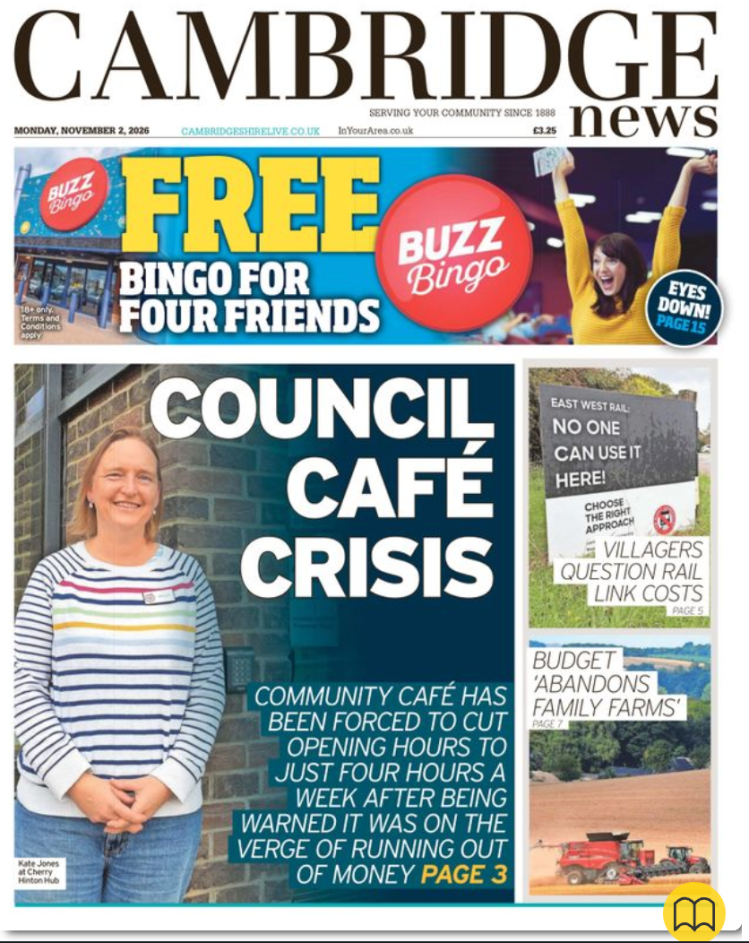
This is why going forward, Cambridge needs to reassess the size, locations, and methods of resourcing community centres so that they are ‘Chancellor-proof’.
With all of that in mind…
**How should Cambridge communicate with its residents?**
…was a question I looked at over a decade ago on my old blog. It was a ***very different world***. March 2016. On the face of such political sixpences the tides of history turn. (And how the ex-Chancellor George Osborne got off so lightly given his role in the whole debacle around EURef I’ll never know…)
The challenges still remain – and are things that anyone involved in the current and future growth of Cambridge need to address. Because the current systems and structures are not working – especially on development planning and large planning applications. And that may mean covering for costs that you didn’t expect to (but which would cost far less than outsourcing the functions to a corporate consultancy) and organising events where you have longer, more meaningful conversations over multiple events over an extended period of time rather than a set number of ‘windows’ in a fixed pattern.
I suggested a UKGovCamp-style open space forum/unConference
Cambridgeshire public sector people – please sign up for this (and/or ask people in your institutions to do so). Cambridge private sector firms interested in supporting an ‘inclusive annual event to enable people working in or with the public sector to come together and try to make things better.’ (esp anything digital – but not exclusively), please consider sponsoring them.
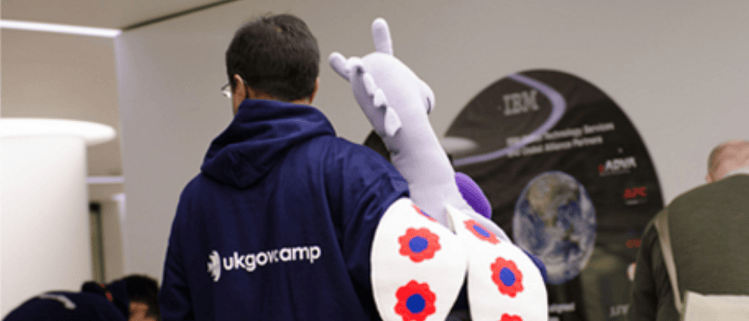
Above – me and Puffles the Dragon Fairy volunteering at a UKGovCamp well over a decade ago (I had hair and hardly any of it was grey back then!)
Also, this is what a pitching session looks like when you have only 30 second to pitch – the results of the voting following each pitch enables organisers to decide what size rooms and what time of the day to slot sessions into.
One other place local councils could start…
Their local further education colleges – especially the institutions that run media studies courses.
For a start it engages with the teaching staff on the front line, and also provides an opportunity for students to participate and even present their own findings/research/opinions. (At which point they should be paid for the work that they do, and credited for it where corporate institutions use their findings) By showing young people in particular (Especially those at vocational institutions) that their views and experiences matter – and get rewarded for it, they are more likely to stick around.
Food for thought?
If you are interested in the longer term future of Cambridge, and on what happens at the local democracy meetings where decisions are made, feel free to:
- Follow me on BSky
- Spot me on LinkedIn
- Like my Facebook page
- Consider a small donation to help fund my continued research and reporting on local democracy in and around Cambridge


