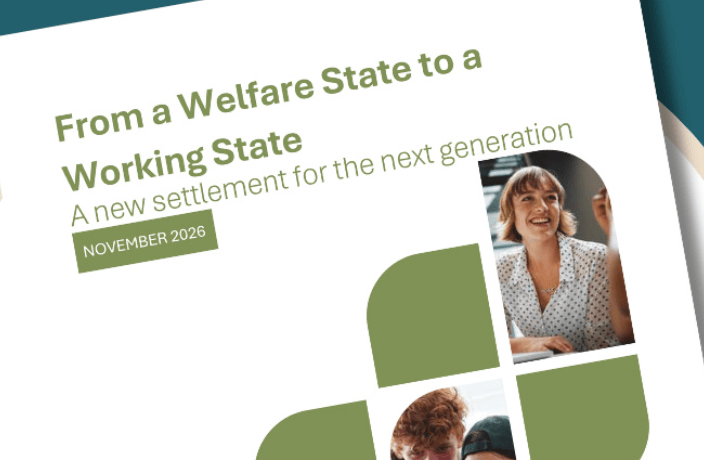
It’s in Paragraph 69 of the Milburn Review here in what is a document jam-packed with policy recommendations. The problem is that too many commentators are making basic errors on what Personal Independence Payments (PIP)
Using the Government’s own words:
“There are 2 parts to PIP:
- “a daily living part – if you need help with everyday tasks
- “a mobility part – if you need help with getting around“
Above – https://www.gov.uk/pip
Quite understandably there is opposition to the proposals that treat young people worse than older adults in the same situation regarding disabilities.
“Disability Rights UK opposes the creation of a new social security system for young Disabled people, cutting the health element of Universal Credit and barring young Disabled people from receiving Personal Independence Payment. All Disabled people of working age should be entitled to the same benefits, to enable us to address societal barriers and to meet the additional costs of disability. There should be no discrimination based on age.”
Above – Disability Rights UK
There is so much to cover in the report that one blogpost won’t be enough.
At the same time, even thought the government-backed report is about young adults, it is so wide-ranging in content and policy recommendations that any new non-punitive services that emerge from the report could – and perhaps should be extended to adults more generally. (By non-punitive I mean that there’s no element of compulsion that could lead to a sanction).
‘Part-time participation [in Higher Education] fell by more than 50% between 2008/9 and 2019/20, weakening a vital route for mature and disadvantaged learners.’ – Milburn (2026) para 479
That’s a damning statistic – one that David Cameron needs to own. (He’s been getting column inches again with his suggestions on future policies). That part of the report also highlights the ‘higher education cold spots’.
- On the Social Sciences, Humanities and Arts for People and the Economy (SHAPE) – Mapping inequality in SHAPE provision in UK higher education report
- Explore the data maps that informed the report above
I’ve picked out the general heat map below left, vs Theology and Religious Studies below right to highlight how distribution in a specific subject can vary.
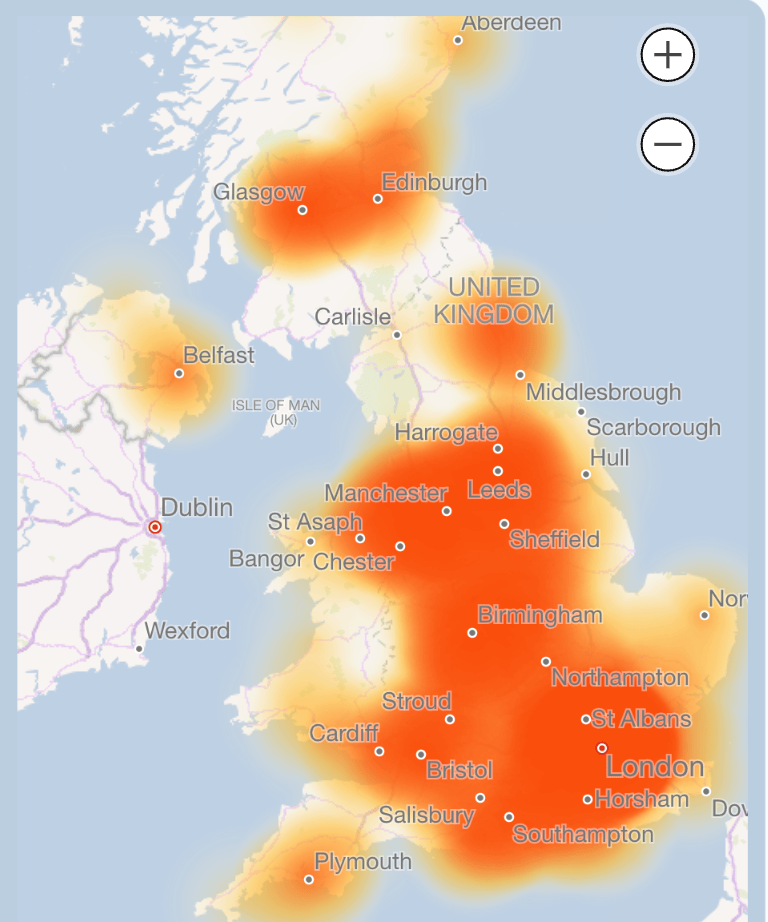
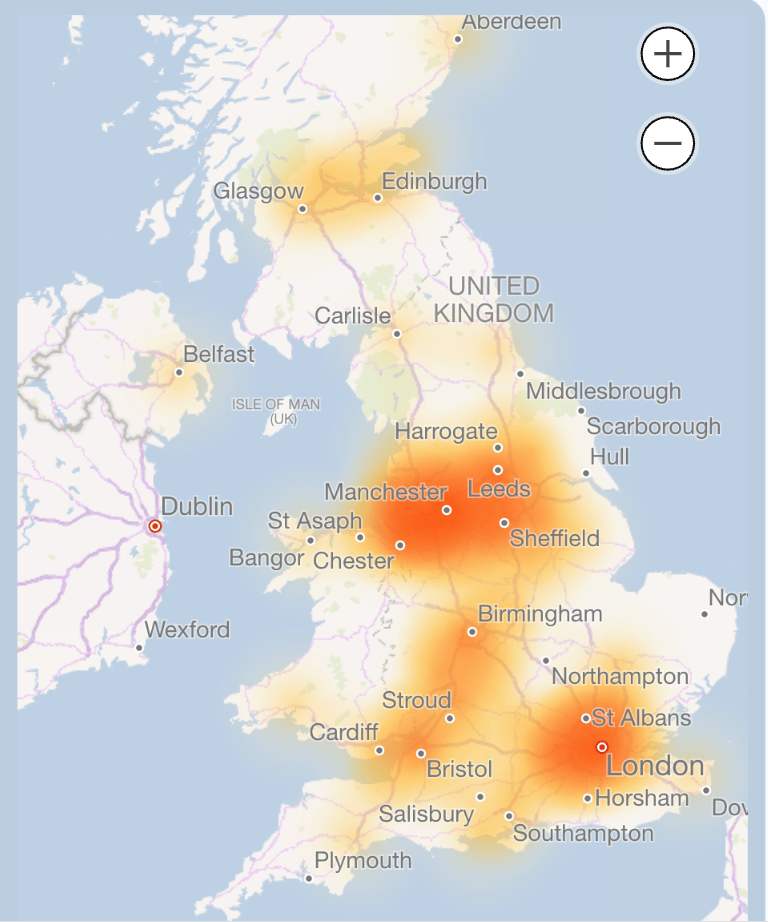
Above – Mapping SHAPE subject provision
Milburn recommends devolved funding for Mayors and strategic (i.e, the current combined) authorities
“A new approach is needed. Mayors and strategic authorities should receive devolved funding from central government. In time they will be able to use the proceeds of local taxes, in place of national grants, to fund their services for which they will be responsible, including the Youth Opportunities Service.”
Above – Milburn (2026) para 601
Which in principle deals with some of the moans I’ve been throwing at the Combined Authority’s Skills Committee.
The term ‘fragment’ comes up 43 times
And the word ‘Mayor’ comes up 38 times. This indicates where the Combined Authority for Cambridgeshire and Peterborough could examine in order to make the provision greater than the sum of its parts.
The term ‘Hub’ comes up 53 times
It also comes up a lot in large planning applications too! Everything has to have a ‘Hub’ and/or be called a ‘Hub’. Or “The Hub”. It reminds me of dull grey business parks or generic box-like community centres made out of cheap materials, poorly built and full of snags and teething problems left behind by big developers in a rush to cash in the profits before the cash-starved council building control service pulls them up on it. #SorryNotSorry. What other terms could be used instead?
‘Britain should also build something closer to an Open University for skills: a national digital Open College’
“…through which people can find and accumulate accredited modules from colleges, universities and approved providers, with AI helping them navigate choices. This should sit over existing institutions, rather than creating a new provider, and be part-funded by employers and other private investors.”
Above – Milburn (2026) para 458
I quite like this recommendation – with one caveat for Cambridge: We don’t have an existing institution that could deliver the offer that a national digital Open College could provide the framework for.
The Further Education section from para 445 is worth reading because it goes beyond young people not in employment, education, or training. (Hence NEETs). One of the things it picks up on is the transition from school to the world of work. (The term ‘transition’ coming up 96 times!) One of the things previous generations got badly wrong was the box-ticking culture rather than having a mindset of ‘every child matters’. As a result in my experience in the 1990s, teenagers that were performing well academically were deemed to have no problems in life generally, and that those who were seen to be at risk of becoming NEETs were urged to sign up to college courses (often Cambridge Regional College) even though those courses and locations (it still had the old Brunswick School site) may not have been suitable. Furthermore, the mindset from the institutions – and thus the wider ‘state’ was that once you had left, you were no longer ‘their problem’. Which makes the Dutch case studies really interesting, because as the Milburn Review notes, Engagement is key. (See para 662)
A new large lifelong learning college as the provider for National Open College courses
They should drop the digital bit because it’s not 1999 anymore. Similar applies to services underpinned by AI – such as course searches, because it’s going to become mainstreamed in the very near future. Note that MPs have already called on ministers to come up with a national lifelong learning strategy. A national open college should form part of this.
Co-design it with young people and unemployed people. And pay them for their services
And by that I mean not just a small group of people working on a small part – eg the design of a common room or social space. Their participation could involve much larger groups of people working on the things they are most passionate about. Furthermore, that work doesn’t need to be rigidly-framed in the way we sometimes see with developers allocating a small fixed space for ‘community activities such as yoga classes’. It’s a stereotype but one I see far too often! Small community rooms for yoga! (Which often end up being far too small – even for yoga classes!)
Instead, young people could be invited to co-define the problems that need to be solved. i.e. it’s not just about getting people into jobs – something that the literature I have seen elsewhere criticising past governments for such an approach. I’m not going to begin pretend I know what young people are concerned about. Furthermore, I expect geographical variations to be a significant factor.
The Survey of Young People – DWP August 2026
“This report presents findings from a survey of 417 young people aged 16-24 who were not in education, employment or training (NEET). Fieldwork was conducted by YouGov between March and April 2026.”
…which also shows that more regional and local surveys – repeated over time, are also needed to provide the evidence bases. Fortunately Cambridgeshire and Peterborough has access to one – the Youth Voice Census results for the CPCA. It found the following key issues were raised by young people:
- “The Support Gap: Only 38% can access mental health support when needed , and only 49% feel a sense of belonging.
- “The Experience Gap: The link to employers is missing, with only 27% gaining work experience in the last year.
- “The Accessibility Gap: The reliability of local transport is a significant barrier , with only 29% rating it good or excellent. This drives the finding that 26% cite location as a barrier to work, far exceeding the national average of 18%.“
Which is why Form the Future has been red hot on work experience provision – and doing the important work of lobbying employers to step up and provide more opportunities for our young people.
“Who wants to work on what?”
If we take all of the three priorities identified in the Youth Voice Census, young people could be invited to work on a specific theme across the county or local council area – such as public transport provision,
Or…
They could be invited to work on all three themes but specific to their locality – eg their town or village.
Ensure there is succession planning
Because while a term of office for the CPCA mayor is four years, in that same time period the changes that a young person experiences and goes through just in terms of institutions alone, are significant. Not least when it comes to who can compel them to do what – such as compulsory schooling. More than a few will move away – especially to university given the records of schools state and private in Cambridge. Others will move into the county – for education and employment amongst other things. How could systems of co-design with young people account for that turnover? (It’s a challenge many organisations in Cambridge face given the population turnover caused by fixed term research contracts and contracts of employment – especially in fields where the only jobs available in highly specialised areas involve moving abroad.)
A single large lifelong learning college isn’t the magic solution to all of the problems…
…but it should form part of the package of solutions and responses. Furthermore, such an institution also needs to be connected to and integrated with a host of other things including but not limited to:
- A well-designed public transport network capable of hosting more than just one mode of transport
- Support services funded/provided by other institutions including the NHS – in particular those that respond to the barriers that people have raise as stopping them from participating.
- A wide range of leisure facilities (What might such a place look like where parents young and old would want to go to, and to where their children would also look forward to spending time at due to the activities put on for them while their parents are on their courses and workships?)
- Employment opportunities
This is why I think a large lifelong learning college should be one of the anchor institutions for a new second urban centre for Cambridge.
I expect more to come from the report as and when other institutions pick up on individual aspects of it. Because it is substantial.
If you are interested in the longer term future of Cambridge, and on what happens at the local democracy meetings where decisions are made, feel free to:
- Follow me on BSky
- Spot me on LinkedIn
- Like my Facebook page
- Consider a small donation to help fund my continued research and reporting on local democracy in and around Cambridge.


