
The Education Select Committee heard evidence about the state of citizenship teaching in schools. The overall picture was a miserable one.
You can:
- watch the meeting footage via the landing page here
- browse through the menus to see how many GCSE entries there were for different subjects in 2026 in your area
In Cambridge the number of GCSE Citizenship entries were about ten percent of the number of GCSE Maths entries
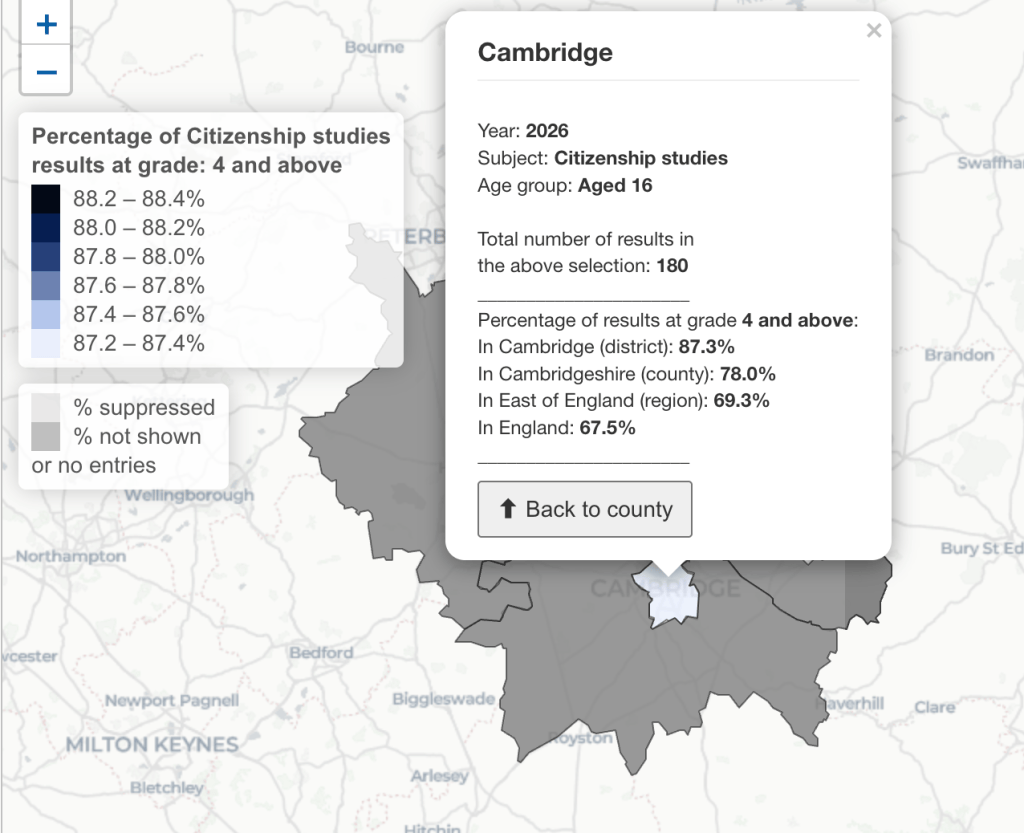
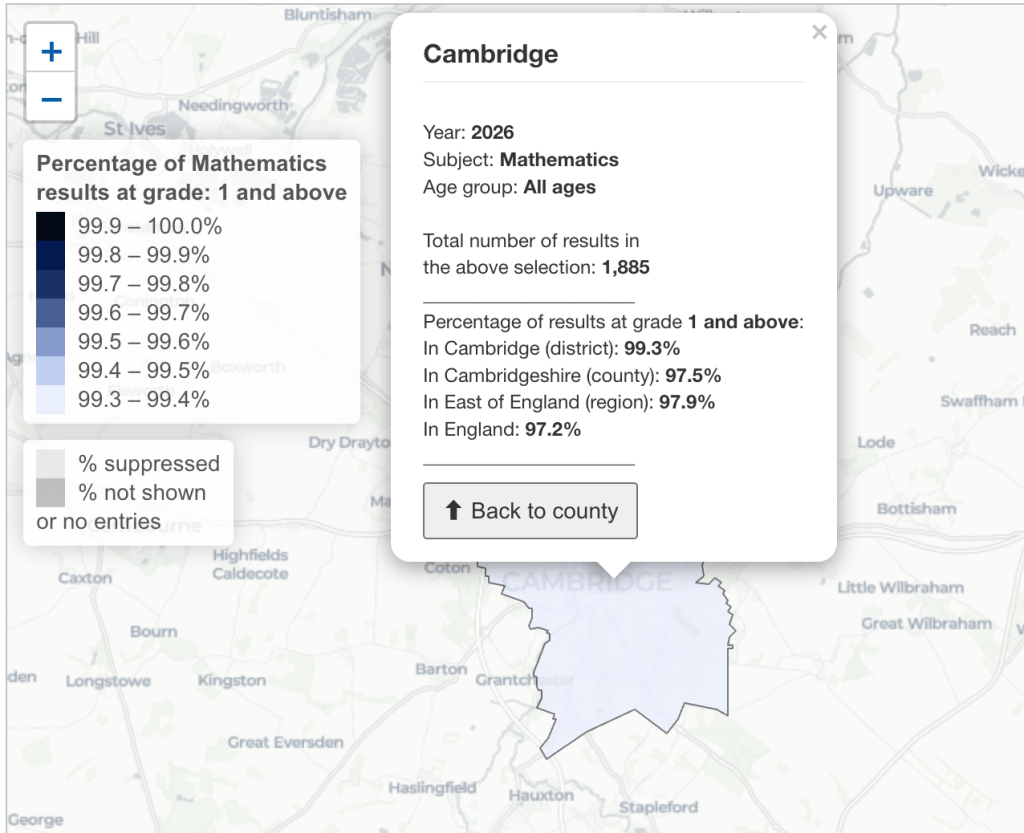
Above – from Analytics OfQual in 2026 there were 180 entries for GCSE Citizenship (of which 87.3% scored a 4 or above (an old C) compared with 1,885 entries for GCSE Maths.
That’s a rise compared with the figures from 2022. That year, the whole of Cambridgeshire had only 145 entries. Four years later it rose to 240. But there is still a very long way to go to get anywhere near the subject with the highest entries, which is Maths. Inevitable given its compulsory status and given that the subject is not disaggregated like English Language/Literature, and the sciences. History and Geography each hovered around the 3,500 mark for the number of entries in Cambridgeshire.
“What did the witnesses in Parliament say?”
Have a watch of the clip below
I don’t know if anything has been happening for UK Parliament Week – I stopped raising this as an issue a decade ago after getting nowhere with it.
“There has been a complete lack of investment for teacher training for citizenship – 28 teachers were trained last year.”
Above – a shocking statistic from Liz Moore from the Association for Citizenship Teaching
And educating children and the wider public in holding decision-makers to account matters – there are some cracking examples from the USA in relation to data centres popping up.
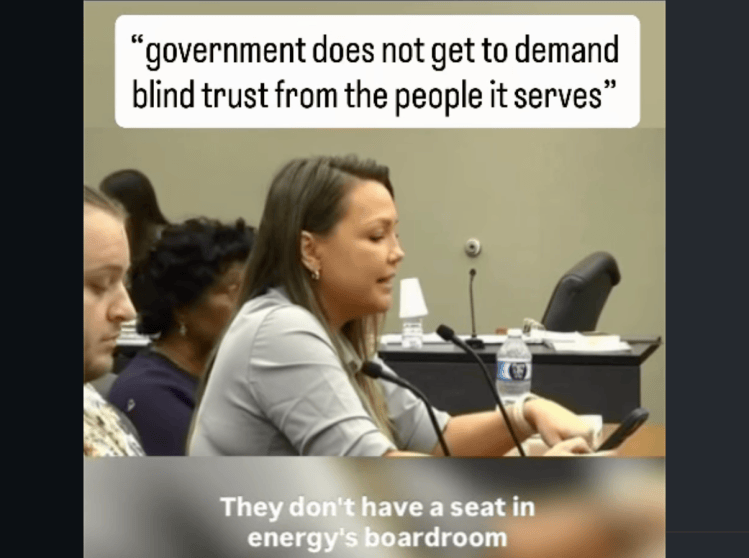
Above – Rubia Garcia on IG in Louisiana. “We [the people] are not shareholders – we get the bill”
Another one which went viral in the US was Shonique Williams in a different Westminster City Council – I clocked that every point she was making was on behalf of an oppressed group with no power. (The full uncut version is even more powerful, but it’s pre-watershed). And when we look back at social and political history we see that it is full of examples of peaceful activists spending decades peacefully protesting and getting nowhere despite relatively modest demands when looked at through the lenses of today, followed by a violent eruption – the results of more than a few of which we are still living with today.
Above – the consultant’s report from the New Local Think Tank. The recommendations are in Appendix 2 of Item 5 from p35 onwards
I wrote about the above report back in July 2024 here
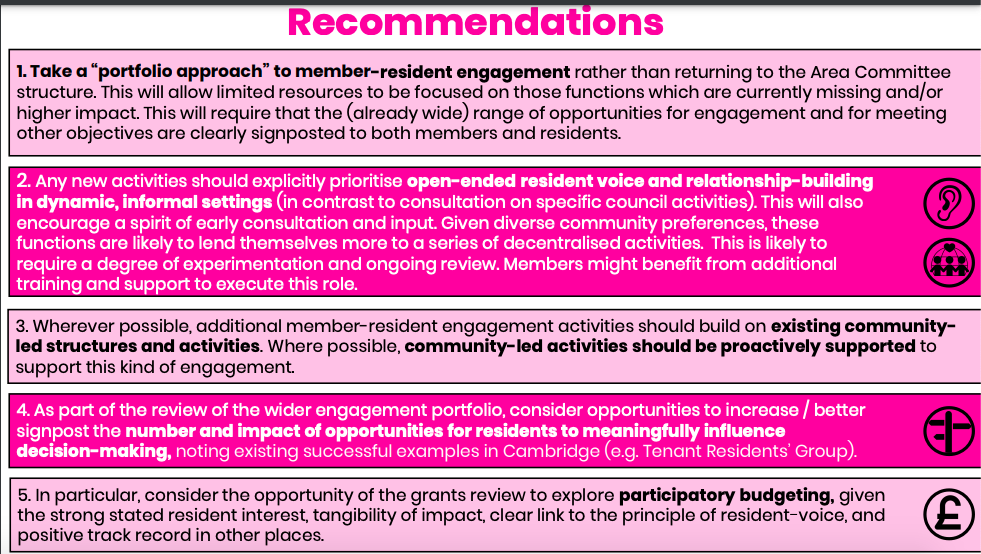
Above – how to the recommendations read today?”
How can they be applied to a city and district which is going to have even more significant planning applications before it? Because votes at 16 isn’t just about teaching teenagers about future local and general elections, but about shaping the future of where they live.
If you are interested in the longer term future of Cambridge, and on what happens at the local democracy meetings where decisions are made, feel free to:
- Consider a small donation to help fund my continued research and reporting on local democracy in and around Cambridge
- Follow me on BSky
- Spot me on LinkedIn
- Like my Facebook page


