
And if so, who needs to do what to replenish and grow it?
Researcher Sam Smith posted the time series graph below back in February 2023 comparing actual housing market prices in Cambridge over time with what they might have been if they had matched the overall inflation rate, and then compared with with both researcher starting salaries, and then average wages in the city.
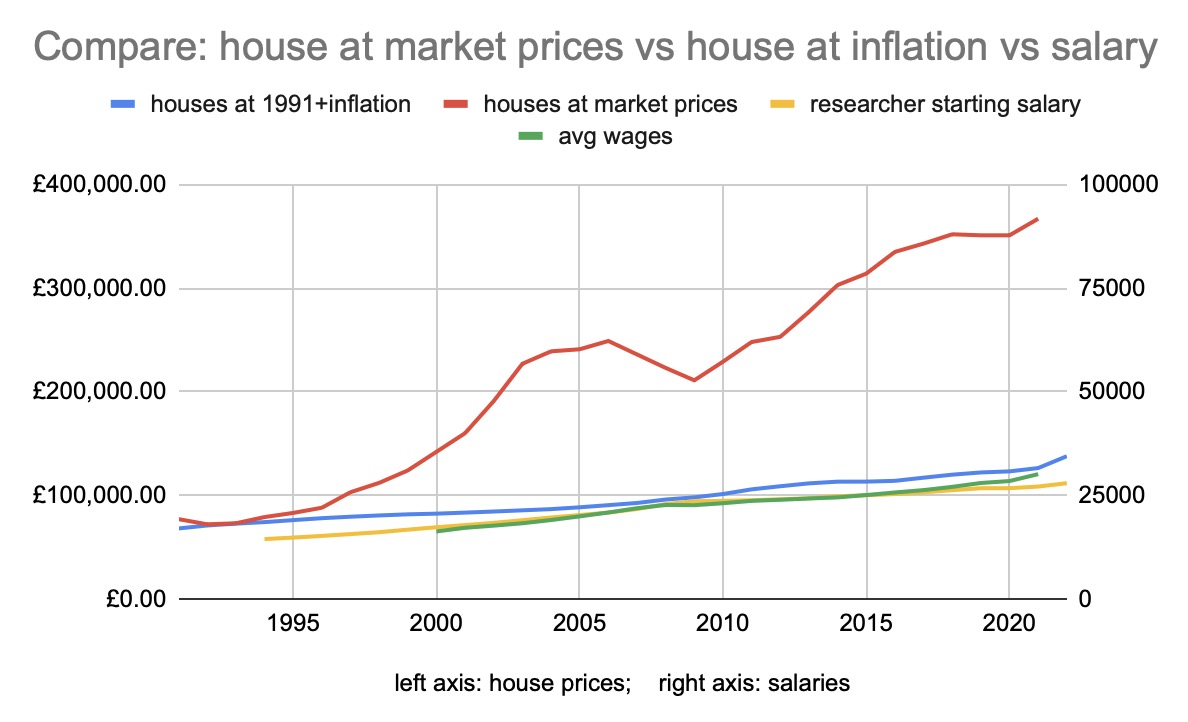
By 2005 house prices were ten times the average wage and also the researcher starting salary.
It’s now 2026. According to the Office for National Statistics…
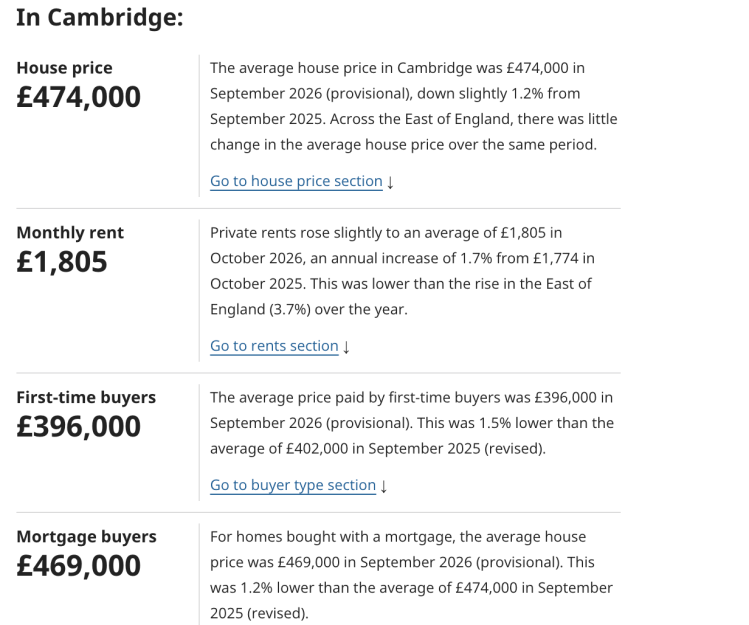
Above – Office for National Statistics price of local housing: Cambridge. November 2026
The data automatically updates so check the date when you click on the above.
House prices in Cambridge are so high **that even professional footballers cannot afford them**
Okay, so we are talking League One and not the Premier League, but the news report on the then recently-promoted Cambridge United made for sobering reading back in August 2026
If you are going to have house prices over ten times the average wage in a city as small as Cambridge lasting over a generation…
Go figure.
“Won’t the draft local plan alleviate things?”
The draft Greater Cambridge Local Plan 2024-45 was signed off by Cambridge City Council earlier in the week. When it was first presented five years ago (2021) the then Independent Councillor for Queen Edith’s, Cllr Sam Davies MBE (who won her seat with the highest number of votes in the city earlier that year) stated the following:
“The pattern is set. We are planning twice as many houses as we’ve already built over the last 20 years, yet this will still lag behind job creation.”
Above – Sam Davies MBE 28 September 2021
Which is why electrified rail-based regional transport is ever so important for the future of the City: We cannot build ourselves out of this.
Ultimately the causes of (and solutions to) the problems are within national government because of the historic and current over-centralisation of power in the UK. Which I won’t go into.
“What’s all of that got to do with the town’s soul?”
There’s an essay/thesis question title in this:
“What has the long term impact on Cambridge’s [insert cohort/group/subject/theme of research] of the very high housing to wages ratios, which for most of the past 20 years have been in double figures?”
I was then reminded of a lovely track by Jessie Ware from a few years ago which accompanied a short film set in London. (Have a watch of it here). It ends with the scene below.
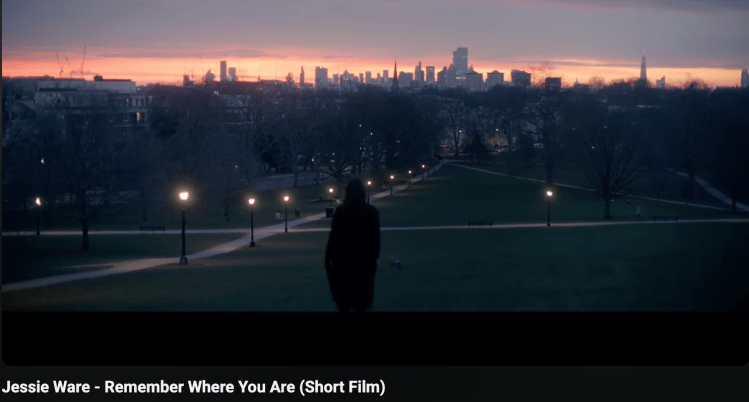
Above – Remember Where You Are (2021) Jessie Ware
“Can we keep moving in the after hours?
Can we keep loving on the edge of doubt?
You should let me save the day
Please and thank the pain away
Why don’t you take me, take me home?”
Where would the equivalent ‘top of the hill’ setting be for me?
Not on Castle Hill but of Lime Kiln Hill on the south-eastern edge of the city. Over the decades every so often I’ve made my way to the top to look out over the city. Some of you may even recognise this detail from a photo I too over a decade ago from the banner on my Youtube Channel

Above – Sadly this view no longer exists. Brookgate built their boxes along station road and now only the very top of the steeple from the Church of Our Lady and the English Martyrs is visible from this point
Which is why I was more than a little troubled by a post that appeared in my LI feed from someone I don’t follow (so I won’t name them because that’s not fair), but the person posting it works for one of the firms involved in building the Station Road carbuncles that from my perspective destroyed part of Cambridge’s skyline.
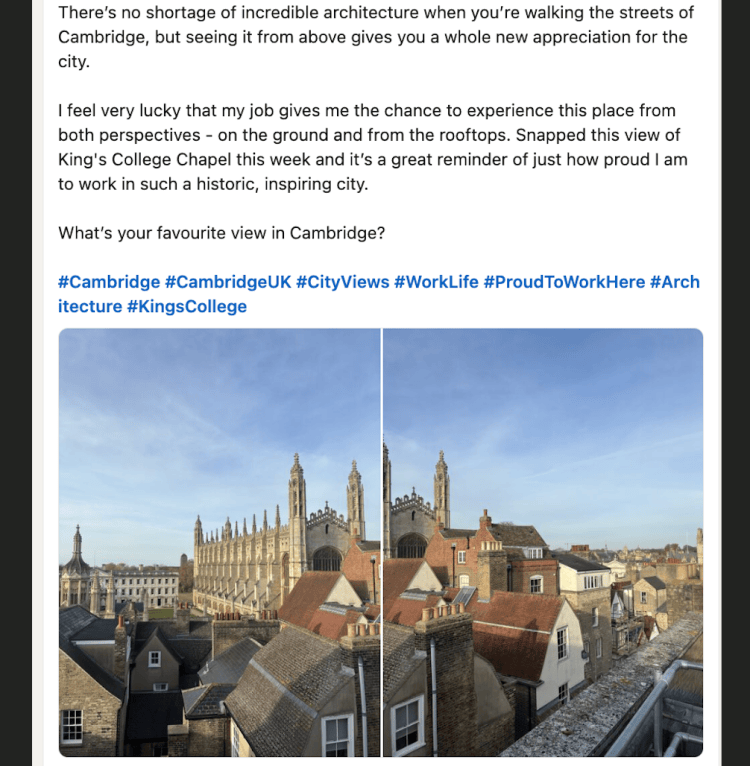
…and yet the employees of the same firm post images of Cambridges older buildings stating how wonderful they are while their employers are facilitating the construction of buildings and structures that are anything but like this.
I don’t want an internet pile-on, so please please please don’t go after the person who posted the above.
Because what I’m doing is calling out the firms and the wider industry for ruining the very things that in this case one member of staff says they take pride in. (Hence why I also did not respond to the post saying: “This view, but your employer helped destroy it” although the temptation was ***huge***)
The above reminds me of the research by Humanise which I wrote about back in June in relation to a big planning application at Cambridge North.
“The outsides of buildings matter – they affect our mental health
“Which brings me back to Dr Anna Kim’s paper from September 2025 for Humanise here
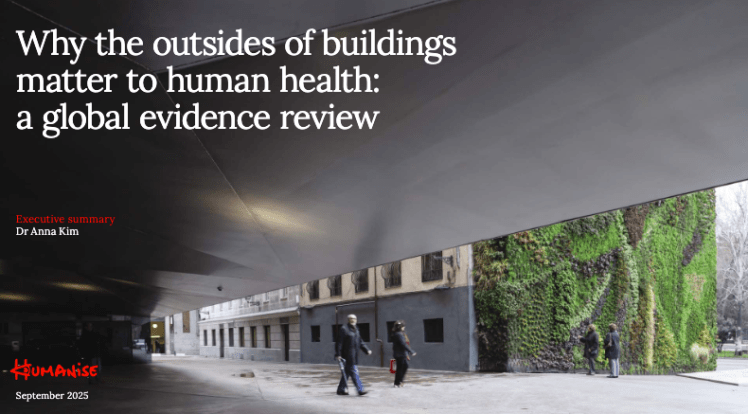
As Dr Kim states:
- The shape of buildings affects stress levels
- Visually engaging buildings help us think and feel better
- Natural features boost mood and reduce mental strain. Distinctive buildings help people find their way. Street-level design shapes how we feel and connect
- Buildings with character create a sense of belonging
- We experience buildings through our whole body
- Welcoming design supports wellbeing
Maybe these help explain why Cambridge’s older colleges and their buildings are popular with tourists, students, and alumni alike.“
In Part 2, I’m going to go into how in my opinion civic arts and communal/collective music should have grown with the city but instead have gone in the opposite direction. (I wanted to write about that originally but spent too long in this post explaining the above!)
If you are interested in the longer term future of Cambridge, and on what happens at the local democracy meetings where decisions are made, feel free to:
- Follow me on BSky
- Spot me on LinkedIn
- Like my Facebook page
- Consider a small donation to help fund my continued research and reporting on local democracy in and around Cambridge


