Cambridge Independent highlights the planning application for another round of boring grey boxes that Cambridge Past, Present and Future dubbed The Great Wall of North East Cambridge when Conservative ministers approved the outline planning permission
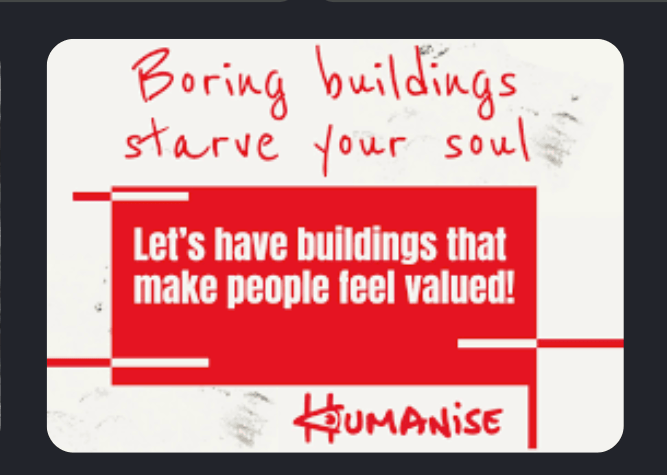
Image: From Humanise’s campaign against boring buildings
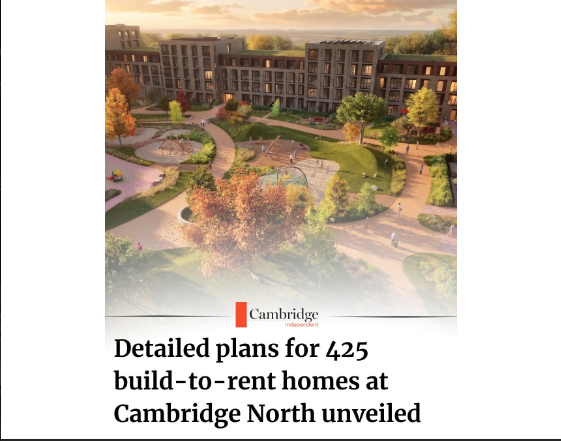
Above – by the Cambridge Independent which should also be in this coming week’s paper edition
“How ugly is it?”
I guess the property professionals involved might say they were inspired by the colour of an ancient pebble or stone block somewhere to make the loosest of all connections to the etch-a-sketch style boxes below.
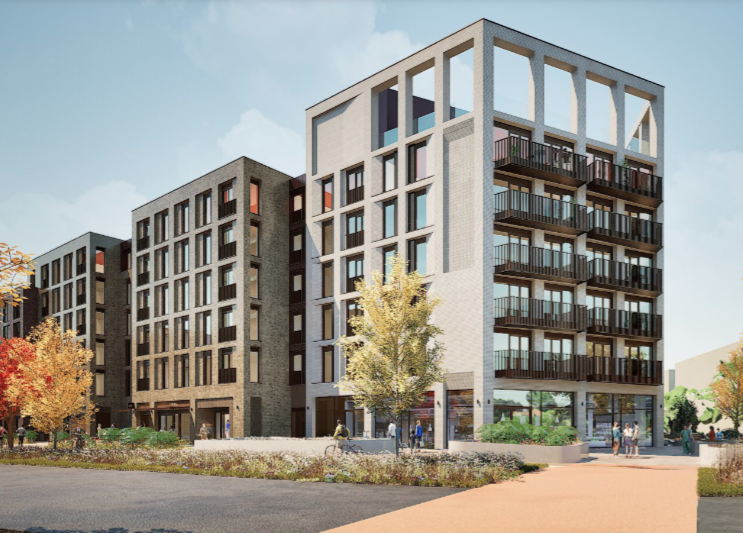
Above. The blandification of Cambridge: Planning Ref 26/01691/REM Design and Access Statement (1/2) Executive Summary p4
Now compare it to Dr Anna Kim’s report of September 2025 for Humanise.
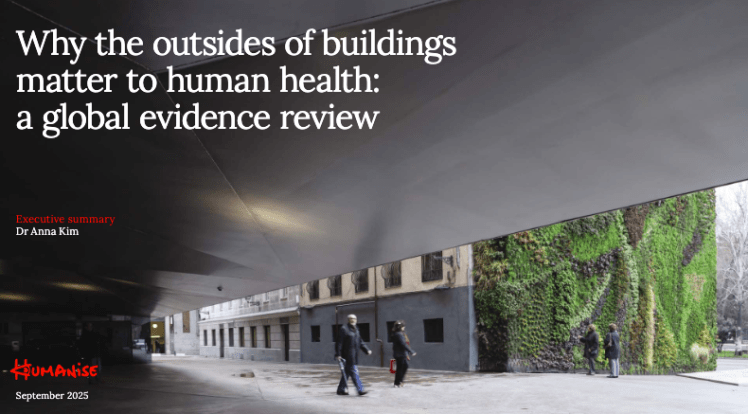
Above – Why the outsides of buildings matter to human health: a global evidence review
In fact, you’re probably best off reading the summary of the above ahead of (or even instead of!) this blogpost.
For those of you interested in the planning application and who would like to submit a comment to Greater Cambridge Shared Planning Service…
You can see the following:
- The planning application and documents (direct link – which sometimes crashes)
- The planning portal which if you select the ‘simple search’ option allows you to type in addresses and reference numbers. C&P 26/01691/REM and the same application and documents will come up
- Guidance on how to respond to planning applications
“Am I living in a box? Am I living in a Cambridge Box?!?”
Some of you may be familiar with Living in a Box’s self-titled song from 1987. The word ‘Cambridge’ can be replaced by the name of any institution or firm involved in constructing such carbuncles should you want to personalise it.
Above – how many times can you get the phrase: ‘Living in a Box’ into a blogpost?
“. The title itself came from a throwaway line: a friend (sometimes reported as former member Jon Bennett) complaining about life in a tiny Sheffield council flat — “I feel like I’m living in a cardboard box.” The band liked the phrase so much they wrote a song around it, recorded it, and then called themselves Living in a Box.”
Above – the origins of the song and band name from TV80s
Read it on the internet so must be true I suppose.
Their hit single that followed two years later could have been all about demolishing substandard housing – Blow the House Down, in 1989. If the style of the guitar solo sounds familiar it’s because Brian May of Queen (who were recording next door) did them.
But I digress.
In a wider context it looks something like this on the street elevations
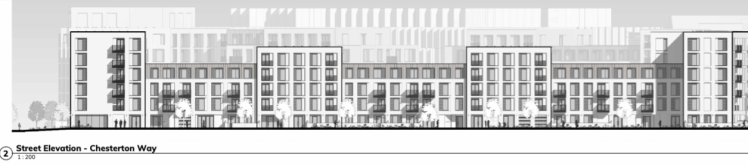
Above – Planning Ref 26/01691/REM Street Elevation
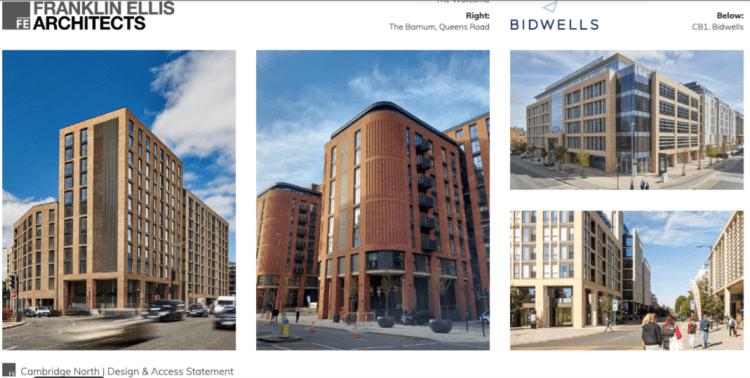
Above – vernacular examples in the design and access statement, p11
I’m not going to lose too much sleep over this development which in the grand scheme of things is:
a) on the other side of town from me
b) was approved by the then Planning Minister Lee Rowley of the doomed Conservative Government of 2024. I blogged about the decision at the time in this piece from April 2024, including the quotation below:
“The Minister was quoted as saying:
“Mr Rowley, acting on behalf of Housing Secretary Michael Gove, has now agreed it would “contribute to the continued growth of the research and development cluster” in the area and be consistent with the government’s vision for Cambridge”
Above – BBC Cambridgeshire 25 Apr 2024“
There’s no point sounding off again on the bland and boring architectural designs, because ultimately the design style was rubber-stamped by the minister in what was probably the only notable decision he made in just over six months in the post before the general election
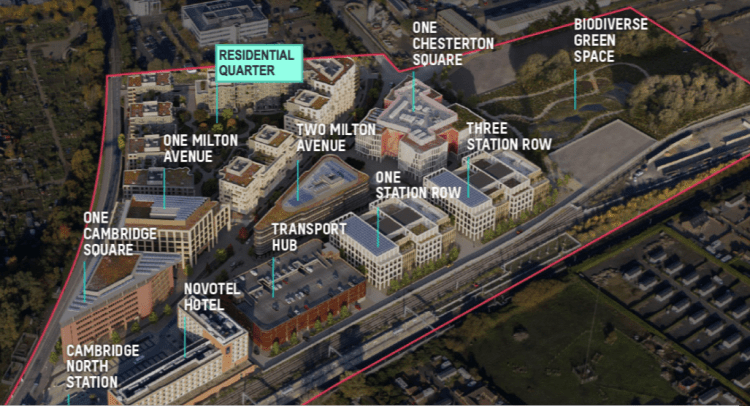
Above – the bigger picture on p16 in the Design and Access Statement
“What on earth is that thing labeled One Chesterton Square?!?”
Possibly a future candidate for the Carbuncle Cup?
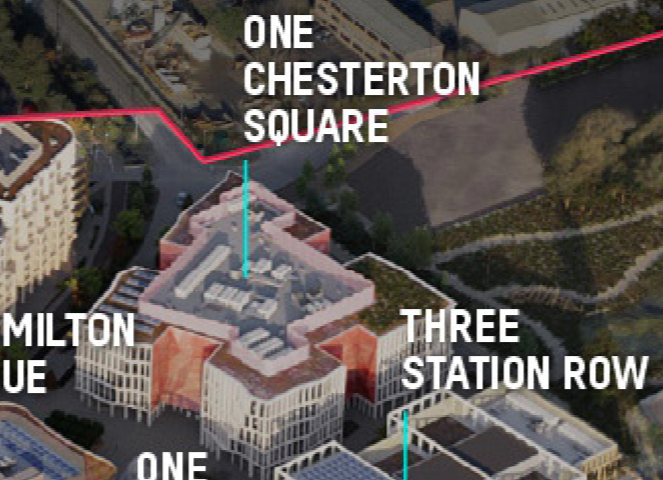
Above – ***Ooooh that’s ugly!!!***
The Designing Out Crime Officer has issues
There’s no security statement, so the officer responsible at Cambridgeshire Police has requested a meeting, noting:
“Mixed use developments with strong transport links, while good for the community and local businesses, can increase the opportunity for crime and influence cross border crimes including County Lines, cuckooing and the associated exploitation of vulnerable people, old and young.”
Which is striking given what the masterplanners – Brookgate, experienced with Cambridge’s main railway station.
“”Visitors arriving by train are now greeted with a generic clone-town scene more like a suburban retail park than an illustrious seat of learning. Reconstituted stone fins line the front of a broad, bland office building, presenting a beige frontage of Pret, Costa and Wasabi outlets to the new station square.”
“Residents have also accused the developers of “designing in crime”, after a rise in antisocial behaviour and a wave of “pop-up brothels”, says Mr Wainwright, the paper’s architecture and design critic.”
Above – Chris Elliott of the Cambridge News quoting Olly Wainwright of The Guardian back in June 2017
“That’s nearly a decade ago!”
Which is all the more reason to learn from contemporary history and not repeat the same design errors elsewhere in the city. Especially given the sums involved. (For the record, Olly Wainwright’s article of 2017 is here, and features quotations with a number of local residents and familiar faces from the time).
‘Could-be-anywhere’ architecture?
One aspect I find thoroughly depressing about contemporary architecture is the lack of variety.
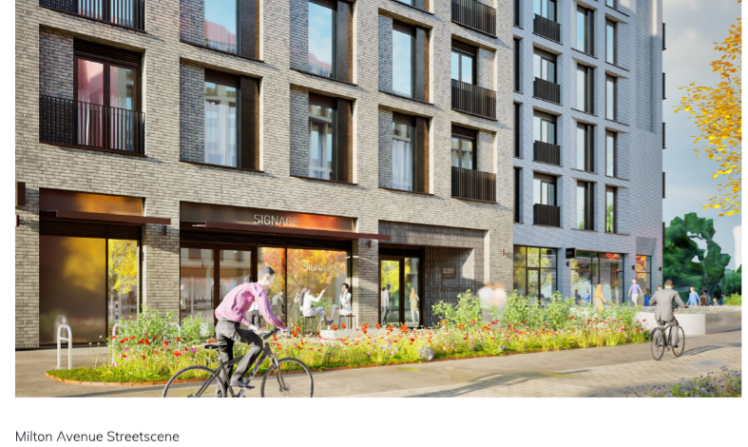
Above – CGI detail, p62 in the Design and Access Statement
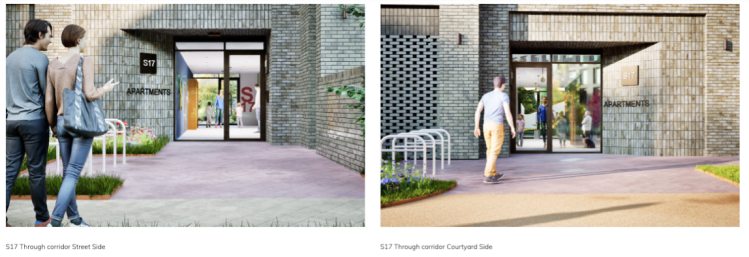
Above – CGI detail, p65 in the Design and Access Statement
Which reminds me of the brickwork of the old Lion Yard outside the toilets in the 1980s/1990s with the stale stench of…exactly.
But then contemporary design attempts at ‘artistic’ brickwork (which looks lazy and low-grade compared with the artistic efforts of previous eras). I find it insulting when property professionals try to justify such things as artistic and interesting.
More identikit grey and beige for the private courtyard.
The internal private gardens are inevitably surrounded by miserable designs that could make the place feel prison-like – especially if they use the grey brick.
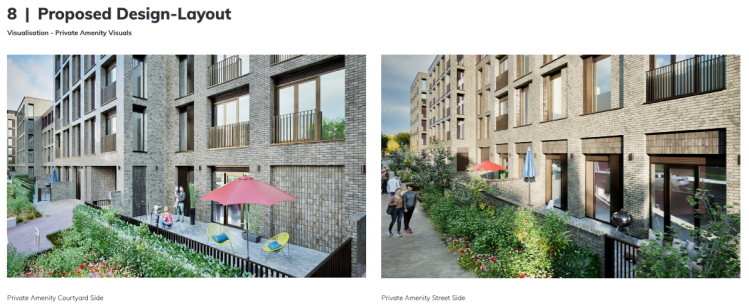
Above – CGI detail, p70 in the Design and Access Statement

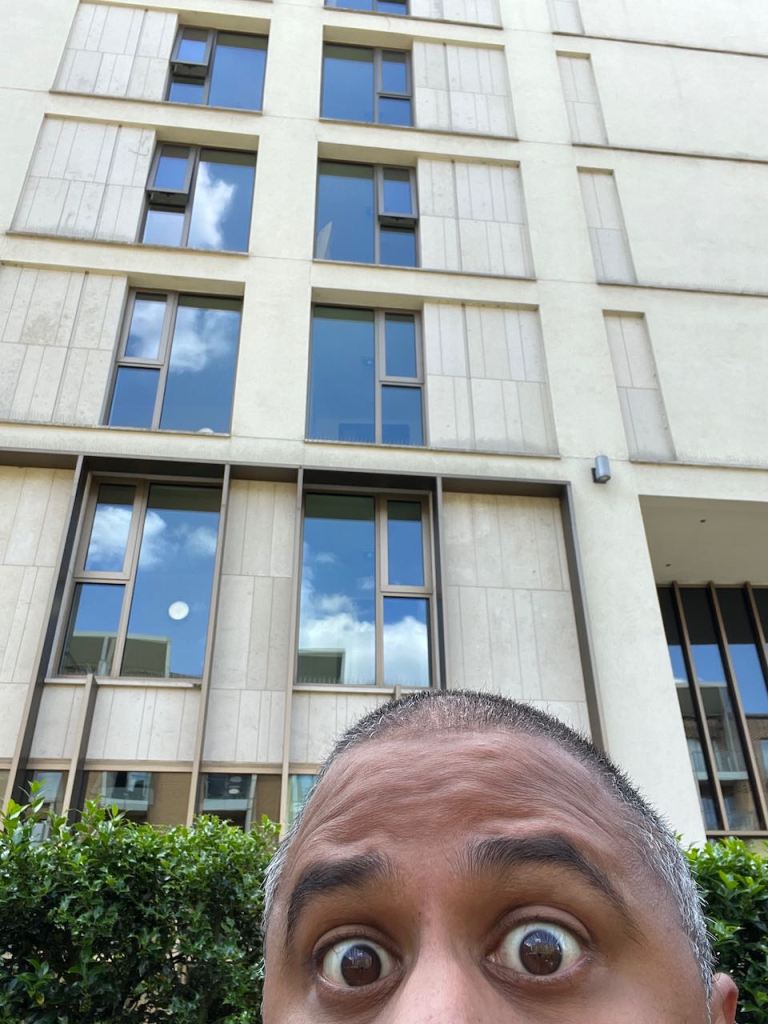
Above – me trying to enjoy a local choir singing on a summer Sunday afternoon a few years ago courtesy of the brilliant CB1 Residents’ Association – but getting distracted by the visually noisy and ugly buildings behind me
The outsides of buildings matter – they affect our mental health
Which brings me back to Dr Anna Kim’s paper from September 2025 for Humanise here
As Dr Kim states:
- The shape of buildings affects stress levels
- Visually engaging buildings help us think and feel better
- Natural features boost mood and reduce mental strain4. Distinctive buildings help people find their way5. Street-level design shapes how we feel and connect
- Buildings with character create a sense of belonging
- We experience buildings through our whole body
- Welcoming design supports wellbeing
Maybe these help explain why Cambridge’s older colleges and their buildings are popular with tourists, students, and alumni alike.
It remains to be seen what Homes England and Hill can come up with for the airport site. I only hope they can take on board the new research findings emerging from the pioneering field of neuroarchitecture.
Food for thought?
If you are interested in the longer term future of Cambridge, and on what happens at the local democracy meetings where decisions are made, feel free to:
- Follow me on BSky or on LinkedIn
- Like my Facebook page
- Consider a small donation to help fund my continued research and reporting on local democracy in and around Cambridge.


