
The MP for South Cambridgeshire (including Queen Edith’s and Cherry Hinton wards within Cambridge City Council) says **Infrastructure First**
(Doing things this way means I’ve got something of a permanent record that’s easy to access and refer to)
Ms Heylings made this announcement on her IG Page
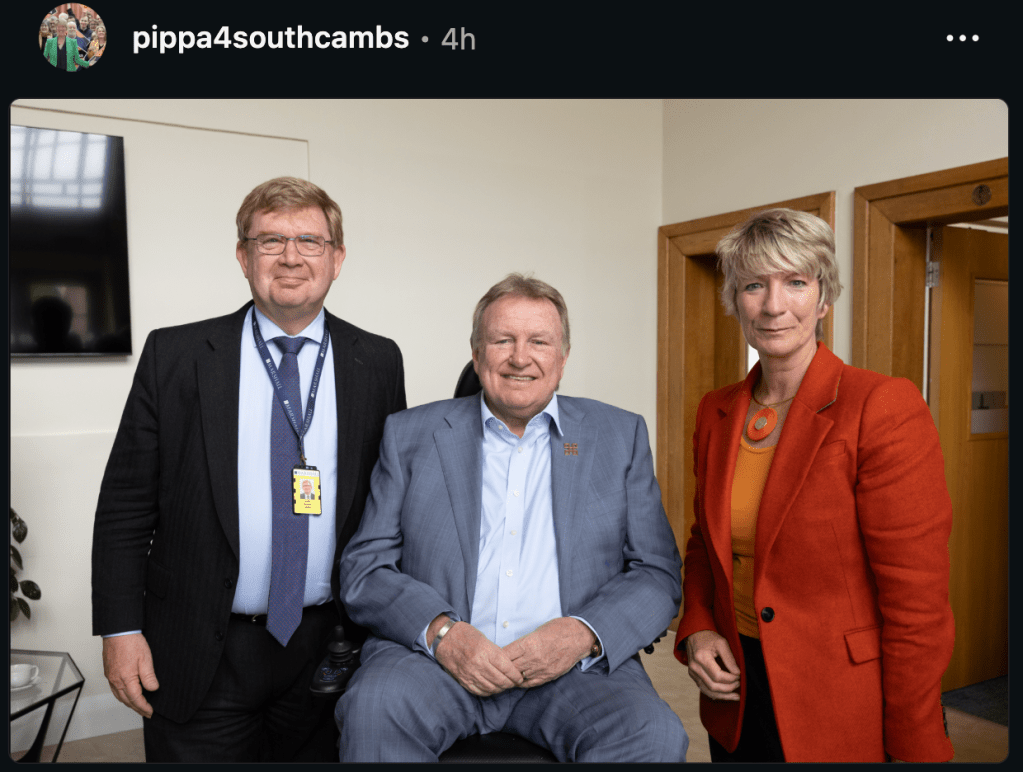
“The Greater Cambridge Development Corporation was announced today — my fellow Cambridgeshire Liberal Democrat MPs, Charlotte Cane MP and Ian Sollom MP and I have a clear message: infrastructure must come first.
“Growth at the pace the Government is demanding simply cannot be delivered without solving the fundamental problems first — water supply, sewage capacity, GP surgeries, transport links and school places.
“A development corporation that tackles those barriers — the things local councils can’t solve alone — could have a role to play. But one that strips planning powers from local authorities and overrides community voices is something we strongly oppose.
Growth must be done with communities, not to them.”
How Southern Cambridgeshire has changed
…and will no doubt change again.
Just before the General Election of 2024 the Conservative Party dominated the parliamentary seats in Cambridgeshire and Peterborough. Then came the earthquake in the south of the county.
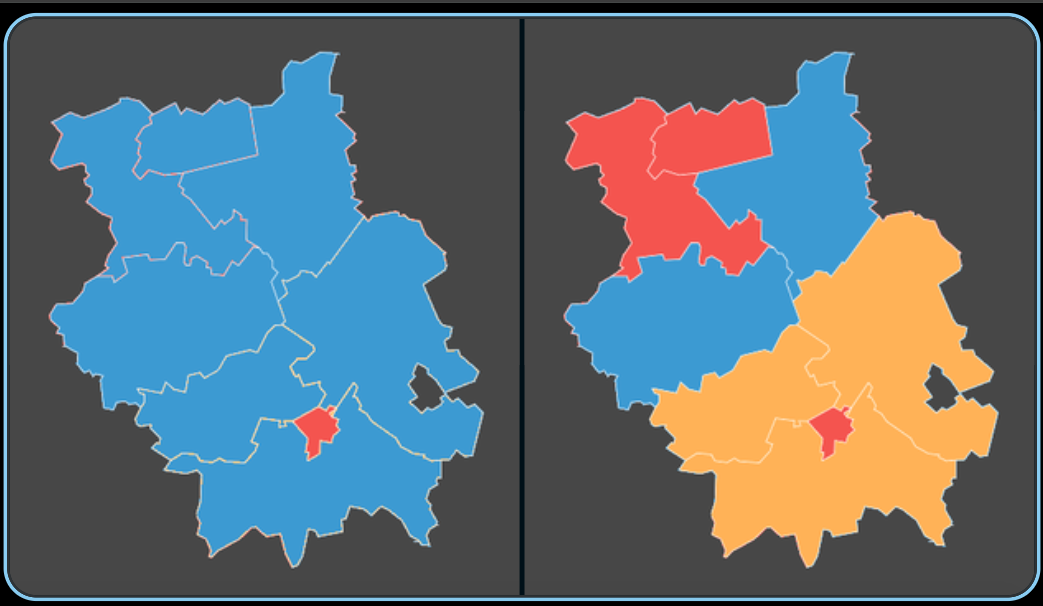
Above – how the constituency representation changed – based on the post-2024 boundaries
The last time the old Cambridgeshire / Cambridge County constituency surrounding Cambridge was held by someone other than a Conservative was when TGWU Rep and left wing campaigner Albert Stubbs won the seat for Labour in Attlee’s landslide of 1945. This was when his local party included a number of infrastructure improvement demands in their local manifesto, which included three interesting items, two of which we’re still waiting for.
- Indoor swimming pool (now Parkside, completed nearly 20 years later)
- Municipal sports ground
- Central Concert Hall owned by the Town

Above – Labour’s Plan for Cambridge, Oct 1945 p9, featured in Lost Cambridge (which has links to the digitised source document and the surprisingly interesting proposals from the Cambridge Communist Party!)
The Cambridgeshire Liberal Democrats highlight multiple chronic failures of government policy over successive governments
- water supply,
- sewage capacity,
- GP surgeries [to which you could and dental clinics too]
- transport links and
- school places.
I hope that all of our local MPs will get a much higher public profile as things move forward. Ms Heylings is the most highest profile, regularly posting social media content including video content. Furthermore, I think there is a convening role for local MPs in chairing debates with representatives from campaign groups, research experts, and more to enable local residents (Especially young people) to get into the detail of specific issues of concern. Such as water capacity.
I’d like to see the other MPs putting out more, similar content as part of a wider public engagement approach to the future of the city and county. In particular clear examples where MPs have spoken in the House of Commons asking questions of ministers, and have tabled written questions which they then publicise the responses on. In particular I’d like to see Cambridge’s MP Daniel Zeichner tabling far more written questions on the future of the city and the challenges involved. See also the records of written questions (and ministerial responses) from:
(Feel free to suggest questions that your local MP can put to ministers on your behalf via https://www.writetothem.com/ )
With all of these, the problems cannot be solved by Greater Cambridge alone. Furthermore, Cambridge’s ‘offer’ to the places able to help solve those problems cannot simply be along the lines of the Yours, Cambridge campaign. Not least because the very large and substantive land holdings that the older and wealthier colleges have are now appearing in news items that are sources of tension in localities far from Cambridge – such as here in Kent.
“Could new specialist schools be funded at ARU Peterborough for things like town planning and dentistry”
This was a question I put to the Cambridgeshire and Peterborough Combined Authority in both 2022 and 2025 – the latter asking for a progress update on the former. You can listen to my question on the issue of a new school of dentistry at Peterborough, and the response from the Skills Committee Chair Cllr Lucy Nethsingha, Leader of Cambridgeshire County Council.
The above response was given in February 2025 and I wrote about it here. Anyone want to table any public questions for the Combined Authority’s committees coming up later this month? Have a look at their calendar here.
In the same blogpost above I also reminded readers / the CPCA of all things lifelong learning. Here’s what former Labour minister from a century ago Arthur Greenwood said about adult education and lifelong learning:
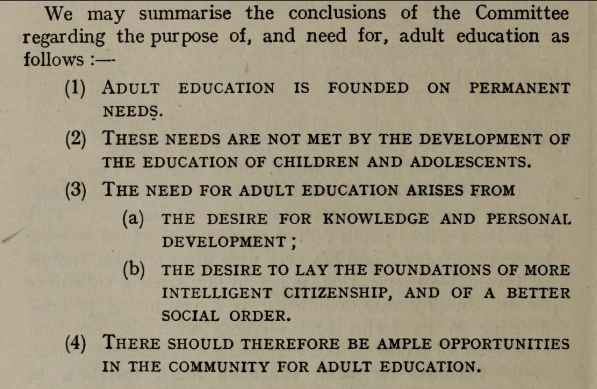
Above – Arthur Greenwood (1920) The Education of the Citizen – Digitised here
Given Cambridge University’s global market, what prospect is there for growing new institutions to serve local communities?
It would be interesting to see the data on the longer term destinations of college leavers and graduates from the further and higher education institutions in/around Cambridge. My guess is that the vast majority of Cambridge University graduates leave the city for pastures new, with few staying or returning to settle in the long term. This is also my guess for the private and state-funded sixth form colleges that have a reputation for academic achievement. How does this compare with the vocational providers such as Cambridge Regional College?
The one other risk is diseconomies of scale with ever larger institutions. At what point does it make sense to establish a new institution rather than continually growing an existing one?
Fragmented governance structures and institutions – things that the Greater Cambridge Development Corporation cannot deal with
If I’m not clear on how provision of school places, GP places, and NHS-funded dental places is organised and scrutinised, then I can’t imagine a very busy general public has much of a clue either unless they/their families are at the front line and/or are regular service users. It’s one of the reasons why I think the civil service is missing a trick by not targeting people who have long term experience of engaging with the welfare state and state-funded/provided services. They live the day-to-day problems and furthermore can see the connections and gaps where those working in the individual silos (especially the middle managers and executives) might not.
I’m not convinced that the restructure of local government will resolve Cambridge’s long term issues. I remain of the view that the Redcliffe Maud Report of 1969 (the Royal Commission on Local Government in England) should have been the starting point for negotiations.

Above – From Lost Cambridge: the abandoned proposals from 1969 that proposed a Greater Cambridge Unitary Council that matched the boundaries of the economic sub-region, within a wider regional ‘Province’ for large infrastructure co-ordination.
For those of you interested in the history and the source documents, see Lost Cambridge here
Cambridge City Council’s next meeting covering planning and transport
It’s on 23 June at The Guildhall.
You can see the meeting calendars of the following below:
- Cambridge City Council
- South Cambridgeshire District Council
- Cambridgeshire County Council (incl the Greater Cambridge Partnership)
It would be good to rebuild the network of people scrutinising all of the above like we had a decade ago
Food for thought?
If you are interested in the longer term future of Cambridge, and on what happens at the local democracy meetings where decisions are made, feel free to:
- Consider a small donation to help fund my continued research and reporting on local democracy in and around Cambridge
- Follow me on BSky
- Spot me on LinkedIn
- Like my Facebook page


