So says a report tucked away in a place where most people would not know existed
“Overall participation declined compared to the previous year, with a 6.2% reduction in total learners and a 7.4% decrease in new starters. This was driven primarily by a fall in Adult Skills enrolment, alongside a notable reduction in Tailored Learning volumes.”
There has been a decline in provision for construction and healthcare
“…higher-level provision (Level 3+) remains limited and has declined significantly… …While areas such as Retail have grown, key sectors including Health and Care and Construction have seen reductions.”
Which is a triple-blow for the Cambridge economic sub-region as these are sectors where employers’ groups have continually fed back that they have chronic shortages at technical level. There are similar tales across the country. And austerity has a long tail too – as the Institute for Fiscal Studies wrote in 2022
“The Association of Colleges has warned that at this rate adult education will disappear by 2020. The total number of adult learners fell by 10.8% in just a single year between 2014 and 2015. We have had 40% cuts in real terms to the adult skills budget between 2010 and 2015, and spending on the non-apprenticeship parts of this budget fell by 57%.”
Above – David Lammy MP to House of Commons, 13 Jan 2017 in a debate on night schools and Adult Education
I wonder what became of him!
“What’s going wrong with lifelong learning?”
Lots of things, but I make the following observations specific to Cambridgeshire:
- Public transport access makes or breaks people’s participation on training schemes – especially those of us (myself included) on low incomes.
- Location of training facilities clearly matters – hence the CPCA’s focus on education and training ‘Cold Spots’
- The amount of money offered from central government is pitiful in comparison to need – and Conservative ministers did not grant the CPCA the legal powers to tax the wealth being generated within the sub-region to pay for the much needed investment in training.
- Private sector firms won’t invest because in part they fear once trained at their own expense, the staff will get poached by competitors which is what happens with Cambridge City Council’s town planners.
- Ministers past and present have not brought in any substantial policies or programmes for adults to retrain in those areas where there are skills shortages.
As a result, there is too little funding trying to chase a very specific cohort of people – often with multiple needs that the Combined Authority cannot manage alone.
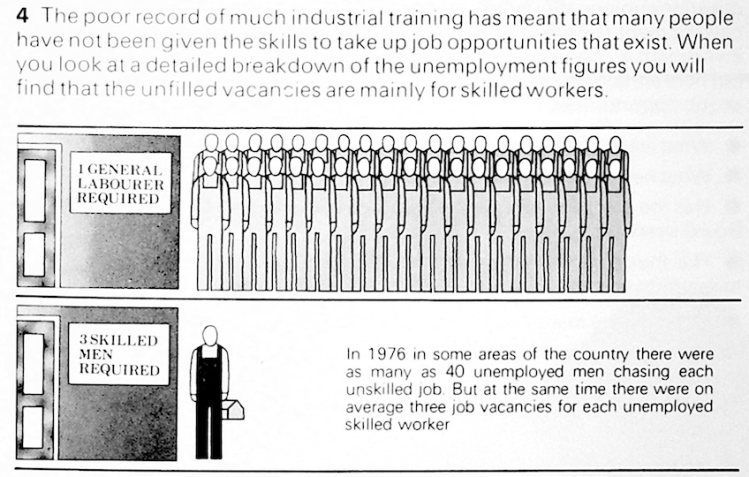
“The poor record of much industrial training has meant that many people have not been given the skills to take up job opportunities that exist. When you look at a detailed breakdown of the unemployment figures you will find that the unfilled vacancies are mainly for skilled workers.”
Above – Trade Union Studies (1976) British Broadcasting Corporation, p53
Has much changed in the past 50 years?
Location, location, location of learning centres
With that shoestring funding, the Combined Authority funded the establishment of the new training centre on the edge of Chatteris – which was opened by The Princess Royal in late 2023. Its location however, highlights the many structural problems that Chatteris faces.
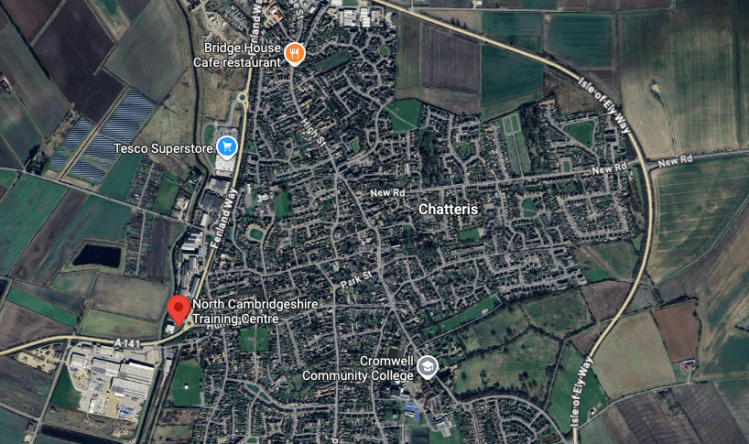
Above – the North Cambridge Training Centre on the western edge of Chatteris. GMaps
For a town which has few bus services and no rail link, and which has a limited land supply due to being surrounded by land liable to flood (it’s in the middle of The Fens).
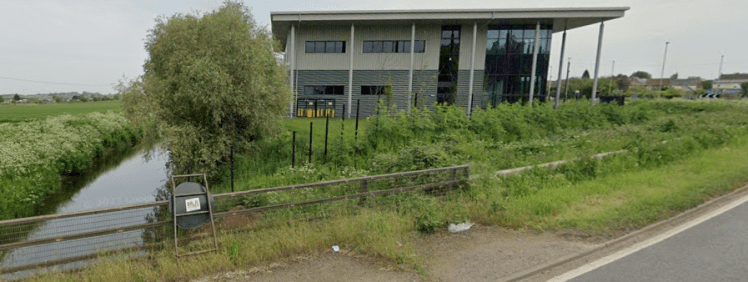
Above – the training centre sits next to part of the drainage infrastructure
Chatteris used to have a railway station linking it to March and St Ives.
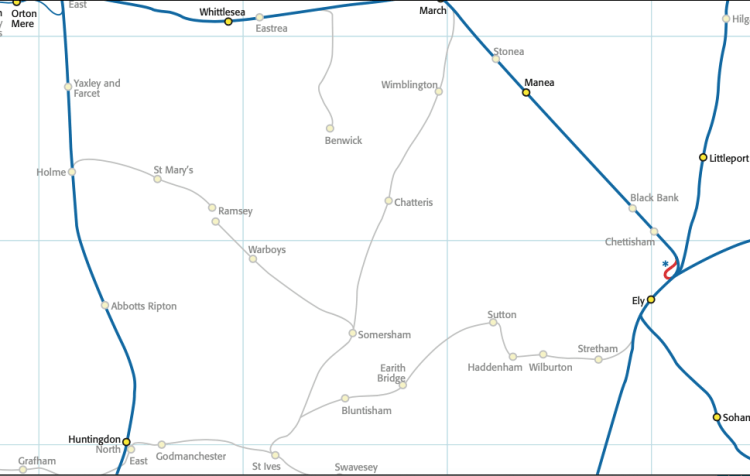
Above – Chatteris at the centre of the old greyed out railway network. Detail from the New Adlestrop Rail Network Map
The story is told in Branch Lines around March
Does the future of Chatteris involve reopening that line? Or building a new East-West line linking the town and new reservoir to Ely in the east and Ramsey and beyond in the west?
The lack of vision from the Combined Authority – linked to their lack of funding and competence?
Cllr Alex Bulat tabled a public question on my behalf back in 2023.
“Now that Marshall’s Airport is consulting about what to do with its site, and now that Hills Road Sixth Form College is consulting about opening a new college north ofCambridge, what consideration has the CPCA given towards establishing a lifelong learning centre inCambridge that is easily accessible by public transport?”
Above – Cllr Dr Alex Bulat to CPCA Skills Committee, 03 Sept 2023 – you can read the full text of the question, and the CPCA’s response here.
I’m tempted to table a public question for the next Skills Committee on 15 June 2026 (you can read the meeting papers here) to follow up on given that airport site question given the recent acquisition by Homes England – an executive agency of the Ministry of Housing & CLG.
There still remains the problem of underinvestment in skills and more broadly, lifelong learning
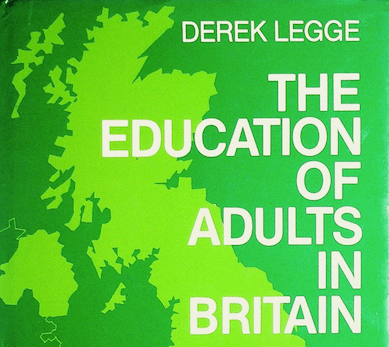
Which is why for me I think policy makers should have a look back to previous generations to see what we had and lost. Derek Legge’s book published by the Open University in the early 1980s gives a comprehensive picture which you can browse through here.
Above – Derek Legge’s The Education of Adults in Britain (1982) by the OU
The contents pages covers much of the philosophy / disposition of lifelong learning in its broadest sense – going far, far beyond the very narrow definition given by successive governments. (Mainly as an excuse not to fund anything more than ‘essential skills for growth’)
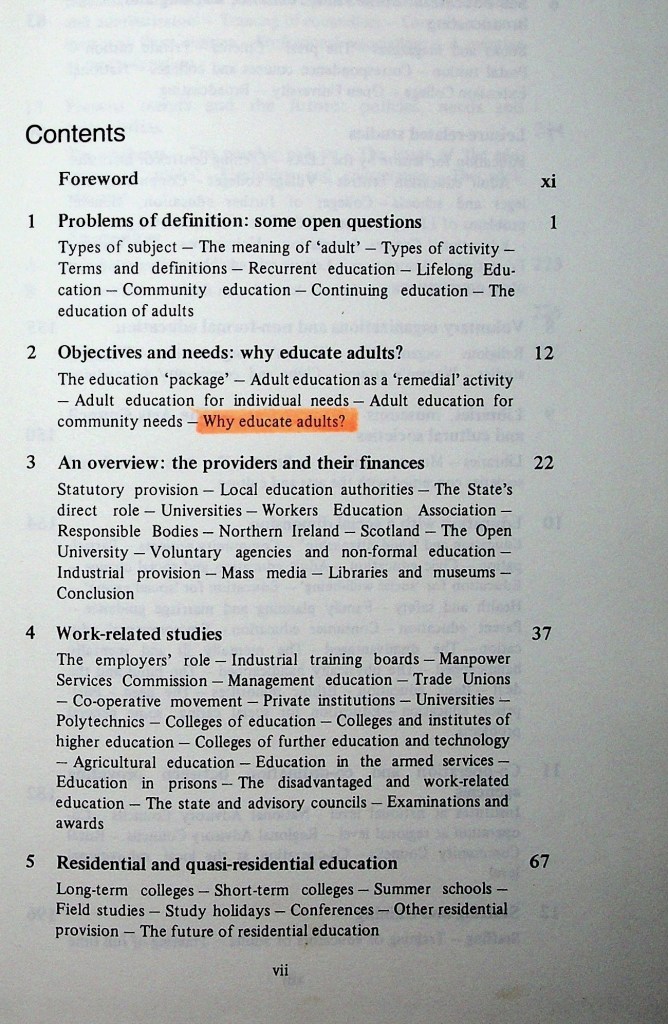
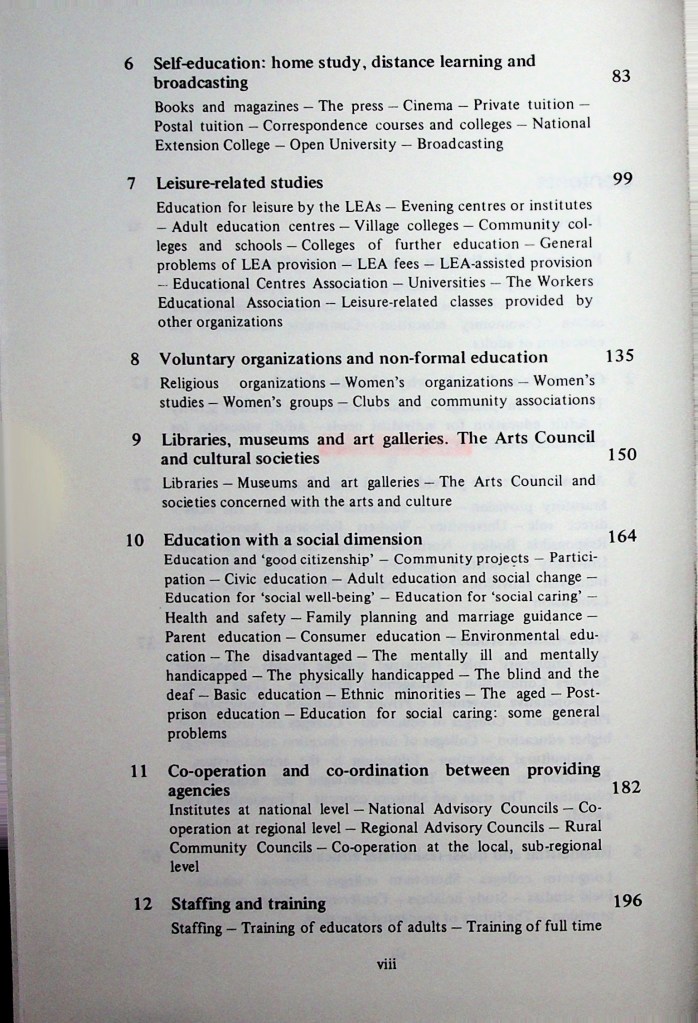
Above – the contents of The Education of Adults in Britain
Which helps explain why I want to see someone in political office make a pitch for a new large lifelong learning college in an expanding Cambridge. I’ve chosen the airport site given that as well as Cambridge East railway station, light rail / mass transit is also a consideration. Which means there is the chance to build a large facility that can house something far more than just a few standalone training facilities as at Chatteris. Instead there is the chance to build a place where adult learners would choose to be, and where adults would choose to get out of the house to be there.
It remains to be seen whether the politicians of today and the near future have the vision to make it happen.
(And for that to happen, it needs more of us to make that case to them).
If you are interested in the longer term future of Cambridge, and on what happens at the local democracy meetings where decisions are made, feel free to:
- Consider a small donation to help fund my continued research and reporting on local democracy in and around Cambridge
- Follow me on BSky
- Spot me on LinkedIn
- Like my Facebook page
Food for thought?

 The Cambridge Town Owl