
At the same time, Homes England (part of the Ministry of Housing) buys the Cambridge East site (AKA the airport) off Marshalls.
See the consultation outcome published by the Government here, which was published after their press release that I wrote about in my previous blogpost.
“Following establishment, the Secretary of State will appoint an interim Board comprised of subject matter experts in fields relevant to development, such as transport and urban design. A public appointments process for the permanent Board will be commenced as soon as possible once the Development Corporation is established, alongside invitations to local leaders, leading to the appointment of a full Board by early 2027.”
Above – GovUK Press Release 03 June 2026
“What powers will the CamDevCo have?”
“A powers and functions Statutory Instrument will be laid in the autumn, which will equip the Development Corporation with plan-making and development management powers. This will be accompanied by a Secretary of State direction to restrict the use of plan-making powers by the Development Corporation when it is established.”
So we’ll have to wait until after the summer recess. That said, expect lobbyists to be bombarding ministers and civil servants with their requests on what should be in it.
Democratic accountability and freedom of information
While the CamDevCo will be directly accountable to the Housing Secretary and not to local residents, the consultation response states:
“To ensure local leadership continues to have a substantive and influential role, the government is committed to maintaining 4 Board positions for democratically elected local representatives, even if the number of democratically elected local leaders reduces following any local government reorganisation.”
Which puts a huge responsibility on council leaders and executive councillors who will end up serving on the board. What remains to be seen is how large the board will be. The larger the numbers, the less their local influence will be.
“It will also be subject to the Freedom of Information Act as well as the Environmental Information Regulations 2004.”
Once the CamDevCo has been established, https://www.whatdotheyknow.com/ will become an important means of holding the institution to account. Note that any information requests containing ‘Environmental Information’ – which inevitably covers planning and transport, will be covered by the Environmental Information Regulations. They have stronger powers of disclosure and fewer exemptions/exceptions enabling the withholding of information. See the Information Commissioner’s guidance here.
‘The government also welcomes respondents’ emphasis on protecting Greater Cambridge’s unique character, environment and heritage’
Above – from the Government’s response. I wonder how the Cambridge Science Park and consultants will explain how their building designs will protect Cambridge’s ‘unique character, environment, and heritage’.
For those of you passionate about this, consider joining Cambridge Past, Present & Future – Cambridge’s local Civic Voice representative. They routinely scrutinise planning applications – in particular the larger and more controversial ones. See their planning pages here.
Homes England buy the Cambridge Airport site off of Marshall’s.
“Homes England, with its National Housing Bank, and The Hill Group have today completed the acquisition of Cambridge East, a strategic site that will support the delivery of more than 10,000 new homes, thousands of jobs and a thriving new community.”
Above – press release from GovUK, 03 June 2026
I’ve spent several years looking at the future of the airport site – which has a *very long* history. Three years ago I went along to an early consultation event to find out more – see my write-up here.
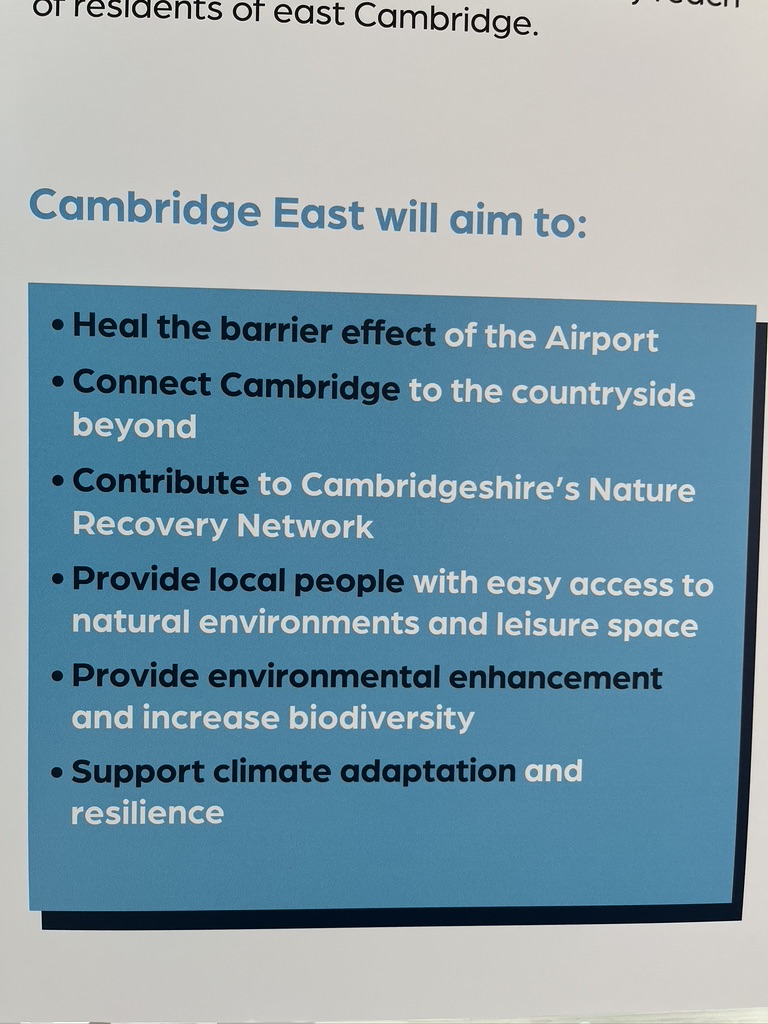
The most important finding from my perspective was that the ugly brutalist proposals from the late 2000s were scrapped.
I wrote about them here – the one below dating from 2008
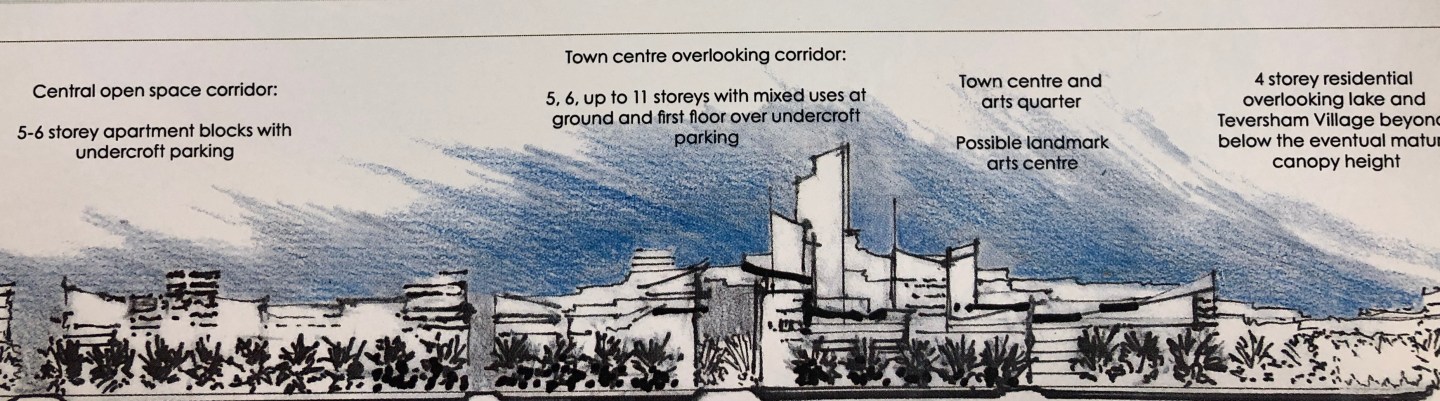
Above – ugly stuff
What was and is still particularly grating and irritating is when property professionals gaslight local residents by trying to associate the architecture and design of the ancient colleges with ugly brutalist designs, such as in the example below.
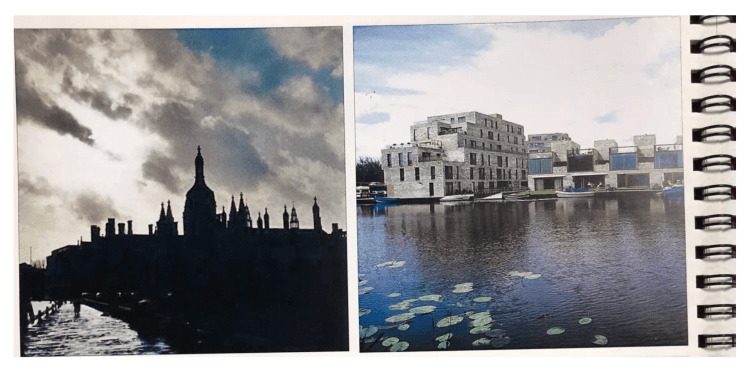
Above – from Cambridge East, Draft Spatial Masterplan Jan 2008, in the Cambridgeshire Collection
This informed an area action plan published by South Cambridgeshire District Council here. How does this compare with today’s standards 18 years later?
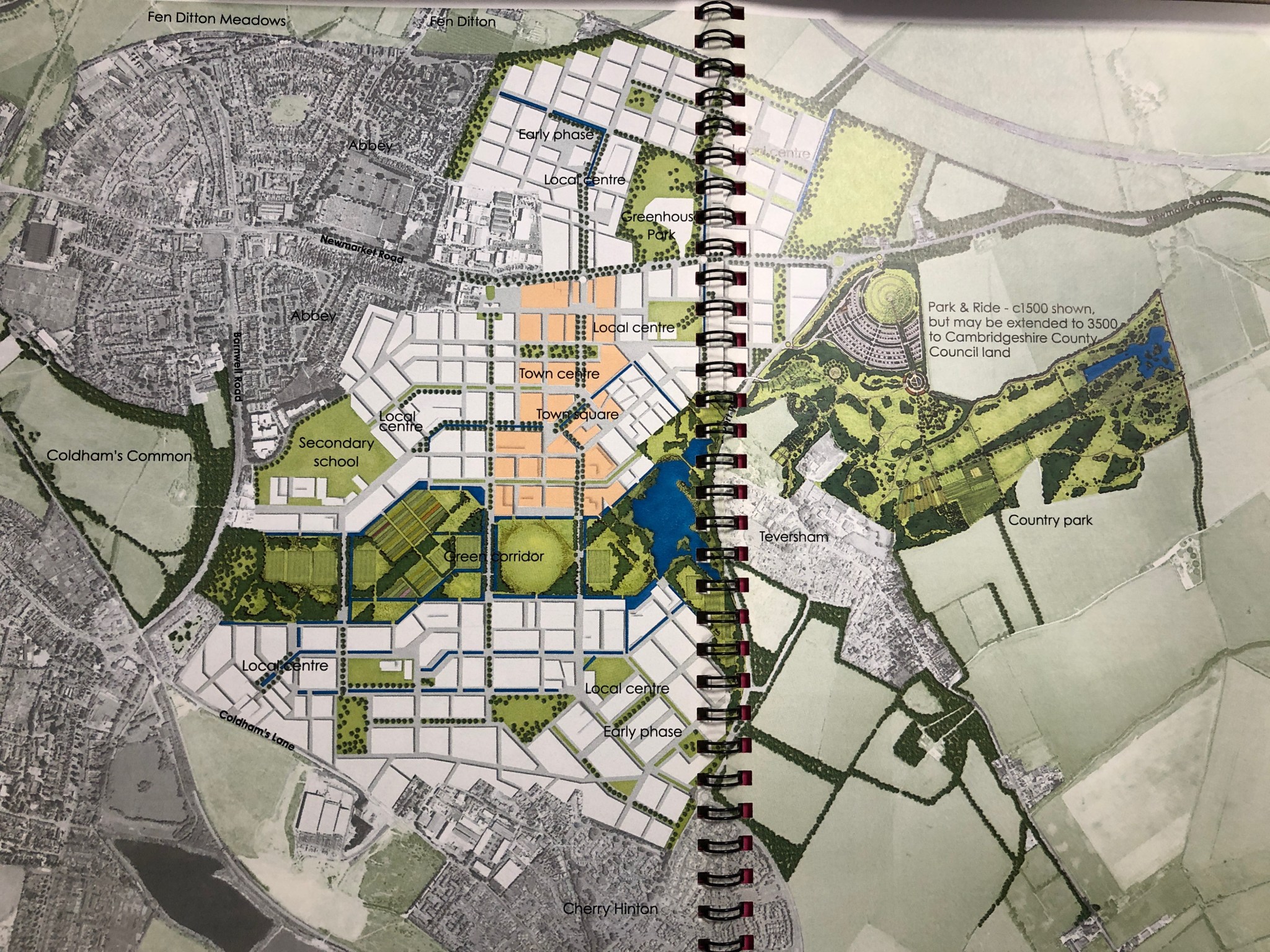
Above – the last of the screengrabs courtesy of the Cambridgeshire Collection – you can visit the collection to read the document in full. A reminder that these proposals were scrapped as obsolete.
What the draft local plan says
I wrote about it back in December 2025
The airport site as a new urban and regional centre
On the site uses, the emerging policy for the airport site states that the uses/activities will include:
“A range of supporting services and facilities to meet the day-to-day needs of those living, working, visiting, travelling through and attending education there, including education, health, community and retail uses. These uses will be delivered at a series of walkable and wheelable neighbourhood centres;”
and
“Provision for such a wider range and scale of cultural, leisure, education, shops, community and faith facilities as will meet the needs of Cambridge East and the immediately surrounding area, as well as those of the wider city and sub-region, that will complement and not compete with Cambridge city centre, which may include civic uses, a conference centre, concert hall, arts centre or leisure facilities”
Above – Policy S/CE: Cambridge East
So the planners are already looking at sub-regional facilities to be located on site.
Rob Cowan on urban design – what facilities could be built on the airport site?
Another plug for Mr Cowan’s excellent book, this is my favourite diagram which indicate the sorts of facilities needed to sustain different levels of populations.
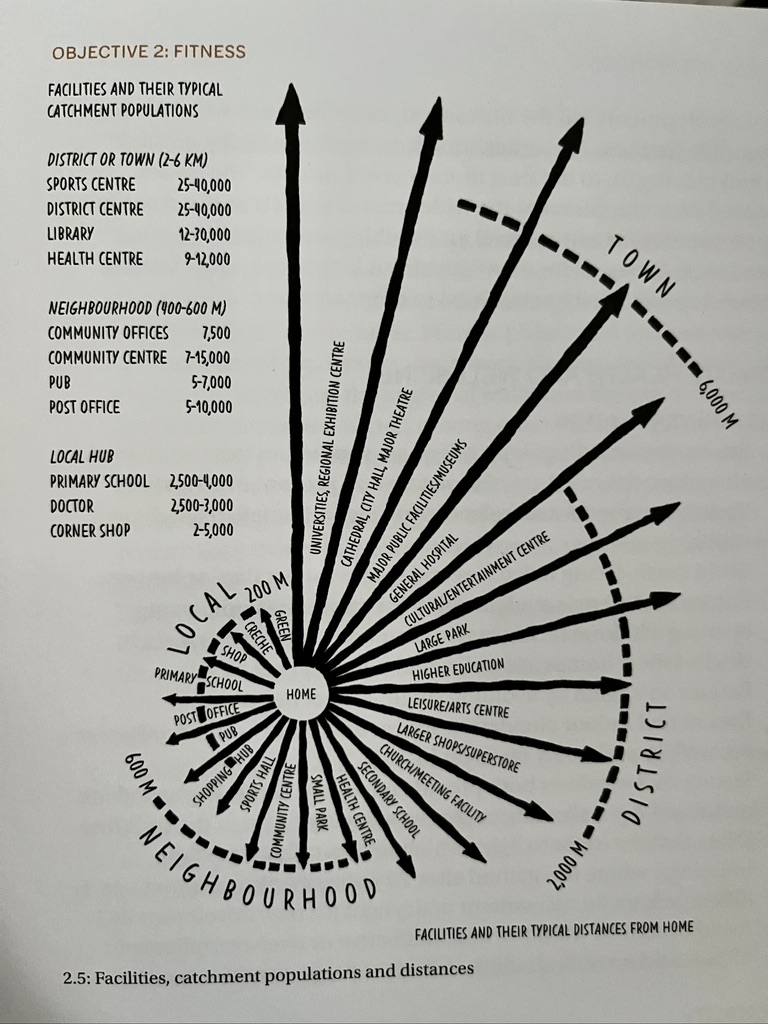
Above – Fig 2.5 in Essential Urban Design by Cowan, R. (2021) RIBA
What I’d like to see further down the line is community engagement inviting residents and professionals working together to come up with…
…A very long list of facilities…
…including references to what other towns and cities around the world have that might be suitable for Cambridge.
The significant potential here is that with Cambridge East Station being proposed, a new public transport and light rail interchange could be built, similar to what our Hungarian twin city Szeged has.
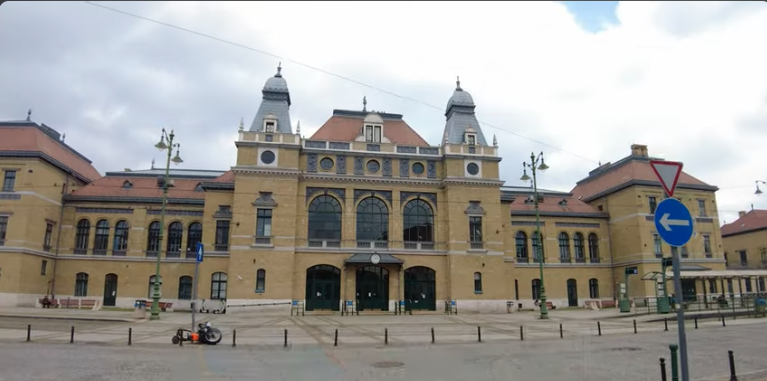
Above – Szeged Railway Station by Railway Networks – and a textbook example of integrated public transport. Why couldn’t we have this for Cambridge Station’s revamp?
I’ve also suggested in many previous posts of creating a design code that is clearly inspired from pre-WWII architecture to provide a strong contrast to the design and style of Eddington in NW Cambridge. It would be such a waste of a site if the best that the UK architectural industry and property professionals can come up with is a cheap imitation of minimalist, bland, brutalist, and socially divisive architecture. (Note that Eddington was designed to be an exclusive Cambridge University enclave, not as an inclusive extension to the city incorporating much needed city-wide and sub-regional-wide facilities).
“Where is the much-needed map of a large scale outline strategic plan?”
This is one of the early actions that I’d like to see: Community events with very large maps that invite the public to suggest:
- what needs to be included
- where they could be located
- how they could be connected
I made this suggestion for Open Cambridge 2023. Could we do so this year?
One of the other means of connecting the new large facilities is by active travel – something first conceptualised by Gordon Logie of Cambridge City Council back in 1966.

Above – Cambridge in the mid-2010s as imagined in 1966 in Lost Cambridge
Gordon Logie was already imagining the post-Holford-Wright expansion of Cambridge, with a network of cycleways connecting all of the city’s secondary schools. Many of these were either in the process of expansion or had recently been constructed. Some of the ones marked were proposed for construction but never got built – such as a secondary school in Fulbourn.
We already know of the Mass Transit Study commissioned by the Growth Company
Since then, minsters have moved a step forward
The Government’s Mass Transit Task Force
This was announced on 21 May 2026. My hope is that we’ll see some new factories and manufacturing facilities built in the north of England – creating the much-needed jobs and strengthened supply chains. Cambridge can then procure the rolling stock from them. The worst option would be to lease rolling stock from existing rolling stock companies because that would act as a massive drain on wealth from Cambridge. Short of ministers creating new not-for-profit rolling stock companies, there’s a case for Cambridge establishing its own.
Campaigning on light rail
A quick reminder of the LRTA’s campaign. There’s also the Cambridgeshire Sustainable Travel Alliance at https://cambstravelalliance.org/ which I hope will be convening some meetings over the summer. Because ministers have kick-started a process that will transform our city and county over the next 25 years. It’s important that residents – especially children and young people, have a voice and can influence the decisions made on what they will inherit.
If you are interested in the longer term future of Cambridge, and on what happens at the local democracy meetings where decisions are made, feel free to:
- Consider a small donation to help fund my continued research and reporting on local democracy in and around Cambridge
- Follow me on BSky
- Spot me on LinkedIn
- Like my Facebook page


