The Sutton Trust published new data as Cambridge Ahead held a discussion about inequalities in the city, concluding that ‘opportunities are not enough‘
“At Young Citizens, we want young people to leave formal education with a strong grasp of the political, legal and economic functions of society, and with the social and moral awareness to thrive in it.”
Something’s going wrong in Cambridgeshire
The interactive map from the Sutton Trust is here, and displays data on:
- Below left: White Working Class opportunities index
- Below right: White British Free School Meals percentage.
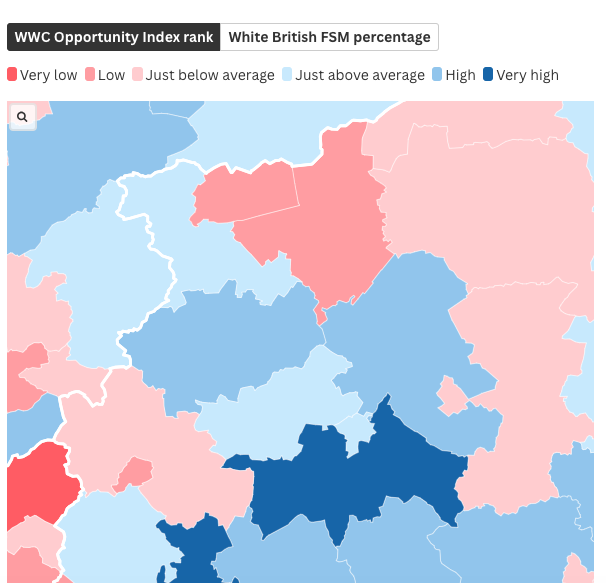
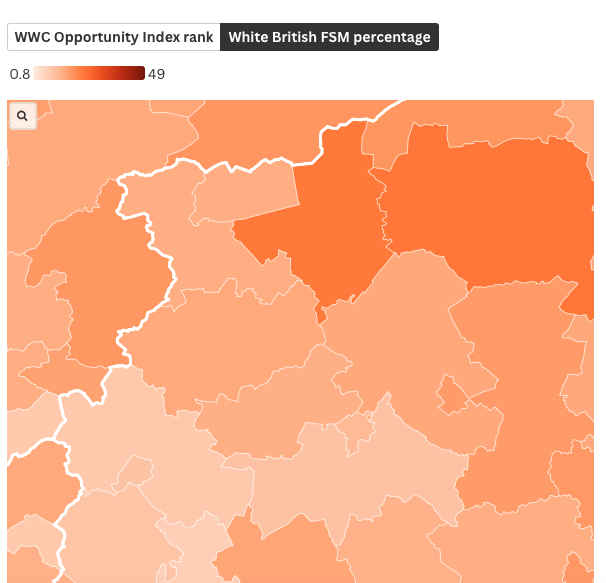
Above left: WWC Opportunities Index, Above-Right, FSM Percentage. Source: Sutton Trust
In North East Cambridgeshire constituency, and in Peterborough, opportunities for WWC children are low, compared with South Cambridgeshire constituency (not the district council area) where they are very high.
On Free School Meals the interactive map has the numbers behind the shading. In NE Cambs the figure is just over 22% of WWC Children receiving free school meals, while in South Cambridgeshire the figure is less than half that, at just under 10%.
This reminds me of Mary Chamberlain’s book from 1977 titled Fenwomen
“‘Fourteen I was, when I left school. I won a scholarship to Ely High School, but couldn’t go because mother couldn’t afford it. Straight away I went to work for a man in the Village, for two shillings a day.”
“I didn’t go to college, there weren’t the funds, and there weren’t the grants, unless you were terrifically clever.”
Above – two quotations from interviewees about their early 20th Century childhoods
One of the other common themes is the impact that poor transport networks – in particular public transport networks, have.
“…To walk up to the surgery was one thing, but to make up your mind to go on the bus at the time the bus leaves on the days it leaves is another thing altogether. In that the Health Centre bus is provided, that is a service, but I still think that a lot of people who perhaps could do with a little medical attention forego it now.”
Which is sobering when you consider how poor the bus services and rail services are.
A reminder – The Greater Peterborough Rail Loop concept
This section is from a blogpost I posted back in October 2024 – making the case for light rail (or electrified suburban rail) loops to connect up the Fenland towns which could also become the sites for new medium-high density accommodation and/or employment sites.

Above – from G-Maps: A conceptual Peterborough and North Cambs light rail loop.
The above was part of a series of concepts I played with in this blogpost. As far as Cambridge is concerned, a North-West-of-Cambridge loop would connect up with Chatteris and Ramsey creating a corridor where both towns shared the same rail line that connects the two loops
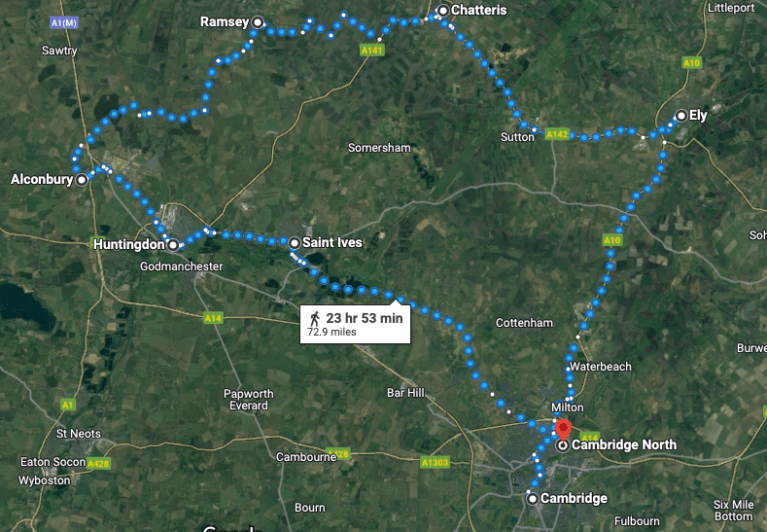
I incorporated the above into a blogpost on the Chatteris Reservoir here.
What Cambridge Ahead said
They posted a short piece on LinkedIn here
“A recurring theme throughout the discussion was that opportunity alone is not enough. Young people need to be able to see those opportunities, understand the routes available to them and access them in practice.”
Above – Cambridge Ahead 18 June 2026
The reason why that quotation resonated with me is because I lived it in the mid-1990s.
‘I wish that I knew what I know now, when I was younger’
Each of us who goes through secondary school and also further education/sixth form experiences ‘the great scattering’ – something that at the time wasn’t in popular parlance then. But Rod Stewart and The Corrs had released that number around the time I had finished my A-levels. Being the neurodiverse deep-thinker I pondered for months what this would mean in my personal context, almost trying to second-guess myself at times. But I never figured it all out until after I had graduated from university, by which time more than a few career and life routes had already been closed off.
Why as a county are we still failing today’s generations of teenagers just as my generation was failed some three decades previous?
Not only that, in too many areas we’ve actually gone backwards:
- Opportunities for part-time work for teenagers (a social right of passage where teenagers get to interact with the public in the workplace and be treated as adults – eg working on a checkout at a supermarket or in a pub/bar/restaurant)
- Integrating teenagers with the public service providers that they will be dependent on, on their own terms as adults – and learning how to hold them accountable as well as finding out about possible future careers.
- Declining public social spaces – safe spaces, for teenagers and young people. The ones with the least are the ones who don’t get to go to the big nights out or big private parties – which is why I suggested this to provide not just more opportunities but also the outreach to go with it.
- Declining transport access – especially public transport access which is why the recent headlines about bus services declining by 2035 make for such grim reading.
Not surprisingly, one think-tank has decided the entire system of local council funding needs a fundamental rethink. (Here’s an example from The Fabian Society in the early 1970s trying to unpick the same issue)
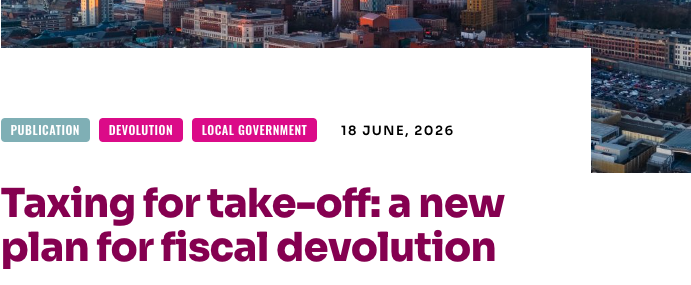
Above – Overhauling how local and regional tiers of the state are funded. By Re:State June 2026.
“What else did Cambridge Ahead say?”
- Earlier engagement with young people to build awareness, confidence and aspirations.
- Creating more visible pathways into employment, including apprenticeships, work experience and vocational routes alongside higher education.
- Addressing practical barriers such as transport, which can limit access to education, training and employment opportunities.
- Strengthening collaboration between employers, educators, local authorities and community organisations to support social mobility and local talent development.
The elephant in the room
Inevitably there will be a very strong influence/bias towards placing young people in the context of potential future employees of member institutions – in particular those that are struggling to recruit people with the right skills sets. But what that does not cover is life beyond the workplace – what used to be called ‘Civics’. For those of you unfamiliar, have a browse through some of these digitised short books and pamphlets from the olden days.
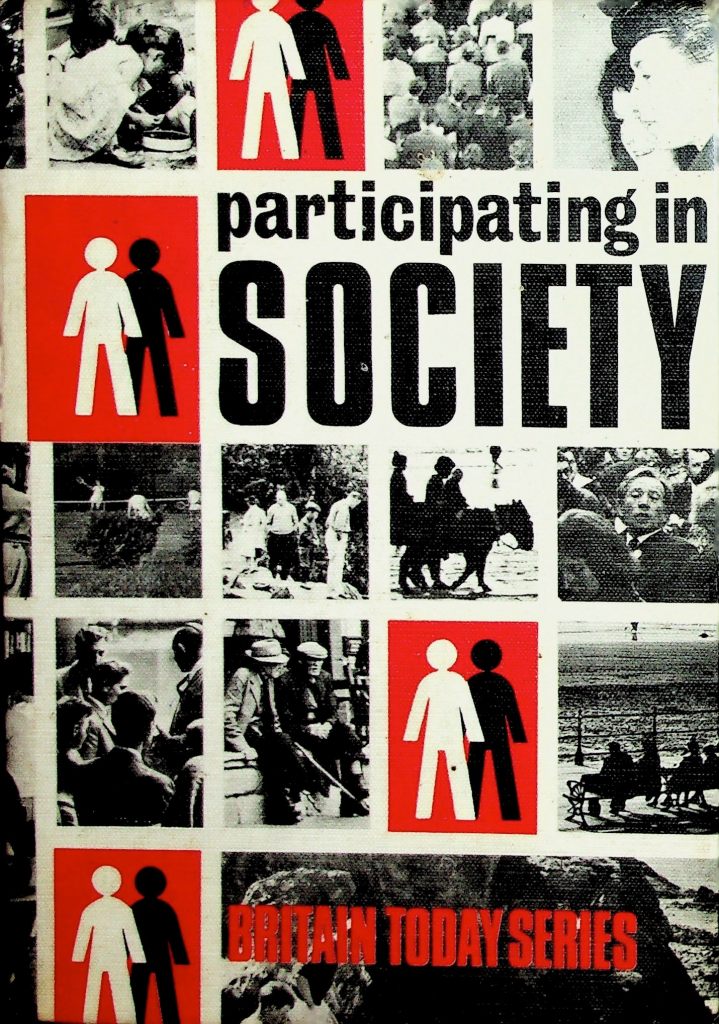
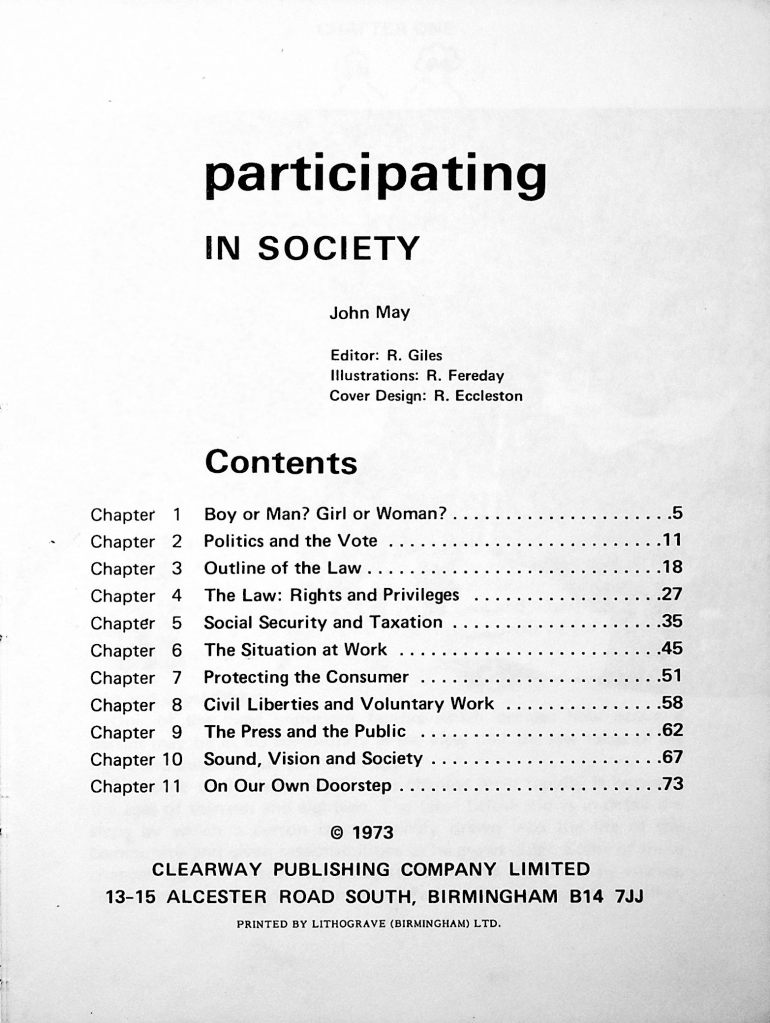
Above – Participating in Society (1973) by John May, published by the long-since-closed Clearway Publishing
The publishers also published a fascinating book that’s far too expensive second hand, called Facing Society by Brenda Green. It was reviewed in the Birmingham Daily Post of 20 Oct 1971 and digitised by the British Newspaper Archive here.
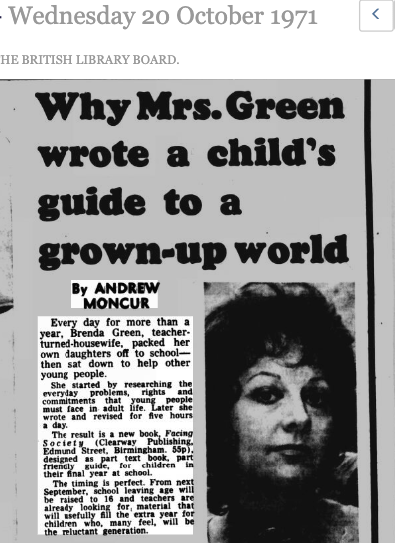
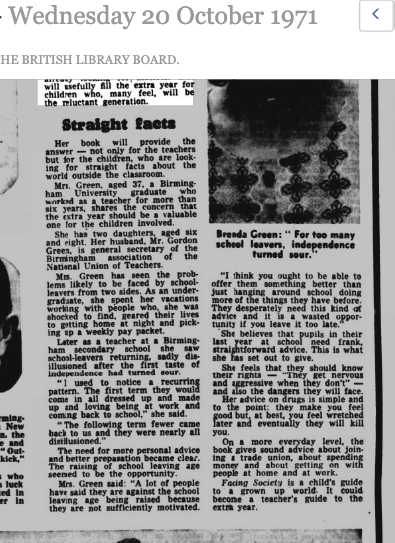
Above – Why Mrs. Green wrote a child’s guide to a grown up world (1973) BPD
While the party political controversy about whether young people should be taught about trade unions inevitably gets raised, it’s less of an issue today because:
- The much lower proportion of working people who are members of trade unions
- The much lower proportion of people who are members of political parties
- The disaffiliation of a number of trade unions from Labour (the most high profile being the RMT Union, which its predecessor union the National Union of Railway Workers sponsored Labour MPs from 1913-1990)
- The targeting and outreach work of other parties ranging from The Greens (and a headline or three from TeamNigel) through to the national parties for Scotland (SNP) and Wales) Plaid Cymru.
Working with Young Citizens (previously the Citizenship Foundation) and other youth charities
With such little take-up of GCSE Citizenship in Cambridgeshire, perhaps that is one area that those wanting to do something about chronic inequalities could do something about. Comedian Tom Allan humorously raises the issues about what was and what was not useful about what he learnt at school in Maths. The benefit of GCSE Citizenship is that a number of the activities involve the students engaging with the outside institutions and their communities as part of the course. It’s not just books and exams.
Young Citizens here is recruiting volunteers, and the Association for Citizenship Teachers is also worth looking at to see what useful resources are available. Furthermore, the old publications by the Citizenship Foundation which are available second hand, are worth acquiring to browse through. Because if we don’t want future generations to face what current and previous generations faced, then the time to act is now.
Food for thought?
If you are interested in the longer term future of Cambridge, and on what happens at the local democracy meetings where decisions are made, feel free to:
- Follow me on BSky
- Spot me on LinkedIn
- Like my Facebook page
- Consider a small donation to help fund my continued research and reporting on local democracy in and around Cambridge.


