
The proposals have come to the fore in their recent publication on overhauling how local government is financed, but the idea has been around for some time. With Andy Burnham having participated in the work of the think tank in recent times, will this proposal finally come around after over a century of waiting?
“Recommendation 8: Government should replace business rates with a new Land Value
Tax (LVT). As in Recommendation 7, councils should have the ability to vary the rates.
Retention of up to 100 per cent of the proceeds should be normalised for the most
established and institutionally ‘mature’ regional authorities.”
Above – Back from the Brink (2024) p7
The report goes into more detail further down the page on p24 in the section on business rates.
“As well as encouraging investment, development, and economic activity, a Land Value Tax
approach would help to ensure more efficient use of available land by reducing speculation and vacancy. Because land values are more stable than property values, long-term financial planning would be enhanced by the change too.”
Above – Back from the Brink (2024) p24
The proposals were restated in Taxing for Takeoff report from June 2026.
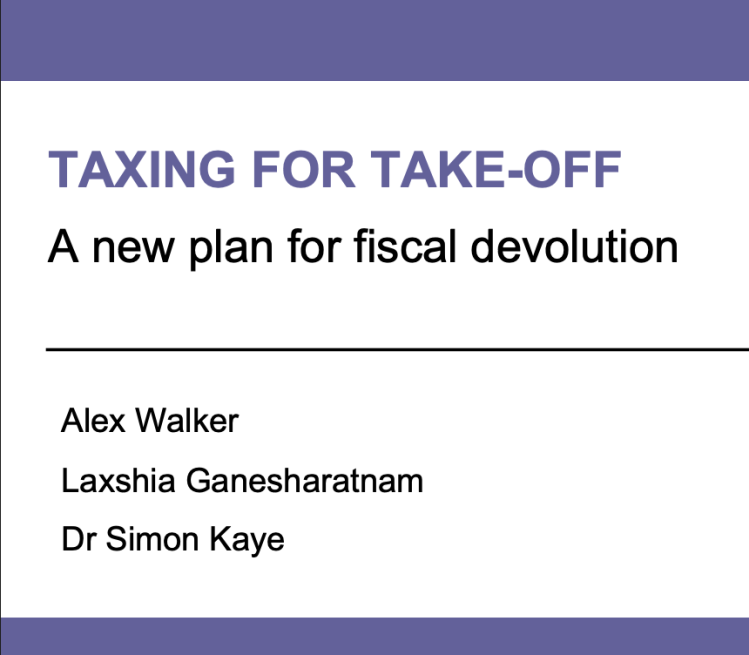
“Recommendation 6: Business rates should ultimately be replaced with a Land Value Tax,
with a similar model of 100 per cent retention for all MSAs within a broader redistributive
system, and heightened levels of local control.”
Above – Taxing for Takeoff (2026) slides 34/35
The United Committee for the Taxation of Land in the early 1900s
The above-mentioned committee published a number of pamphlets including one on the impact on the post-war housing crisis in their pamphlet House Famine and the Land Blockade. Because there were so many local land owners with geographically-specific monopolies, they could extract huge sums from local councils and developers for undeveloped land for housing. There was a big incentive for councils to enable development as it would result in alleviating housing pressures while at the same time potentially increasing their revenues from local taxation. Land with nothing on it resulted in small revenues, while trying to buy the land resulted in disproportionately high bills.
The main argument on a land value tax for me is that it enables the community to benefit from the increase in land value that the work of the community or the state has enabled. For example a new railway line and railway stations. Also, land cannot be hidden in offshore accounts. an LVT creates an opportunity for the state to create laws which enable councils to apply to the Courts to confiscate land from those who refuse to pay and/or cannot be located. (‘Use it or lose it’ is the term sometimes used).
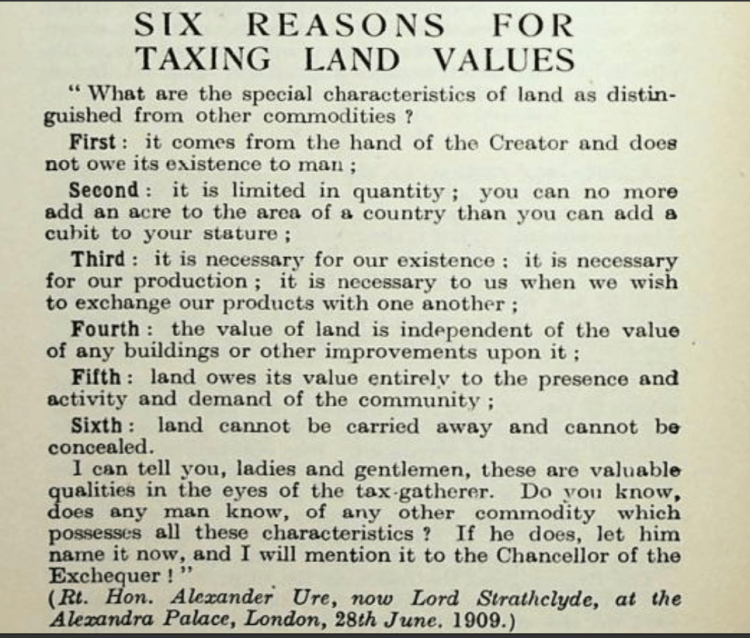
On the page following the above are a number of quotations attributed to the then Prime Minister and former Chancellor David Lloyd George. Following that the pamphlet concludes with the benefits to local government and the simplification of revenue collection.
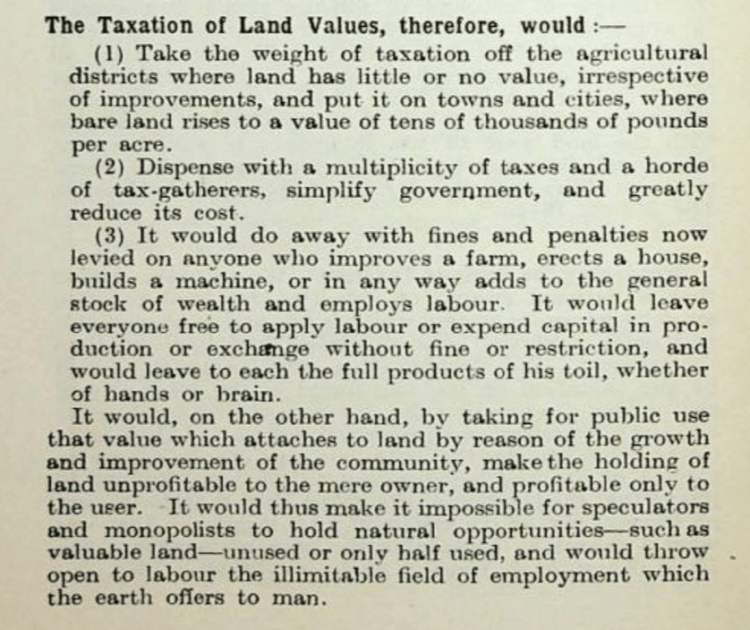
Above – House of Famine and the Land Blockade, p45
Cambridge’s land value tax conversations in the early 20th Century
The Liberal Party – 1904
The Cambridge Liberal Women’s Association, one of the most high-profile women’s groups in Cambridge in an era when women did not have the vote, held a meeting to debate their party’s national policy of a Land Value Tax. At the time the policy had little chance of being made law because the House of Lords – at the time having no life peers, as well as being full of aristocratic land owners had the ability to block legislation. The ability to overcome such actions were only brought in in later years.
The chair of the debate was Anne Palme Dutt, one of the most prominent liberal reformers in Cambridge, and wife of the Mill Road medic and GP Dr Upendra Dutt who later became the medical officer for Cambridge Borough Council. Their son, Raj Palme Dutt became one of the most prominent Communist Party members in British history, having been educated at The Perse, and then at Oxford University.

Above – Anne Palme Dutt, Palmer Clark Archive in the Cambridgeshire Collection. Developed from a glass plate negative (Commissioned by A Carpen)
You can read an account of the event in LostCambridge here
The Labour Party – 1919
This meeting covered more policy content than the Liberal Party meeting, and took place at a time when the national Liberal Party was split between the Coalition Liberals under Lloyd George, and the ‘Old Liberals’ under Asquith – while recognising that huge numbers of radical liberals and social democrats have switched to the Labour Party.

Briggs presided a rather small attendance.” [It was the middle of December 1919]
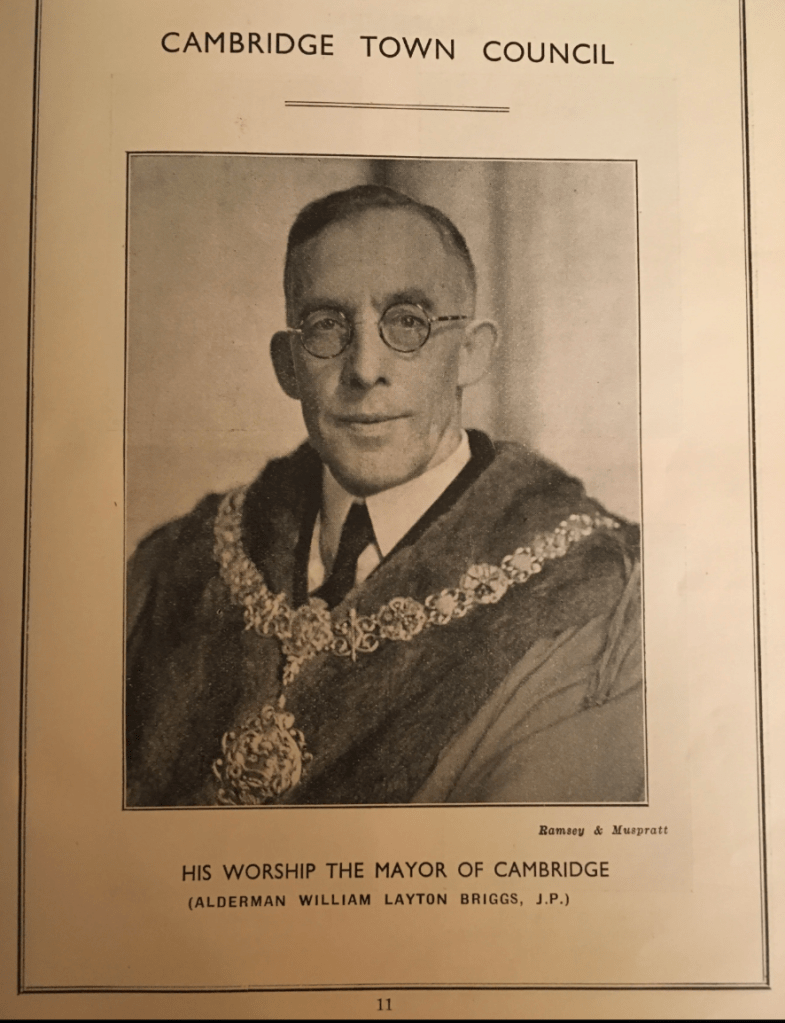
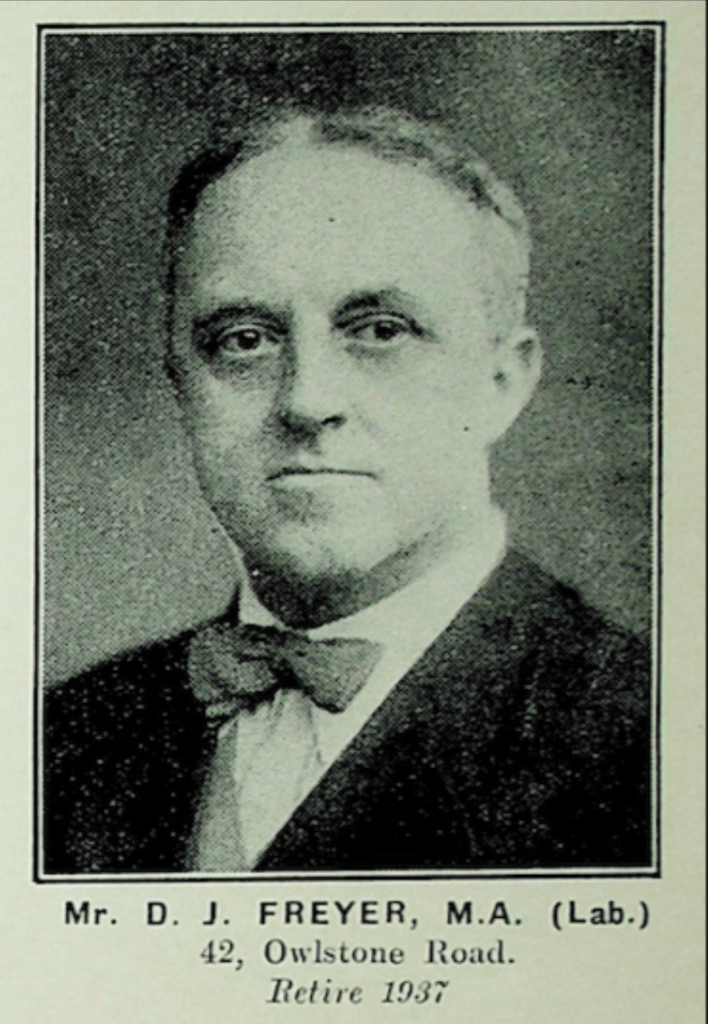
Above-Left – William Briggs who became Labour’s first Mayor of Cambridge in the mid-1930s, and Above-Right, Poet Dermot Freyer, who later became a councillor on Cambridge Borough Council for Labour, and sometimes referred to with his wartime military rank of Major.
You can read the account of the debate in LostCambridge here which covered the issues of how to pay for their party’s social programmes – ranging from overhauling the rates, land value taxes, to central government grants.
The Policy Engine site tried to crunch the numbers and finds an LVT is broadly progressive
You can read the briefing here
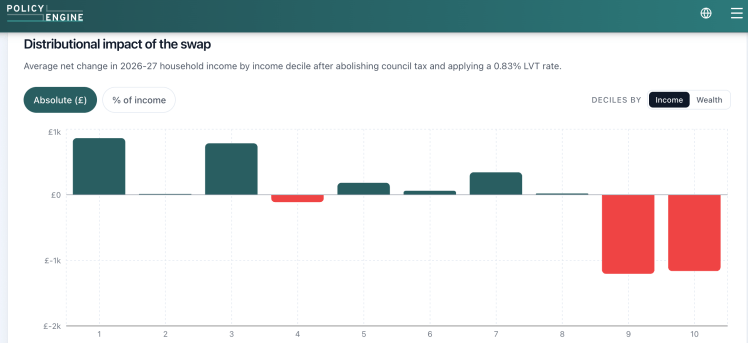
Above – impact by income decile. The wealthiest deciles are hit the hardest – but then they have the broadest shoulders. (Furthermore, land can’t go ‘walkies’ into an offshore tax haven)
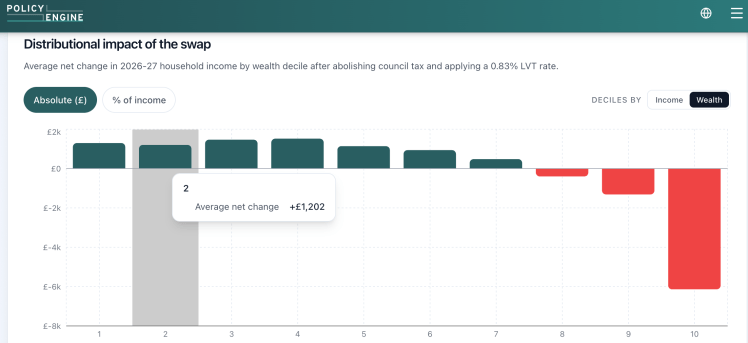
Above – impact by wealth. Again the wealthiest deciles lose out at the expense of the rest.
Which indicates why it has never gotten through Parliament. Wealthy interests have succeeded in blocking the policy over successive generations.
It remains to be seen if the Government irrespective of who is at Number 10 or Number 11 are willing and able to bring in this policy. (Just don’t expect Cambridge University’s wealthier colleges to like the policy!)
If you are interested in the longer term future of Cambridge, and on what happens at the local democracy meetings where decisions are made, feel free to:
- Follow me on BSky
- Spot me on LinkedIn
- Like my Facebook page
- Consider a small donation to help fund my continued research and reporting on local democracy in and around Cambridge.

 The Cambridge Town Owl