You can add transport planning, and town planning, and landscaping/ecology to that list in the hope that at some stage one decision-making institution will take on the competency for lifelong learning provision
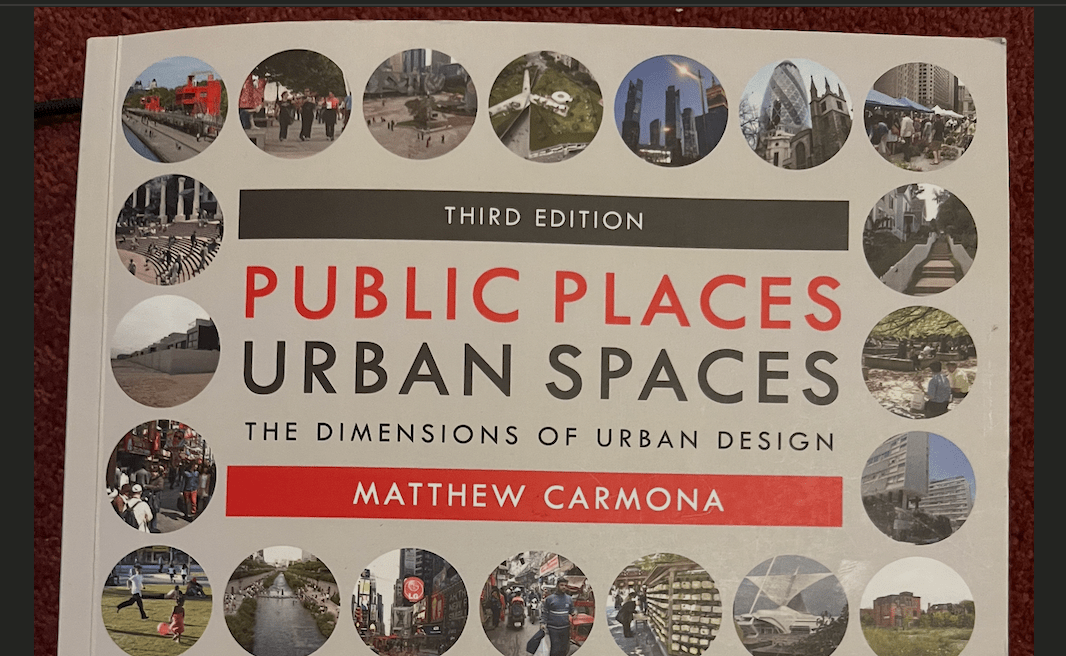
Image: Public places, urban spaces 3rd ed. (2021) Carmona. – I found it in a charity shop!
I mentioned in an earlier blogpost that the London Borough of Sutton was getting a new lifelong learning centre. Turns out Blackburn is also getting one – and what a building they are getting too!
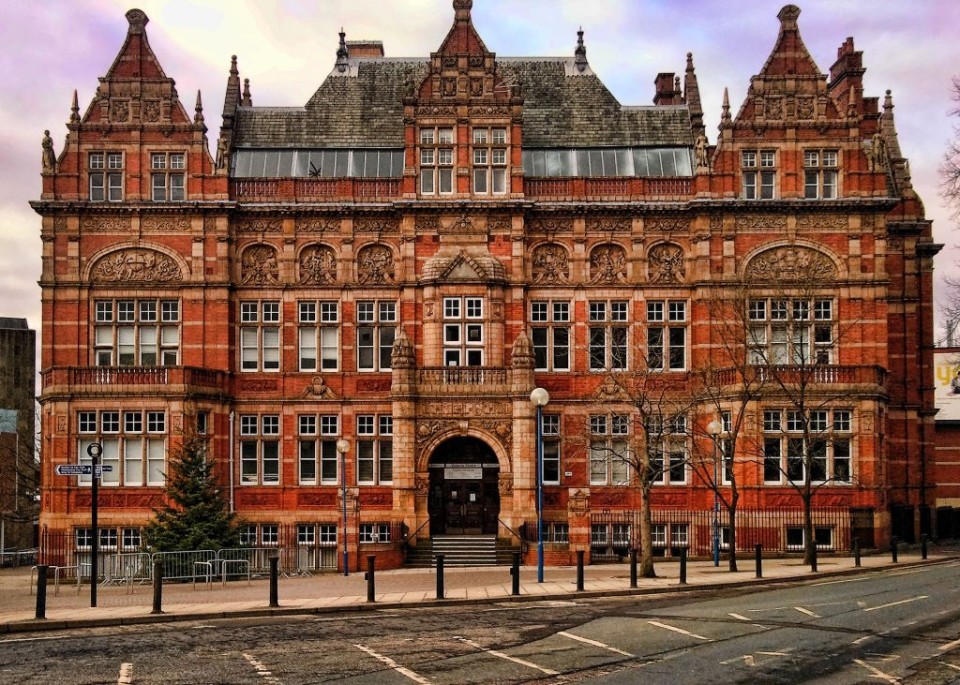
Above – The Victoria Building, Blackburn, being converted into a new Adult Education College
Almost opposite the building is a concert hall that’s bigger than Cambridge’s Corn Exchange
It’s the King George’s Hall – a concert hall with a capacity of up to 2,200 people. Opened in 1921 it is currently having significant renovation work done to it and is due to re-open in Autumn 2026.
They’ve got a nice enough town hall too – completed in 1856, although what the urban designers and town planners were thinking when they decided to locate the different public buildings I don’t know. However, the principle of having the three buildings in a short walking distance from each other is a sound one – as is having the railway station nearby. It’s a 15 minute stroll to walk past the four of them
Then there’s Tunbridge Wells with something of a mini tale of woe – or success depending on your party political preferences
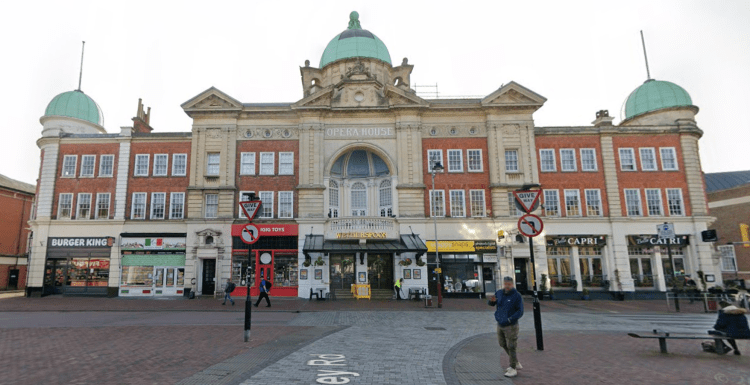
Above – Tunbridge Wells Opera House – later converted into a cinema, then a bingo hall, and then a big chain large pub outlet. Around the corner from it is the Amelia Scott Centre whose refurbishment/conversion was completed in 2022, only for a TeamNigel-led county council to pull a chunk of funding a earlier this year. The previous year the Tories fell like skittles losing 57 of their 62 seats to the former. It remains to be seen what the restructure throws up – mindful that Tunbridge Wells Borough Council has been LibDem led since 2022. Additionally, the 1930s town hall and theatre sit on block the other side of the Amelia Scott Centre
“Your point being?”
There’s historical precedence in local government history of bringing together important public buildings and facilities together within a small geographical area. In the case of Tunbridge Wells you walk up a road called ‘Mount Pleasant’ to get from the railway station to those civic buildings. There used to be an old cinema en route and the opportunity to replace an old building on a large site with a beautiful landmark building was missed – instead they got something that looks like it was built in Cambridge.
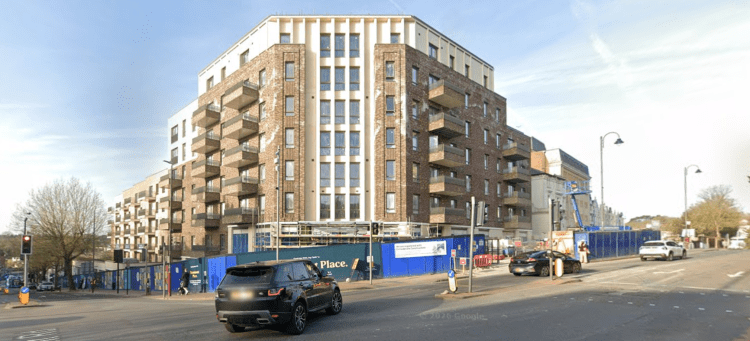
Above – this carbuncle houses a retirement home, and the locals were *not happy* with the designs.
A new lifelong learning college for Cambridge – it will have to come from the Development Corporation
See my past posts on lifelong learning here. Essentially the CPCA has to cover the whole of Peterborough and Cambridgeshire. Given the limited funds, tight policy remit, and the economic state of the rest of the county, the new funding has to go to those parts of the county with the least. I don’t begrudge them that.
Hence asking about the airport site / Cambridge East as a potential second urban centre
In the above blogpost I contrasted some older building designs with some bland boxes at the time proposed for the biomedical campus.
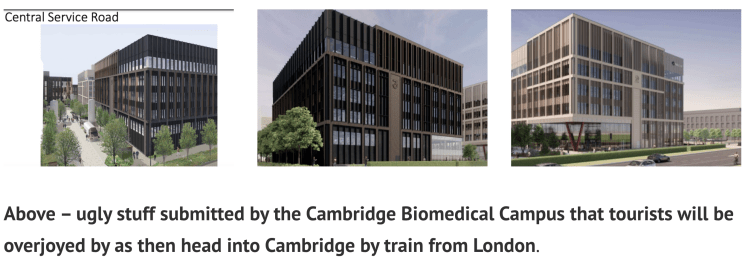
That GSK will be moving into one of these bland carbuncles doesn’t surprise me, nor does the lack of self-awareness from Cambridge’s sci-tech bubble about the devastating impact this move could have for Stevenage. Which is why I think Cambridge’s institutions need to think ***very carefully*** about what their collective response should be, because leaving Stevenage to wither will do far more damage to their brand and to the city than they might realise. And in one of the most divided cities in the country where election results show the residents are unhappy with a whole host of things, they cannot take the public consent for ‘business as usual’ for granted.
What the Cambridge Airport site benefits from is a blank sheet from which to get the locations of the different civic buildings and infrastructure to function greater than the sum of their parts, and to design and build such an inspirational public space that people would choose to be there rather than staying indoors.
Which architecture firms are going to dare to do something different to what has been built in and around Cambridge over recent decades?
(Or have the Building Regulations been designed and written in such a way that ugliness is designed in at the start?)
If you are interested in the longer term future of Cambridge, and on what happens at the local democracy meetings where decisions are made, feel free to:
- Follow me on BSky
- Spot me on LinkedIn
- Like my Facebook page
- Consider a small donation to help fund my continued research and reporting on local democracy in and around Cambridge.


