“Cambridgeshire County Council and Peterborough City Council are working jointly to prepare a new Minerals and Waste Local Plan for Cambridgeshire and Peterborough. This will replace the current plan which was adopted in July 2021.”
…says the consultation 2026 landing page from Cambridgeshire County Council here.
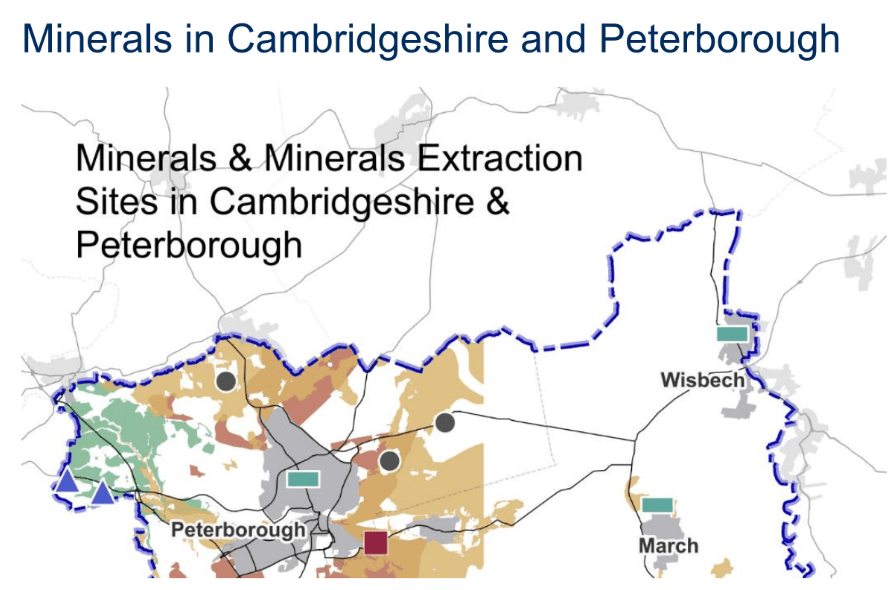
Image: Detail from the current minerals extraction sites in Cambridgeshire & Peterborough
While we still generate lots of municipal waste (15% of the total generated in 2017), the amount of construction waste generated makes 59% of the total.
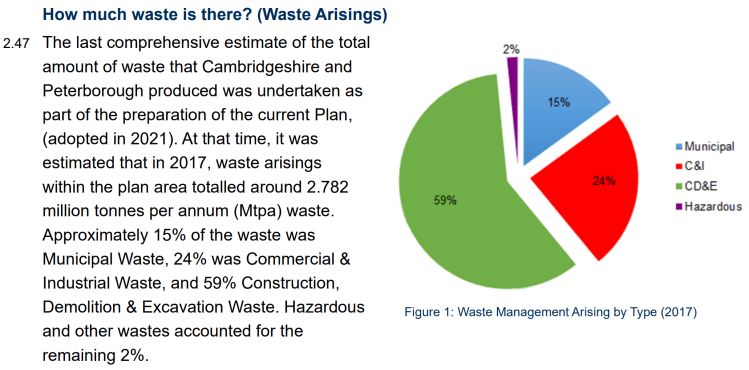
Which means that for the draft local plan and the Greater Cambridge Development Corporation, getting that figure down both as an absolute figure and as a percentage needs to be addressed. (Unless the absolute figures for municipal and commercial waste are absolutely minuscule – and 15% of 2.8million tonnes of municipal/household waste is not minuscule!)
“What else does the plan from 2021 say?”
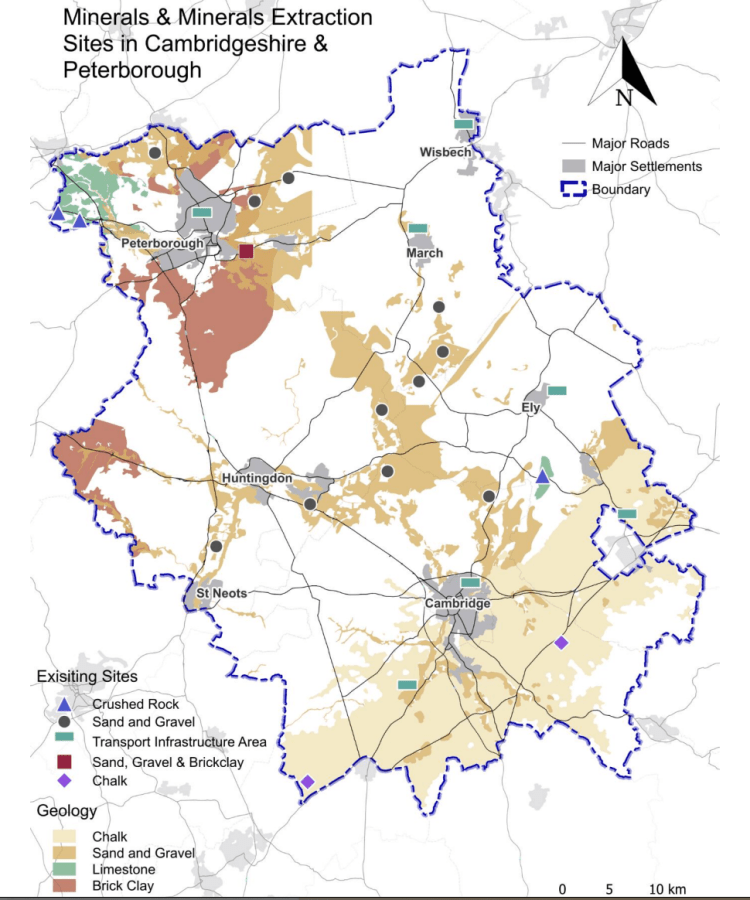
You can read the 2021 plan here. It has a map showing where we’ve been digging up material for building and construction.
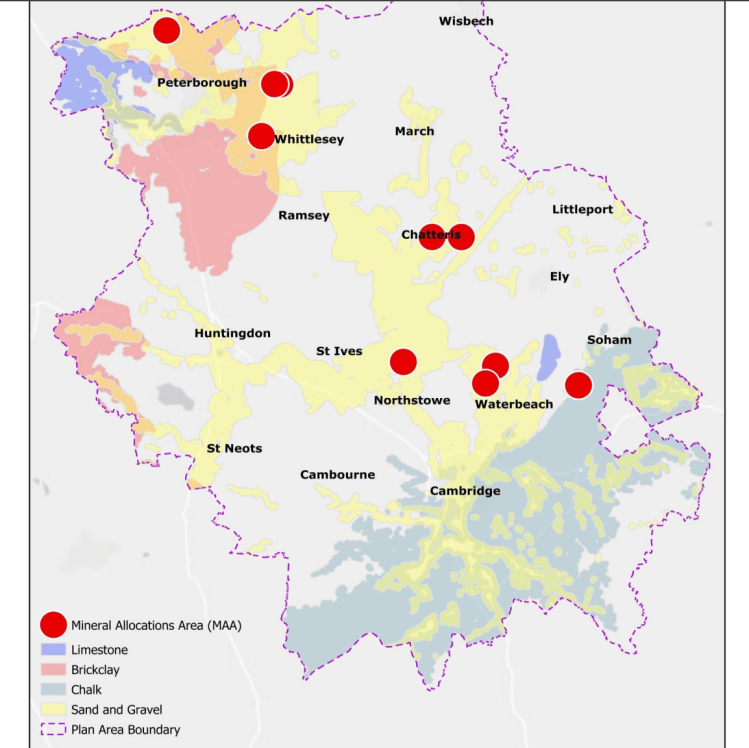
Above – Cambridgeshire & Peterborough Minerals and Waste Plan 2021, p12
“So Cambridge and South Cambridgeshire managed to avoid getting any quarries then?”
No – we exhausted our supplies in the olden days. Local history tells us that.

I’m just old enough to remember the existence of the other works further up the railway line – the Norman Cement Works that formed a haunting backdrop to St Bede’s Secondary School on Birdwood Road.
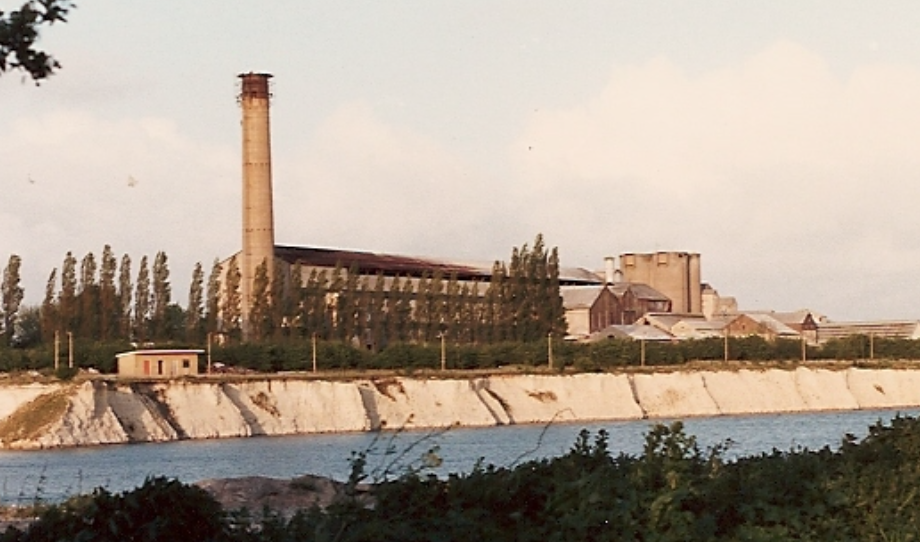
Above – by Geoff Kitchin on CCAN here – the disused Norman Cement Works from the late 1980s
You can read more about the history of Cherry Hinton Village on the CCAN website here. Furthermore, the Victoria County History entry is here. And finally you can join the Cherry Hinton Local History Society here.
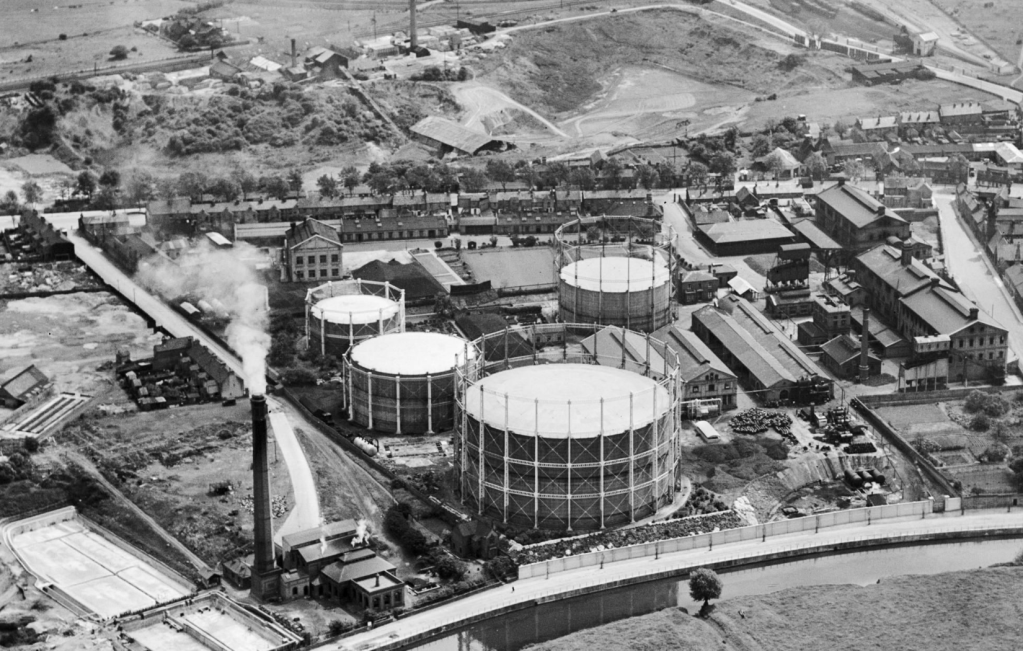
On the other side of Newmarket Road was an old brickworks, the put of which you can see top-centre, along with the old chimney in the photograph below. (Note the trees lining both sides of Newmarket Road!)
“What is extracted at the existing sites?”
The full map from the detail above shows what is where.
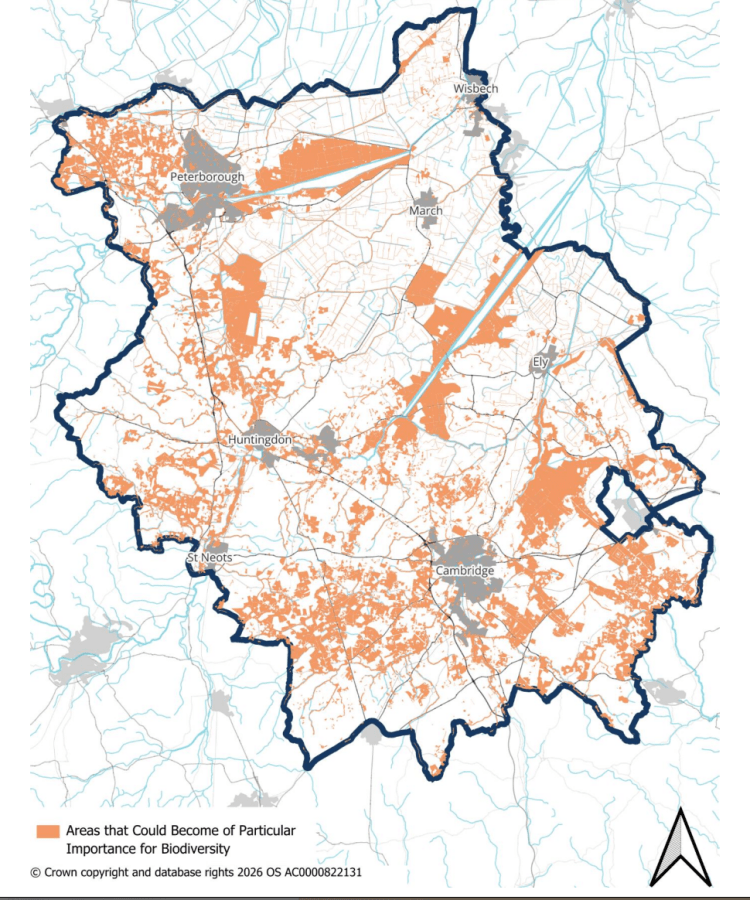
At the same time there are a host of environmental restrictions on what can be excavated, how and where.
“So, how to they select which sites?”
Through an assessment process that assesses each site on:
- Constraints (things that might make extraction more expensive, and/or denote an absolute prohibition in law and/or reality – such as establishing a quarry in front of King’s College Chapel)
- Opportunities (for example proximity to major road/rail infrastructure, far away from built up areas and where the overlying soil is of low grade and not suitable for agriculture or property development)
The document titled Proposed Site Assessment Selection Methodology in the middle of the five consultation documents is the one to look at.
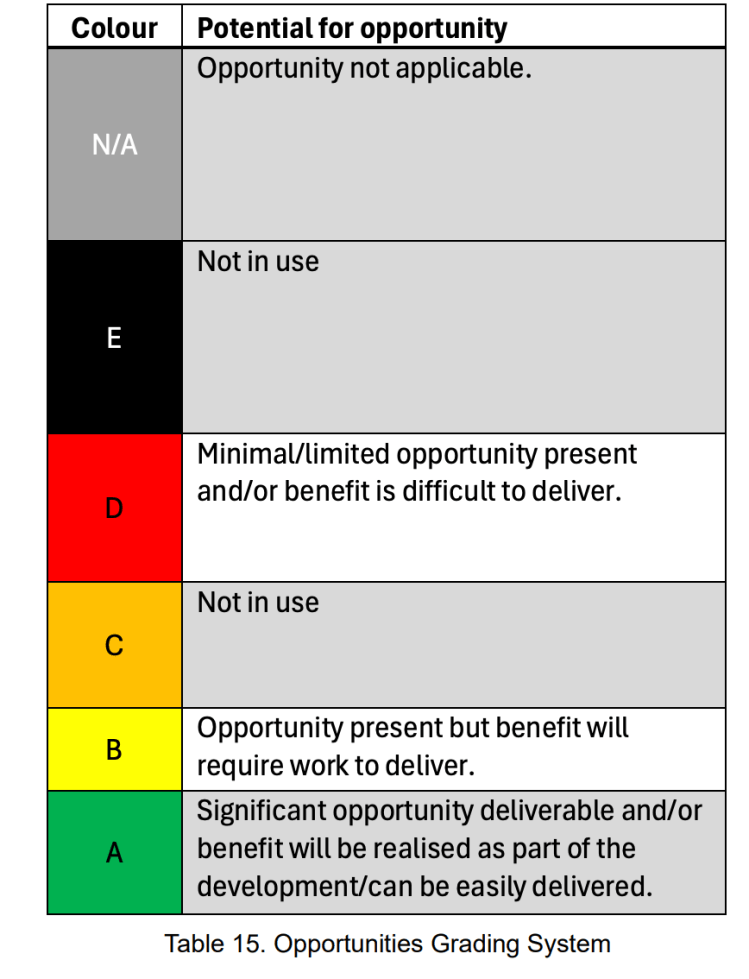
Above – the opportunities criteria, p14 of the site assessment selection document
Which is followed by the constraints
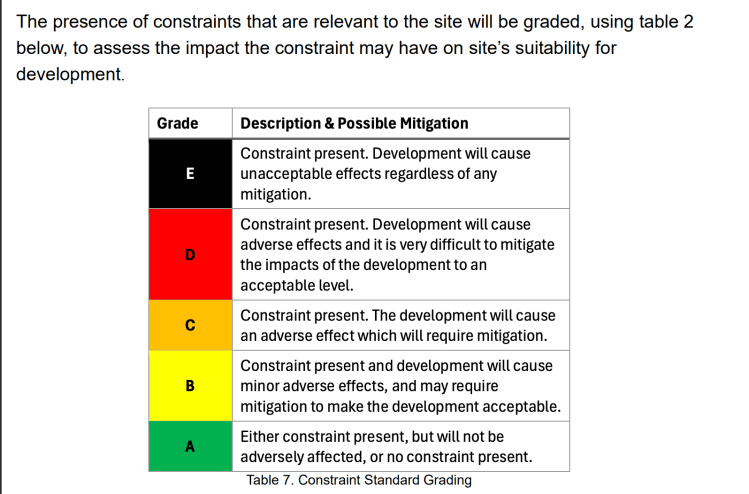
Above – the constraints criteria, p10 of the site assessment selection document
And this culminates in a matrix similar to those in risk management documents
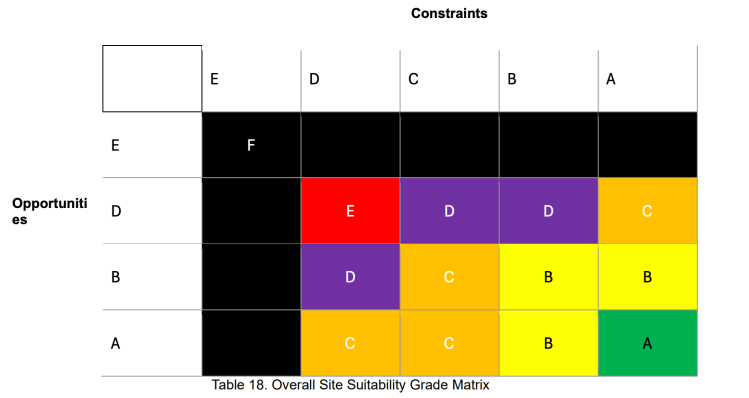
Above – the opportunities/constraints matrix, p16 of the site assessment selection document.
So the hunt is on for any prospective sites that falls into the ‘A’ category for both. Which is easier said than done. The challenge for the selection of shortlisted sites is what mitigation can be put in place.
Waste processing
This shows that the document and consultation should be widely publicised and discussed because a growing city is going to produce much more waste until/unless we significantly change our ways. And I’ve not seen enough evidence of reducing consumption, reusing materials, and recycling. For me it’s a systems design issue where we both penalise the producers of unnecessary packaging and bring in systems that make the most sustainable choice the cheapest, the easiest and most convenient one. But that means localising more of our sorting and reprocessing facilities. i.e. not doing this:
‘Cambridge City Council and South Cambridgeshire District Council’s recycling waste have been transported to Newry in Northern Ireland since March 2025.’
***How on earth?!?!***
As the article shows, the system is broken because local government is relying on the private sector to come up with a commercial solution for councils to procure. And there is no backstop to account for when the market fails, resulting in huge volumes of waste being transported to Northern Ireland – involving a ferry crossing!
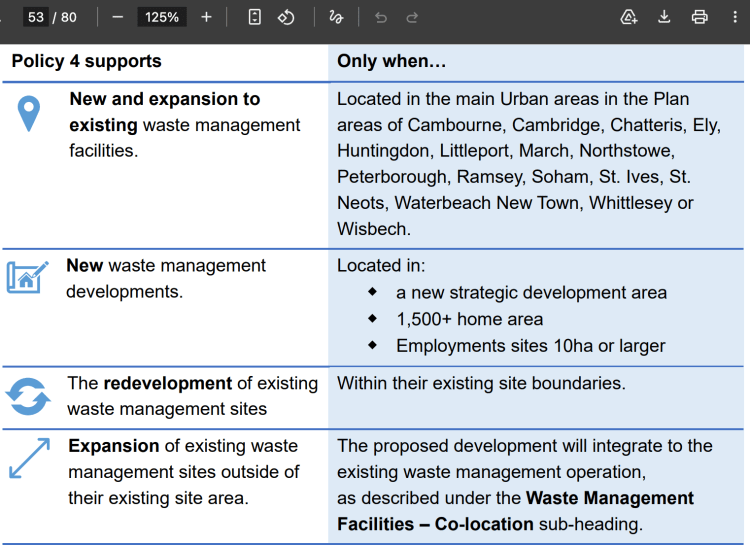
Hence the proposals for new sites need looking at. One example shown below is an anonymised waste management facility for a new large housing development.
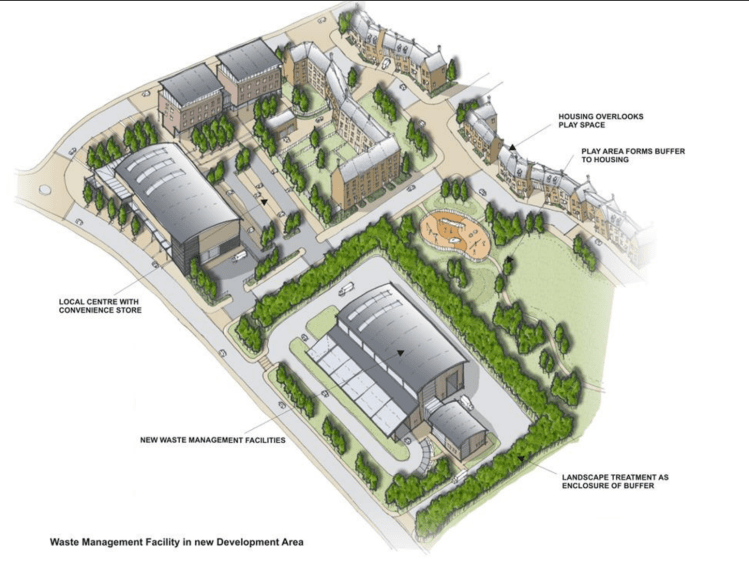
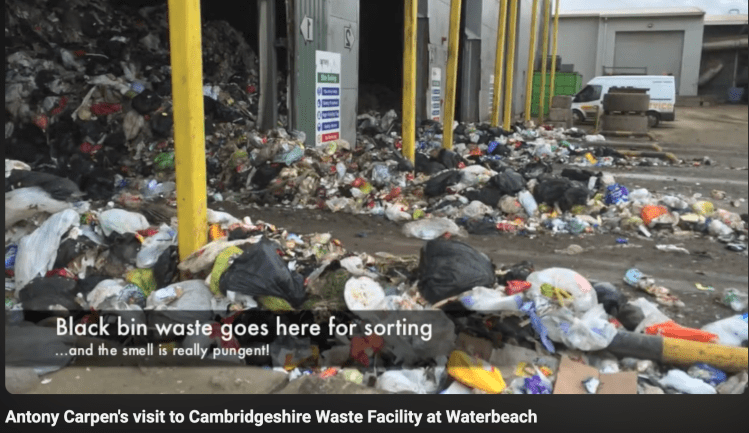
(Although I’m not sure I’d want a children’s playground close to a waste processing plant because of the inevitable stench that is associated with the operation of such plants.
Criteria for new waste facilities.
These start from p53 of the main consultation document
“Anything on mining historical landfill sites for critical minerals in old appliances?
A little:
“Policy 13 (Landfill Mining and Reclamation) of the current Plan sets out that the mining or excavation of landfill waste will only be supported where it is required to: address a safety or environmental issue at the site; to facilitate another development, where the removal would not adversely affect harm the amenity of nearby residents or other neighbours; or where a viable waste resource exists, and mining and processing would result in significant environmental gains.”
It’s not much to go with for now, but I imagine in the not-too-distant future we’ll see some case studies where this becomes a practice.
If you are interested in the longer term future of Cambridge, and on what happens at the local democracy meetings where decisions are made, feel free to:
- Follow me on BSky
- Spot me on LinkedIn
- Like my Facebook page
- Consider a small donation to help fund my continued research and reporting on local democracy in and around Cambridge


