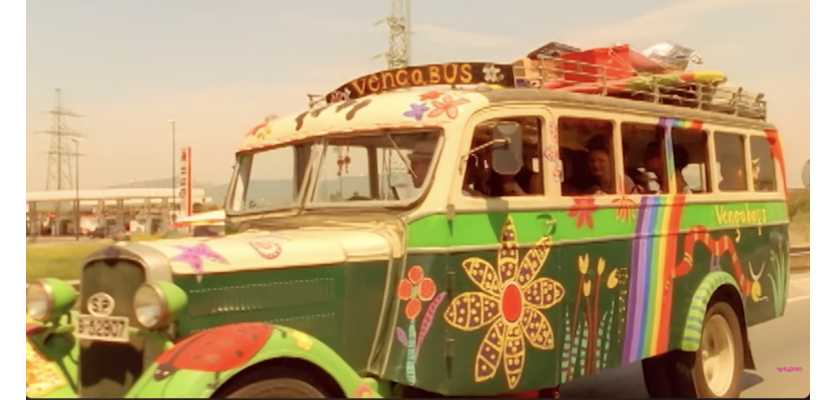
One participant in the CPCA’s Mass Rapid Transit trying to make the case for buses vs trams
Image: The Vengabus inspired by Dutch public transport and Europop. Looked like a step up from what Stagecoach offered Cambridge in the same year, such was the state of privatised and deregulated buses
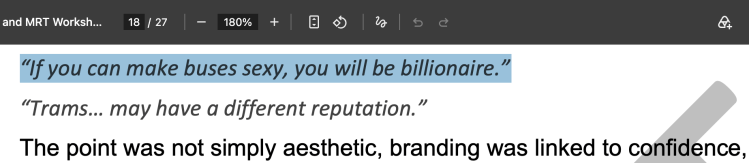
The power struggle continues between the Mayor of the Cambridgeshire and Peterborough Combined Authority who has Light Rail in his manifesto, and I assume senior transport officers/engineers in favour of more buses (or anything without rails).
TL:DR? See the CPCA Transport Committee Papers here and read the Director’s Update for a summary (Item 6)
“If it’s not the Venga Bus from 1999, I’m not interested”
One for anyone who missed the late 1990s.
It’s an earworm and in the first term of my first year at university one of my flatmates loved this track. So it reminds me of late 1999.
Above – I guess the Vengaboys did quite well out of their vehicle. Maybe not to billionnaire levels but a respectable attempt!
“How do they propose making buses sexy?”
I don’t know, crossing the Vengabus with T-Spoon? They were also from The Netherlands!
Above – T-Spoon on Top of the Pops (remember that?)
We’d have got red-inked by our English literature and language teachers at secondary school for writing such ‘poetry’ but then none of my English teachers at school ever wrote anything that got to Number 2 in in the UK Singles Charts in that decade!
“What’s that got to do with light rail?”
We could have used English classes in our timetables to learn about politics, democracy, the rule of law, local government, public services and how to have our say and influence the future of our city – such as the debate on Cambridge’s traffic congestion. After all, enough of us cycled to school and had paper rounds thus having a direct interest in what was being proposed. The newspaper archives show that the debate on light rail vs busways for Cambridge goes back well over a quarter of a century.
But because we did not have citizenship education in at school in the 1990s (No, I haven’t forgiven John Major’s Government for this!!!) my generation of teenagers were not involved in debates on the future of the city.
It’s not as if support for light rail for Cambridge was lacking in the olden days
I wrote about this survey from the Cambridge Evening News which was published ***when I was still at primary school***

Above – Detail of Cambridge Evening News 28 February 1990 in Lost Cambridge
The historical context was a population significantly lower than it is today. The 1991 census showed that:
- Cambridge’s population was 101,643
- South Cambridgeshire’s population was 121,109
That compares with the 2021 census which recorded Cambridge with 145,700, and South Cambridgeshire with 162,100. (See more at ONS on how life has changed in South Cambridgeshire here).
We’ll find out from the Greater Cambridge Development Corporation what the projected population is likely to be in 2045 – when its lifespan is scheduled to come to an end.
It is for the year 2045 that politicians, ministers, civil servants and planning professionals should be scoping out infrastructure for.
Hence why it’s so frustrating to see transport leads insisting on language that only alienates the general public in an era of depressingly low political trust in the midst of global political – and environmental insecurity.
I won’t repeat the historical details other than to point you to the major work that kick-started the era of fast growth without the infrastructure to underpin it – which was from the late 1990s-early 2000s.
Cambridge Futures 1997-2003
The diagram below highlighted the six alternatives to minimum growth – central government (Tony Blair’s Labour Government) having taken a firm view that Cambridge needed to grow. Out of the six options put to the people of the city in the late 1990s, we got…all of them!

Above – Cambridge Futures from the Wayback Machine circa 1999
I’ve written more about that historical context here.
Fast forward to 2026 and the Greater Cambridge Transport Strategy
The papers of interest are at item 11 here – including the annexes cut-and-pasted from the agenda:
- Appendix A – Draft GCTS and Mass Rapid Transit Stakeholder Report , item 11.
 PDF 405 KB
 - Appendix B – Summary of updates made to interim draft GCTS , item 11. PDF 62 KB
- Appendix C – Updated Interim Draft GCTS , item 11. PDF 6 MB
“What sort of reputations do trams have?”
This is one of the adverts in this month’s Tramways and Urban Transit Magazine
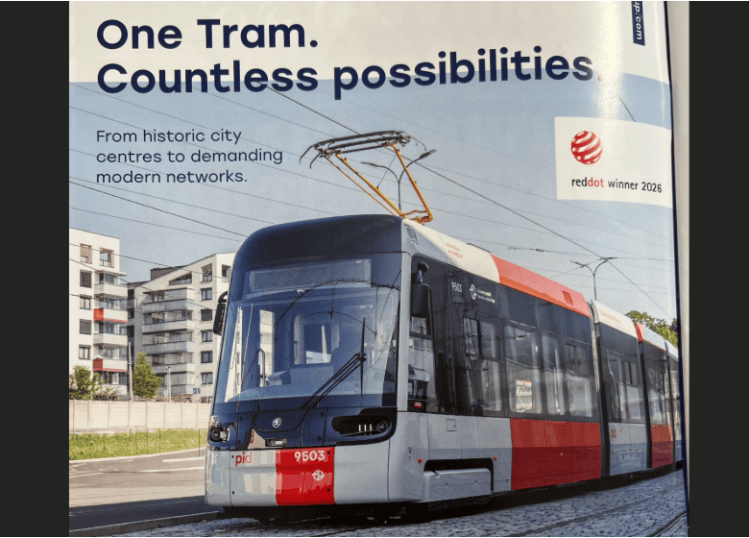
Above – “From historic city centres to demanding modern networks”
Guess which company is doing the advertising.
“Tell me”
SKODA!
Actually, that’s something that won’t make sense to anyone under the age of about 30. Back in the 1980s, the Skoda had something of a woeful reputation, as a young Jeremy Clarkson on Top Gear back in 1995 refers to here – before reviewing one of their new motors of that decade.
What that era of contemporary TV comedy-bashings omitted was the century-long history of manufacturing a range of heavy industrial items (as the UK found out the hard way in the First and Second World Wars) before VW took over the motoring side of the company as mentioned by Jeremy Clarkson in 1995. This thread brings us up to date with where the firm is today – the sort of firm that UK ministers would love to have in the old industrial heartlands of Northern England.
“What are Skoda like now?”
Better than anything designed and built in-house by the UK – because our last manufacturing firm that did that completed its last order in 1988 and that was for Blackpool.
Skoda Trams and Light Rail

Above: A Skoda tram. ***Wow!*** Can we have that for Cambridge please?!?”
And also featured is Ethiopia’s historic capital Addis Ababa they have a new light rail network – the first in sub-Sarahan Africa
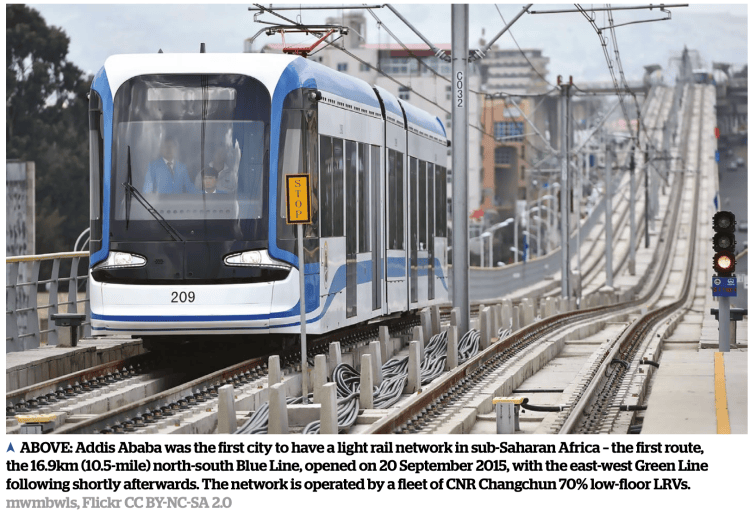
Above – from LRTA September
Have look at the video by Harriet Anabo which features light rail, buses, cycleways and 21st Century building developments that wouldn’t look out of place in the UK – mindful of the image many of us perhaps still have of the country dating back to the 1980s.
Now compare all the places that Skoda has built public transport systems with where the UK is
Have a look at https://www.skodagroup.com/products/city-transport and browse through the drop-down menus and consider the responsibilities that Prime Ministers from Thatcher onwards have for allowing the UK’s public transport manufacturing base to decline to the extent that the UK is now dependent on firms domiciled abroad for key components of any major new light rail system.
“We seem very relaxed about the fact that 61% of UK manufacturing firms are foreign owned. In a recent interview, business minister Baroness Neville-Rolfe claimed that 320 UK manufacturing businesses (nearly two thirds of this sector) employing over 500 people are now owned by foreign companies, i.e. with over 50% of their shares in foreign hands”
Above – Modern Railways March 2021
“So, where next?”
We’ve got to wait to see what the Mass Transit Taskforce – which I wrote about here the last time the Transport Secretary answered questions in Parliament on trams, comes up with

Above – the Mass Transit Taskforce whose technical-level summer consultation I think closed very recently
We also still don’t know what happened with Theresa May’s Government and its work on light rail.
In my next blogpost I’ll look at the proposed map – which doubles down on the ‘Mass Rapid Transit’ but does not account for the bottle neck in the city centre. This was something that the Independent Audit of the Greater Cambridge Partnership’s C2C Busway called out regarding the now abandoned City Access Programme. It is still an outstanding problem that has not gone away.
If you are interested in the longer term future of Cambridge, and on what happens at the local democracy meetings where decisions are made, feel free to:
- Follow me on BSky
- Spot me on LinkedIn
- Like my Facebook page
- Consider a small donation to help fund my continued research and reporting on local democracy in and around Cambridge


