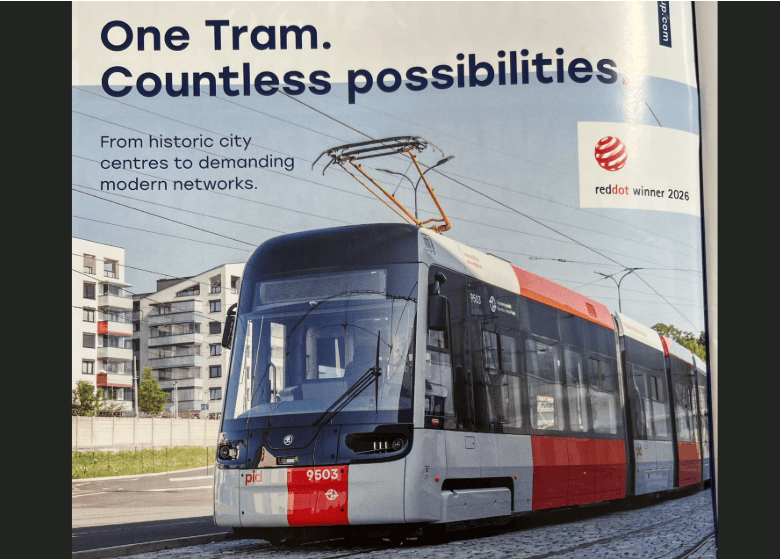
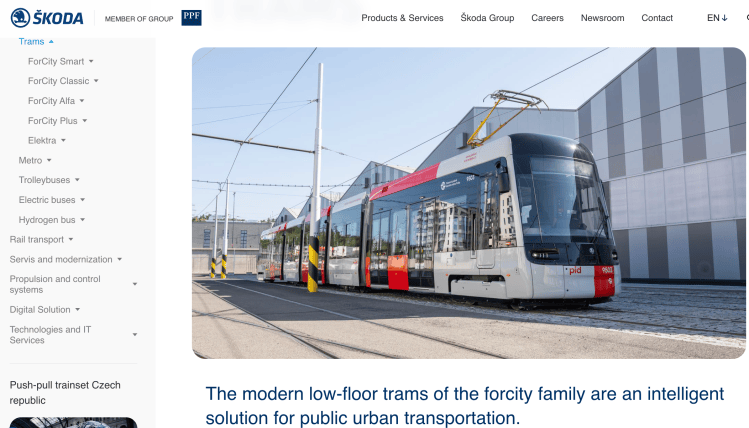
In the meantime, Skoda in the Czech Republic shows the UK what we could have had – if only successive governments had invested in the declining manufacturing base for a new generation of electrified public transport systems
TL:DR? Persuade your councillors, council officers, MPs, elected politicians and senior transport people to go and visit the Skoda Group in Pilsen, Czechia/Czech Republic.
There are many other reasons to go – not just for its beer and brewing heritage
Mass Rapid Transit – keeping options open?
This was the blogpost I was going to write until I got distracted by the quotation from the CPCA’s mass transit stakeholder workshop (I didn’t get an invite!) that quoted one participant talking about making buses sexy. So I wrote a post wondering how they intended doing that, coming to the conclusion that if it didn’t feature 1990s Europop I wasn’t interested.
In that blogpost I noted Newsnight earlier featured Ed Conway who highlighted the slow industrial decline since 1979 and becoming ‘fixated with buying things as cheaply as possible from anywhere in the world.’
“What is the plan for supply chains, workflows from one city to another (eg for tunnelling teams) and reskilling workforces to build and maintain the next generation of metros and mass rapid transit systems?”
Unless it’s more roads and buses with roadsigns, in which case the supply chains are already there, but it’s hardly fit for purpose given the Government’s growth plans. And the draft strategy as in the papers leaves the key question of whether Cambridge should have an underground tunnel (irrespective of mass transit mode) unanswered. The words ‘Underground’ and ‘Tunnel’ do not appear at all in the 150–page draft paper.
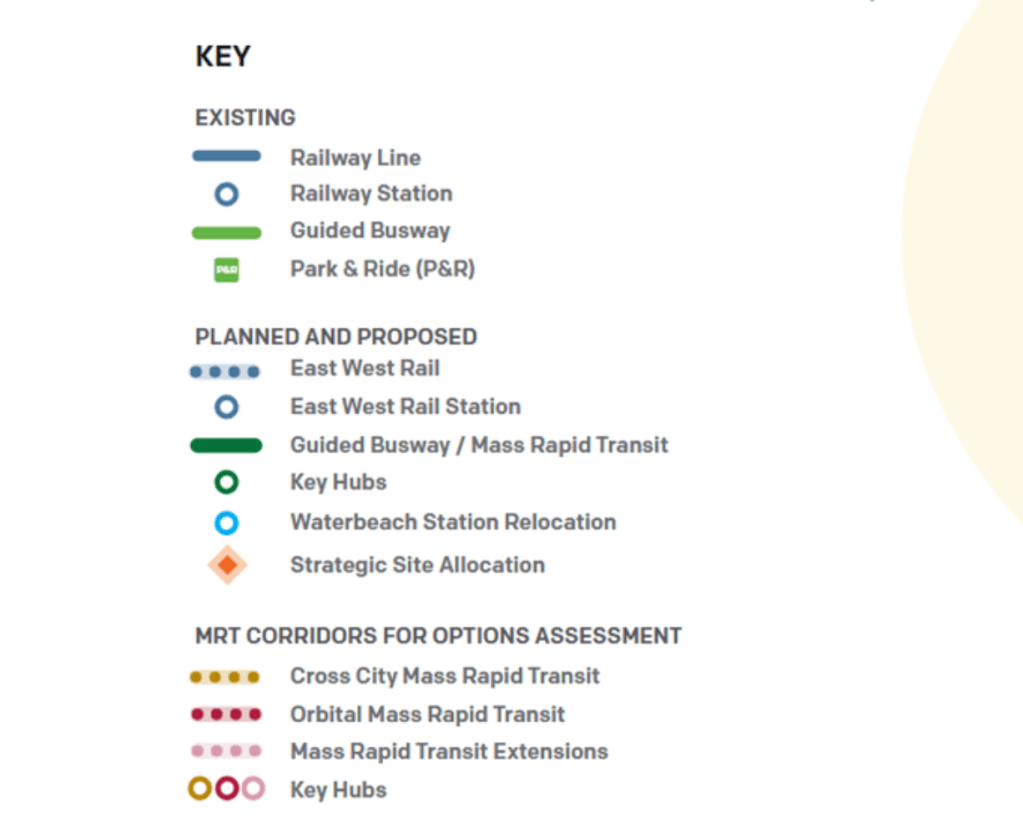
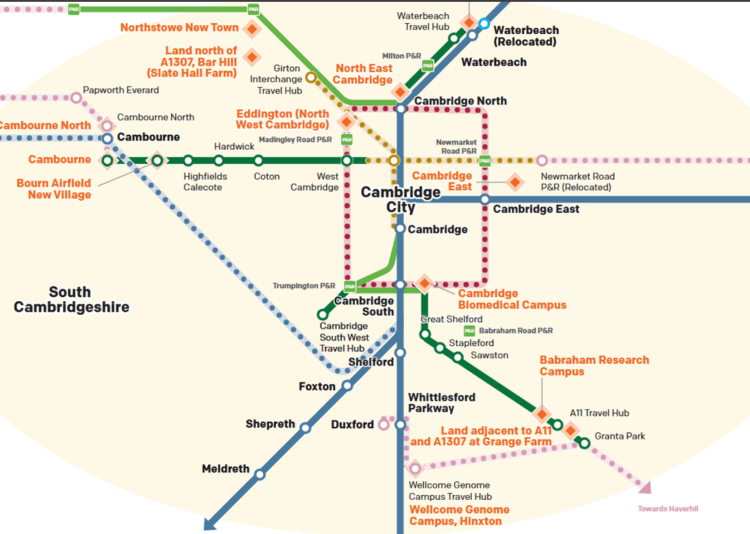
Above – detail of a diagram of key Greater Cambridge Transport Strategy rail, high quality public transport corridor and mass rapid transit interventions. P45 of the CPCA Transport Committee Papers at item 11 Appendix C
“What is the Cross City Mass Rapid Transit”?
That’s the part that needs explaining in more detail. In the meantime have a browse through the tables between pages 116-138 of the draft report. Actually,
Important: Read through this table
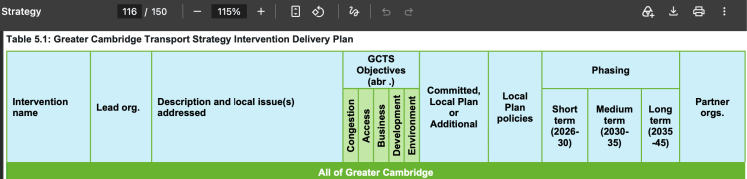
Above – the table of proposals/interventions in the Greater Cambridge Draft Transport Strategy from p116 of the CPCA Transport Committee Papers at item 11 Appendix C
This is because it lists the proposed interventions and breaks them down into three phases.
- Short term (2026-30) which is mainly the Greater Cambridge Partnership
- Medium Term (2030-35) which starts addressing some of the difficult questions that a light rail system developed from 2016 might have resolved by now
- Long Term (2035-45)
The maps do not incorporate public transport/active travel routes to health, education, arts, leisure, sports and social facilities that are essential to combatting loneliness in society
This is ***really disappointing*** because of the number of times I have raised this issue both informally and in public questions. This also reflects the institutional sexism within the Transport Engineering profession. Two articles from 2025 (See Women in Transport here, and Transport Engineer here), paint a sobering picture. The World Bank also published a piece about the inbuilt bias against women when it comes to planning and designing public transport infrastructure.
Designing a network rather than a series of A-to-B routes
“There is little doubt that – consciously or not – our transport networks have traditionally been designed for men, by men. Specifically, men who are white, able-bodied, unencumbered by children or other loads, men who are simply trying to commute into work and back again, otherwise known as the ‘default male’. The needs of women, parents and children – or indeed anyone outside that template – are all too often given scant consideration, if they are considered at all.”
Above – Rebecca Fuller for the Urban Transport Group, 09 November 2021
The current state of Greater Cambridge Greenways – one of the few successes of the Greater Cambridge Partnership (blogged about by CamCycle in 2021 here) also reflects the A-to-B mindset.

Above – the Greater Cambridge Greenways in CamCycle Summer 2021
The Greater Cambridge Cycling Orbital – first proposed by CamCycle in 2013
I have been around for *that long* that I remember these things!

Above – from CamCycle 2013 where the concept of the Greenways, adopted by the GCP, is visible
“Where will all the new additional buses coming into Cambridge from the busways go?”
We’re still waiting for a substantive answer.
“the GCP still has no plan for where all the new buses will go in Cambridge city centre after leaving the busways.”
Above – Smarter Cambridge Transport’s petition from 2021
Opposition from the CPCA Mayor to the planned busways
Note that the CPCA Mayor told the Cambourne to Cambridge Busway Public Inquiry that under the franchising system he will decide what bus routes to commission – and he is under no obligation to use a busway that he opposes. The consistent line from the GCP’s former Transport Director, now interim Chief Executive Peter Blake is that the buses from the busways would join the existing network. The problem he has is that such a move is not within his power – it’s with in the power of the CPCA Mayor.
The only way I can see this being resolved is by ministerial intervention one way or another. Either they let the CPCA Mayor do as per his manifesto commitment or they break up the CPCA, or hand the powers over to the Greater Cambridge Development Corporation. Or even more radically, hand powers to a new strategic authority and mayoralty that covers the area formerly known as the OxCamArc. Either way, it could get very messy Politically.
“About the Cross-City Mass Rapid Transit, where does that fit in?”
This is also where it gets very messy. The map below is a detail from one showing proposed transport connections between the city centre and new developments.
“In the medium term, these improvements are complemented by further delivery
of high-quality public transport corridors, initially bus-based but also mass rapid
transit for cross-city, city centre and potential orbital routes around Cambridge,
providing faster, more reliable and higher-capacity connections across Greater
Cambridge”
Above – Draft Greater Cambridge Transport Strategy . P29 of the CPCA Transport Committee Papers at item 11 Appendix C
It further states”:
“In the medium term (2030-2035), we will continue rolling out our integrated network of
high-quality public transport and active travel corridors [including] …new segregated high-quality public transport corridors, providing arterial cross-city and orbital connections, supported by lane and junction priority to improve movement to and across the city.”
Above – Draft Greater Cambridge Transport Strategy . P8 of the CPCA Transport Committee Papers at item 11 Appendix C
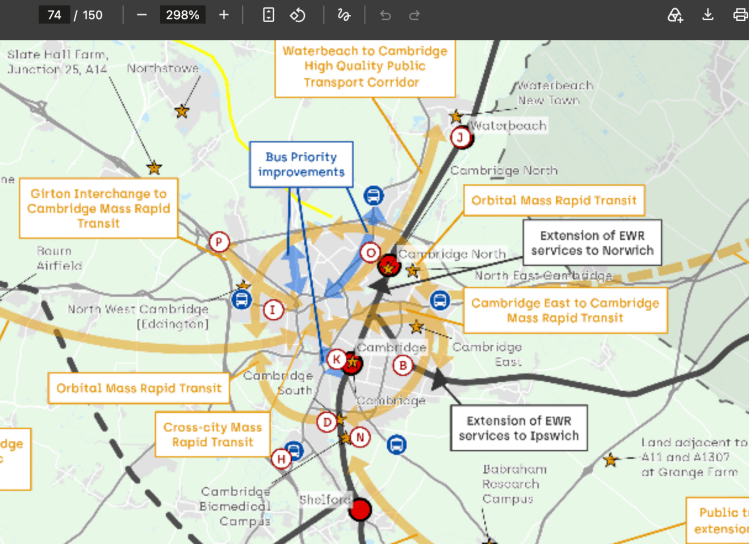
Above – detail of a diagram from the draft Greater Cambridge Transport Strategy . P74 of the CPCA Transport Committee Papers at item 11 Appendix C
“How frequently do the authors travel by bus in/around Cambridge?”
Only as someone completely dependent on buses to get to/from the city centre, I cannot see how the major junctions on the Cambridge inner ring road can be redesigned to give buses priority. There’s no room to widen roads any further.
Take an example of a ‘cross city’ route that might incorporate a bus from Cambourne that then heads out to Newmarket Road
- From West Road Concert Hall (which like Eddington does not have bus access on the Stagecoach network so anyone wanting to go to events who lives on the east side of the city has to pay for two sets of bus tickets – something that designs out access to people on low incomes)
- To the Abbey Stadium (Cambridge United FC)
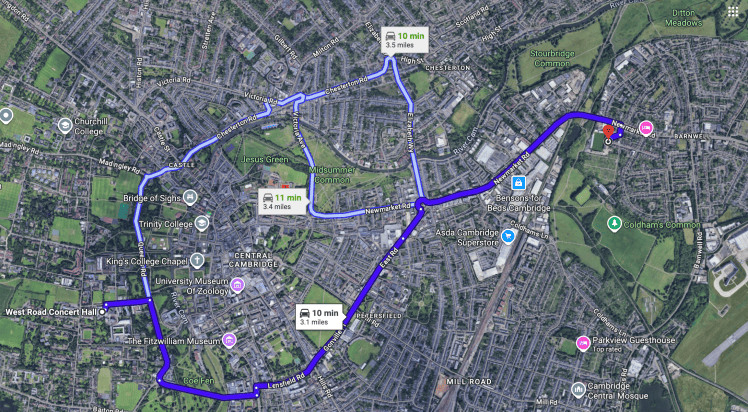
Above – From G-Maps. The car-based route shows a ten minute drive. What would that look like in the midst of:
- An existing rush hour (2026)
- Rush hours in five-ten years time with further increases in population and different economic scenarios including increased economic activity and far fewer empty shop units (as well as a climate-emergency-driven depression)
Note that with the Cambridge South East Transport (CSET) Busway coming in from the A11 and heading to Cambridge Station, prioritising west-east busway routes will snarl up the CSET buses plus the existing bus services Citi 1 (Cherry Hinton and Addenbrooke’s), City 2 (Mill Road), and Citi 3 (Cherry Hinton Road). I dread to think what it would mean for the north of the city – one for Cambridge Area Bus Users to take on?
“How do they propose to manage the traffic congestion?”
See Figure 4.1: “Establishing a practical, phased approach to managing the impacts of congestion in and around Cambridge– map of key interventions” in the draft transport report (p51) and the text from p48 before it.
“…In this period, the aim is to work towards public transport, including first and last-mile connectivity and interchange via travel hubs and Park & Ride, having generalised journey times that are competitive with the private car for cross-city, city centre and key radial corridor movements, with that position achieved in the medium term.”
Above – Draft Greater Cambridge Transport Strategy . P49 of the CPCA Transport Committee Papers at item 11 Appendix C
“That’s not a plan to manage traffic congestion.”
And that’s my worry – it feels like they are repeating the same mistakes that the Greater Cambridge Partnership made a decade ago. There’s little that is substantially different to what GCP and Cambridgeshire County Council officers were offering up in the mid-late 2010s. (I went to, and filmed too many of those meetings!)
The short term and medium term measures risk creating more problems than they solve.
Which is soul-destroying because despite my moaning and criticism…
****I want this transport strategy to work!***
In fact it is essential that it more than succeeds in persuading people to use forms of transport that don’t involve burning fossil fuels as we are finding out the hard way.
The draft strategy reads like it wasn’t co-designed with residents that:
- use the buses regularly and are dependent on those bus journeys (to the extent that if the bus doesn’t turn up, they don’t get to go to where they need to get to, whether work, college, evening events, social events).
- cycle in Cambridge regularly – in particular on busy roads and/or along existing or new cycleways
- people who have to make circular journeys that involve more than a standard return journey.
It feels like it was put together by highly-qualified professionals who don’t live and breathe the lives of the people who will ultimately use and live by the transport network the processes is meant to come up with.
The ultimate risk is party political support collapses due to an electoral backlash
And we’ve been there before with the catastrophic congestion charge where senior transport officers took as given the Political consent for the congestion charge – a consent that had not been very clearly a) asked for by political candidates at local elections, and b) given by the people at the ballot box.
It’s not like transport officers and councillors were not warned
Had they done this, they would have spotted a report on attitudes towards congestion (including congestion charging) commissioned by Cambridgeshire County Council back in 2008. You can access it via the Cambridgeshire Collection in the Central Library.
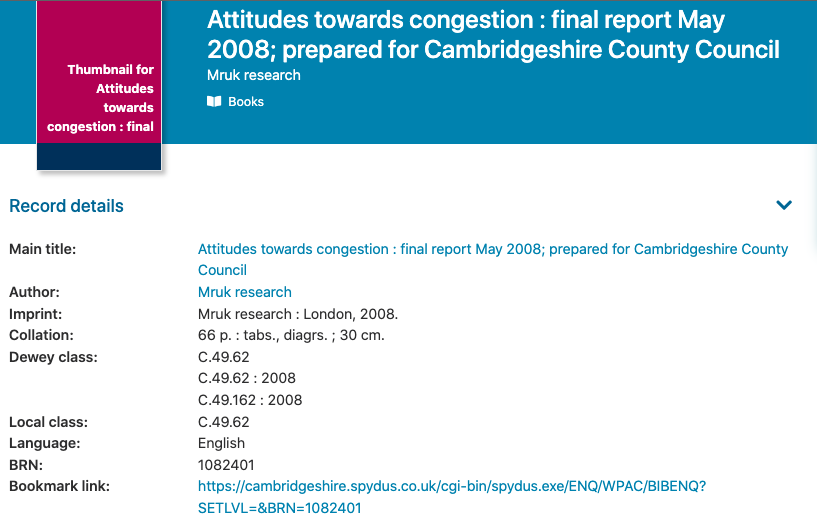
The most important finding?
“Nearly two-thirds of respondents (59%) would support congestion charging if attractive alternatives were in place for travelling in Cambridge”
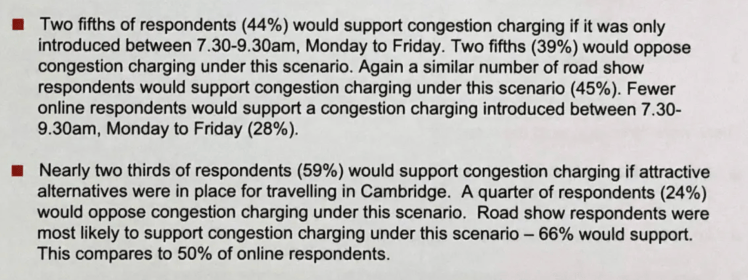
Above – MRUK Research for Cambridgeshire County Council, Executive Summary p4, May 2008.
See my blogpost from 2023 here and scroll down to see the full executive summary. While none of the councils at the time or the GCP seemed interested in this study. That said, officers at the now Greater Cambridge Development Corporation were happy to get hold of a copy of the report as part of their evidence base.
“Attractive alternatives” – that reminds me of my previous blogpost!
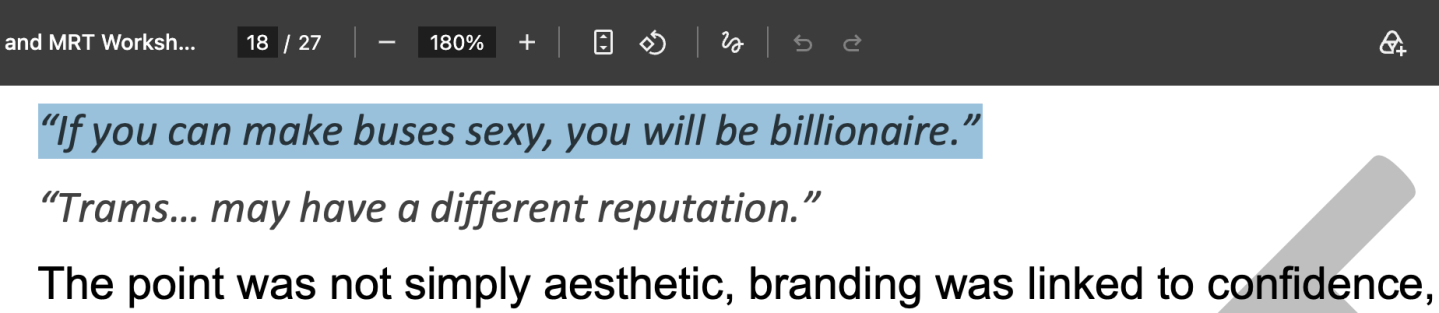
Above – I couldn’t not write a blogpost on that quotation!
If ministers and councillors want an integrated transport network, they need to go far beyond their standard online-based consultations
Future events should allow the participating public to get creative – including but not limited to drawing out different transport routes on very large print maps (such as the A0 map I got printed out for a previous local plan consultation where fewer than a dozen members of the public came to the Queen Edith’s public event (and only two of us came to the Cherry Hinton one).
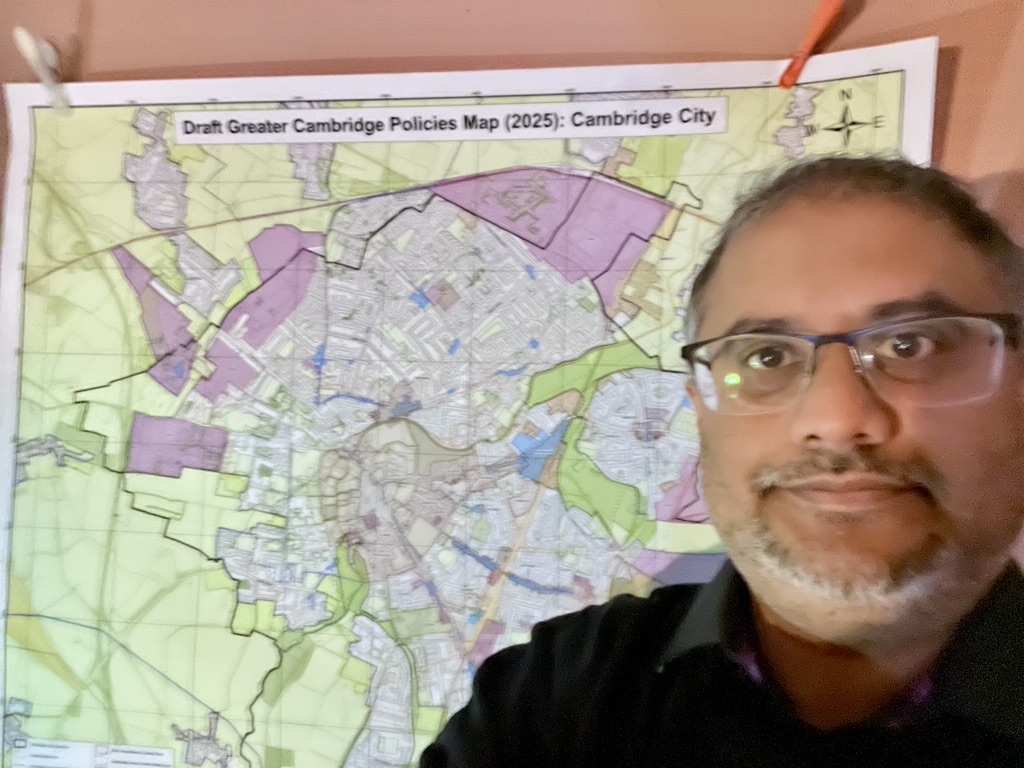
Above – I took this map along to two public events on the draft local plan. Surprisingly the planning officers were not provided with their own, they only had online versions which made it hard for some members of the public to see/comprehend the ‘big picture
- Let children highlight areas that could be made safer.
- Let teenagers highlight and propose roads and routes that could be segregated for cycles and scooters only
- Let parents who need to do multiple tasks on a working day (mindful of the growing and long overdue use of paternity leave) pick out connections and links that would significantly reduce time spent travelling
- Let staff at sports, arts, and leisure venues shape routes that make it easier and safer for them to get to/from work – especially in unsociable hours
In a nutshell, plan beyond 9-5 office hours
By keeping things vague, the public more than likely will remain sceptical
- Mass Rapid Transit – because of past form, members of the public more than likely will interpret this as ‘buses’ and not rail. And buses that get stuck in existing motor traffic as happens with busway buses on the existing guided busway when they hit the city centre.
- High Quality Public Transit – because of past form, same as the above.
- Vague corridors on low-resolution maps rather than more detailed proposed routes for concepts like the cross-city routes where no suitable existing overland routes appear to exist without radical prohibitions on existing motor traffic.
Quadricycles – micro-e-cars are completely missing
Planners really should be making provision for micro-e-cars that have much lower top speeds, less powerful engines, weigh less, have shorter ranges but are suitable for short urban journeys.
Also, if Cambridge is going to have e-scooter hire facilities, can we have them in Cambridge Blue and not bright orange?

Above – I don’t think this version is available anymore. Also the seat design has improved to provide more suspension/shock absorption.
Future long term transport planning processes need to be improved significantly compared to what we’ve experienced over the past couple of decades. The fact that 12 years after the first Cambourne busway public meetings there are still no spades in the ground tells its own story.
If you are interested in the longer term future of Cambridge, and on what happens at the local democracy meetings where decisions are made, feel free to:
- Follow me on BSky
- Spot me on LinkedIn
- Like my Facebook page
- Consider a small donation to help fund my continued research and reporting on local democracy in and around Cambridge

 The Cambridge Town Owl