The long-awaited updates to the Cambridge Science Park’s planning application for a revamp and significant densification of the site have been published by the Greater Cambridge Shared Planning Service
You can:
- browse through the extensive documents at: https://applications.greatercambridgeplanning.org/online-applications/ Ref: 26/01902/OUT
- see the latest from the developers at https://futurecambridgesciencepark.co.uk/
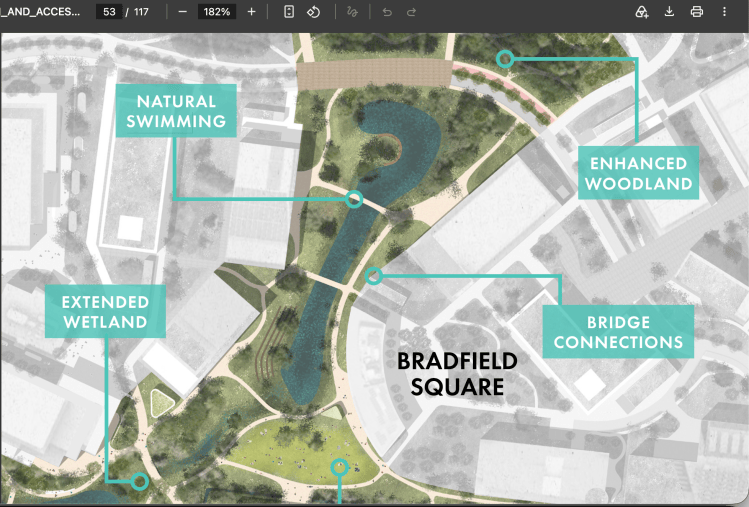
Above – the proposed natural swimming area on p53 of the Design and Access Statement of Sept 2026
…Although looking at G-Maps here, it may need a bit of a clean before people go swimming in it!
Historical England’s warning to Cambridge: This application will change the city
They followed through on my moaning back in May 2026 here
You can see how the skyline of Cambridge will be transformed with 21st C Sci-tech-Industrial buildings dominating the background. Having the buildings in light beige is artistic licence in my opinion – I expect the reality to look a lot more uglier given the property industry’s past form.
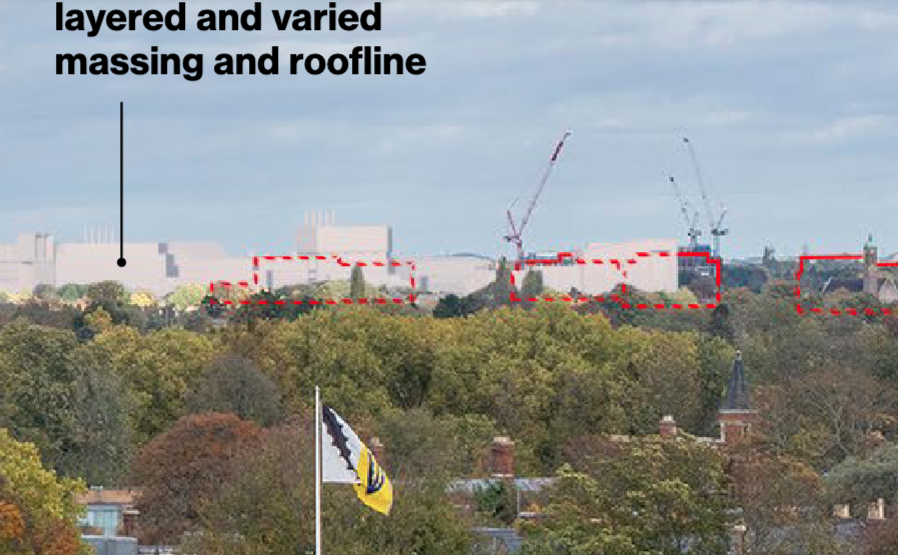
Above – Detail from Design Codes Part 8 p11, in my blogpost of 30 May 2026
The two choices from Historic England to the Planning Committee that will judge this:
1: “The first choice is whether the opportunity presented by the Science Park’s redevelopment could be realised in a way more sympathetic to Cambridge’s identity.”
2: “The second choice will be whether the effect of the development proposed in the outline application on the character and identity of Cambridge, and on the character and= significance of its conservation areas and designated heritage assets would be outweighed by the public benefits the development would secure (NPPF, 215).“
Above – Historic England to Greater Cambridge Shared Planning Service, 10 July 2026
“What is Cambridge’s identity?”
Depends who you ask. On one extreme you’ve got the picture postcard ivory towers that are centuries old and bring in all of the tourists. On the other you have the 21st-C sci-tech boxes within which complicated stuff happens, skilled jobs are created, money is made, and tax receipts are generated for the economy which makes ministers happy. There doesn’t appear to be much middle ground.
Note middle ground isn’t always the best option. Think of the weeds popping up in roads and pavements. Local government voted not to use the weed killer to spray the unwanted plant because of environmental impact. But then the councils cannot afford the manual workers to remove them by hand. Additionally there is no voluntary culture or one backed by law to compel local residents tot carry out the work for free – as was the expectation in generations gone by. The rapid turnover of population and the nature of short-term rents makes it harder to generate the community spirit needed to sustain settlements.
Visualisations
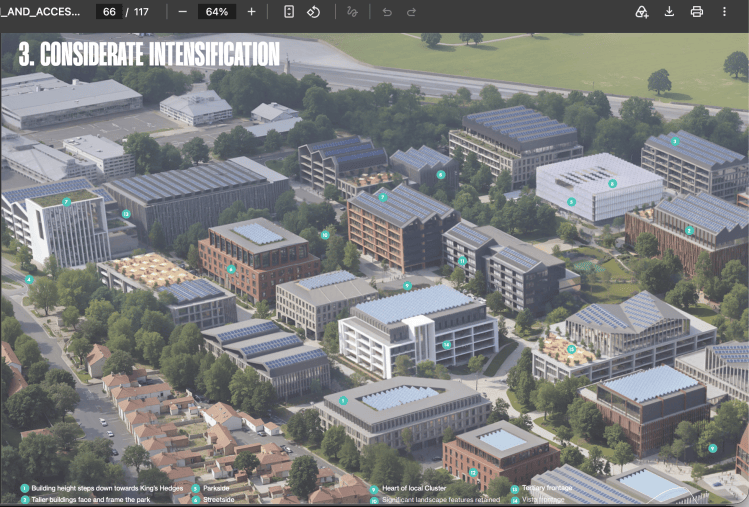
Above – Compare Cambridge Science Park proposals (p66 Design and Access Statement, Sept 2026, above with Yale below
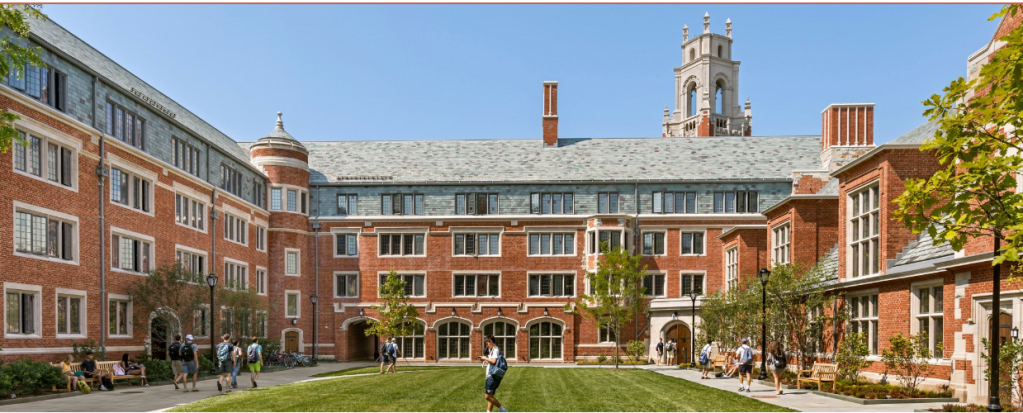
Above – from The New Residential Colleges at Yale: A Conversation Across Time – Robert A.M. Stern was one of the partners that built new residential colleges at Yale in the mid-late 2010s. They were striking not least for taking their inspiration from existing pre-20thC buildings. Image – Yale Residential Colleges RAMSA
Is there something about Yales approach over the past 15 years that could work for Cambridge?
Anything on Water?
Yes from the Environment Agency
“Grey water recycling and rainwater harvesting should be carefully investigated. Water companies cannot supply non-wholesome water to properties, so this would need to be actioned by a third party. With rainwater harvesting the dry weather benefit should be considered, i.e. there is little rainfall in the times of high demand.”
Above – Letter from the Environment Agency, 13 Aug 2026
“How many new staff will be working on the densified site upon completion?”
- A low increase, an additional 53,000 staff within a 75minute radius by 2047
- A high increase, 133,000 staff in the same period.
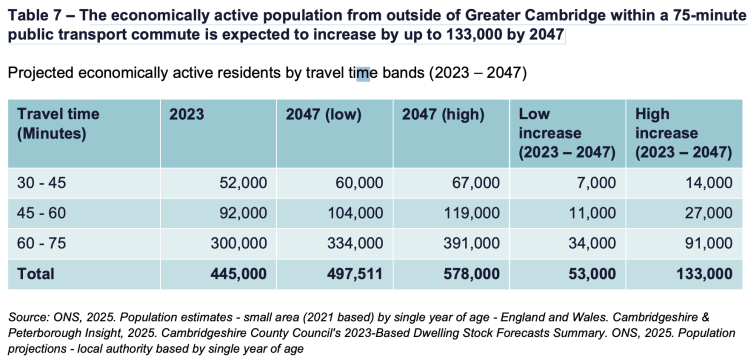
Above – P13 of the Transport Assessment
When you think additional homes and people, that’s a very large Cambridge we’re preparing for!
It also said this on rail commuting – highlighting the importance of workplaces close to railway stations:
“45% of London’s commuters use rail as their main mode, and men (who dominate long-distance rail commuting) are far more likely to endure 60+ minute journeys.
45+ minute commutes are not a barrier in a well-connected region; people routinely make
such trips for attractive jobs, and with CSP’s location as a strategic Site a short trip away
from Cambridge North Station, it is well placed to attract workers who would be willing to
commute”“
Having done the Cambridge-King’s Cross commute more times than is sensible, I found the journey between King’s Cross and my old Office off Victoria Street on the Underground the most stressful, followed by the journey from Cambridge Station to my house.
No mention of light rail
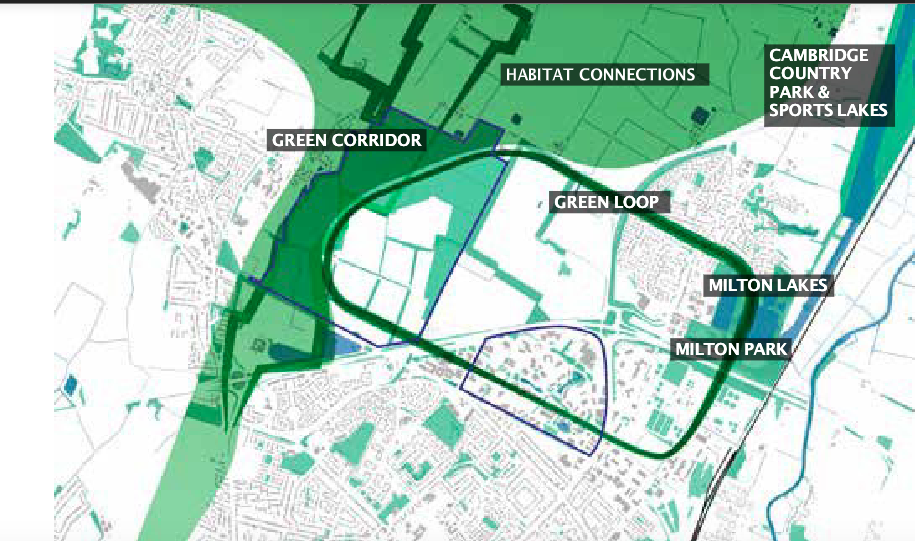
The future integrated transport network becomes an important consideration – one not mentioned in this report. When I look at the increased densities of the proposed buildings, one wonders what an overground tramway line that has more frequent stops than the Isaac Newton Line of Connect Cambridge Light Rail might be like. Especially if it started at or was an integral part of the proposed further expansion fo the Science Park over the A14 which incorporates the long-delayed Cambridge rowing lake and water sports facility.
The proposals from the Cambridge Sports Lake Trust incorporate the lake. (click & scroll down). The section closest to Milton and the A14 is below top
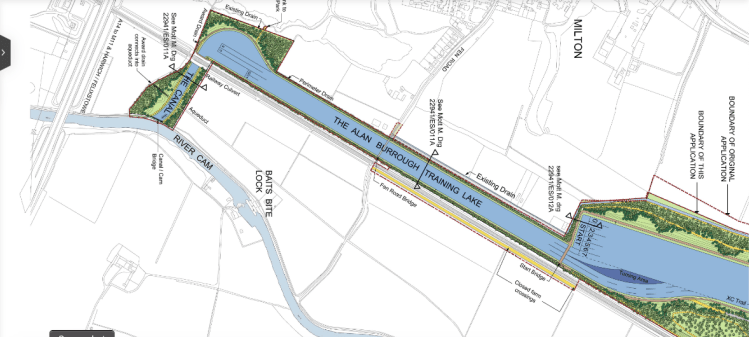
…followed by the section furthest away.

Above – Cambridge Sports Lake Trust. One way or another they will need to build a railway station whether for suburban or light rail.
Also not forgetting active travel and e-micro-vehicles either: the teenagers are ahead of the game. See also Electroheads below.
Furthermore, Trinity College have the option to make pool-car micro-e-car transport travel an alternative to the standard motor cars. I mentioned this at the consultation event saying that the two Cambridge Science Park developments have the option to implement micro-e-cars ***at scale***, linking up with existing and new developments to build in areas for neighbourhood pool micro-e-cars.
Ministers really need to get their heads around where the people are and bring forward proposals to tax, regulate, build new segregated infrastructure for, and enforce the law on e-micro-vehicles.
Above – Electroheads on the Citroen Ami
I’ll finish this post here for now – the next one will look at community engagement and youth engagement, both of which have reports covering them included in the application documents.
If you are interested in the longer term future of Cambridge, and on what happens at the local democracy meetings where decisions are made, feel free to:
- Follow me on BSky
- Spot me on LinkedIn
- Like my Facebook page
- Consider a small donation to help fund my continued research and reporting on local democracy in and around Cambridge


