A number of Cambridge City Council meetings highlight a number of housing issues that residents are being invited to discuss throughout October 2026
The papers for the Performance, Assets and Strategy Overview and Scrutiny Committee (taking place at The Meadows Centre in Arbury – Tuesday, 6th October, 2026 5.30 pm) has at item 6 an update on the city council’s housing programme.
Following up from the Government’s grant of nearly £100million announced a month ago (August 2026).
The original plans for North Cambridge included Cambridge City Council spending £80million on redevelopment of existing council housing sites for “…more than 200 new council homes and 200 new market homes [to be] built across the Arbury Court site and the nearby Kingsway council estate.”
Above – Cambridge City Council’s North Cambridge webpage mentioning the approvals from October 2025
The recent papers for the Scrutiny Committee (where backbench councillors get to scrutinise executive councillors and senior council officers) coming up on 06 October asks the Committee to
“[Approve] the increase of Arbury Court and Kingsway redevelopment project budget to £103,200,000 to account for the increase in site boundary, and a projected increase in affordable (council) homes delivered, compared with the existing project boundary, approved in October 2025. This will increase the Affordable Homes Agreement to purchase 245 homes from the council’s development partnership with Hill – Cambridge Investment Partnership (CIP).”
Above – CamCitCo PAS Scrutiny Cttee 06 Oct 2026 Officer’s Report p3, paragraph 1.2
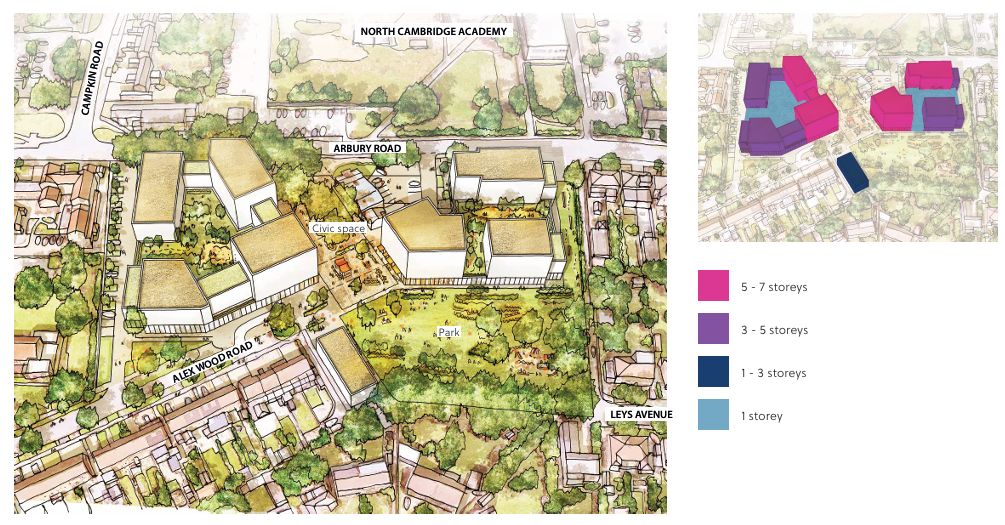
I’m assuming that this means this increasing number of council properties will be subtracted from the number of market homes that Hill will be selling.
Proposed designs for the Kingsway flats
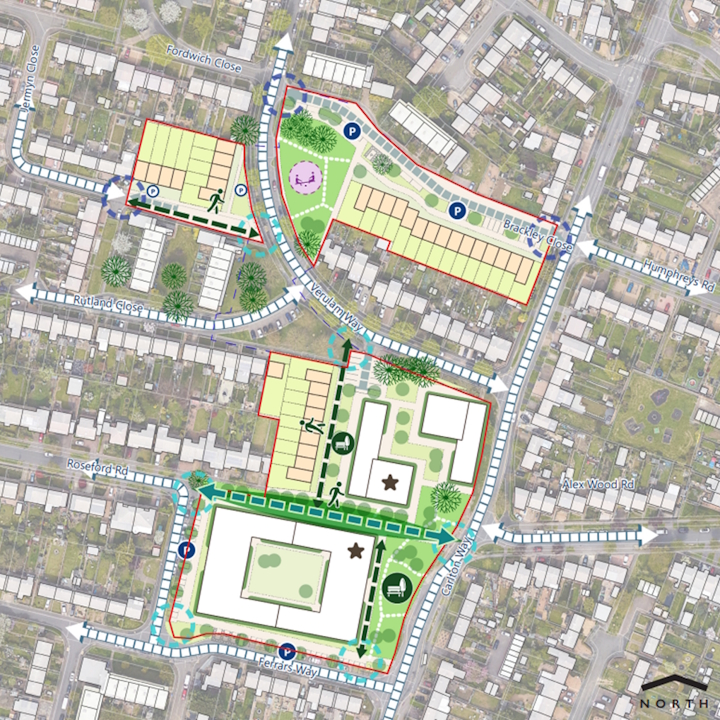
Above – from Cambridge City Council (29 September 2026) – proposals also incorporating additional homes following a new government grant last month
Coleridge ward is getting something too!
“Well I’m glad we’re getting something coz we have a helluva time!”
I have no idea why my brain defaults to that clip from Monty Python’s The Life of Brian (which we had a university seminar discussion on when I first left Cambridge for Brighton!) whenever the news announces someone/somewhere getting something.
“There is now an opportunity to increase the number of affordable (council) homes from 45 to 57 (78% affordable (council)). With the Homes England Strategic Partnership funding
secured, the number of council homes at Social Rent will increase from 5 to 34.“
Above – CamCitCo PAS Scrutiny Cttee 06 Oct 2026 Officer’s Report p12, paragraph 4.2.1
In this case it’ll make a big difference to more local families in the Davy Road flats opposite Dragon Playground. (See the project website at https://davyroad.co.uk/ )


Above – me and the big dragon slide at Dragon Playground (I didn’t name it!) on Coleridge Rec, the slide installed following the city council election candidacy of my Twitter avatar Puffles the Dragon Fairy in May 2014 – the dragon securing 89 votes.
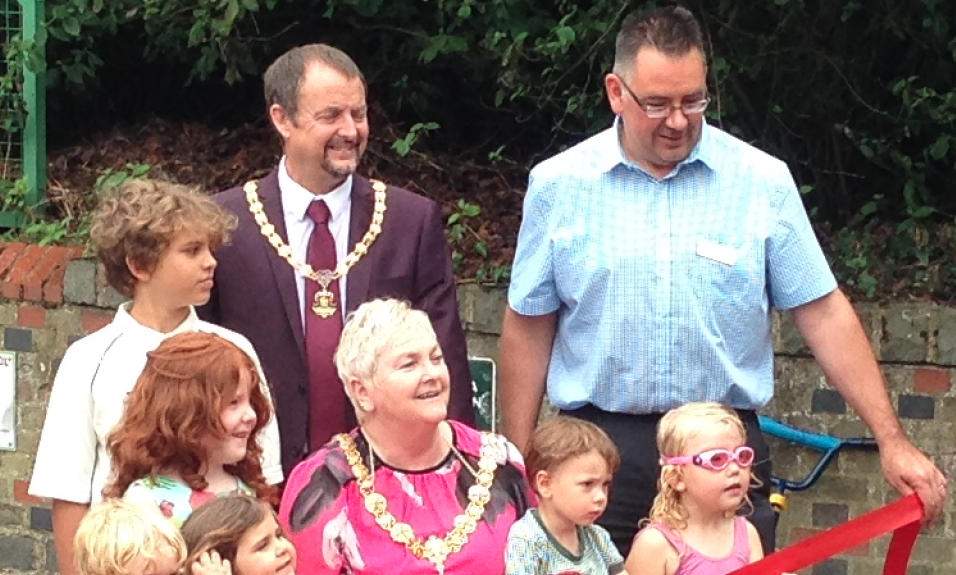
Above – the then Mayor of Cambridge Cllr Geri Bird opening the revamped playground with its highly popular splashpads – from a blogpost on what other themes Cambridge could use for playgrounds.
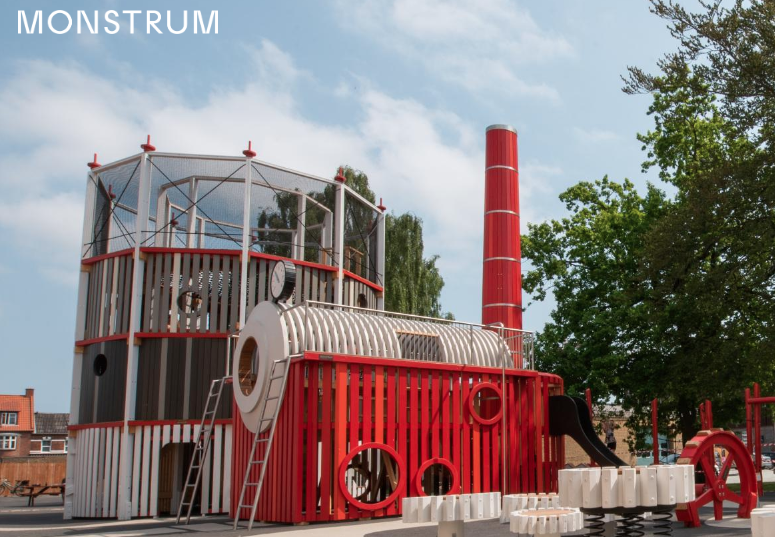
Above – ***I want that one!*** from the Industrimuseet in Horsens, Denmark via their FB Page. (Could this be built on any spare land at the Cambridge Museum of Technology, formerly the sewage pumping station?)
“What do the overall numbers show?”
The context is Cambridge City Council’s agreement with the developer’s Hill
The principle involves demolishing low density council housing where the cost of retrofitting and renovation to meet new housing standards is prohibitive in existing budgets. On those sites is a mix of social rent housing, more expensive ‘affordable rent’ housing (both council-owned and run), and some private housing for sale on the private market, from which Hill covers its costs and makes a profit from.
Such is the size of Cambridge’s inflated housing bubble that it is possible to build medium-high density council homes on the low-density sites to ensure that there is *a net increase* in the number of council homes built while enabling new homes for the private market to be sold as well. Given Labour’s longstanding policy of ‘mixed communities’ with private (owner-occupied, and rented), housing association, and council housing, in principle the programme enables the diversification of residents by income levels *and* reducing the housing waiting lists. Which again in principle should have a positive impact on communities with the increased diversity of skills and talents people can bring to community life.
“Have the mixed communities’ town planning policies worked?”
Depends who you ask. For some it has – visually improving an area. For others it hasn’t – the gentrification of an area pricing them/their families out of the area they lived in/grew up in.
Which is what makes the study commissioned for the Cambridge Sub-Region’s Strategic Housing Market Assessment report worth browsing through. The section at Chapter 26: Delivering mixed, balanced communities – 2009 update is here and has both Cambourne and Cherry Hinton as case studies.
“The idea that communities ought to contain a greater mix of housing types and residents is a key component of the current Government’s policies on housing and neighbourhoods. The reasons for pursuing mix include delivering social housing, meeting other social policy goals and principled opposition to division between different types of people. There are lessons for implementing planned changes to mix and for the management of new and existing mixed areas.”
Above – Cambs Insight (2029) Ch26. p2 – setting out the case from Gordon Brown’s Labour Government, the policy brought in by Tony Blair’s Labour Government in 2003
The document above provides a good summary of the merits and otherwise of mixed communities as a policy of central government. But given the inevitable complexities of social policy, reviewing and refreshing the policies in light of lived experiences remain important.
That said, the current local housing policy for Cambridge and South Cambridgeshire supports using the planning system to build tenure-blind mixed communities. It also cites national planning policies too.
“planning policies and decisions should aim to achieve healthy, inclusive and safe places which promote social interaction, including opportunities for meetings between people who might not otherwise come into contact with each other”, and which are “safe and accessible, so that crime and disorder, and the fear of crime, do not undermine the quality of life or community cohesion.”
One of the biggest changes since that report was written is the rapid rise of social media usage which very clearly has impacts in local communities. While the root causes of social problems (eg the online behaviour of high profile international figures domiciled abroad) is outside of the control and influence of social policy makers, the impact is already deep within the communities they work in. And at present we don’t know how to respond.
Note the local history context here – especially in the context of crime and anti-social behaviour
For those of you interested in the social history of North Cambridge, the British Newspaper Archive has digitised its back catalogue of issues of the Cambridge Evening News 1969-2005. Which may be of help to any further education student looking for a topic for an extended project. That said, a note of caution: I grew up on the south side of the river and didn’t know anyone who lived in the north of the city until my final year of secondary school. Furthermore, with no significant social facilities for young people and poor public transport links from north to south, the incentive to go beyond our neighbourhoods was limited. Even today it can be easier and quicker for someone living in South Cambridge to get to King’s Cross using public transport than it is getting to Cambridge Regional College or similar – as I found out the hard way in 2011 after I left the civil service, embarking on an adult teacher training course.
Therefore as a teenager during the earlu-mid 1990s my opinions of what Arbury and the people who lived there were like was shaped by
- playground/community rumours, and
- sensational front page headlines in the local papers – there being two weekly free papers delivered to residential properties across the city in those days.
It was only during a further education & sixth form summer holiday in the latter 1990s that, wanting as many extra hours as we could, a quartet of us 16-18 year-olds then working part-time at the old Budgen’s supermarket on Perne Road volunteered to go up to the store at Arbury (which is still there) who were going through a mini-crisis, struggling to recruit staff. Spending much of that summer on a checkout 9-5 brought home to me just how wrong the negative stereotypes we had been led to believe of the people and area were. Apart from being angry at who had lied to us (!!!) about our fellow residents, there was also a lesson in connecting communities and the importance of decent public transport & social facilities.
That’s not to say it didn’t have its problems – it did. Just like so many other places. But this was far outnumbered by the vast majority of residents who were fine. It also makes me wonder about the impact of automated checkouts at food shops and retailers – how many teenagers are being denied not only their own income stream (and the independence that comes with it) but also the opportunities to interact on a regular basis with the general public? If there is one campaign that the business communities could be persuaded to support, for me it would be to get rid of the vast majority of automated checkouts and bring back the jobs, opportunities, and spending power for teenagers and younger workers. Amongst many others.
Section 106 funding for a local history project?
Some of you may have seen the local history site https://www.arbury-cambridge.com/ which can tell you more about the neighbourhood.

Above – https://www.arbury-cambridge.com/ which has a number of blogposts on the local history of the district
It would be great to see a local history project funded by Section 106 funding that enabled local residents to provide their testimonies of both times gone by and our present era, and to what extent their memories of the post-war/late 20thC decades match the stories in the newspapers from that era.
If you are interested in the longer term future of Cambridge, and on what happens at the local democracy meetings where decisions are made, feel free to:
- Follow me on BSky
- Spot me on LinkedIn
- Like my Facebook page
- Consider a small donation to help fund my continued research and reporting on local democracy in and around Cambridge


