
The building was saved from the wrecking ball by a planning inspector who refused an appeal by the site owner in late 2025. But nothing has happened since. Can the new development corporation and Cambridge City Council bring it back into public use – even as a ‘meanwhile use’?
I wrote about the appeal here, which also included a concept of how it might be converted in the longer term by Jonathan Gimblett.
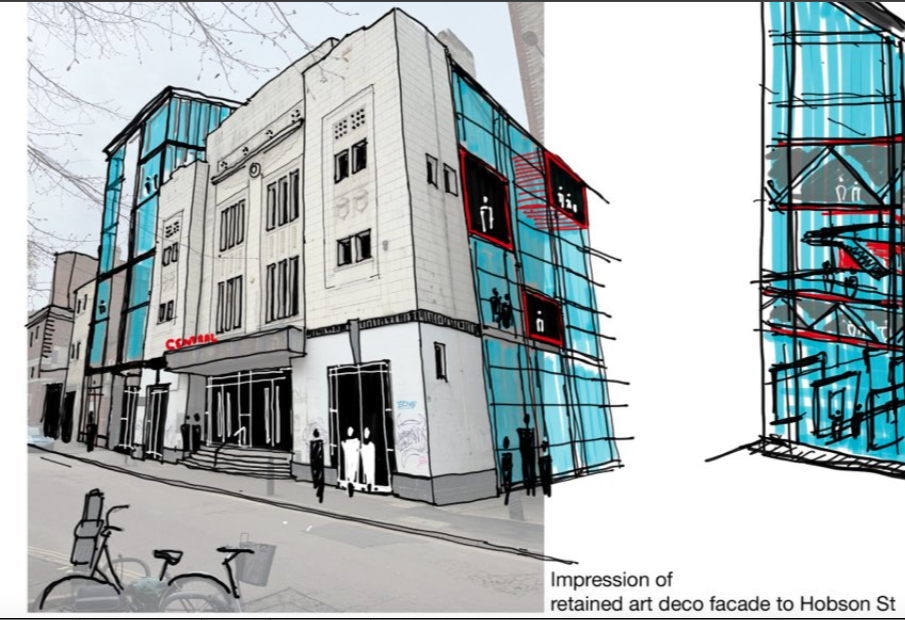
Above – proposals from Jonathan Gimblett which I featured in this blogpost.
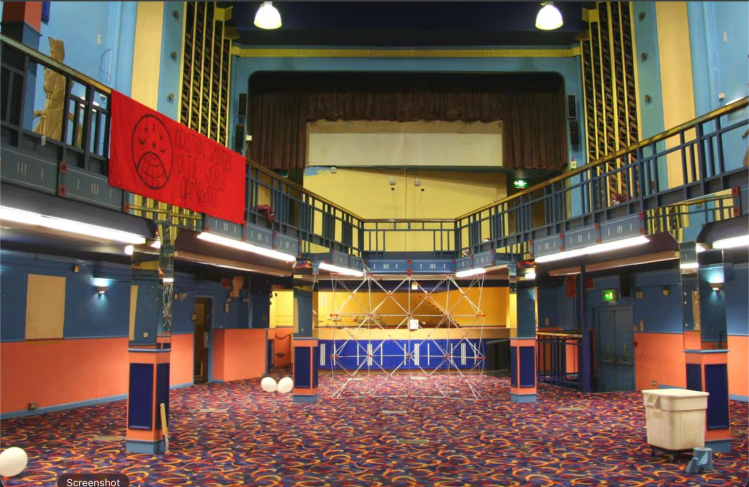
Above – Image of the interior from the early 2010s when the building was squatted. By UrbanX Photography, featured in the Cambridge News on 26 August 2018.
The change in Government policy
“We’ll see boarded-up buildings that have been left to rack and ruin turned into places people are proud to visit again, the pubs and clubs that mean so much to them thriving once more, and local businesses growing and creating jobs that put money back into their own community.”
Above – Housing, Communities and Local Government Secretary Angela Rayner, 25 Sept 2026
The Greater Cambridge Development Corporation has stronger powers of land acquisition than local government
- Parliament approved the creation of the new Greater Cambridge Development Corporation as I wrote here.
- Section 103 of the Planning and Infrastructure Act 2025 strengthened the The Local Government, Planning and Land Act 1980 (the enabling act that the development corporation was created under) to include additional powers and functions to achieve the objectives of the development corporation.
Subject to sections 137 and 138, for the purpose of achieving the object an urban development corporation established for the purposes of an urban development area in England may—
- (a) acquire, hold, manage, reclaim and dispose of land and other property;
- (b) carry out building and other operations;
- (c) carry on any business or undertaking for the purposes of the object; and
- (d) generally do anything necessary or expedient for the purposes of the object or for purposes incidental to those purposes.
With that in mind, ministers were clear on what they expect of the CamDevCo when it comes to community engagement
“The government expects the [Greater Cambridge] Development Corporation to be an exemplar of excellent community engagement, and it will be established with objectives that require it to work closely with local government, communities and local partners to ensure that growth is shaped by these priorities at formative stages and delivers lasting benefits for existing and future residents.”
“Improving community engagement? We’ve been here before”
This was discussed 10 July 2024 – see Item 24/26/Civ App B for the report here.
It was part of an agenda item on what to do with area committees – which we’re still waiting for a substantive response to.
‘What was an area committee”?
I tried to explain over a decade ago in the video clip below – part of a series where I created a short vlogpost every day for a month in January 2016 in order to get comfortable speaking into a camera.
Above – Cambridge City Council’s East Area Committee, 28 January 2016 at the Cherry Trees Day Centre. (For anyone wondering about the gig I was talking about, it was this – I briefly appear at 0m25s in!)
Back to area committees as a means of citizens’ engagement
In that blogpost I picked up on the shortcomings as someone who was a fairly regular attendee of those committee meetings in the 2010s.
“Ultimately the councillors on them could not hold accountable the decision-makers whose day-to-day decisions affected the lives of local residents.
- Police officers unable to deal effectively with anti-social behaviour
- Highways authorities unwilling/unable to deal with rat-running
- Councillors having planning refusals overturned by national planning inspectors despite huge and sustained opposition (see The Flying Pig Pub)
- No one able to hold the providers of places for doctors’ surgeries or NHS dentists to account while residents watch as more and more homes are built
The report by the New Local think tank included a diagram on what such area committees could have achieved
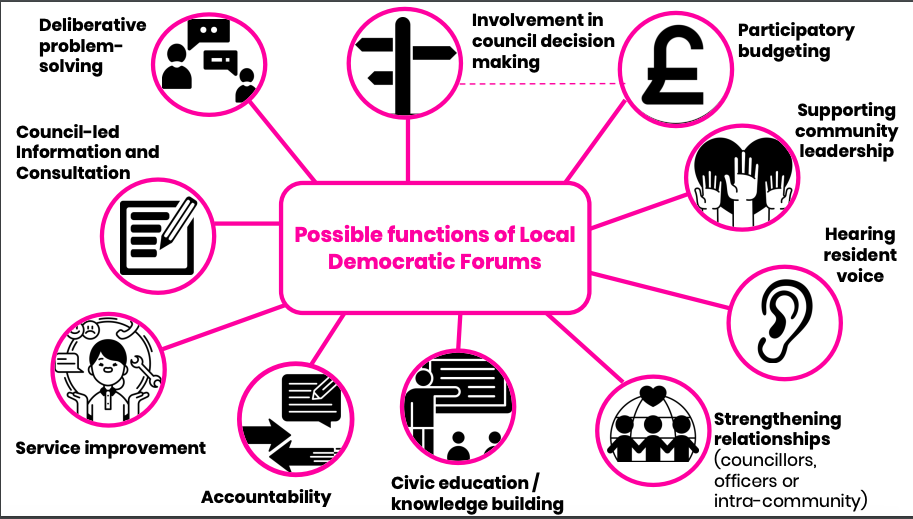
Above – Cambridge Civic Affairs Committee 10 July 2024 – 24/26/Civ App B, slide 11.
As I wrote at the time: “Unless other public service providers are brought into the orbit of local councillors, any local democratic forum that will replace the area committees will fail.”
The Hobson Street old cinema building as a new Citizen Hub base
I’m really interested in what the Citizen Hub in St Neots is doing. You can see some of the videos of their events on the Citizen Hub YT page here
“The Citizen Hub is a place for local people to know that they matter and their voices are heard. Walk through our doors to reach our network of local businesses, services and community under one roof.”
Above – https://www.citizenhub.co.uk/
“Sounds a bit like The Cambridge Room”
Similar but much more comprehensive to The Cambridge Room – mindful that at some stage The Cambridge Room will need a permanent space of its own.
Gameifying civic action
I wrote about the Rebel Badge Club in this blogpost. In an era of loneliness and social disconnection, think what scouts/guides/woodcraft do but for adults. The books/badges/events are here.
They told me that some places have established their own local groups so that people can undertake the various activities and life experiences to collect the badges like the children do.
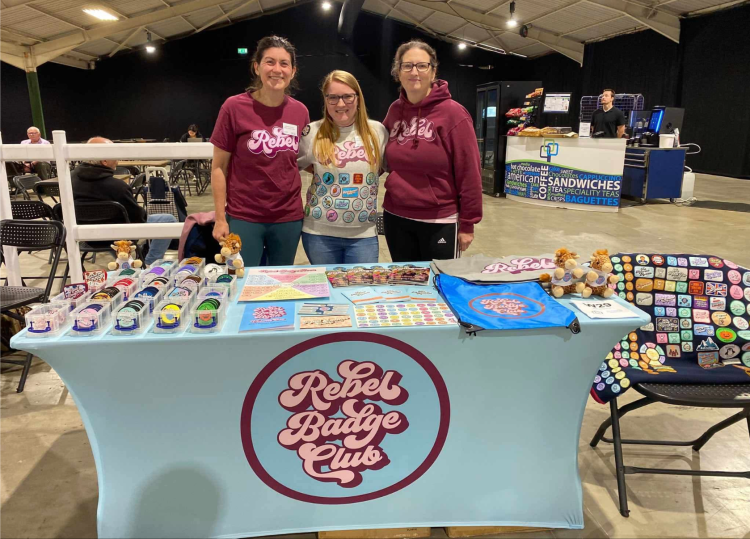
Above – from the Rebel Badge Club on FB
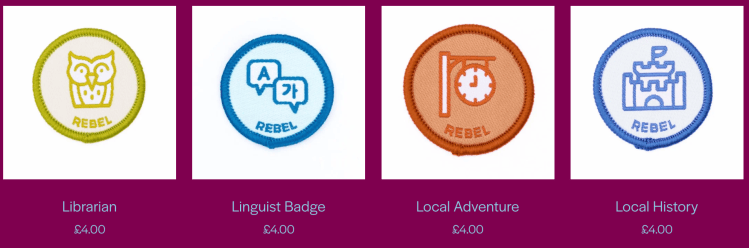
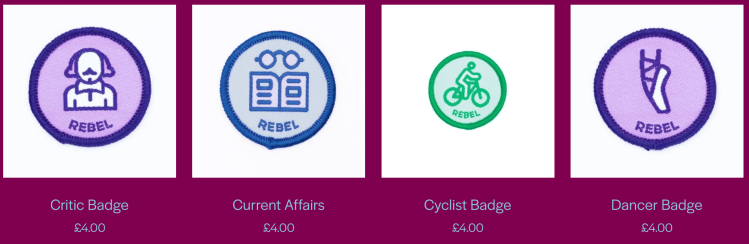
Above – do I qualify for all of these badges?
…There’s one for politicians too!
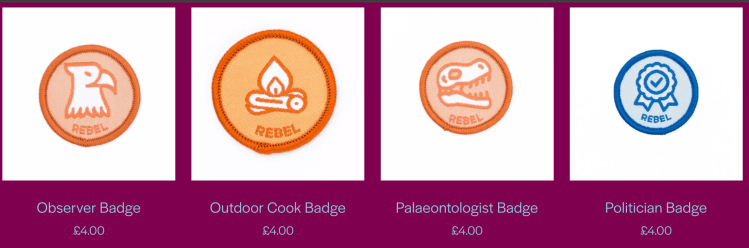
…and they even have one for scientists.
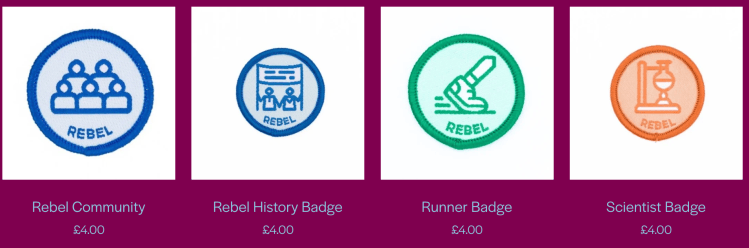
…And runners! Or running scientists! (It’s not either/or)
Small civic and community activities that are part of bigger pictures and social groups
While I don’t think something like this would start off at a new Citizen Hub running out of the Hobson Street Cinema, it is something that could start off at a very small scale in local neighbourhoods – ones that already have a strong local presence. It could then expand from there.
One thing that a future Citizen Hub could facilitate is the earning of those badges similar to how libraries facilitate children’s reading challenges in Cambridgeshire. For example:

- How many events could you take photos at before you got a photographer badge?
- How many events could you ask a public question at / give a short presentation at before you got a public speaker badge?
- How many local public policy reports might you want to read before you got your reader badge?
Note the above are just suggestions on how the badges might be applied to civic action and public engagement. It doesn’t mean you can’t get them through photographing nature, MC’ing an arts/music event, or reading contemporary horror or grpahic novels.
Anyway, just some ideas for people to play with.
If you are interested in the longer term future of Cambridge, and on what happens at the local democracy meetings where decisions are made, feel free to:
- Follow me on BSky
- Spot me on LinkedIn
- Like my Facebook page
- Consider a small donation to help fund my continued research and reporting on local democracy in and around Cambridge.


