A new report by the All Party Parliamentary Group (APPG) on Further Education and Lifelong Learning is damning on the successive cuts to this sector
You can read the report by the Association of Colleges for the APPG here
Definition of Adult Education
The report defines it as:
“Adult education can be summarised as the programmes or systems designed to educate or train adults at different stages of their lives. For individuals, learning helps them to upskill, reskill, access the job market, develop language proficiency, build self-confidence or even combat loneliness. For society, adult education is a powerful tool for economic growth, employability, personal growth, health, wellbeing and social cohesion.”
Above – AOC (2026), p9
Essentially it goes beyond the narrow skills agenda, and should be a core component of government policy in a host of different policy areas – in particular health and wellbeing. The problem that current reporting systems (to account for taxpayers’ money spent) struggle to capture the indirect impact a wider range of policies can have on a range of government objectives and targets. One of the most well-rehearsed ones I heard during my civil service days was on public policy responses to high rates of teenage pregnancies, which in the 1990s were a regular newspaper headline. One of the pilots in the early 2000s found that measures empowering teenage girls – especially policies and funding that enabled them to stay on in full time education, had a significant impact – more than policies that involved simply handing out contraceptives. Note there are *lots* of caveats and contextual points with that anecdote – including the long term impact of 18 years of socially-conservative policies from the Thatcher and Major Governments, alongside the state struggling to deal with the explosion of the internet and the explicit content that went with it – content that publishers could not publish in mainstream books.
Provision of places and spaces to learn
The Chief Executive of the Association of Colleges highlights the continued shortfall of facilities to enable adults to learn the essential skills needed not just for employment or retail, but also for wider public participation such as responding to consultations where the documents are only available online.
“Fully participating in society and in work now require good digital skills which millions of adults need the chance to learn, and yet the places and spaces to learn are sorely lacking.”
Above – David Hughes CBE, Chief Executive, Association of Colleges
Five themes explored in the context of adult education
- Economic growth, skills and workforce needs
- Social mobility and inclusion
- Health, wellbeing and community resilience
- Policy, funding and the future of lifelong learning
- Learning from across the UK and beyond
“We’ve all seen how the public conversation has shifted on the NEET crisis, thanks to the work from Alan Milburn and his team, and this is exactly what needs to happen with adult education… …John Healey oversaw a skills budget nearly four times what it is now, of more than £5bn, when he was Adult Skills Minister in 2002.”
Above – David Hughes CBE, Chief Executive, Association of Colleges
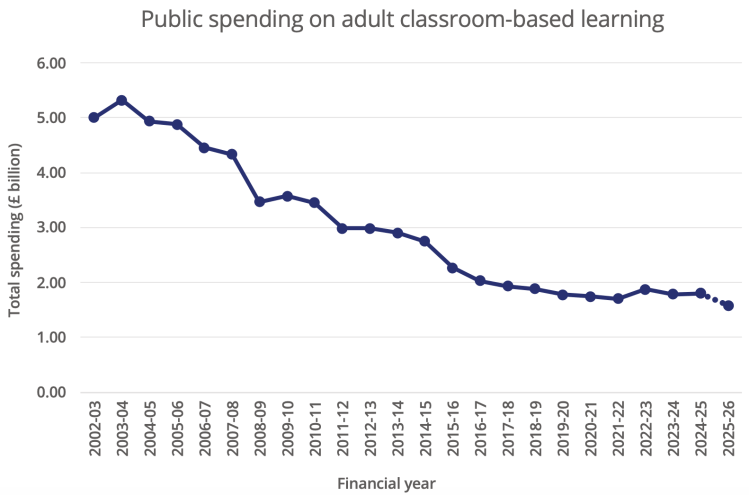
“How big have the cuts been?”
Significant. Down from over £5billion annually in 2004 to just over £1.5billion per year in 2026.
“What did the Mayor of the Combined Authority Paul Bristow say about provision in Cambridgeshire?”
This was recorded just before Andy Burnham became Prime Minister. Hence Mayor Paul Bristow’s appeal to the incoming Government led by the former Mayor of Greater Manchester for much more devolution of powers and funding in the area of skills. With The Budget in a week’s time, the Chancellor of the Exchequer has a huge opportunity to bring in that major change – one I expect some in The Treasury will be fighting hard against.
“What does current skills provision look like?”
Have a look at the recently-published Local Skills Improvement Plan
…which may be worth comparing to the barriers identified by the CITB report on construction apprenticeships of 15 October 2026. Which as I wrote in this blogpost, the construction sector has dreadfully-high drop-out rates – the root causes of which are not solely the responsibility of industry.
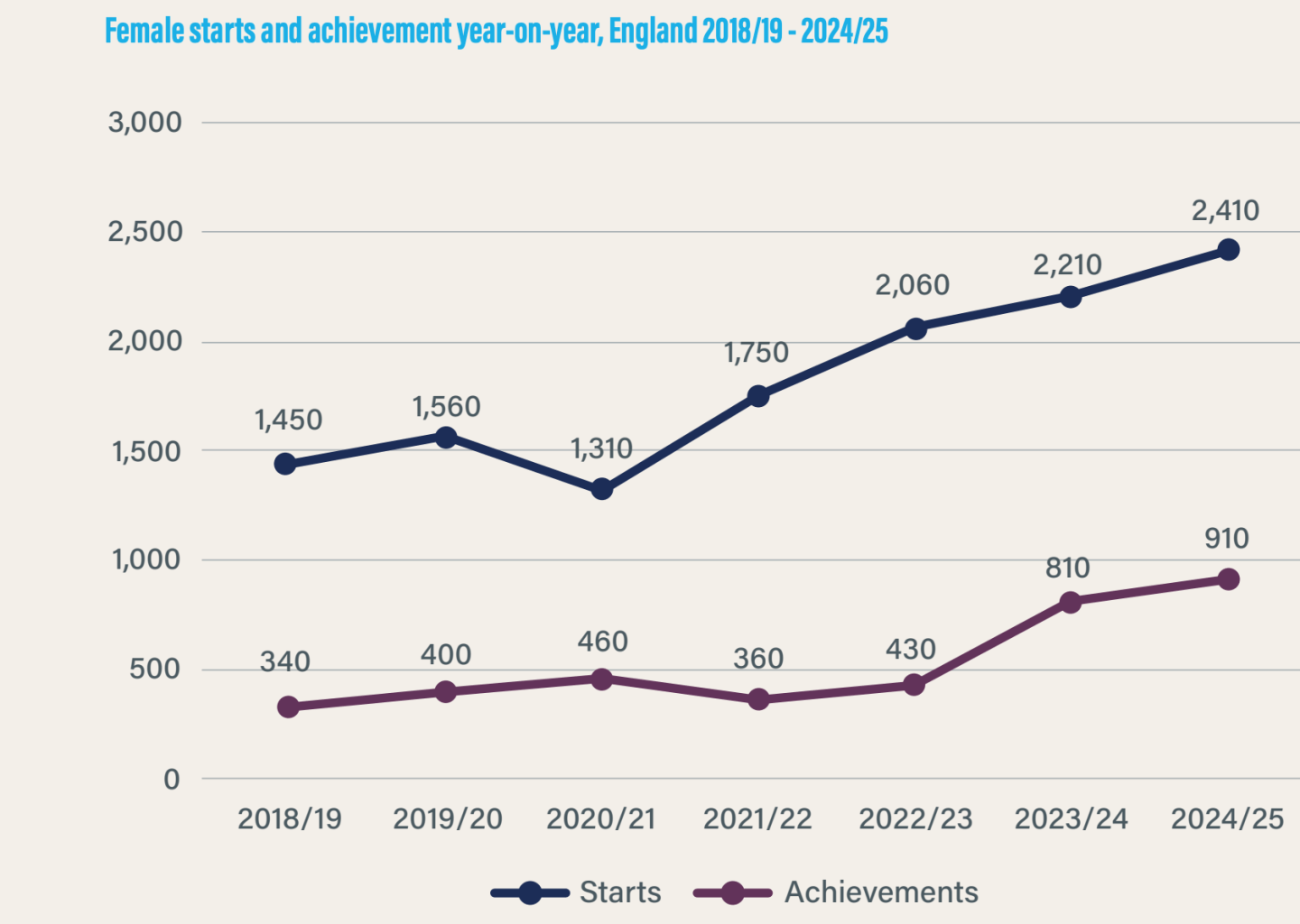
Above – Construction Apprenticeships: Challenge. Opportunities. Support. Autumn 2026 update, p15 / p8pdf
One of the vocational options that I covered in a blogpost from 2024 on science education for adults was Day Release for workers – a recommendation coming from a committee of the old Ministry of Education in 1964
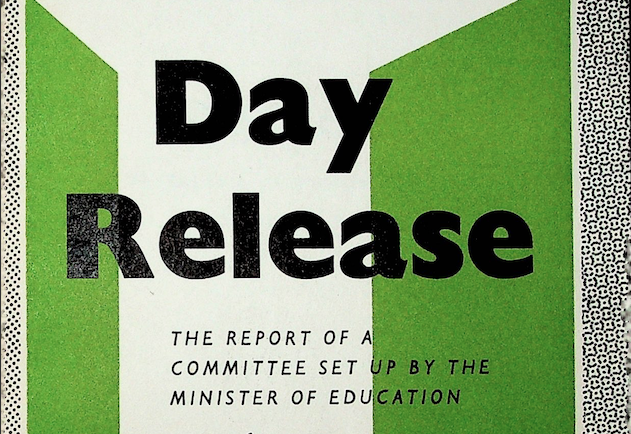
Above – You can read the digitised report on Day Release (1964) here
They have 12 recommendations which make for interesting reading today which you can browse through here.
Adults and Society – Chapter 2
This section is introduced by Dr Sam Rushworth MP (Labour – Bishop Auckland), and Rachel Gilmour MP (LibDems – Tiverton and Minehead)
They are quoted as follows:
“…the inquiry finds a strong case for recognising adult education as a universal public good and as an important part of the UK’s social and preventative infrastructure, while broadening policy and funding frameworks that currently place greatest weight on immediate qualifications and employment outcomes. Adult learning is not only an economic intervention; it is a cornerstone of a more inclusive, healthier and more connected society.”
Above – AOC (2026), p26
Some of you may want to lobby your MPs on this point – in particular asking them to question ministers on how policy areas outside the remit of the Department for Education are using adult learning provision and services to achieve healthier societies and more cohesive and connected communities.
MPs identify the lack of support for retraining as a huge barrier for adults who might otherwise be willing to retrain to fill chronic shortages in critical sectors of the economy
“Welfare support for retraining was similarly poorly rated; 0% said it is fully adequate and one-quarter (25%) it is not at all adequate in supporting people out of work to upskill or retrain.”
“Most respondents felt that adult education is recognised only to a small (53%) or moderate (30%) extent as a preventative intervention.”
Above – AOC (2026), p28
It’s not just single barriers – they are interconnected. (Public policy challenges have a habit of being like this)
These included:
- financial pressures such as the costs of courses, transport, childcare, equipment and lost income. Many cited L&W’s (2025) finding that 24% of adults identify cost as a barrier to learning, compared with 8% in 2019
- poor mental health, disabilities, low confidence, lack of social capital and previous negative experiences of education that limit participation
- caring responsibilities
- digital exclusion
- a lack of awareness of available provision that further constrain engagement
- cultural or linguistic barriers.”
“What does the L&W item refer to?”
It’s the Learning and Work Institute’s Adult Participation in Learning Survey 2025
“Too many people are being locked out of learning. The survey shows age, class, income, and when people left full time education are all key predictors of participation in learning. For example, you are 20% more likely to learn as an adult if you left school aged 18 compared to age 16, and half of those who left full-time education age 16 or below haven’t engaged in learning since.”
Above – Learning and Work Institute 03 November 2025
The major drawback of using existing school buildings for adult education provision
For adults that did not enjoy their time at school, one of the last places they might want to learn in is the very place where they had those bad experiences.
What do you do if the only facilities you have are existing school buildings? This in part was the driver behind the Village College model pioneered by Henry Morris for the old Cambridgeshire County Council (When it covered Greater Cambridge and Newmarket Rural District – ie not Ely, Fenland, and Huntingdonshire). Very tight funding settlements in the interwar era shaped the development of the village colleges of that era.
What makes the public policy challenge even greater is that those most likely to have the greatest needs – the AOC report identifying adults experiencing multiple and complex disadvantages on p30 of its report. And those are the people least likely to be able to move to a place with better facilities, or have the means to travel to those better facilities. Hence why with extremely limited funding, the Combined Authority has focused its resources on what it calls ‘Further Education Cold Spots‘
The Greater Cambridge Development Corporation is the potential game-changer
The reason being it has the combination of the legal powers and funding/resources to come up with solutions that deal with the multiple barriers in a co-ordinated manner:
- Commissioning a large enough lifelong learning facility to host a wide range of courses and activities
- Commissioning a design *that does not look like a school from the 20th Century*, and instead looks and feels like a place that learners would choose to be
- Providing space for the essential services (eg free or affordable creche/child care facilities for learners) the lack of which previously stopped them from participating
- Providing comprehensive public transport access in the form of a major travel hub for the large lifelong learning facility so that public transport services remain sustainable late into the evening for those attending evening classes.
It is then incumbent on the state to make provision for grants/subsidised fees and free/discounted public transport for those on the lowest incomes – something that is beyond the remit of the development corporation.
Which reminds me – the Combined Authority needs to refresh its skills pages at https://cambridgeshirepeterborough-ca.gov.uk/what-we-deliver-archive/skills/
If you are interested in the longer term future of Cambridge, and on what happens at the local democracy meetings where decisions are made, feel free to:
- Follow me on BSky
- Spot me on LinkedIn
- Like my Facebook page
- Consider a small donation to help fund my continued research and reporting on local democracy in and around Cambridge


