‘Wouldn’t it be nice if that social group from that reel had a base in Cambridge as well as London’
…is something I often find myself thinking. Which is why this blogpost reads as a meandering brain-dump. That said, at the end we find very recent research (October 2026-recent) shows many of the things listed can have a substantial impact on tackling loneliness *and* improving neighbourhood cohesion.
It also stems from one of the failures in public consultation processes when it comes to finding out what communities both want and need. It’s not something that can be easily identified by a highly-paid London-based consultancy rocking up to somewhere far away, rocking up to a pre-arranged event, and listing what people said. As the actor Michael Sheen told everyone in 2017, it’s much, much harder than that.
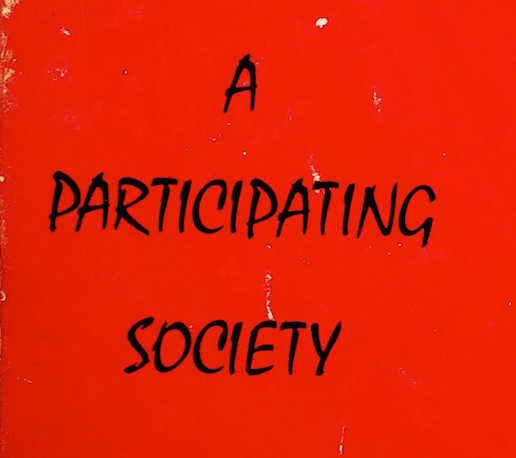
Image: A syllabus from the old National Adult School Union for 1970, titled: A Participating Society.
I’ve often wondered what a sort of ‘general studies book group’ might be like – one for example that is of the theme of things the world has discovered since we left school (For those of you who were 1990s teenagers for example!)
On accessible third spaces in neighbourhoods, and on groups of people
I popped over to my re-opened local that was named after the building company that built much of the housing in the area in the late 1800s/early 1900s, The Rock. (Hence ‘Rock Road’, and ‘Rock Road Library’).
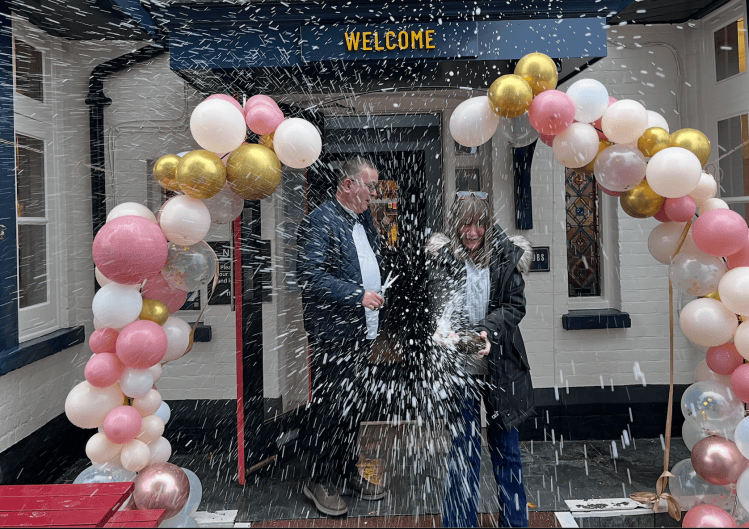
Above – getting soaked by an exploding bottle of Prosecco, The Rock Pub, Cherry Hinton Road, Cambridge.
The revamp was the result of the brewery Greene King expanding its division of franchised pubs earlier in 2026. (i.e. its Pub Partners brand of hive (with a kitchen and greater food provision) and nest options (with smaller food provision).
Talking to the new landlady Caz who owns the new franchise, she told me that this set up gives her far more freedom to do what she wants and provide more of what the local community wants and needs – hence why one of her first moves was to bring back live music to what was one of the well-known small venues on the local music circuit back in the late 20th Century. Those were the days when the Cambridge Evening News had a daily circulation of 40,000 copies, in which once a week was an extended ‘What’s On’ section that had an extensive events list – something that Cambridge has not been able to replicate online as the single source of entertainment information used by the entire city and district.
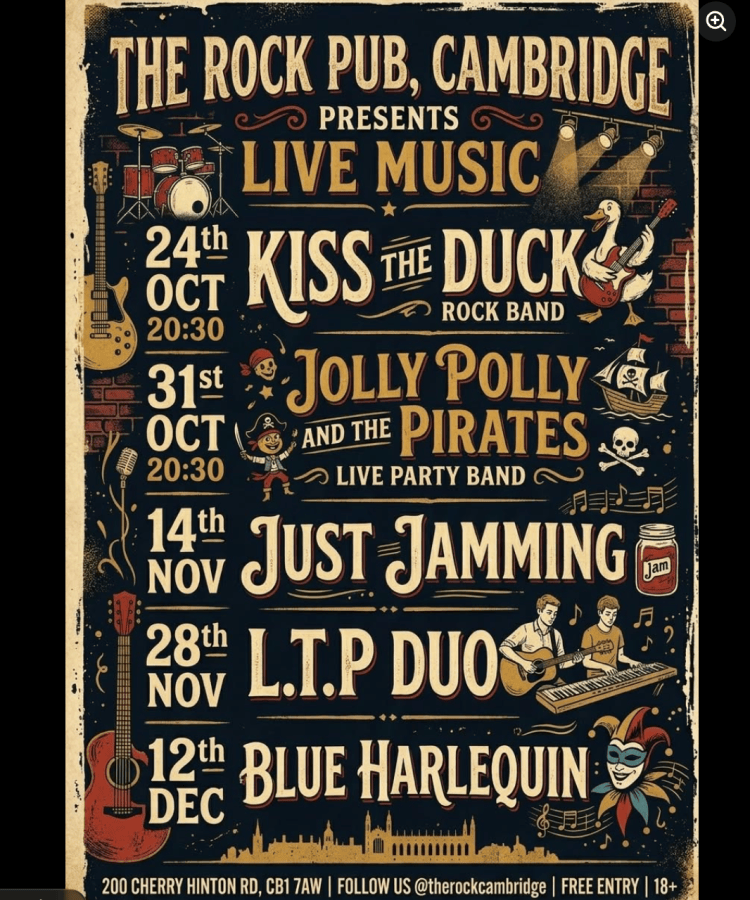
Above – I know it’s AI-generated but it only-reopened yesterday.
Actually, a number of venues locally have started using AI-generated templates for events advertising. And there’s a growing backlash from the graphic design and advertising sector because it means a significant loss of income for their industry. (Don’t get me started on the copyright issues or the environmental impact of the data centres!) Hence why I’m seeing more people saying that they will boycott those places that use AI-generated posters.
One potential response is for local creatives’ alliances (we have CamCreatives in Cambridge) to make it easy for local, independent venues to find out and commission local artists and designers for seasonal posters and advertising, or even to commission templates that venue staff can fill in the essential details in themselves. i.e something that goes beyond the list that CamCreatives has here. (Easier said than done, I appreciate.)
On filling in the ‘Cambridge-shaped gaps’
Every so often I’ll stumble across a national federation of something interesting and find that it has active branches in everywere-but-Cambridge. One example I regularly come back to is the Worker’s Educational Association which used to have a big presence in Cambridge as I wrote in Lost Cambridge back in 2023 here.

Above – from the WEA here: a county-sized hole in lifelong learning from 2023.
Sadly there’s little coming from the Combined Authority on this front. The previous Mayor (Dr Nik Johnson – Labour & Co-operative) tried to get some commissioned courses going but that was as far as it went. There were a handful scheduled for early September 2026 that I wrote about back in June, but there is at the time of posting nothing local to Cambridge.
The Empty Chairs movement
I wrote about this initiative’s attempt to tackle loneliness in society back in July through the simple act of a person sitting in a pub or cafe in an identifiable colour, and pinning a notice on an online portal – i.e https://emptychairs.org.uk/
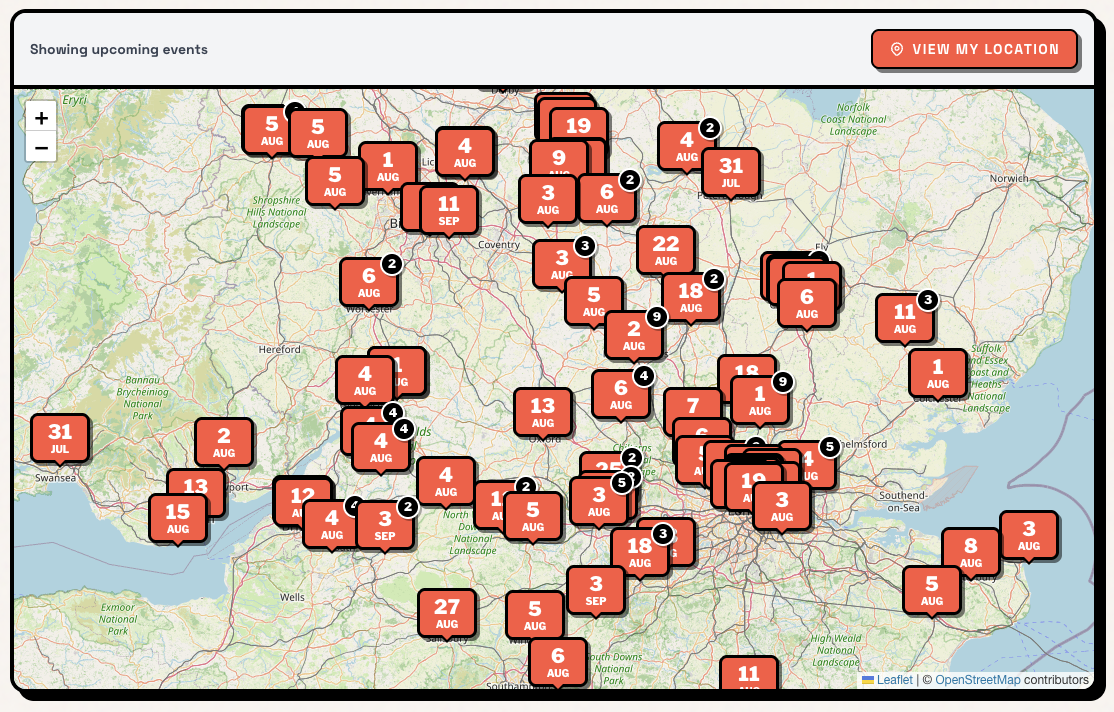
Above – a snapshot of Empty Chair’s event map for August 2026 – after which the numbers and places has expanded even further, including outside of the UK
There is now an established one hosted by Lewis at the Handsome Prince pub on King Street around the corner from the old Hobson Street cinema that happens on the last Thursday of the month from 7pm. I’m tempted to start a similar one at The Rock at the halfway point in between so that it’s only a fortnight between one or the other should anyone want to go to both. Which reminds me, for those of you concerned about the climate emergency, there’s also the People, Planet, Pints monthly gathering at The Salisbury Arms that normally meets on the first Thursday of each month – you need to sign up to claim a free drink from the sponsors.
Calling for an annual Cambridge Societies Fair
I won’t repeat what I wrote in this blogpost from January 2025. With the implosion of social media, we’re having to go back to people-and-paper-based methods of publicity. The number of once regular social media users who have told me they’ve completely disengaged from the big name platforms is striking.
What if Cambridge established its own chapter of the Rebel Badge Club to give people a loose social framework to help small groups of people choose which activities to do together and when?
I wrote about this brilliant idea in a recent blogpost here, having first heard about their early group event back in January 2025
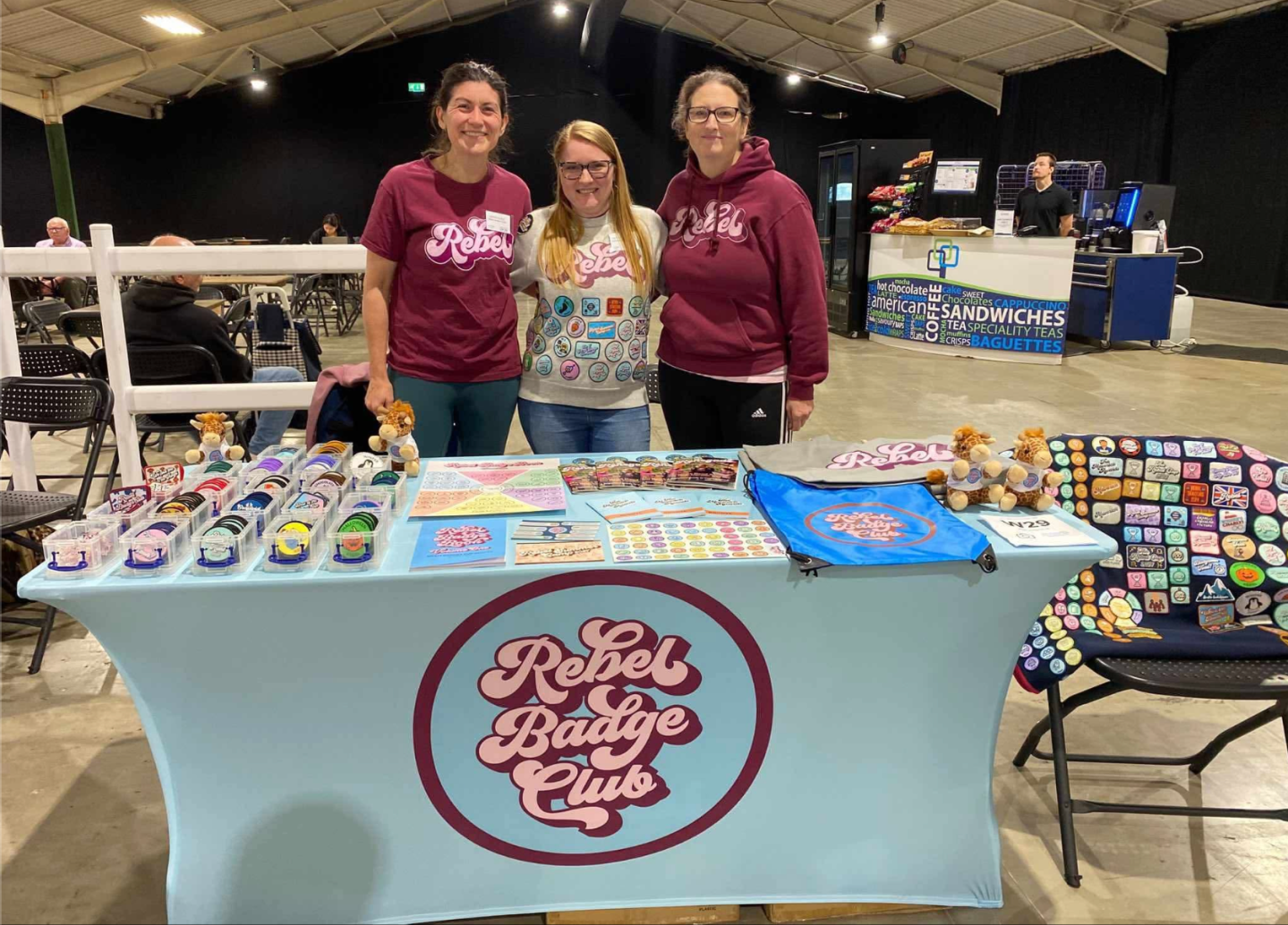
Above – from the Rebel Badge Club on FB
I’ve got the second volume of the guide books on order (which lists the badges and suggested activities to do in order to achieve them and award yourself the badge!)
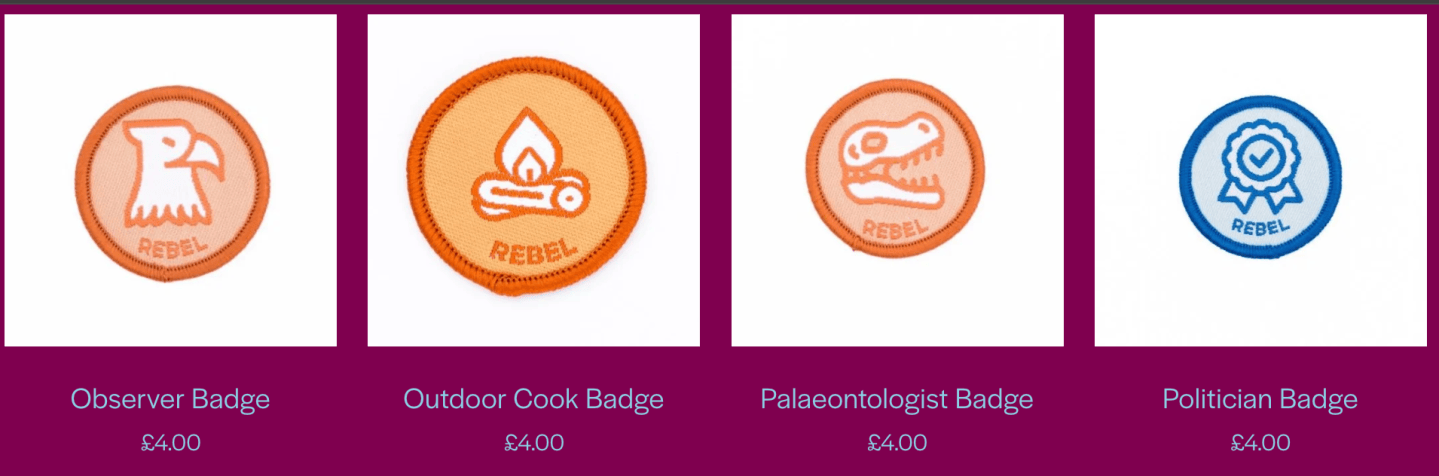
Above – don’t do the Outdoor Cook Badge during droughts and heatwaves
The point about the above scheme is to build up social infrastructure over an extended period of time. That said, not everyone is going to be in a position to take on something like this.
Smaller scale regular support
- Shoulder to shoulder community in London
- Men walking and talking
- The offline club (Mainly capital cities)
- Andy’s Man Club (which is in Coleridge ward, Cambridge)
- Active Multisports (Brighton and Hove)
- The Lonely Club, Brighton and London
In terms of established online-organised social groups, both Meetup (with Cambridge-located groups here), and Eventbrite (with Cambridge-located events here) are still going, although the financial barriers for the former have risen substantially in recent years.
Things in the ‘That would be nice but the efforts and resources needed are huge’ category
The handful below are in a different league
The organisers of the latter (Mystic Fate) told me that Cambridge doesn’t have any venues that meet the needs of hosting such an event.
Things that we have – an ‘off the top of my head’ selection
- Cambridgeshire IVC (which emerged decades ago from a group of Cambridge graduates who wanted to maintain the social lives they had at university)
- Edge cafe recovery groups at the eastern end of Mill Road, Cambridge.
- Makespace Cambridge whose events are on Meetup here, the range of which shows the potential there is to establish similar spaces in the city especially as it grows further.
- Sew Positive on Gwydir Street, Cambridge – “Sew Positive is unique. Its mission is to build communities of like-minded people who face social exclusion.”
- Citizens’ UK Cambridge Branch – which is being established in November 2026
- Together Culture – with a couple of projects running this autumn – although the loss of their premises on Fitzroy Street was something of a body blow, and a missed opportunity for Cambridge’s wealth-creating sectors to step in.
Things organised for children that might be good fun if organised for adult groups too
Ages ago I wrote about a new playground with equipment designed for adults
Above – Cambridge: Can we have a public playground like this?
On central government objectives – the growth of Cambridge, and civil contingencies
I wrote about what Ministers expect from the new development corporation on community engagement here, and while much of the focus on public engagement focuses on what the institutions wanting to engage want and do, far less attention is given to what the people and communities need in order to be in a position to give their considered opinions on whatever the issues are. Having strong civic society institutions in place make engagement activities easier – but are not without their drawbacks.
The other recently-announced objective is civil contingencies – what to do in a disaster
Like the pandemic, or actions by hostile states, organisations, and individuals. Hence the Government’s new ‘Be Ready’ campaign at https://beready.campaign.gov.uk/

And that highlights its emergence from the Civil Society Strategy from Theresa May’s Government. (Count the number of Prime Ministers we’ve had since!)
Above – Civil Society Strategy 08 August 2018
Each section has a series of missions. In the first chapter, the first mission is titled as: Mission 1: a connected, resourceful society (from p32)
- Loneliness and social connections
- Civil society and disaster response
- Ministerial statement: policing and civil society
From that strategy emerged the first plans to tackle loneliness in society, the last update we got being in 2023 here. That included the 2023 independent evidence review, which included the economic case for tackling loneliness here.
2026: An epidemic of loneliness?
Chris Coates for the UK Longitudinal Study wrote about loneliness here, the title alone making me wonder what became of the announcements and initiatives of previous governments. There was something in his paper that highlighted neighbourhood level challenges, something that is particularly relevant for Cambridge given the chronic inequalities.
“Neighbourhood cohesion was also found to reduce the strength of the link between loneliness and both mental health and life satisfaction. The “strength of these associations was weaker among individuals who perceived their neighbourhoods as more cohesive”.”
‘Local community identification improves wellbeing by reducing loneliness: Longitudinal evidence from two studies‘
Research by Stevenson, McNamara, John, and Gallagher from October 2026 here
This for me highlights the need for the local state (not just local government) to have a presence in all neighbourhoods, not just the ones where the data show the highest levels of social need / multiple deprivation. And that change cannot happen under the existing financial structure of local government.
With The Budget next week, we’ll see if The Chancellor will finally make that break – one that a growing number of institutions are now calling for.
If you are interested in the longer term future of Cambridge, and on what happens at the local democracy meetings where decisions are made, feel free to:
- Follow me on BSky
- Spot me on LinkedIn
- Like my Facebook page
- Consider a small donation to help fund my continued research and reporting on local democracy in and around Cambridge.


