
A short blogpost to highlight recent publications that might otherwise get missed given The Budget and also the new Cambridge Transport Strategy papers from the Combined Authority
*Declaration of Interest: I was commissioned to write one of the background local history research reports for the CamDevCo
Picking up on what Phil Rodgers spotted a few days ago – redacted items in recent set of meeting papers from the recently-established Greater Cambridge Development Corporation, you can see some of the items were redacted. (i.e. had a thick black line over them)
You can access the papers on the CamDevCo’s website here – scroll down and click on the Previous Meetings tab. Then select the most recent one (20 Oct 2026).
“Why were they zapped from public view?”
I don’t know – but the sixth item on the agenda (10/26/06) explains *Why* the development corporation might have to redact such information.
“This Policy establishes GCDC’s transparency principles, its proactive publication commitments, its approach to the Information Commissioner’s approved model publication scheme, the handling of information requests, circumstances in which information may lawfully be withheld or redacted, and the governance arrangements that support compliance with this Policy”
Above – Greater Cambridge Development Corporation (“GCDC”) Transparency Policy, Meeting papers 20 October 2026, p17
For those of you interested in scrutinising the detail of what the CamDevCo is doing, then the content of the transparency policy is important – because this sets out the standard to hold their decisions to.
Note that Parliament also has a role in scrutinising development corporations – Mark Sandford for the House of Commons Library wrote this recent guide which includes references to the CamDevCo and why ministers chose this.
FAQs on the CamDevCo
The CamDevCo produced a list of FAQs – mainly stemming from the questions put to them by elected councillors on Cambridge City Council and South Cambridgeshire District Council.
“As is usual procedure with the set up of statutory bodies, a statutory instrument was laid before parliament and debated in both the House of Commons and the House of Lords who were able to scrutinise the legislative basis for establishing the Greater Cambridge Development Corporation.”
Above – CamDevCo FAQs
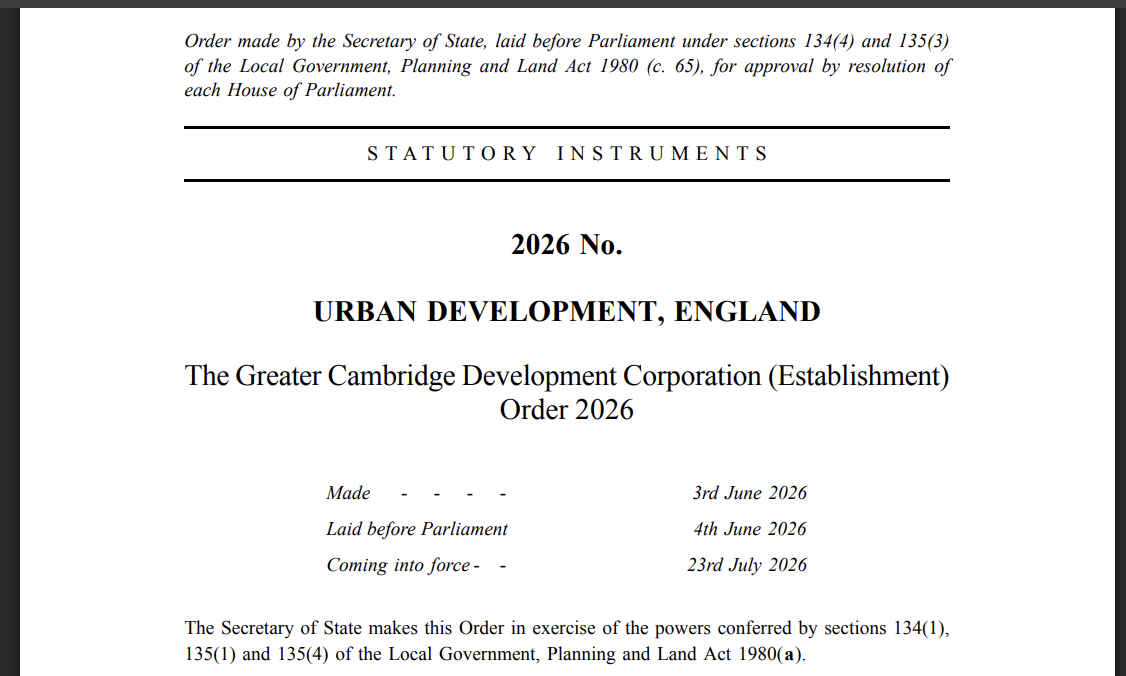
There are links in the above to the video of the two debates so you can judge for yourselves how good a job MPs and peers did of scrutinising the Government’s proposals.
“What are the things that might justify putting a big black line through the text?”
The most prominent one is anything to do with buying and selling land. We’ve all seen what the property market is like in Cambridge, and one of the things that we’ve seen in Cambridge is the impact that property speculation can have on the wellbeing of the city. One particular class of information is market-sensitive information
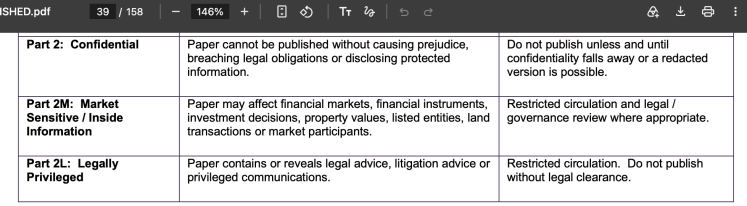
Above – CamDevCo / Previous Meetings / 20 October 2026 / Meeting Papers / p39
There will be documents and classes of information that THE LAW requires the CamDevCo to keep confidential and restricted. For example if a land owner or property promoter had inside knowledge of sites that the CamDevCo intend to acquire using the powers of land assembly granted to the latter, that might influence their future financial decisions. And given the financial scale involved with all things brand Cambridge, you can see the issues that this raises.
Local government redacts items in its meeting papers routinely and legally using powers under the Local Government Act 1972. One example I’ve seen in the past has involved property valuations relating to the sale of council-owned assets (eg the old Shire Hall or the old Mill Road Library). Disclosing such information early on might result in a worse deal for the council and thus the tax payer, which is not in the public interest. Hence the case to withhold the information.
Local Government leaders and the CamDevCo Board
The leaders of Cambridge City Council, South Cambridgeshire District Council, and Cambridgeshire County Council all have seats on the board of the development corporation – as does the Combined Authority Mayor Paul Bristow. There is nothing to stop local residents from contacting their local councillors and asking them to put questions to council leaders about any of the items in meetings that council leaders have attended representing member councils.
That’s not to say they will give you the response you may want. They may simply say there were sound legal reasons for the redaction and that legally they are not at liberty to discuss the item without opening themselves up to legal action being taken against themselves as board members. But what it does show to an unfamiliar public is how local lines of democratic accountability function in real life.
Oh look at that – it’s nearly 2am!
If you are interested in the longer term future of Cambridge, and on what happens at the local democracy meetings where decisions are made, feel free to:
- Follow me on BSky
- Spot me on LinkedIn
- Like my Facebook page
- Consider a small donation to help fund my continued research and reporting on local democracy in and around Cambridge


