As expected and as inline with the planning officer’s recommendation, the application that will change Cambridge’s economy has been approved
You can read the Cambridge News write-up by LDR Eoin McCaul here and also the formal announcement from the Cambridge Science Park here
You can also:
- Watch the presentation speech by Cambridge Science Park / Trinity College (The applicant)
- Watch the video of the determination by city and district councillors on 18 November 2026 here
- Browse through the extensive documents at: https://applications.greatercambridgeplanning.org/online-applications/ Ref: 26/01902/OUT
- See the latest from the developers at https://futurecambridgesciencepark.co.uk/
- Read my previous blogpost on the application here – where I raise the issues / opportunities on skills and training.
In the one before my previous post on the growing science park, I compared the aesthetics with one major expansion of Yale in the US.
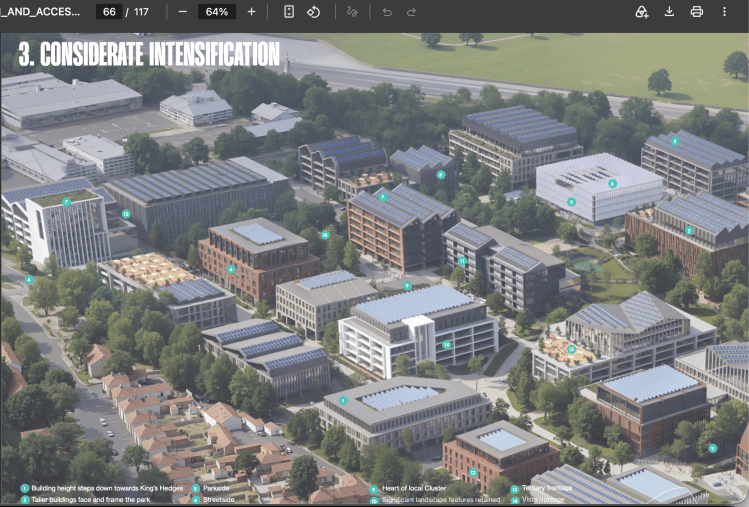
Above – Compare Cambridge Science Park proposals (p66 Design and Access Statement, Sept 2026, above with Yale below
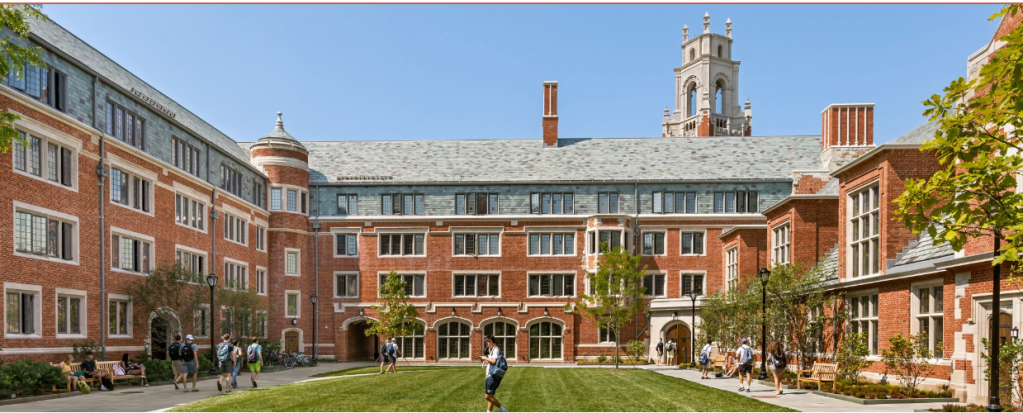
Above – from The New Residential Colleges at Yale: A Conversation Across Time – Robert A.M. Stern was one of the partners that built new residential colleges at Yale in the mid-late 2010s. They were striking not least for taking their inspiration from existing pre-20thC buildings. Image – Yale Residential Colleges RAMSA
As I asked: “Is there something about Yales approach over the past 15 years that could work for Cambridge?“
“Was anything said on the water crisis?”
Yes – the Chair of the GCP Cllr Peter Fane (LibDems – Sawston and Shelfords)
“Prior to occupation of the development hereby permitted, written confirmation will be submitted to and approved in writing by the Local Planning Authority evidencing that the anticipated additional net increase in waste water generated by the development is capable of being accommodated by the Cambridge Water Recycling Centre, or there is sufficient on-site capacity to deal with a net increase in waste water flows from the development.”
Which is as expected.
Re the application transforming the city:
***By the year 2047, the Cambridge Science Park expects the densified site to employ an additional 23,360 workers***
I wrote about this in my previous blogpost on the application
Now that the outline application has been approved, the Greater Cambridge Development Corporation now has something substantial to work with on provision of light rail
And Cambridge Connect has long since incorporated this into its scheme

Above – Connect Cambridge concept map for a Greater Cambridge Light Rail
Which reminds me:
Rail Future’s annual Cambridge meeting is on the following Saturday

More details are in the latest Rail Future East newsletter here.
I wrote more about all things Rail Future’s meeting as the guest speaker is the head of communications from East West Rail. Also we get to look at some of the porposed improvements that Rail Future East has been campaigning for.

Above – the Rail Future East vision which I included in a blogpost from three years ago
Future decisions that require further ‘reserved matters’ applications
These are where local residents and community groups close to the Cambridge Science Park can push for substantial improvements to their part of the city. For example on sports and leisure facilities:
“The Communities Officer in their comments on sport and recreation stated limited information was available regarding delivery triggers, access arrangements, affordability and future operating models for sports and leisure facilities. This information would form part of future reserved matters applications.”
Above – Officer’s Report para 27.8
On transport:
“The transport mitigation package includes the provision of strategic solutions in collaboration with Cambridgeshire County Council and the Greater Cambridge Partnership. The mechanisms and timing of these off site improvements and financial contributions will be secured by way of Section 106 Agreement and appropriate planning conditions, with all triggers to be agreed by the County Council.”
Above – Officer’s Report para 28.8
Table 11 has more detail on the commitments:
“Total transport contribution is £31,629,909 at a tariff of £95.66.”
I’m assuming this will incorporate the Greater Cambridge Development Corporation and also the Combined Authority – mindful of local government restructuring and also the ending of the GCP in 2030
And on jobs, skills, and employment
“The Employment and Skills Strategy will create clear pathways into employment
for local people across all phases of construction and operation.”
Above – Officer’s Report para 28.16
Furthermore, Table 11 states:
“A site wide Employment and Skills Strategy (ESS) will be submitted to and approved
by the [Local Planning Authority]. Each Reserved Matters will require a detailed ESS to be submitted to and approved. The RMA [Reserved Matters’ Applications?] ESS will need to accord with the site-wide ESS.”
Above – too many acronyms!
On public art
“Minimum value of the public art to be £2,500,000 less any figure agreed as part of other standalone consents.
Above – Table 11
You can read the Outline Public Art Strategy of September 2026 (v2) here, Do have a look at their case studies
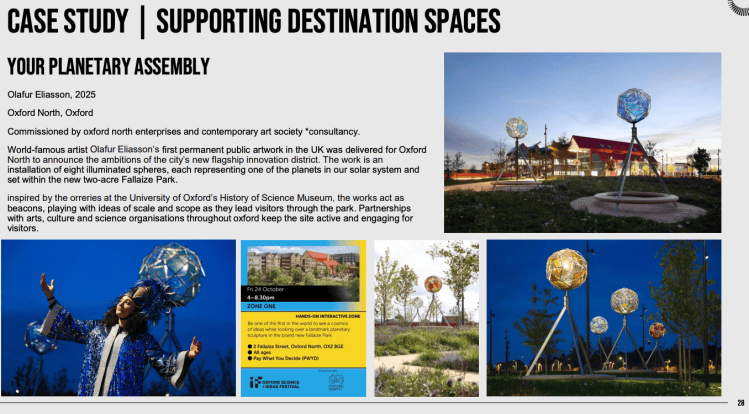
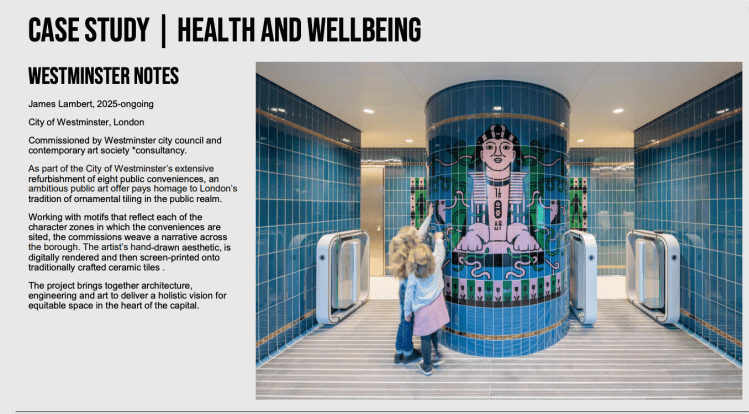
Above – Outline Public Art Strategy of September 2026 (v2) pp28-29
If you want to find out more, you can get in touch with the science park directly at https://futurecambridgesciencepark.co.uk/ and/or contact your local councillors via https://www.writetothem.com/
If you are interested in the longer term future of Cambridge, and on what happens at the local democracy meetings where decisions are made, feel free to:
- Follow me on BSky
- Spot me on LinkedIn
- Like my Facebook page
- Consider a small donation to help fund my continued research and reporting on local democracy in and around Cambridge


