Meeting papers for the Greater Cambridge Development Corporation on 02 December 2026 contain the latest on a Mass Rapid Transit – a light rail to you and me
But before we begin, a quick reminder that the Head of East West Rail Comms will be at Rail Future’s Annual Cambridge Meeting on 28 November 2026 at the Mill Road Community Centre from 2pm

And a book recommendation
“Light Rail Transit Systems: 61 Lessons in Sustainable Urban Development“
By Rob van der Bijl, Niels van Oort, Bert Bukman (2018)
“Readers will learn how to understand the value of light rail and tactics on its effective integration into communities. It uses strong supporting evidence and theory drawn from the author’s team and their extensive experience in developing new light rail systems.”
It’s not cheap but there may be a few of you who want to see what the lessons learnt are from more recently-built light rail systems.
Greater Cambridge Development Corporation – meeting papers for 02 December 2026
See the page here, scroll down to Upcoming Meetings, click on the tab and open the papers.
The meeting papers quote the old 2018 Cambridgeshire & Peterborough Independent Economic Review
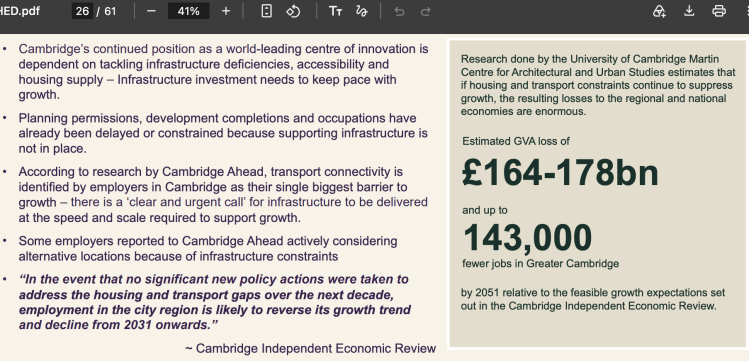
Above – I can’t find the reference to the document or the quotation for the above in the final paragraph.
Does it refer to:
’60 Hours Lost in Congestion’
So says a traffic score card from a firm you’ve never heard of
…which raises wider issues about data transparency where such things are used to influence and inform public policy-making.
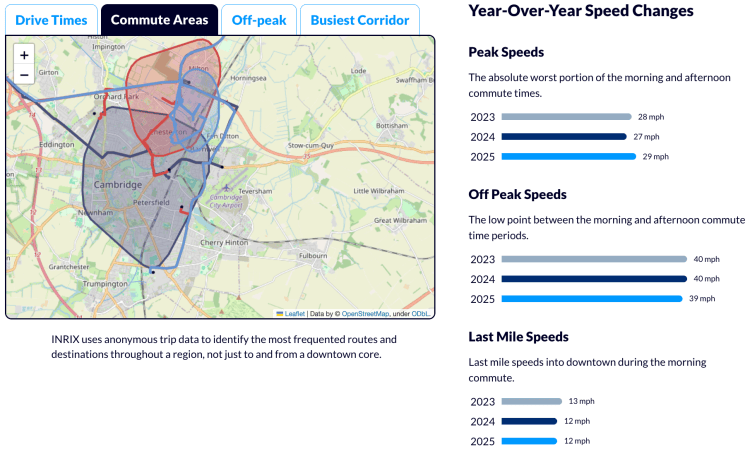
Above – snapshot of INRIX Scorecard for Cambridge 2025
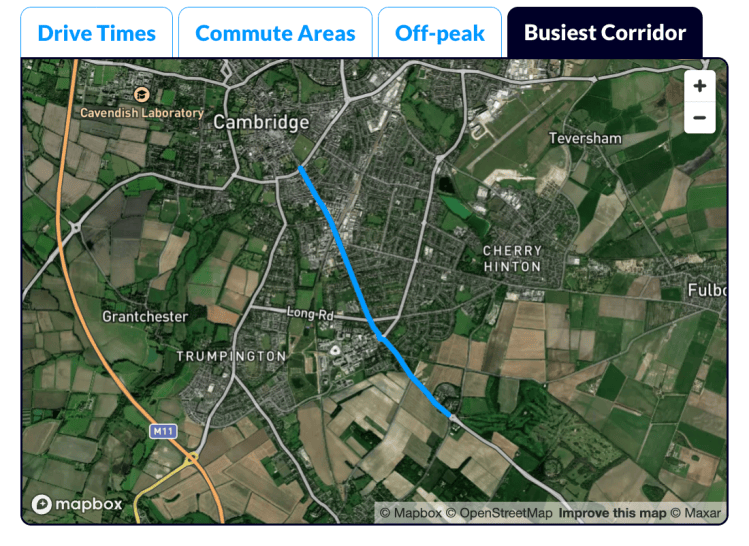
Above – snapshot of INRIX Scorecard – Busiest Corridor for Cambridge 2025
Even the presence of the Babraham Road Park and Ride seems to have done little to dampen the incoming traffic that heads down Hills Road. The number of people working and/or studing at a range of institutions along or not far from that corridor has grown substantially since the early 1990s. At no time has any substantial new form of segregated public transport been built. Hence what is happening now is building the infrastructure ‘after the event’.
Some of us tried to persuade them – such as the Rail Haverhill group of campaigners
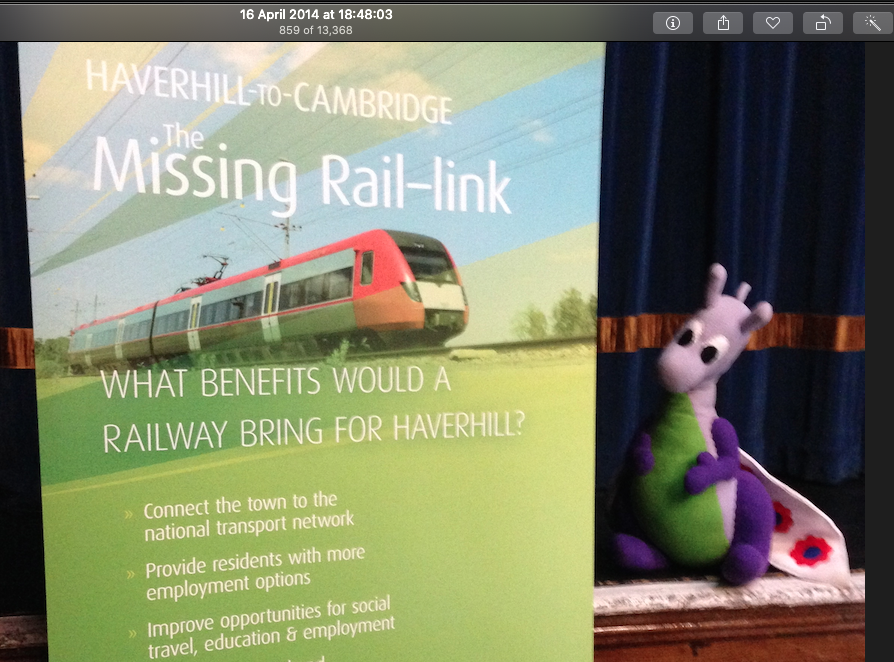
Above – Puffles the Dragon Fairy in Haverhill back in April 2014 (it’s now November 2026), linking up the town’s rail-reopening campaign with the emerging work on what became the GCP
Above – the consultants’ study on Rail Haverhill to Cambridge here from Jan 2016
I wrote more about the above back in September 2026 and followed that up with a piece following the preliminary hearing of the Public Inquiry on the GCP’s CSET busway the following month.
Public Inquiry for Cambridge South East Busway begins on 08 December 2026 at Homerton College
The Public Inquiry for the proposed busway between Addenbrooke’s and the A11 had its pre-inquiry meeting where the public got to see who the participants were
You can see the public inquiry page here,
Note “The venue for the inquiry will be The Graduate by Hilton Cambridge Hotel at Granta Place, Cambridge, CB2 1RT for all scheduled dates except 8-11 December 2026. On those dates, the venue will be Homerton College, University of Cambridge, Hills Road, Cambridge, CB2 8PH.”
Back to the CamDevCo Meeting Papers
The papers identify traffic as a constraint on growth
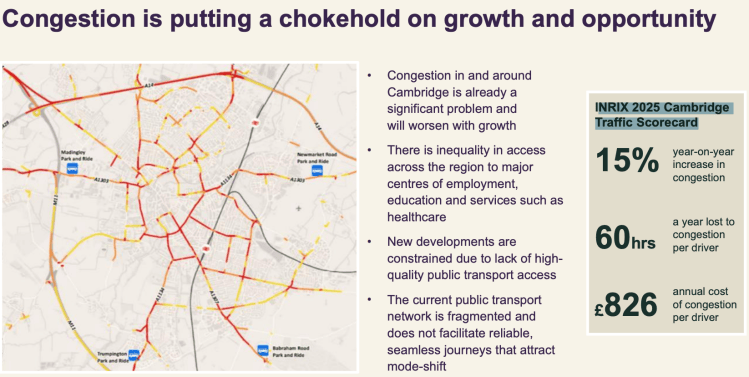
Above – page 27/61 of the meeting papers
I could write something really snarky such as ‘Yeah – we knew that over 35 years ago’

Above – LostCambridge 1990 when I was at primary school.
‘67% of the 10,000 or so Cambridge Evening News readers [in 1990] who responded to our survey said they give full and considerable support to Light Rail’

Above – Cambridge Evening News 28 Feb 1990, BNA.
Although not everyone thought more traffic was a bad thing in those days!

Above – Cambridge Evening News columnist Christopher South in 1994 featured in Lost Cambridge here
…But most of the people reading the meeting papers won’t have lived through the history, so lots of this will be new to them
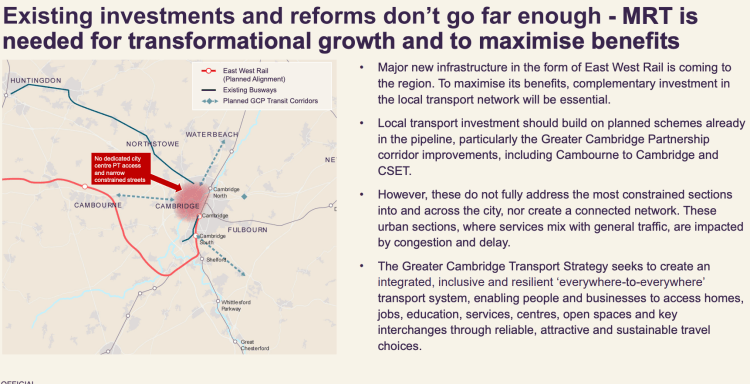
Above – the red box says: “No dedicated City Centre Public Transport access and narrow, constrained streets”. p28
They used to be even more constrained until some road widening in the city centre was done – and not without controversy because a few historical town streets were flattened to make way. Think of the streets north of the Round Church.
The scale of growth proposed by ministers present and also in the previous Conservative Government (See Michael Gove’s Case for Cambridge in early 2024), all previous strategic plans became obsolete.
“Given the scale of growth in Cambridge alongside the underlying and future values – there may be an opportunity to establish a delivery model for MRT [Mass Rapid Transit] where contributions can be captured over time from development and value unlocked”
Above – CamDevCo 02 December 2026, p29
The Strategic Outline Case (SOC) for a Cambridge Light Rail / Mass Rapid Transit
AKA Don’t let the transport engineers pass you off with a cheapo busway.
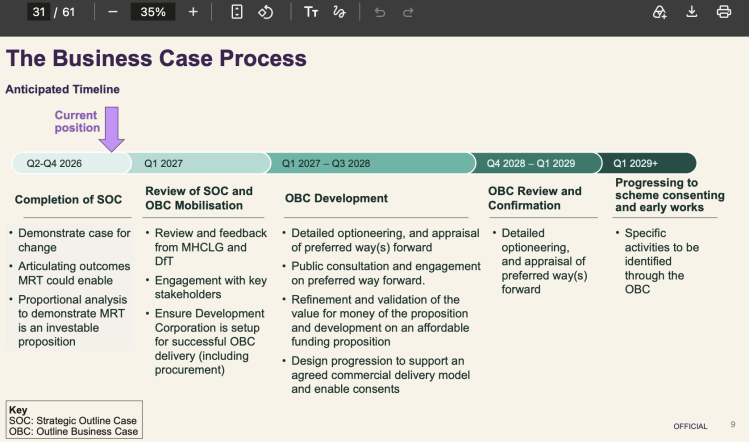
Above – CamDevCo 02 December 2026, p31
The papers say that the Strategic Outline Case will go to ministers in February 2027. Which probably means Easter given how these things get delayed by unforeseen events. Eg:
- weather-related civil contingency,
- ministerial resignation,
- new policy initiative elsewhere,
- international crisis – that sort of thing.
It happens. Hence why plans and budgets need ‘sufficient flex’ to cope with this.
‘We are NOT seeking to define the technological solution for Cambridge [Mass Rapid Transit] through the [Strategic Outline Case] and focusing on being guided by defining the right network and connectivity needed.
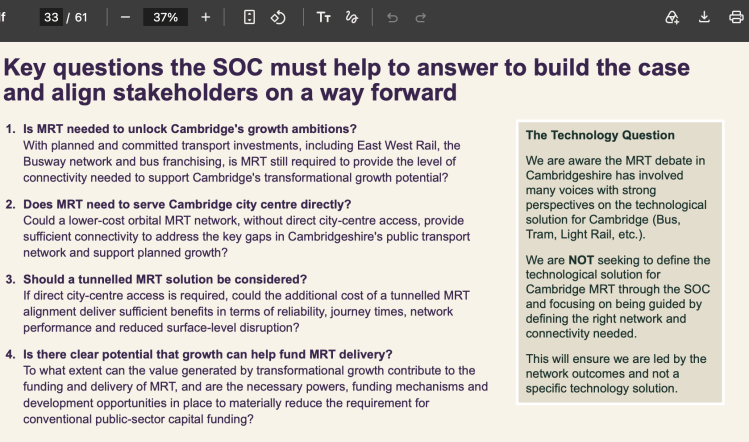
Above – quoting the CamDevCo on p33 of their papers
Congestion charging won’t be coming back ***unless*** there is ‘good quality public transport’
The last time congestion charging was proposed without an already-existing decent public transport system we saw local councillors getting sent threats of violence. (And I called on the police to investigate this)
“A recognition that to have a public transport system that delivers a high level of service then general traffic demand would need to be managed through other levers, such as: parking levies, modal filters, public transport priority/segregation, congestion charging, etc. However, demand management without good quality public transport is not palatable.”
Above – CamDevCo 02 December 2026, p34
In April 2023 I explained why the then structures of local governance – including tax raising powers, and geographical boundaries, were not fit for purpose – and nor was the congestion charge plan from the Greater Cambridge Partnership. I also explained why I was an independent candidate trying to influence the other candidates and their parties. See the video below.
Attitudes towards Congestion – Cambridge 2008
Prior to the catastrophic attempt to bring in Congestion Charging for Cambridge in 2023, I found a research study commissioned by Cambridgeshire County Council on Congestion Charging from 2008 and wrote about it here.


Above – As I mentioned in this blogpost from 2022 I was given permission to digitise the full report ***but I need a separate permission to get it published.***
I.e. 2023 was history repeating itself.
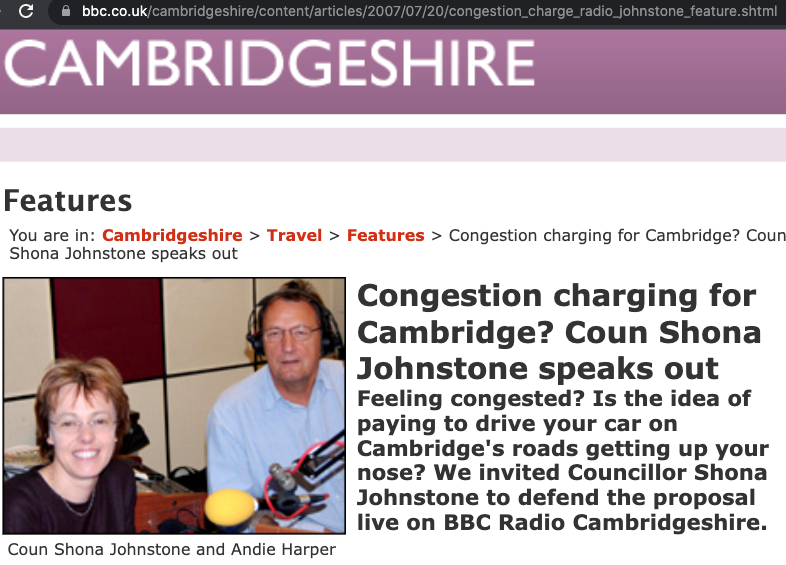
“Let me absolutely emphasise there would be no way that we would be using the revenue from a congestion charge for anything else than re-investing in transport.”
Above – Cllr Shona Johnstone (Cons – Willingham) 20 July 2007 to Andie Harper on BBC Cambs
For whatever reason GCP senior officers and councillors chose not to examine that report in depth. (I asked). The one error that the Greater Cambridge Development Corporation has not been repeating is ignoring the history. (I’ve made sure they’ve got a copy of this and other reports!)
The selection process
I wonder who is on the longlist!
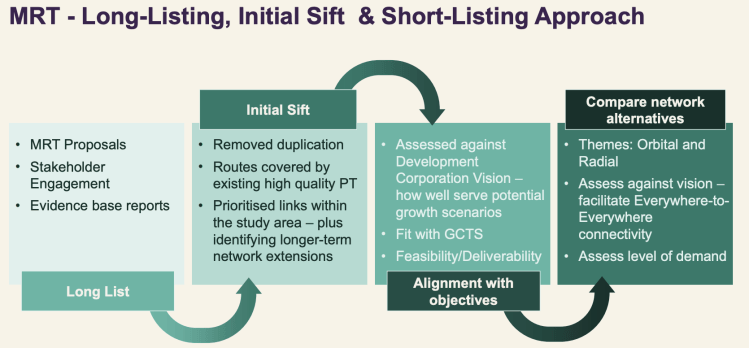
Above – CamDevCo 02 December 2026, p35
Comparing the UK to continental EU in Tramways and Urban Transit Magazine
If you’re not a subscriber, you can subscribe here
November’s edition shows the difference: One orders new trams withn innovative technology. Another…
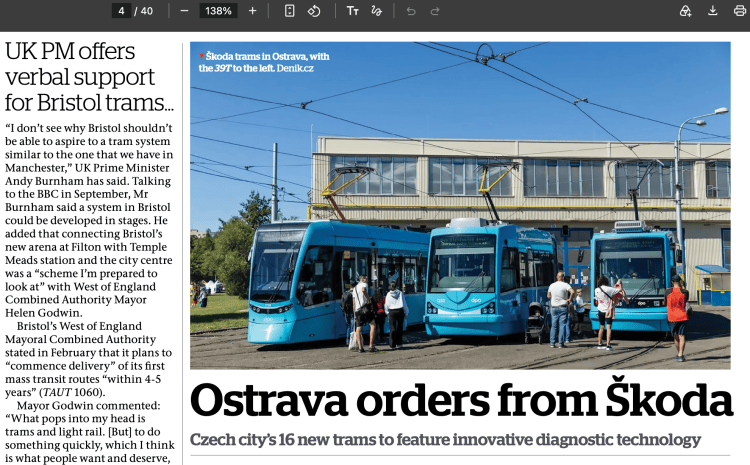
Above: “I don’t see why Bristol shouldn’t be able to aspire to a tram system similar ot theone we have in Manchester” – Prime MInister Andy Burnham in Tramways and Urban Transit Magazine, November 2026
Also in the same publication.
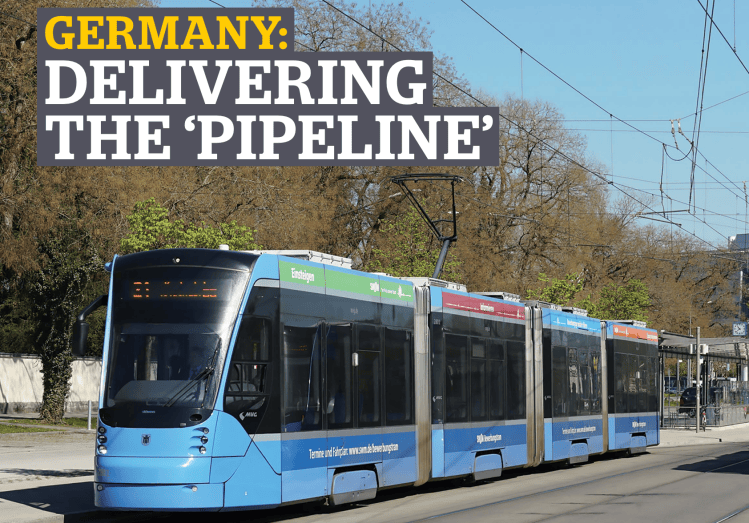
Above – Germany: Getting stuck in with a pipeline of investments. Is the UK doing the same with a strategic approach, lining up supply chains, building new training facilities for workers, and empowering local and regional government to build the infrastructure?
Building the mass transit systems – in the Czech Republic
This is what we should be aiming for in my opinion.
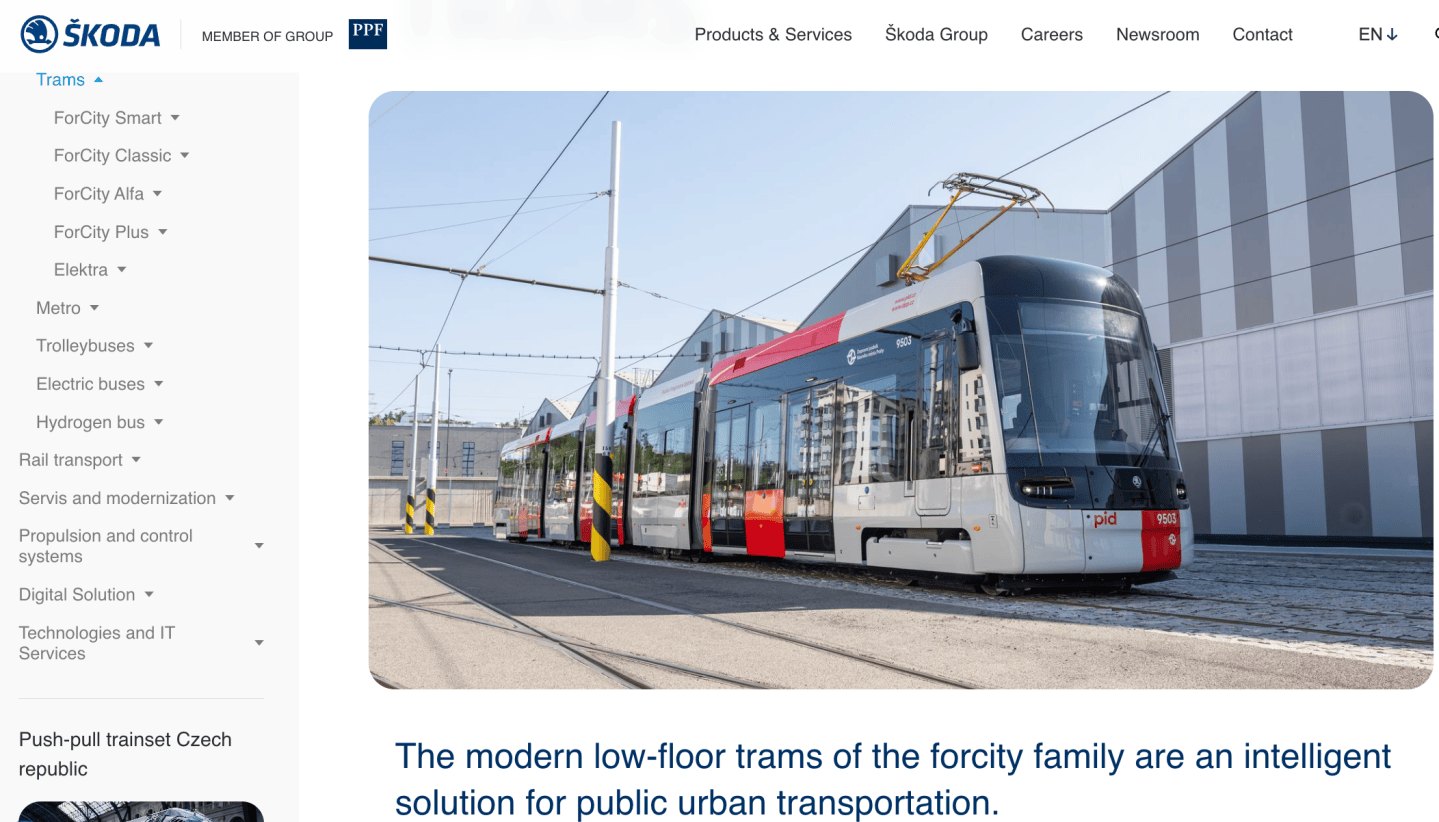
Above – by SKODA in Czechia/Czech Republic. Which of these would you choose for a rapidly-expanding Cambridge region?
Because the draft Local Transport Plan said the case is even stronger.
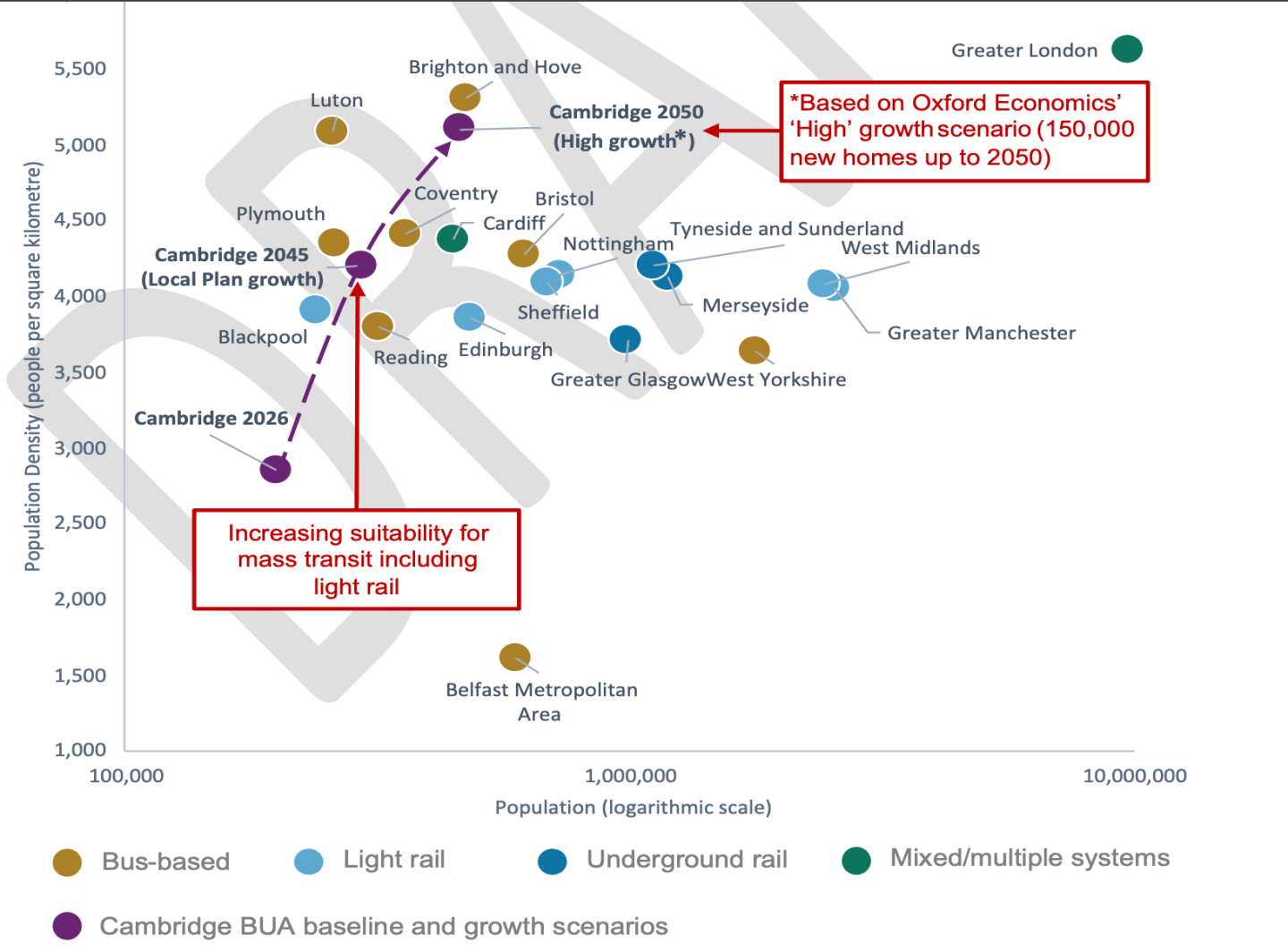
Greater Cambridge Transport Strategy – Need for Intervention p35 / p40pdf (Note the logarithmic scale of the population on the X-axis in the graph above.)
The above is from my blogpost a month ago here
Other CamDevCo Issues – water
Because I don’t have the headspace to deal with water on top of everything else, and because there is a critical mass of campaigners who are doing a far better job of it than I ever could, I normally point things like this in their direction. (Eg:

Above – CamDevCo 02 December 2026, p39
Keep an eye out for their updates.
If you are interested in the longer term future of Cambridge, and on what happens at the local democracy meetings where decisions are made, feel free to:
- Follow me on BSky
- Spot me on LinkedIn
- Like my Facebook page
- Consider a small donation to help fund my continued research and reporting on local democracy in and around Cambridge.


