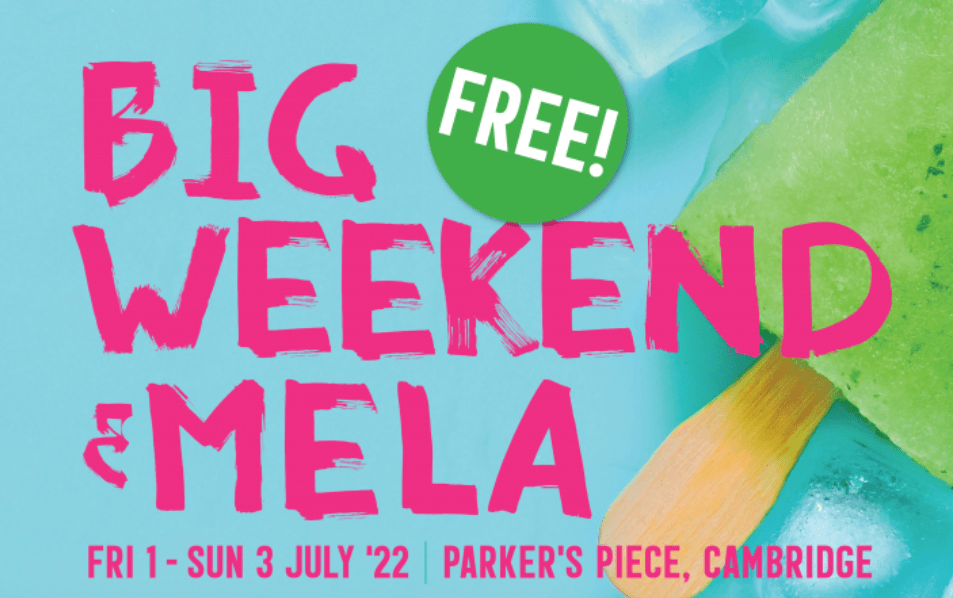
It was cancelled three years ago because of central government austerity combined with the reluctance of enough private sector sponsors and philanthropic contributions to keep it going
I wrote about the cancellation in February 2023 here
“What was The Big Weekend?”
Have a watch below
Above – Highlights video of the 2016 event from Heart Cambridge as was
And this by Neil Jones for Cambridge City Council from 2012
There was a long history of big summer events on Parker’s Piece
The Big Weekend inherited the mantle from the old Pop in the Park events
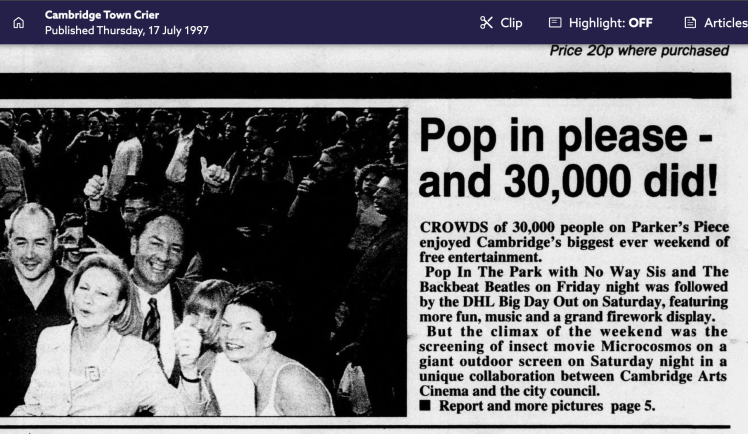
Above – Pop in the Park July 1997 (which I went to!) – Cambridge Town Crier 17 July 1997 in the British Newspaper Archive
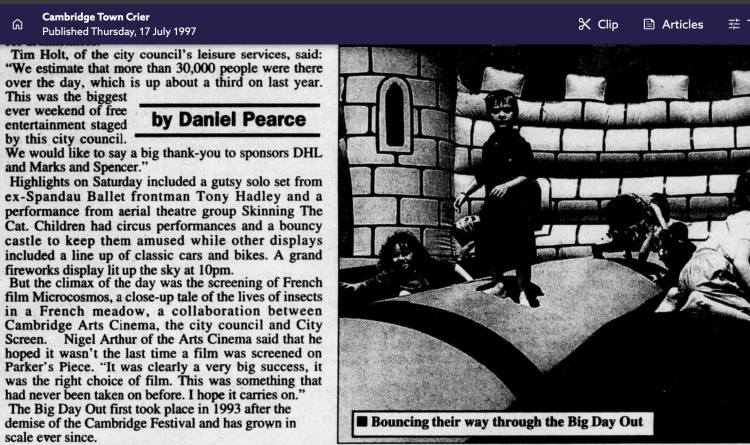
Above – the same newspaper tells us that Pop in the Park emerged from ‘The Big Day Out’ which was the replacement for the once mighty Cambridge Festival [of the performing arts] which was a fortnight-long extravaganza with a first class artistic director in the late Guy Woolfenden
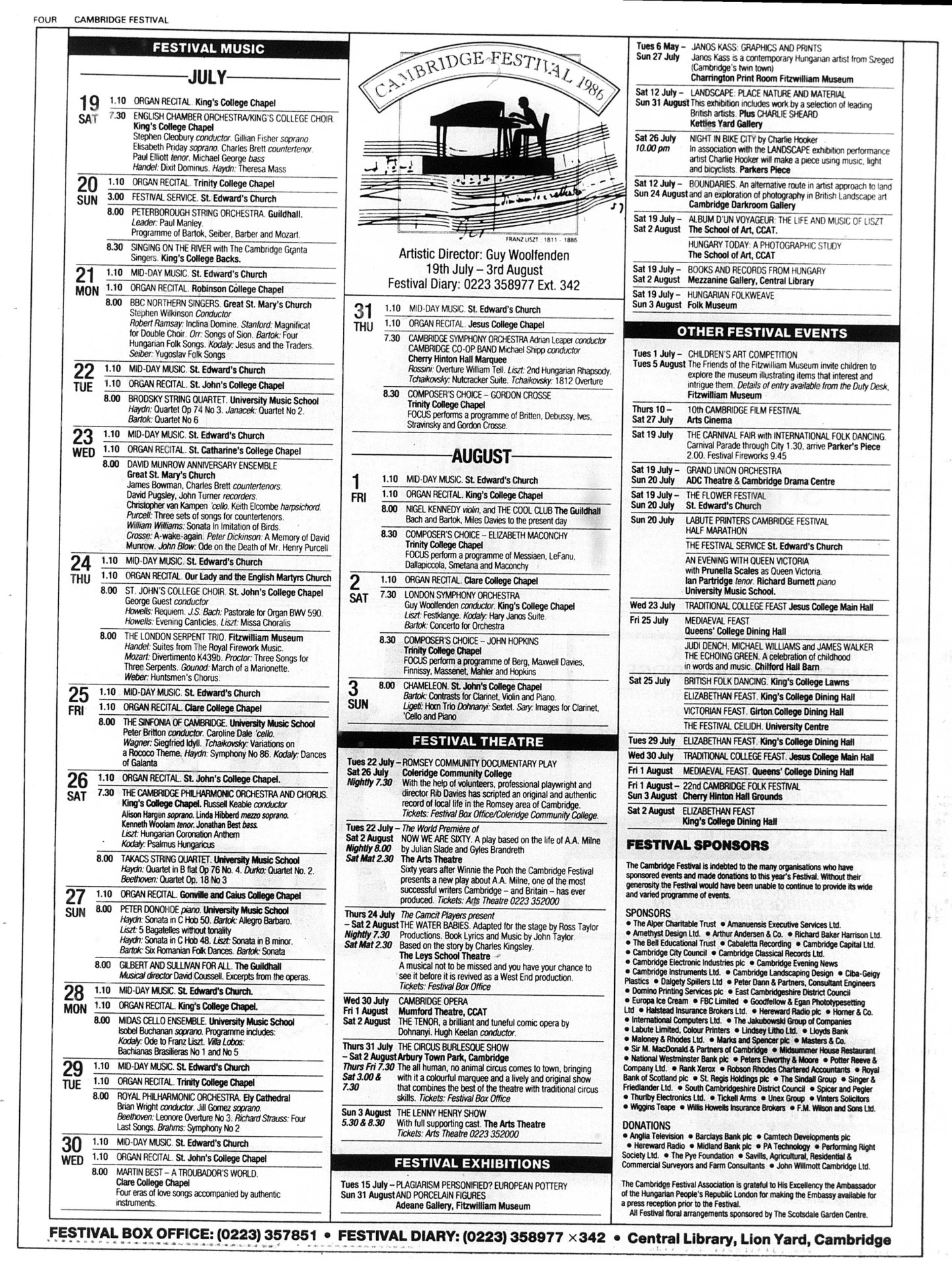
Above – the programme of the Cambridge Festival 1989
2025 was a low point. A very low point – we should acknowledge this
I wrote about the cancellation of both the Cambridge Folk Festival *and* the Big Weekend in 2025 here. The contrast between the publicity coming from the pro-growth sectors versus what was actually happening within the city was striking. Furthermore, the city still has not recovered to anywhere near what it used to have in previous eras as far as a buzzing nightlife is concerned – especially for teenagers and young adults.
“Don’t we have enough festivals in Cambridge at the moment?”
Probably, but then the summer events on Parker’s Piece were not a festival as such.
The Big Weekend also acted as stages to showcase not only local talent, but regional talent too – especially young musicians. One of the best discoveries of the mid-2010s was Tom Korni’s one boy band (as he was back then!)
Above – Tom Korni from Bedfordshire was a regular busker outside The Guildhall in the mid-2010s. He’s a little older now!
Over the years visiting musicians – especially those in their late teens during the 2010s told me that there were very few busking opportunities where they lived, and that Cambridge was the nearest city where they could get both a large enough audience and also get decent contributions financially for their performances. It reminds me of the catchments of both The Cambridge Corn Exchange and The Junction – both of which have much larger catchment areas than many of us city residents are probably aware of. I found out many moons ago at a hack day at ARU where The Junction allowed volunteers to use anonymised postcode data to produce heatmaps of how far people travelled in from for performances. I can’t help but think that if the large venues and institutions did similar, the heatmaps would become very useful evidence bases for future transport infrastructure plans.
Where a Cambridge Societies Fair might fit in
I wrote about my ongoing plea for a Cambridge Societies Fair back in 2025 having first come up with the idea back in 2012. One of the functions one of the Big Weekend days could incorporate is a societies fair, with groups like those outlined below being invited to have stalls for town, gown, and county to find out about. It would help make up for the loss of social media sharing and the decline of newspaper circulation as far as publicity is concerned.
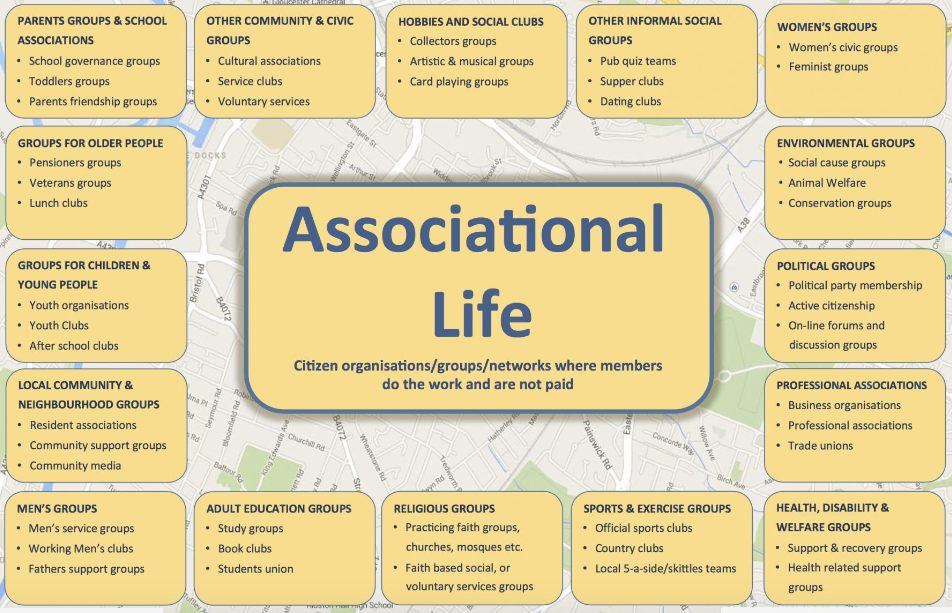
Above – Nurture Development (2015) Communities are the atomic elements of molecular democracy
On the opportunity created by a new unitary council – and a development corporation too
Former Cambridge City Council director Andrew Limb (also a former civil servant during my era when we both worked at the Cambridge regional office in the mid-2000s) wrote:
“…we may be at a moment of unique opportunity. The Government’s current and particular interest in the growth of Cambridge is unusual for a city of its size. It is an interest focussed on economic growth and impact, although ministers have also noted challenges for local people relating to housing affordability and transport, for instance.”
Above – Limb (2025) Inclusive Innovation, p32
Having the targets in the calendar of:
- Shadow elections
- The date at which a new unitary council takes power
- The first large event organised by the unitary council
…all help to concentrate the collective minds of our city and of the people and organisations that make it. (I.e. not just within the historic 1935-era boundaries!)
On solving shared problems – sharing new solutions
The one significant improvement the event could incorporate are showcasing new technologies and products that make people’s lives more convenient while at the same time substantially reduce their environmental footprint. For example the new generation of e-microcars which legally are called quadricycles not motor cars. And much as I’d like to showcase trams and light rail, it costs far to much to get a tram onto Parker’s Piece.
Getting one of these onto the piece to showcase however…
As I’ve mentioned in previous blogposts, politicians and planners really should be making provision for micro-e-cars that have much lower top speeds, less powerful engines, weigh less, have shorter ranges but are suitable for short urban journeys.
Also, if Cambridge is going to have e-scooter hire facilities, can we have them in Cambridge Blue and not bright orange?

Above – I don’t think this version is available anymore. Also the seat design has improved to provide more suspension/shock absorption.
My general point is that if you want to persuade people to change, give them something that is more convenient and better than what they currently have or do – and let them see/feel it for themselves. A huge civic weekend event is one way of engaging with a critical mass of people without the hard sell.
If you are interested in the longer term future of Cambridge, and on what happens at the local democracy meetings where decisions are made, feel free to:
- Follow me on BSky
- Spot me on LinkedIn
- Like my Facebook page
- Consider a small donation to help fund my continued research and reporting on local democracy in and around Cambridge


