In a written statement to Parliament earlier today (26 October 2026) the Minister for Local Government told MPs and anyone reading, to watch for the detail of the roadmap
“The Fiscal Devolution Roadmap, to be published alongside the Budget, will set out how MSAs will benefit from much greater financial freedom in the years ahead, particularly once a share of income tax is assigned in 2028-29. The Government is however determined to help local leaders deliver good growth immediately and today we are confirming £285 million in 2027-28, comprising of mayoral funding for Good Growth Funds and incubator capital funding for other areas transitioning towards mayoral devolution.”
Above Minister for Local Government Jim McMahon MP (former leader of Oldham Council in Manchester), Written Statement to Parliament 26 October 2026
Also, there’s a new ‘borrowing facility’ – but it’s not clear how it will be different from the existing Public Works Loan Board
“The Government will also work with Mayors to design a new £1.5 billion borrowing facility available from 2028, giving them access to the financing they need to back the local priorities that will drive growth in their areas.”
Above – Minister for Local Government
Here’s what the Public Works Loan Board says:
“Since 2004, under the prudential regime, major local authorities are responsible for their own financial decision making. They are free to finance capital projects by borrowing, provided they can afford to service their debts out of their revenues.
It may well be that the new borrowing facility is tied to devolved income tax receipts – especially any receipts that come in as a result of investments such as new public transport infrastructure that are clearly over and above an agreed base line.
“A win for the Re:State think tank?”
Possibly – if you see think tanks involved in intellectual battles. I covered their proposals in this blogpost from last June, focusing on their land value tax content.

Above – Re:State, which published a report called Taxing for take-off: a new plan for fiscal devolution in June 2026
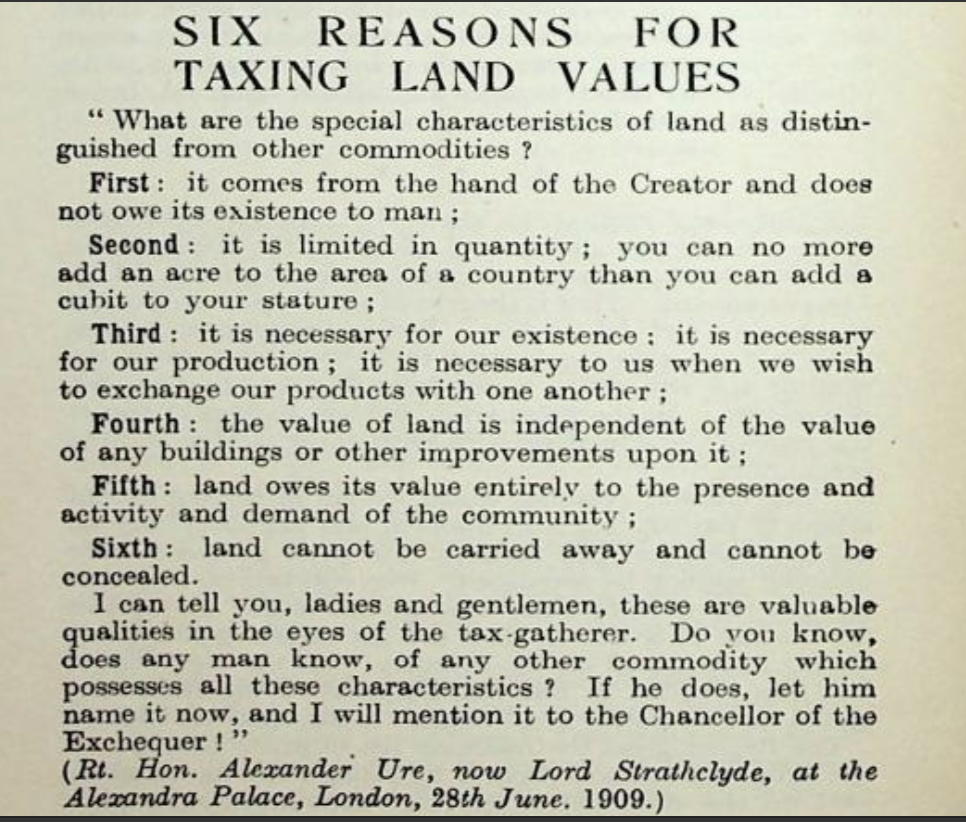
Taxing land values is not a new idea – I’ve digitised historical pamphlets published in the last Millennium that I bought over the years. One of them published in 1929 makes for an interesting crash course – have a browse here. Nine years before, the below was published:
More to follow from The Government
The Minister concluded in his written statement:
“These measures are a first step. The Fiscal Devolution Roadmap and the Rewiring the State Delivery plan will further set out how Good Growth Funds fit within our wider plans to give back control to local leaders, beginning with the retention of a share of business rates from April 2027 and income tax assignment for Mayors from April 2028. I will update the House as this work progresses.”
It will be interesting to see how much Cambridgeshire & Peterborough get mindful of what Cambridge’s sub-region generates (it’s a net contributor to HMT). As the CPCA Mayor Paul Bristow posted on FB just before the Minister posted this written statement,:
“We are one of the few areas of the country that contributes to economic growth. If the Government wants growth, jobs and homes – then work with us. 
But at the same time they cancel A10 dualling and shrug their shoulders when it comes to Ely Junction rail infrastructure 
We also get the lowest settlements when it comes to schools, police and the NHS 
At the very least – give us the tools to raise the money ourselves. I shall always fight for our Region.”
Above – Paul Bristow on FB, 26 October 2026 following his meeting with the All Party Parliamentary Group for the East of England (noting Cambridgeshire & Peterborough have 3 x Labour MPs, 3 x Liberal Democrat MPs, and 2x Conservative MPs – a significant change from early 2024 when there were 6x Conservative MPs and 1xLabour MP). Expect a write-up of that meeting of the APPG here in due course.
‘Give us the tools to raise the money ourselves’ – that sounds like a familiar call from somewhere
“Councillors and even the proposed executive mayor simply do not have the powers needed to make the decisions that people want them to make.
“What sort of powers?”
- Powers to raise revenue
- Powers over planning and transport – policy and delivery
- Powers over regulation of businesses
- Powers over major public services – health, education and employment
Essentially, ‘The Treasury says “No!”‘ is a recurring theme – just as it is in many a Whitehall department.”
Above – A Dragon’s Best Friend (my old blog) 21 December 2026
Shortly after those words I wrote the following:

Above: Cambridge is a city with global recognition governed like a large market town
I think I tweaked it since to:
“Cambridge is a city with a globally-recognised name that is governed like a large market town.”
Which is why the restructure of local government – including boundaries and powers, matters so much to the future of the city. Because at present (and as we’ve seen with the busways) so much is dependent on ministerial approval, and the process of getting that adds to both time delays and to uncertainty.
If you are interested in the longer term future of Cambridge, and on what happens at the local democracy meetings where decisions are made, feel free to:
- Follow me on BSky
- Spot me on LinkedIn
- Like my Facebook page
- Consider a small donation to help fund my continued research and reporting on local democracy in and around Cambridge


