
The Deputy Chief Executive of the Cambridge Growth Company / Greater Cambridge Development Corporation highlighted huge governance issues that ultimately are outside of the competency of her organisation – and must be resolved by ministers
The Cambridge Radio podcast hosted by Lewis Herbert is here
*Declarations of interest:
- I have completed a paid commission on local history by the Cambridge Growth Company
- Lewis Herbert, the host and former leader of Cambridge City Council was also my local councillor for many years in Coleridge Ward.
Have we got any better on solving Cambridge’s challenges through the town planning system?
How do things compare over three years later? (I wrote a blogpost response here on 12 March 2023)
“That’s great – but what did Beth say?”
Have a listen from around 3mins in here.
Ms Dugdale lists the challenges:
- traffic congestion
- fresh water supplies
- sewage processing capacity
- housing
“Firms on the Cambridge Biomedical Campus are holding back on recruitment because of:
- transport congestion
- quality of life – people cannot afford to live/work, and it takes so long to get to places of work “
“[Growth] has outstripped infrastructure and housing provision. Cambridge isn’t a national average place.”
On having a development corporation, she pointed out the access to Whitehall that it provides (the Chair of the Cambridge Growth Company being a direct ministerial appointment, so anything Peter Freeman wants to escalate lands on a ministerial desk), and the convening power of bringing multiple Whitehall departments together.
“Isn’t that what the old Government Offices for the Regions was meant to do?”
Yes – but its actual ability to do that going by my front row seat inside the old Cambridge office was not great.
What Ms Dugdale highlights is a structural problem that the ‘Place’ agenda is meant to deal with. But if that Place agenda – see Total Place 2.0 here, is to be successful, then the policies from Whitehall will need to be far more radical than what they have proposed before.
I get the sense from the briefing around the transition to Prime Minister Andy Burnham that he wants to go big on devolution (will HM Treasury let him?), but there are some big structural changes – in particular on regulation that need to be addressed.
On Systems Doing – by Matt Thompson
This was a really interesting piece by Mr Thompson following a conference on a report titled Connect to Change, from 2025 here. Mr Thompson highlighted the keynote address by Lord Toby Harris, a former Chair of the Cambridge University Labour Club. #BecauseLocalNewsAngle. Lord Harris is also a Commissioner on the National Preparedness Commission
Quoting the latter’s presentation:
“Modern societies depend upon tightly interconnected networks of:
- energy
- transport
- communications
- water
- food supply and
- digital infrastructure.
Their resilience cannot be understood, still less managed, in isolation.”
Above – Matt Thompson (2026) LI
So how are all of these regulated? By separate regulators in separate silos. And do they talk to each other? Who knows? Mr Thompson also noted Lord Harris’s comments on communities policy.
“Effective resilience also depends upon social cohesion, trust in institutions and the ability of government, industry and communities to respond collectively when disruption occurs.”
Above – Matt Thompson (2026) LI
‘Outcomes first, outputs second’
Mr Thompson highlighted a theme from the event which then raised the question about what is being measured by ministers and politicians. Are they the right metrics? This is something that Ms Dugdale picked up on in her comments on Cambridge Radio: What’s the point in having X number of Nobel Prize winners or Y number of ‘unicorns’ if a critical mass of people who work in Cambridge cannot afford to live there?
“Going beyond traditional project metrics, speakers discussed indicators capable of capturing wider system performance across different sectors. Success factors need to be rigorous enough to support evidence-based decisions while remaining sufficiently practical for organisations to apply consistently.”
Above – Matt Thompson (2026) LI
From a party political perspective, one question for ministers could be:
“What’s the point in having all of your growth policies if the residents are going to vote your party out of power on Cambridge City Council?“
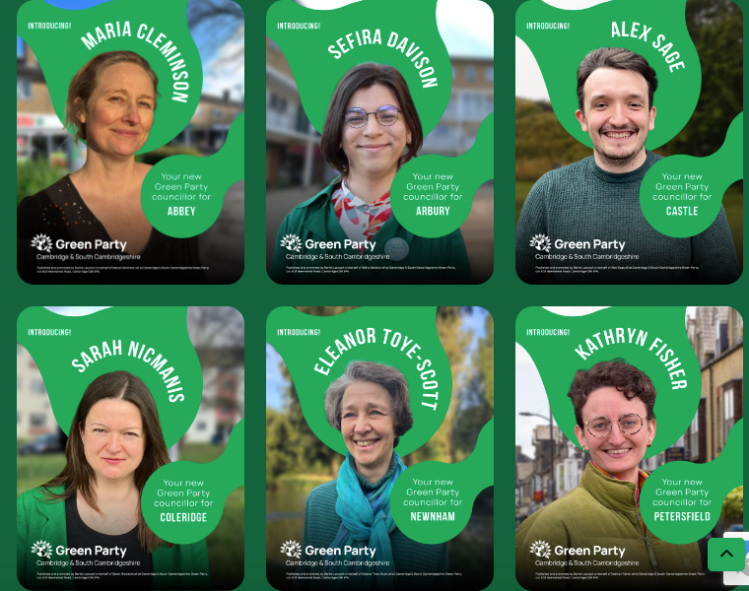
Above – Green Party Councillors on Cambridge City Council elected last May, Labour losing six seats to the Greens, making the latter the official opposition in the Guildhall
You can find out more about the 12 Green Party Councillors here. (And for equal treatment, here are the Liberal Democrat city councillors with 11 councillors, and here are the Labour councillors and former candidates).
Is anyone going to draw up a governance diagram for Cambridge in terms of *what an ideal structure should be like*?
We should find out later this week what geographical boundaries the Greater Cambridge Unitary Council will have. That said, I can’t help but think this is only a staging post towards a greater overhaul because the changes proposed in the consultation still keep many towns and villages within Cambridge’s economic sub-region outside of the local government area.
The City of Leicester managed it in 1939, so why not today?
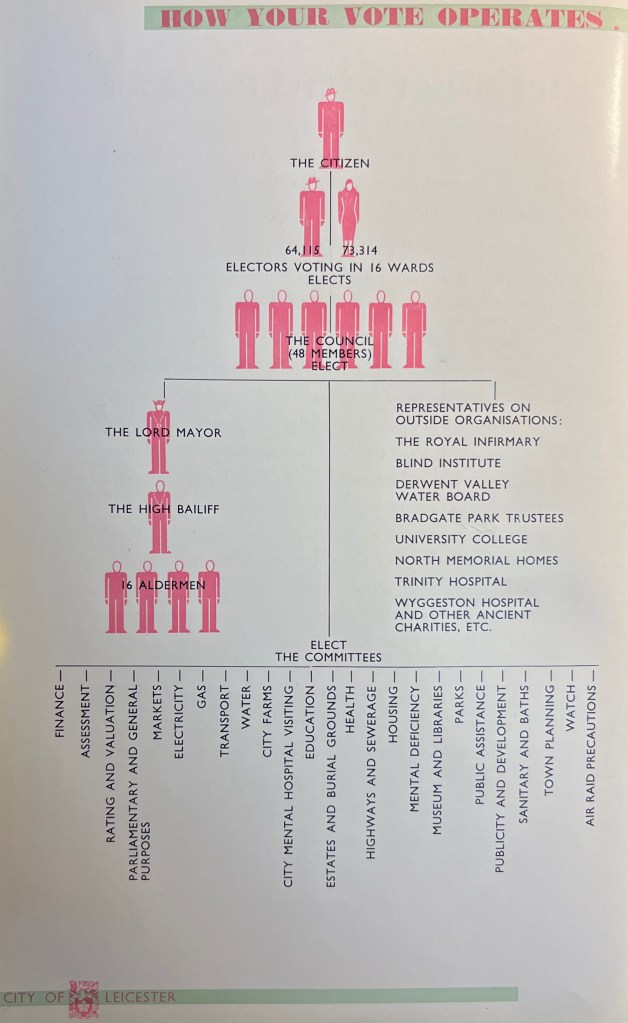
I had a look at who was responsible for what in Cambridge in this post. In the interwar era when there was a huge push to educate the public about democracy given the significant extension of the vote after the First World War, we get a sense from those historical guides that local government had far greater competencies on day-to-day issues compared with their counterparts today. That’s not to say that they also had the resources – quite clearly they did not. It remains to be seen if the next generation of local councils will be given sufficient powers and resources to deal with the growing challenges of our era – as the heatwaves are more than proving to us.
“Burnham’s decade as mayor has required translating these global dynamics into local strategy, giving him a grounded understanding of how international policy intersects with domestic inequality.”
Above – Dr Roli Asthana for the LSE, 06 July 2026
Can the learning from the incoming Prime Minister be applied to Cambridge?
If you are interested in the longer term future of Cambridge, and on what happens at the local democracy meetings where decisions are made, feel free to:
- Follow me on BSky or on LinkedIn (where I pick up a lot of town planning content)
- Like my Facebook page
- Consider a small donation to help fund my continued research and reporting on local democracy in and around Cambridge.


