The Public Map East Project is running a number of community sessions over the school half term at the end of October. With that in mind, some of you may be interested in the book by Teresa Strachan titled: Engaging Children and Young People in Planning: A Handbook for Transformative Practice (2024) Routledge.
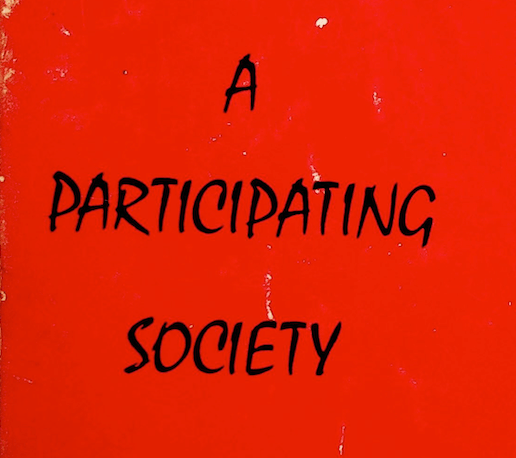
Image: A Participating Society – what a syllabus from an adult evening class guide from 1970 for the church-based Adult School Union recommended to get people involved in local public and civic life. Note the guidance on how to use it
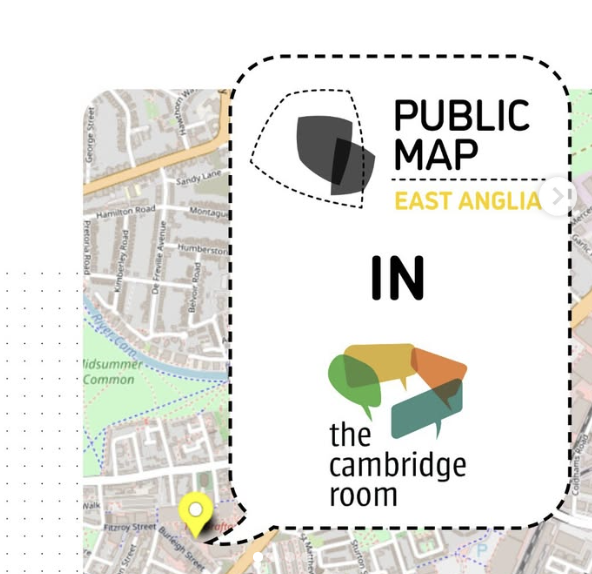
The projec’s researchers have also been doing work with The Cambridge Room as well.
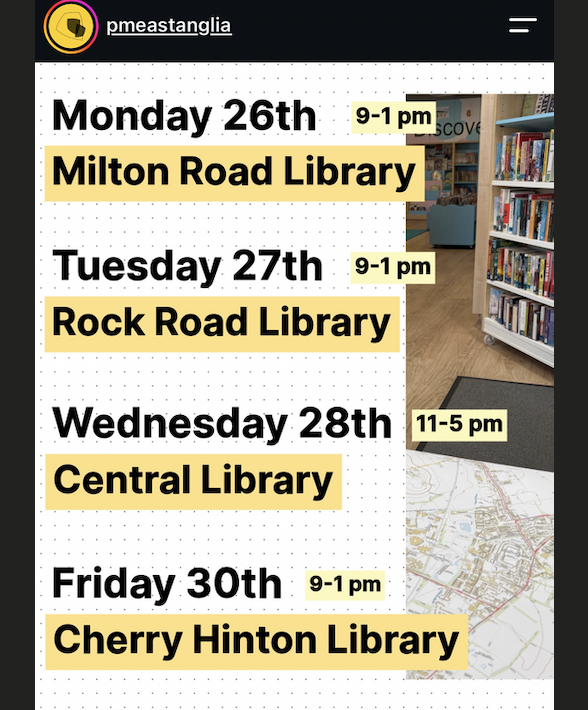
- Monday 26th October 9 -1pm at Milton Road Library
- Tuesday 27th October 9-1pm at Rock Road Library
- Wednesday October 28th 11-5pm at the Central Library
- Friday 30th October 9-1pm at Cherry Hinton Library
“Unfortunately, we will no longer be going to Arbury Court Library.” – which is a shame. I hope they rearrange the date for it unless the mapping has already been done as part of the Shaping North Cambridge work
Above – from PMEastAnglia on IG
On community mapping in Cambridge
See the video below
Above – featuring The Public Map Project and The Cambridge Room at The Grafton Centre
Different sorts of mapping by different people and groups
I’ve covered this from a number of perspectives including looking statements of community involvement from developers that are required for large planning applications. Some of them are ‘minimal effort, box-ticking bog standard’ pieces of work by disinterested consultants. Others are the opposite and lead to long-lasting positive impacts on communities.
On Emotional Mapping
I was particularly interested in the work by Dr Amalia Verzola on emotional mapping and how different parts of where we live impact our emotions. I wrote about her work here.
“I have long been fascinated by #participatory urban planning, starting with my PhD, when I studied, among other things, the Situationists and psychogeography. This approach uses practices such as the 𝘥é𝘳𝘪𝘷𝘦 to explore how city layouts and architecture influence emotions and behaviours.”
Above – Dr Amalia Verzola (2026) on Li.
The emotional mapping guide mentioned by Dr Verzola was this one. It’s something that teachers, youth group leaders and adults more generally can take groups of people (including and especially children & young people) to carry out this exercise where they live.
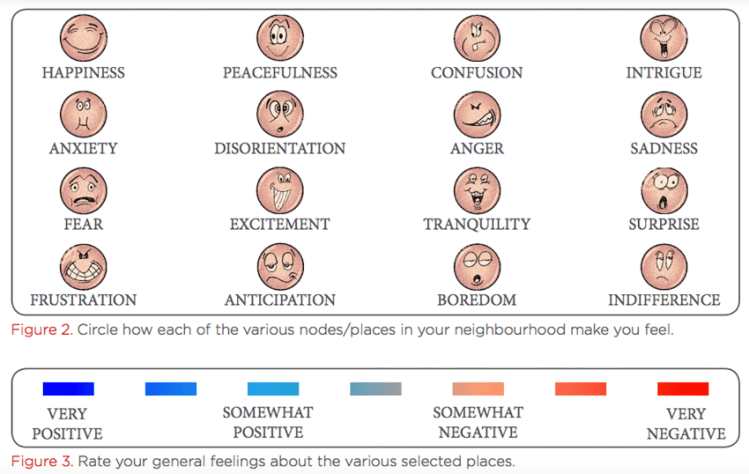
Above – what would a map of your neighbourhood look like through an emotional mapping lens?
The blogpost I wrote covering emotional mapping reminded me of a conversation I had last year with one of the bar staff at The Rock Pub on Cherry Hinton Road – which is reopening next week after a deep refurb.
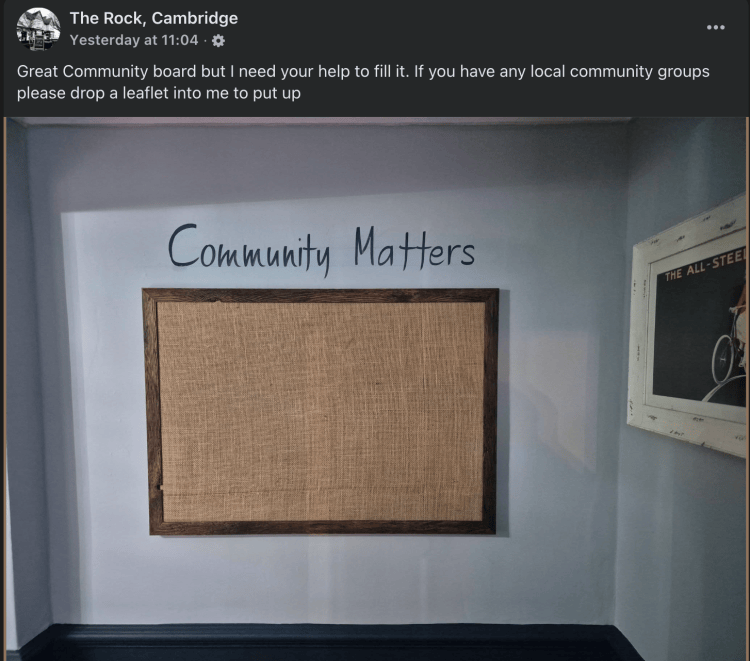
Above – by The Rock in Cambridge. (I’ve wanted one of these locally ***for ages***)
It’s easy to overlook how children and teenagers feel about their local areas:
- How often are they asked?
- How often are they listened to?
- How often are their concerns acted upon?
- How often are their problems actually resolved?
One of the reasons I’m sort of cynical about this is because I lived through it as a 1990s teenager in the same place I live in now. Both the lack of funding *and* the fragmented public services today are consistent with 30 years ago. The only difference is that central government has a thing called citizenship education. Unfortunately it has not been a priority with schools under so many other OfStEd-related pressures so none of the young adults I’ve asked about this in recent years have said they were taught much about this in school.
To put things in a different light, which areas of Cambridge do teenagers today consider as ‘no go zones’ and for what reasons?
How does their feedback correlate with crime maps that the Police have to publish?
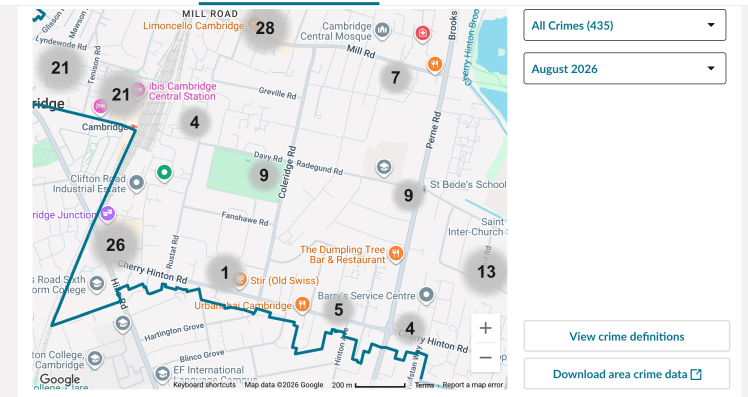
Above – Police UK: the southern half of East Cambridge with data from August 2026
How does the above correlate with things like:
- the distribution of community centres and social spaces?
- the distribution of / location of social and community groups?

Above – the results of a community centres audit in early 2016 by Cambridge City Council which I wrote about on my old blog here
This also feeds into a wider challenge of encouraging people to form their own social groups and organisations. Easier said than done given the fight to keep existing ones open. I’m still of the view that an annual societies fair similar to the ones the students at Cambridge University had last week on Parker’s Piece is one of the essential components – especially given our city’s population turnover.
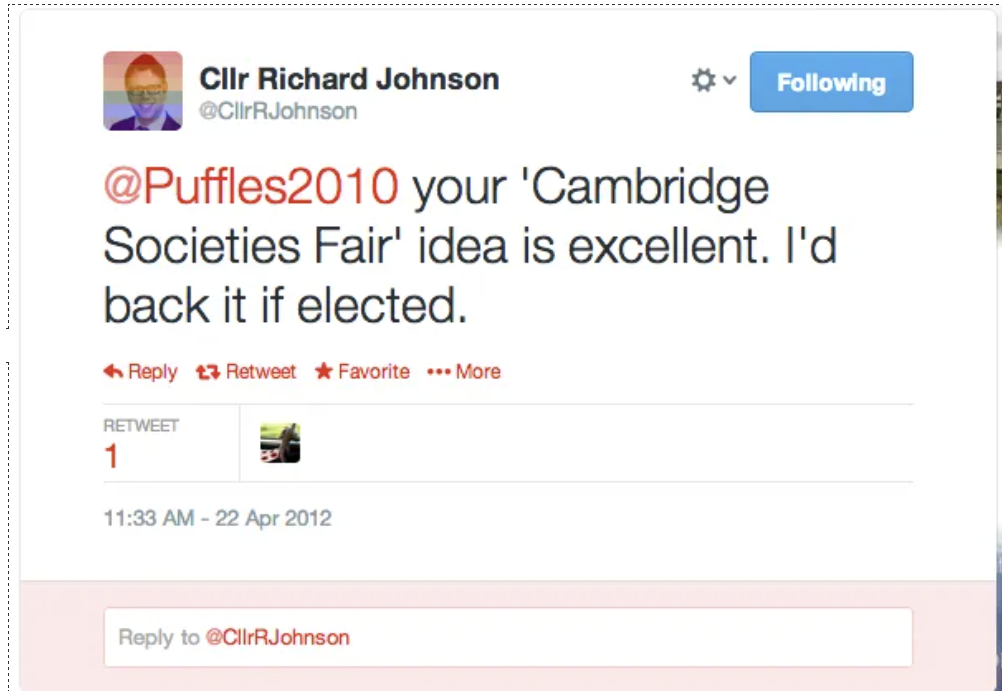
I’d love to see the students from Cambridge and ARU commissioned to organise and run it, so if any civic-minded Cambridge businesses are interested, get in touch with the city council!)
The draft Greater Cambridge Local Plan evidence base on community facilities.
I think it was for the Cambridge North East Area Action Plan that LDA Design produced an audit back in 2019 covering the north of the city. I wrote about it in this blogpost from 2021
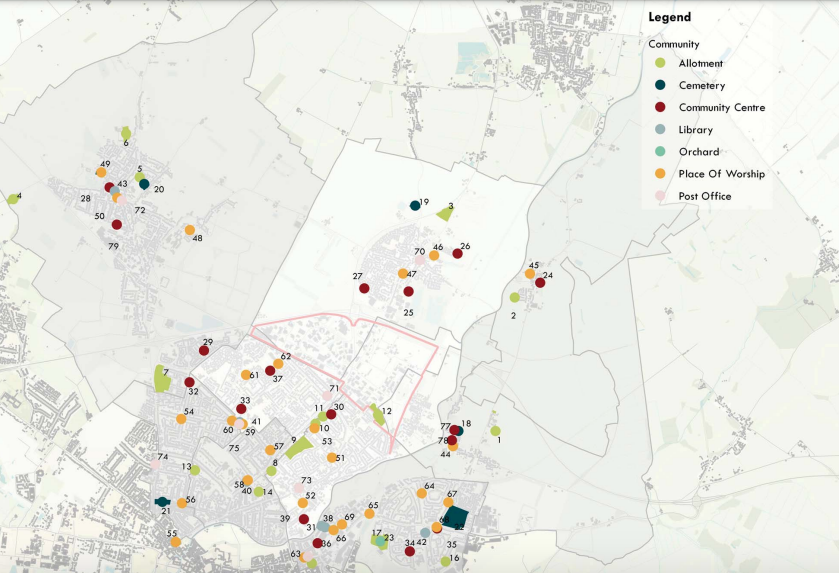
Above – on page 40 is this map of community facilities in North Cambridge.
For the draft local plan, consultants produced an in-depth report which I wrote about here
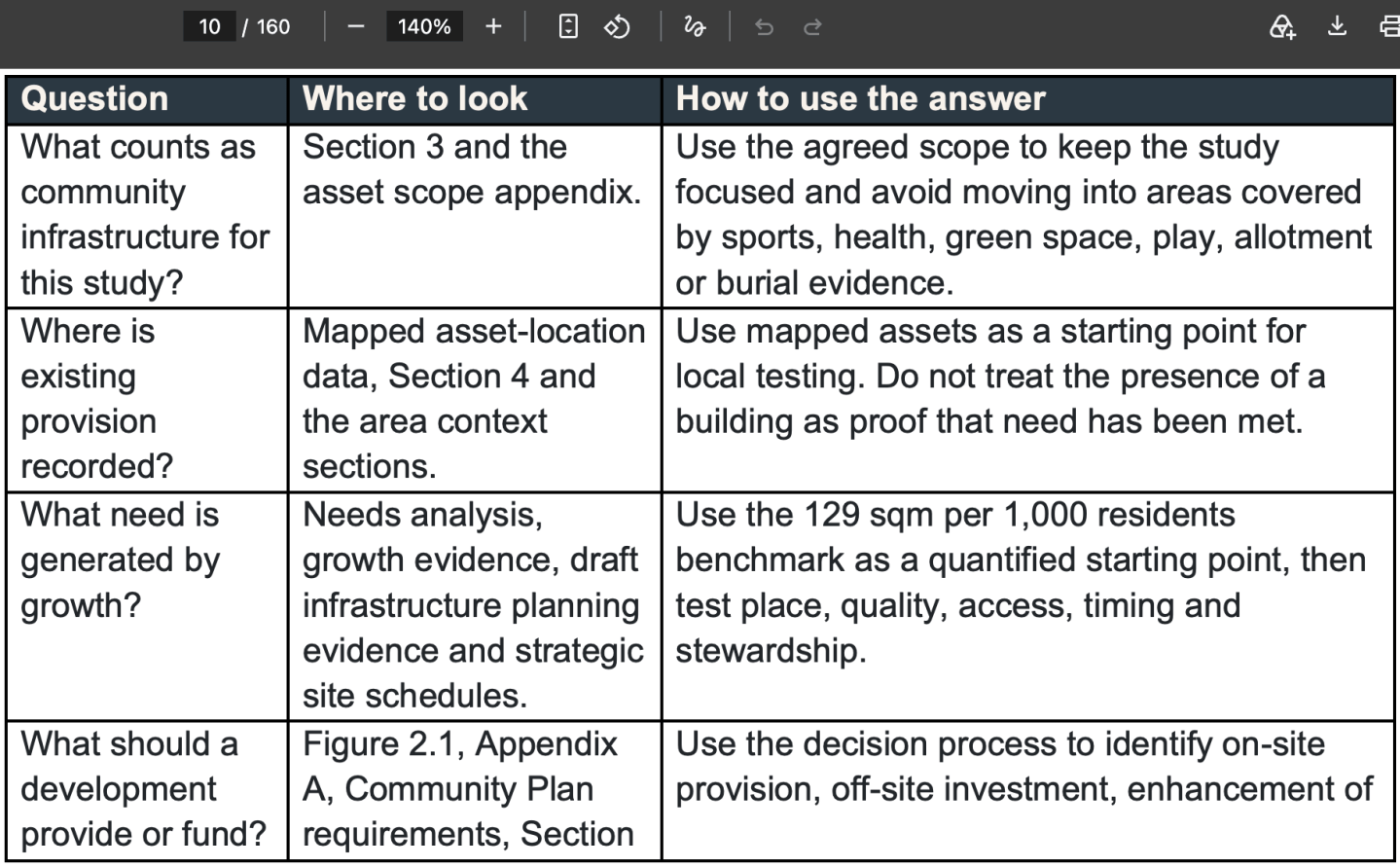
Above – GCCIS (2026) p9/p10pdf
Unfortunately I’ve not been able to find one with dots on identifying specific facilities.
Ideally going forward we’d have a single document that was both in-depth and refreshed periodically to ensure that developers worked from it – and were charged a fee for using it. Furthermore, there should be an expectation that developers should use that information rather than paying consultants to come up with their own.
It’s not just places – it’s spaces too
Again the map below is from an earlier blogpost about the draft local plan, this one looking at big leisure facilities from December 2025
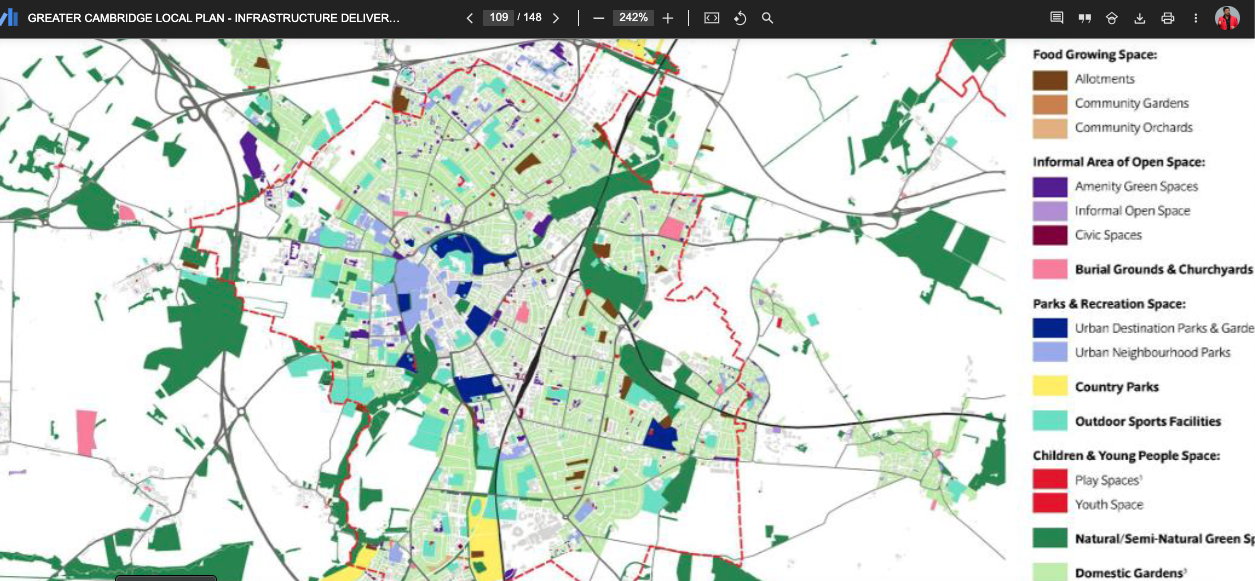
Above – Green and Open Space Types (Cambridge & Fringe) 2025, p109
Going beyond mapping – community discussions
One of the reasons why I like the old National Adult School Union annual syllabuses is that they provide a structure for regular social meetings – something of a lost tradition. Why did adults meet up like this for nearly a century before the movement wound up?
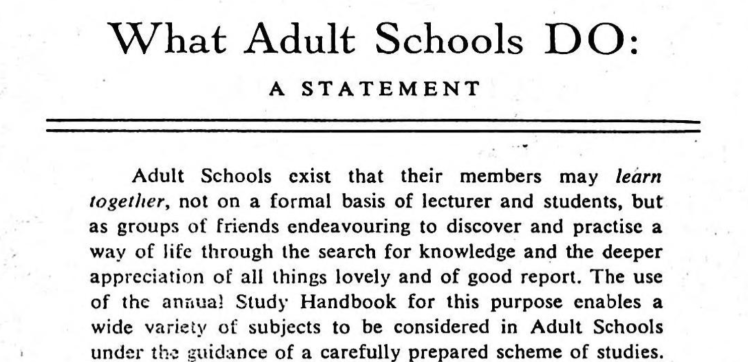
“Adult Schools exist that their members may learn together, not on a formal basis of lecturer and students, but as groups of friends endeavouring to discover and practise a way of life through the search for knowledge and the deeper appreciation of all things lovely and of good report. The use of the annual Study Handbook for this purpose enables a wide variety of subjects to be considered in Adult Schools”
Above – A Participating Society (1970) National Adult School Union, p239
One of the reasons why the society wound up was because the religious context became increasingly irrelevant to the lives people were leading in the post-war era. With many of the subscribing study groups linked to individual parishes or chapels, the decline and closure experienced in the post-war era inevitably hit the finances of the movement. I’ve often wondered what a secular version might be like, but then that opens its own can of worms. Yet at the same time
“In addition to the study of social problems, much direct ~ social work is often undertaken—help to the blind, infirm or aged; hospital visitation; youth work; assistance to prisoners, displaced persons and refugees. In some cases sports clubs are arranged; and most Schools have a good number of social occasions.”
Which sounds like the sort of volunteering that successive governments make a virtue of – as well as providing the sorts of activities we might associate with strong and prosperous communities.
“Strong and Prosperous Communities – sounds familiar”
It was the title of a Local Government White Paper from 2006 which for all of the buzz phrases in it, looking back it now feels like a very technocratic ‘office-based’ policy response to very deep social problems with their roots in the previous century.
“Adult Schools are grouped together for greater effectiveness into Sub-Unions and County Unions, while the National Adult School Union gives coherence to the whole. These larger groupings facilitate the organization of Summer Schools, Lecture Schools, Arts and Crafts, Music, Choral and Dramatic Festivals; they also arrange visits abroad and the reception of visitors from other lands.”
Above – A Participating Society (1970) National Adult School Union, p239
The format of bringing together small groups for larger events has returned in the growth of community singing groups that are part of the same franchises.
The above three provide examples of where small groups rehearse separately and sing at local community events (summer and winter fairs), and also provide opportunities for groups to gather together for much larger events in larger cities.
Singing from the same sheet, reading from the same map?
That’s the important thing about shared evidence bases – having something that is accessible and understandable to the majority of the people. At the moment How Are You Cambridge has put in the building blocks below. But I don’t get a sense a critical mass of the city is making use of it – something that perhaps is a symptom of an imploding social media and also an under-funded local and regional media.
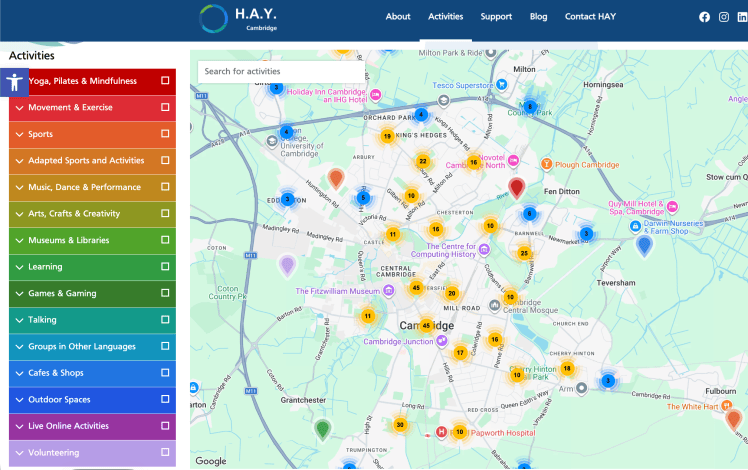
Above the How Are You Cambridge activities map
What might the map above look like in five years time after five annual ‘Cambridge Societies’ Fairs’ that involved not only encouraging the public to get involved with what is already there, but enabling and supporting them to create their own ones both geographically closest to where they live, as well as wider communities of interests?
An objective for the future unitary council?
If you are interested in the longer term future of Cambridge, and on what happens at the local democracy meetings where decisions are made, feel free to:
- Follow me on BSky
- Spot me on LinkedIn
- Like my Facebook page
- Consider a small donation to help fund my continued research and reporting on local democracy in and around Cambridge


