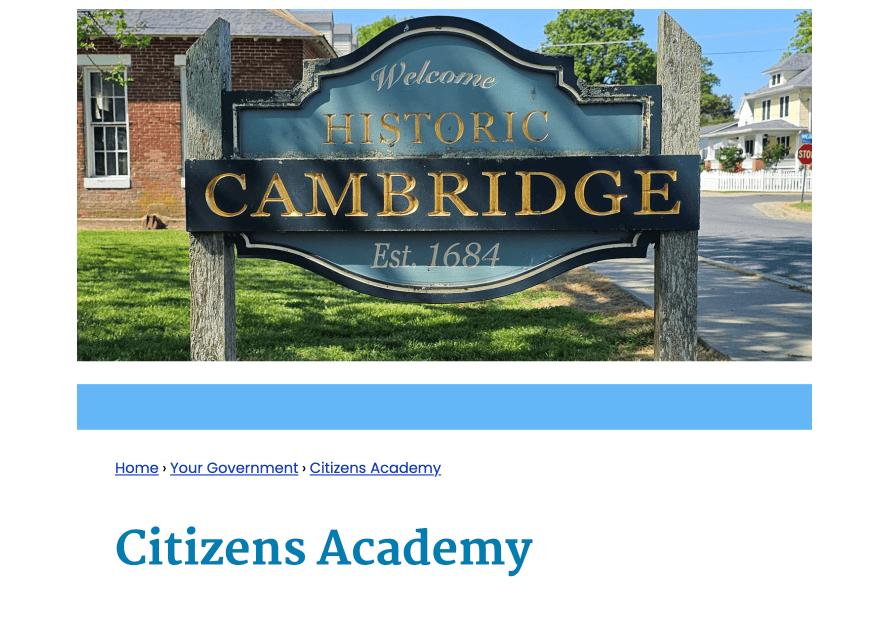
“The City of Cambridge Citizens Academy is designed to teach interested citizens how the Cambridge government is structured and works, and to build a group of citizens prepared to serve for the betterment of the city. The goals are to encourage active citizenship and develop civic ambassadors for the city.”
“Splendid! Where is it?”
City of Cambridge, 410 Academy Street, Cambridge, MD 21613, United States of America
“Oh.”
- City of Cambridge 410 Academy StreetCambridge, MD 21613
Above – the Cambridge Citizens’ Academy in Maryland, USA.
Even though their academy only covers the essentials over four evening sessions, it’s still far more than anything Cambridge the Mothership (i.e. here in the UK) has provided this side of the Millennium.
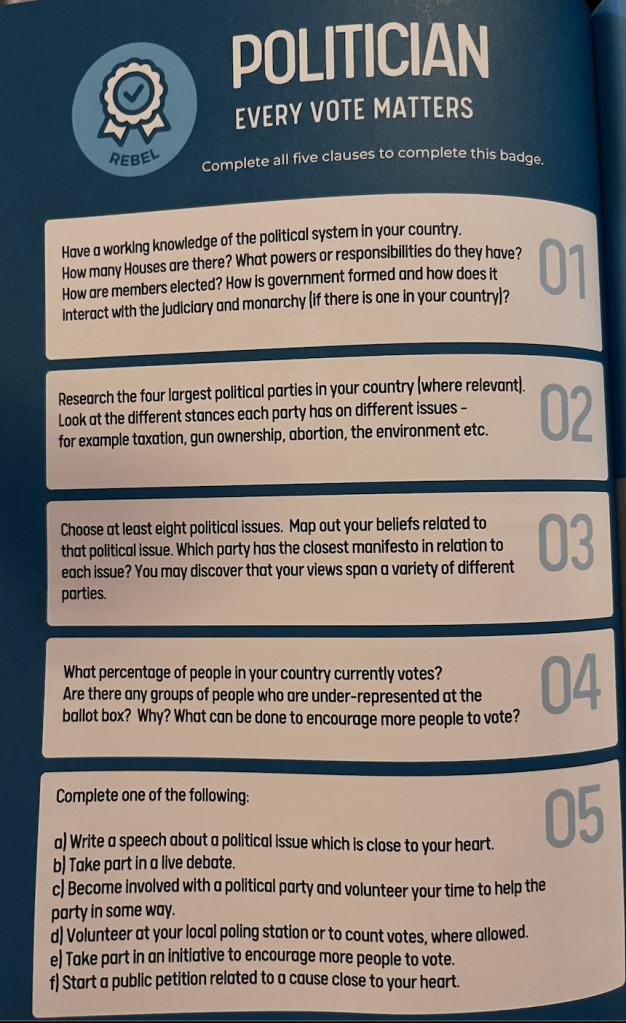
The Rebel Badge Club – have you earned your Politician badge yet?
I ordered the Volume 2 handbook which arrived earlier – the book reading similar to what children at Scouts/Guides/Cubs/Brownies have to undertake to be awarded a badge for each activity. Think of this as the adults version. (Which of the badges here do you think you’d already qualify for, or which you’d be interested in working towards with a group of friends?)
Five case studies from the US Citizens’ Academies
“Informed citizens are a valuable resource for a community. They also make the local government’s job easier. To inform citizens and to attract and train future community leaders, communities throughout the country are establishing citizen academies. Open to citizens of all ages, occupations, and interests, citizen academies educate participants about their community’s municipal services and programs.”
“Participants learn how their local government works and what services it has to offer. Enrollees attend presentations prepared by the various municipal departments, tour neighborhood sites and facilities, and try their hand at various local government “jobs.” Interactions with local government officials provide insight into the particular challenges they face.”
ICCMA 2001, p1
The case study of Sarasota, Florida spans over 10 weeks rather than the four of Cambridge, Maryland.
- Introduction
- Emergency services
- Water, sanitation, waste and recycling
- Town Planning and growth
- House building
- Community services, plus tour
- Health and safety – including local healthcare and prevention
- Transport
- Money – who pays for what?
- Wrap-up and graduation
“What does success look like?”
The case study summarises the qualitative and quantitative, but ultimately ends with this quotation:
“There is an old family saying that goes: “You can serve plain ole sandwiches out of a cardboard box or on a doily-covered tray; how you do it does make a different”
The evaluation of the Citizens’ Academy in Troy, Michigan
“The inaugural Citizens Academy was deemed a tremendous success by all involved. Participants found the experience of meeting with city department heads and learning how the city works to be, in the words of one student, “totally rewarding.”
“They also delighted in the camaraderie that developed. And city staff recognized how much the academy can benefit the city, with more and more citizens becoming familiar with their local government and the services it makes available to them, and with city employees learning about each other’s departments as well.
“One result may be improvements to the level of service in some areas of city government“
When you look at those outcomes, these are things most councils would give their proverbial metaphors to achieve.
- Stronger communities from the camaraderie created by shared discussive and deliberative learning
- Informed residents who ask informed questions, meaning problems can potentially be resolved more quickly
- Public service workers becoming more familiar with who does what in other parts of the city and in other public services – mindful of the complaints about silo working
“Breaking down barriers between public service providers? That sounds like Total Place”
Which I wrote about in previous blogposts
Embedding civic education in local history
This is what the case study in Watertown, New York: by the Jefferson Leadership Institute started with how their community got to where it was post independence. Unlike the previous two cases studies, this one is aimed at people interested in management and executive-level roles – in particular the final session. It is delivered in ten single day sessions over a ten month period. Which is something I would struggle with these days.
“This session focused on some of the skills needed to be an effective leader, including:
- public speaking,
- listening skills,
- board participation in management,
- financial responsibilities, and
- parliamentary procedures.
“Students took part in a mock board meeting in which they had to resolve a realistic issue. The afternoon session focused on leadership traits and resources. Real community issues were introduced, and participants applied their leadership skills in problem solving.”
“Could the Hobson Street Cinema building host a new Cambridge Citizens’ Academy for our Cambridge? (Cambridge, UK)
As I asked in a previous blogpost:

Above – the old Hobson Street Cinema Building.
It’s nice that Prime Minister Andy Burnham name-checked old cinema’s in his recent video clip.
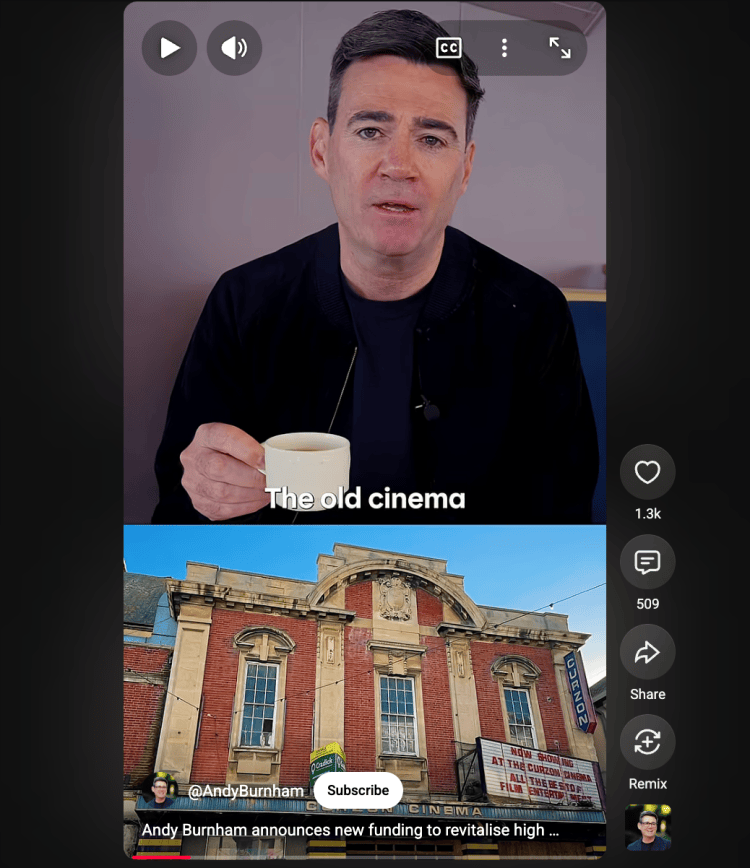
Above – No nonsense: Prime Minister Andy Burnham calls out the owners of disused old buildings that have been out of public use for years. 03 October 2026.
Given the size of the Hobson Street Cinema building, it’s large enough for multiple uses to be accommodated and shared. Mindful of the research by the New Local think tank for Cambridge City Council in 2024 which included a diagram on what a new generation of deliberative forums could achieve – especially in light of government policy changes since publication.
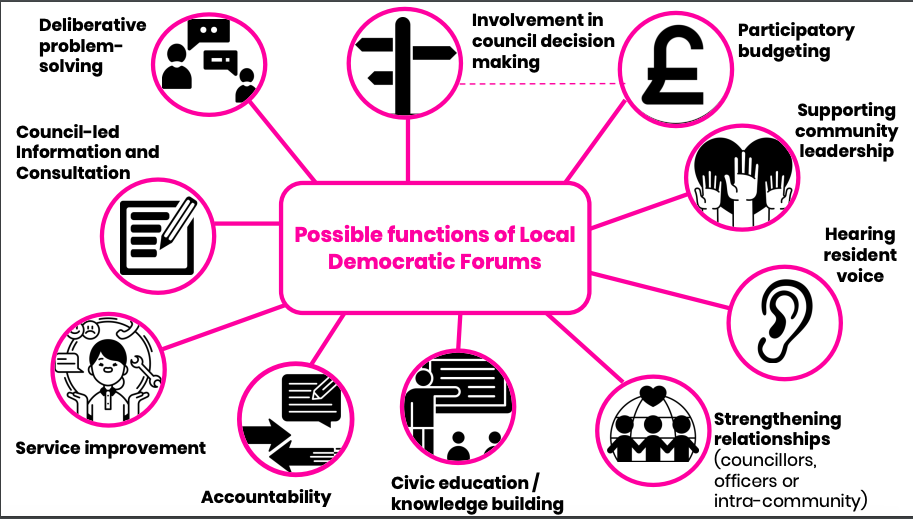
Above – Cambridge Civic Affairs Committee 10 July 2024 – 24/26/Civ App B, slide 11.
Further reading:
For those of you interested, there’s also a Citizens’ Academy Handbook on sale (it’s not cheap) which is a guide on how to establish one…in the USA. But there sufficient crossover on the questions that potential founding institutions need to ask themselves before proceeding. Beyond that from the last millennium, I’ve digitised a host of antiquarian guides and books from generations when universal suffrage was still in its infancy, and when people were fighting for their lives to hold off living under totalitarian dictatorships of the 20th Century. Which is useful in taking us back to first principles. That old saying of not knowing what you’ve got until it is gone.
If you are interested in the longer term future of Cambridge, and on what happens at the local democracy meetings where decisions are made, feel free to:
- Follow me on BSky
- Spot me on LinkedIn
- Like my Facebook page
- Consider a small donation to help fund my continued research and reporting on local democracy in and around Cambridge.


